Safety Promotion is an increasingly important component of EASA's international cooperation activities, with growing interest from aviation authorities and regional organisations worldwide.
Although it is one of the four pillars of Safety Management Systems (SMS) under ICAO Annex 19, alongside Safety Policy, Risk Management and Safety Assurance, Safety Promotion is often described as the “forgotten pillar” of aviation safety, as it is sometimes perceived as dispensable rather than an essential component of effective safety management. But is it really?
While considerable resources are devoted to developing regulations, identifying risks and overseeing aviation activities, ensuring that safety knowledge reaches the people who need it — and influences their decisions — does not always receive the same attention.
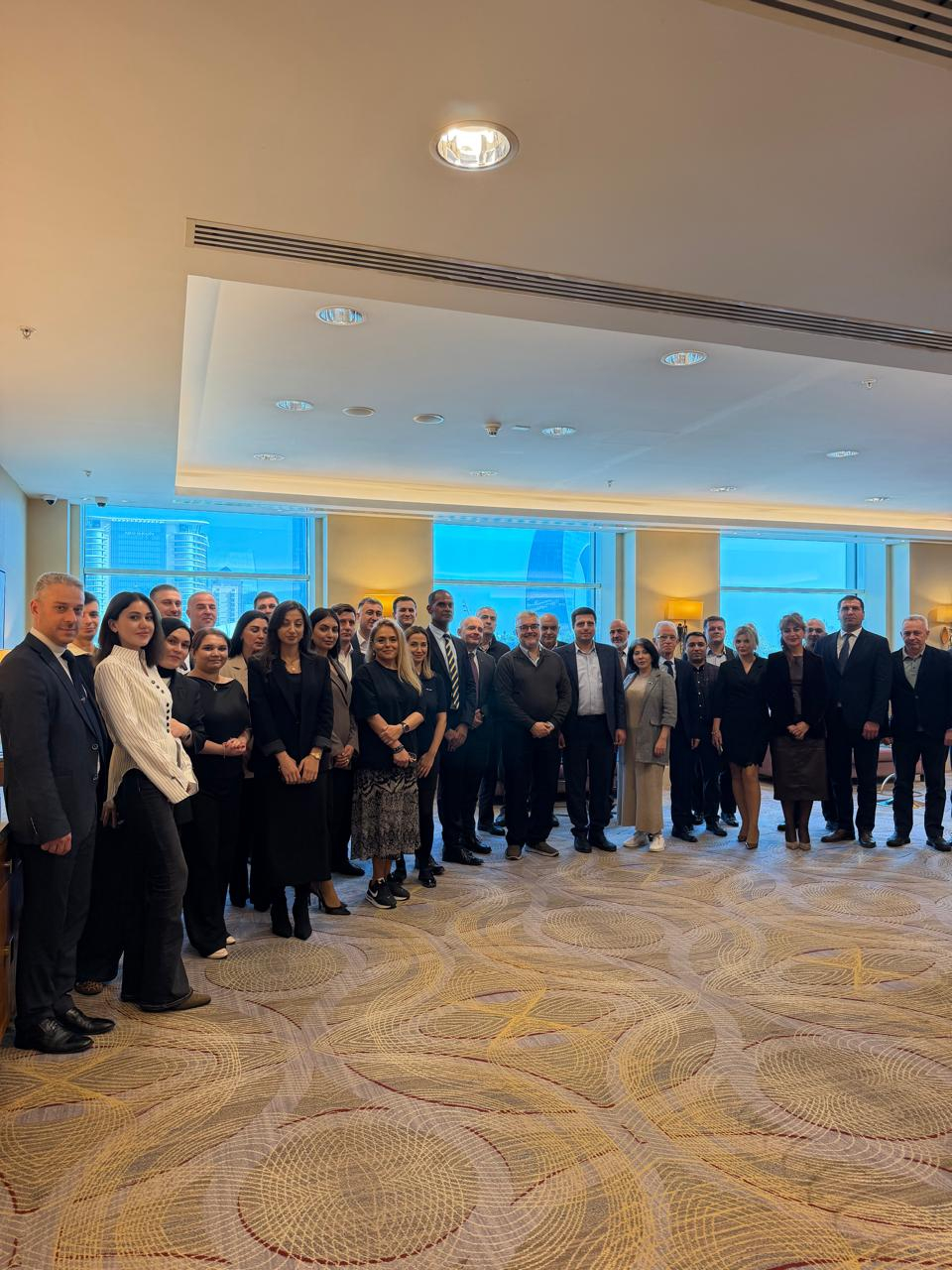
Against this background, EASA's Antonio Gonzalez Gomez, Patrick Firmin and Krzysztof Kedzierski participated in a three-day Safety Promotion workshop in Azerbaijan last week, bringing together representatives of the country's aviation community, including its national aviation authority and Ministry of Transport. This round of workshops continues in mid-November with a similar event held in Sri Lanka attended by Yngvi Yngvason, Patrick Firmin and Javier Vicedo, and where the local industry as well as that from surrounding countries, such as Pakistan, Bangladesh and more will participate.
The workshop focused on sharing European experiences, exploring practical communication techniques and real cases as well as demonstrating how effective safety promotion can be developed without necessarily requiring substantial budgets or specialised communications teams.
A central theme was that identifying a safety risk is only the beginning. Regulatory measures, oversight and training remain essential tools, but sometimes the challenge is not the absence of rules. It is ensuring that aviation professionals understand existing requirements and can apply them effectively in their daily operations.
Beyond the technical discussions, workshops of this kind frequently provide the starting point for longer-term cooperation between EASA and aviation authorities worldwide. They create opportunities to exchange experiences, build professional relationships and develop approaches that can be adapted to different aviation environments.
Because aviation safety is not only about knowing what the risks are. It is also about making sure that knowledge is understood, retained, remembered and eventually leads changes in attitudes that bring action.