
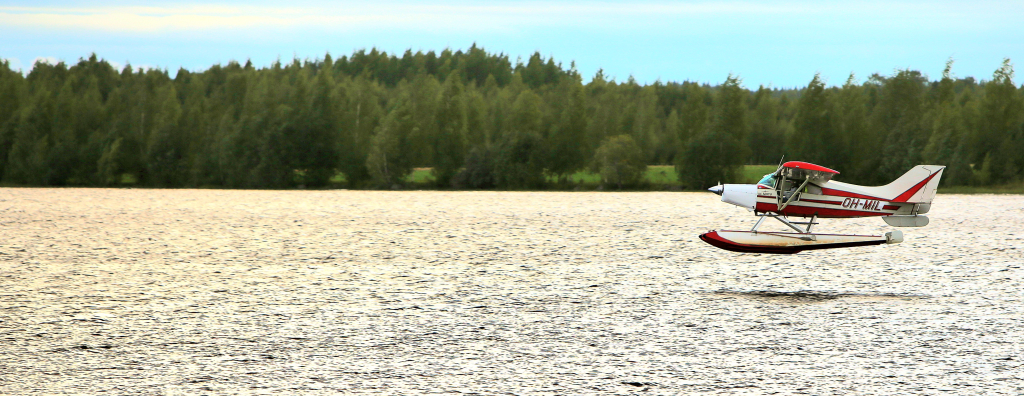
Seaplane and amphibious aircraft operations offer pilots access to destinations that would otherwise be unreachable. They combine the challenges of aviation with those of the maritime environment, requiring a unique set of skills and operational awareness.
While many of the risks associated with seaplane flying are well known, accident experience continues to show that certain hazards repeatedly contribute to incidents and accidents. Understanding these risks is not about questioning a pilot's competence. Rather, it is about recognising how quickly changing conditions, unfamiliar aircraft characteristics, and human factors can erode safety margins.
The following risk areas deserve particular attention:
1. Lack of Experience and Lack of Recent Experience
The single greatest risk factor in seaplane operations is often not the aircraft, the weather, or the water conditions. It is the pilot's level of experience, particularly recent experience.
Unlike many landplane operations, seaplane flying requires skills that are highly perishable. Judging water conditions, managing step taxi operations, docking, handling wind effects on the water, and recognising visual illusions all require practice. Skills that were sharp a year ago may no longer be as instinctive after a prolonged break from flying.
Recent experience is especially important because seaplane operations often occur in dynamic environments where there is little time to analyse and react. Pilots must recognise developing situations and respond almost automatically.
Another important consideration is the type of experience a pilot has accumulated.
Not all float-equipped aircraft behave in the same way. For example, pilots transitioning between aircraft equipped with “Full Lotus” floats and those equipped with more traditional float designs may encounter significant differences in handling characteristics.
Traditional floats generally require greater attention to maintaining float alignment with the direction of movement and water forces. “Full Lotus” floats are more forgiving in certain situations and may allow a different handling technique during water contact. Experience gained on one type does not automatically translate into proficiency on the other.
Assuming that seaplane experience is fully transferable between float designs can create a dangerous false sense of familiarity. Every transition requires appropriate training, practice, and a willingness to relearn techniques.
Experience matters. Recent experience matters even more.
2. Glassy Water Illusion: When Your Eyes Stop Helping You
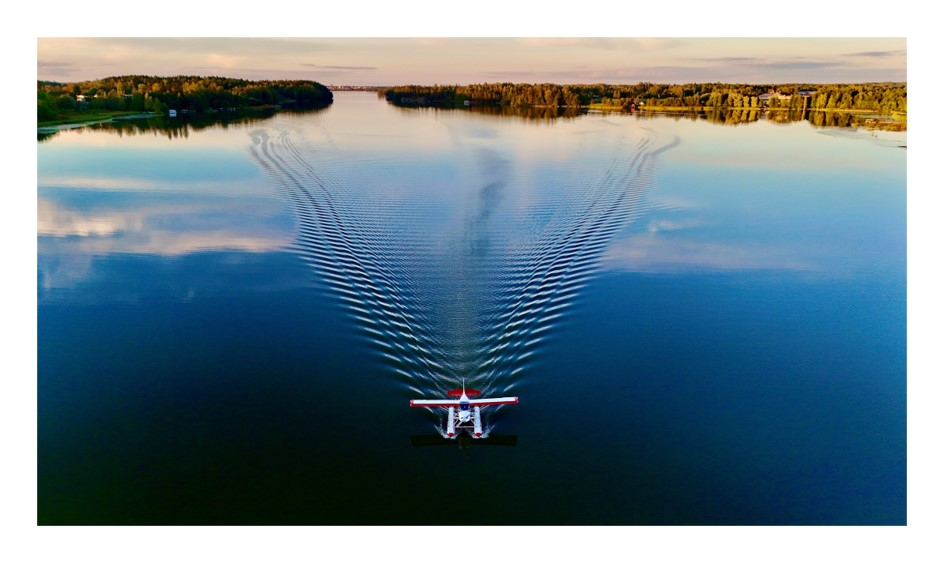
Glassy water is one of those conditions that looks calm and harmless, but can quickly turn into a trap.
When the surface becomes smooth and reflective, it removes the texture you rely on to judge height. Suddenly, your usual visual cues disappear. The horizon can blend into the water, and depth perception becomes unreliable.
That’s where things start to go wrong.
Instead of flaring at the right moment, it is easy to either flare too late, or not at all. The result is often a harder-than-expected touchdown, sometimes with a loss of control.
The tricky part? Most pilots know about glassy water. But in the moment, especially in familiar surroundings, there’s a natural tendency to trust what you see.
That is why this is really about discipline. In these conditions, it is not about flying what you see, it’s about flying a known, stabilised procedure and sticking to it.
3. Amphibious Gear Configuration Errors: Simple, but Unforgiving
This is one of the most well-known risks in amphibious operations, and it keeps happening.
The reason is simple: the same aircraft, often the same approach, but two completely different landing configurations depending on the surface.
- Gear down on water → the aircraft can dig in and flip
- Gear up on land → leading to a gear-up landing
What makes this particularly challenging is that it’s rarely about a lack of knowledge. It’s usually about interruption, distraction, or routine.
A checklist gets rushed. A callout is skipped. Or a familiar operation leads to an assumption instead of a confirmation.
That’s all it takes.
The mitigations are equally simple, but only if they are applied every time:
- Clear callouts linked to landing surface
- Positive confirmation of gear position
- No assumptions, even on routine sectors
Where experience doesn’t protect you—discipline does.
4. Wind and Water Interaction: Your Runway Is Moving
 |
On land, a runway stays where it is. On water, it doesn’t.
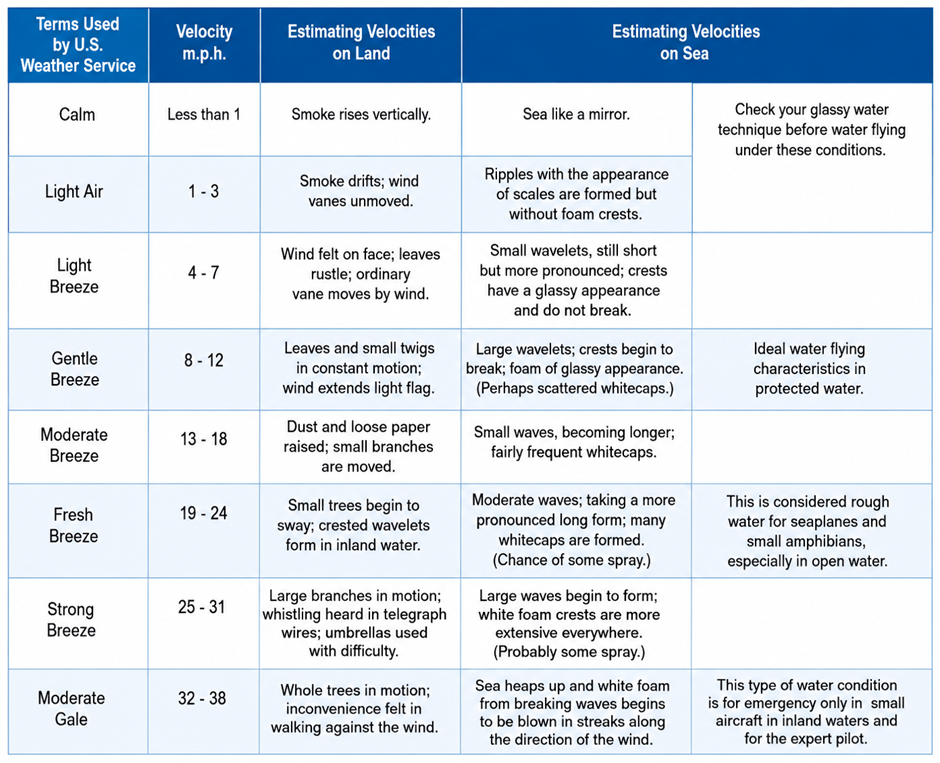
Wind doesn’t just affect your aircraft, it actively reshapes the surface you’re operating on. Waves build, directions shift, and what looked manageable from the air can feel very different once you’re on the water.
Even moderate winds can introduce:
- Waves that affect take-off and landing
- Directional challenges during taxi
- Changes in performance during the step phase
One of the common traps here is focusing on wind limits alone, without fully considering what that wind is doing to the water.
That’s where experience and judgement come in, but also humility.
Sometimes the safest decision is to reassess, reposition, or simply not go. And if you do commit, being ready to reject a take-off early is key.
Because on water, the runway you briefed is not necessarily the one you will get.
5. Survival After Impact: It Doesn’t End at Touchdown
|
In seaplane operations, the story doesn’t end with the impact.
What makes the difference is preparation. |
|
Conclusion: Same Aircraft, Different Mindset
Seaplane flying isn’t just “normal flying on water.” It requires a shift in mindset.
The aircraft may be familiar but the environment isn’t fixed, and it doesn’t always behave the way you expect.
Across all five risk areas, one thing stands out – the need for a consistent and organised approach.
- Sticking to procedures when visual cues are unreliable
- Running checklists with discipline, every time
- Respecting how quickly conditions can change
- Staying ahead of the environment, not reacting to it
For experienced pilots, none of this is new. But that’s exactly why it matters.
Because in seaplane operations, the margin is often not in what you know but in how consistently you apply it.