
Location
Abuja, Nigeria
Description
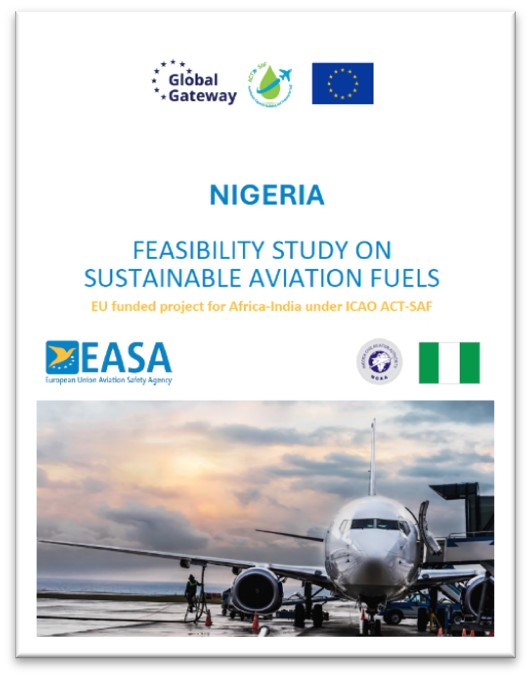
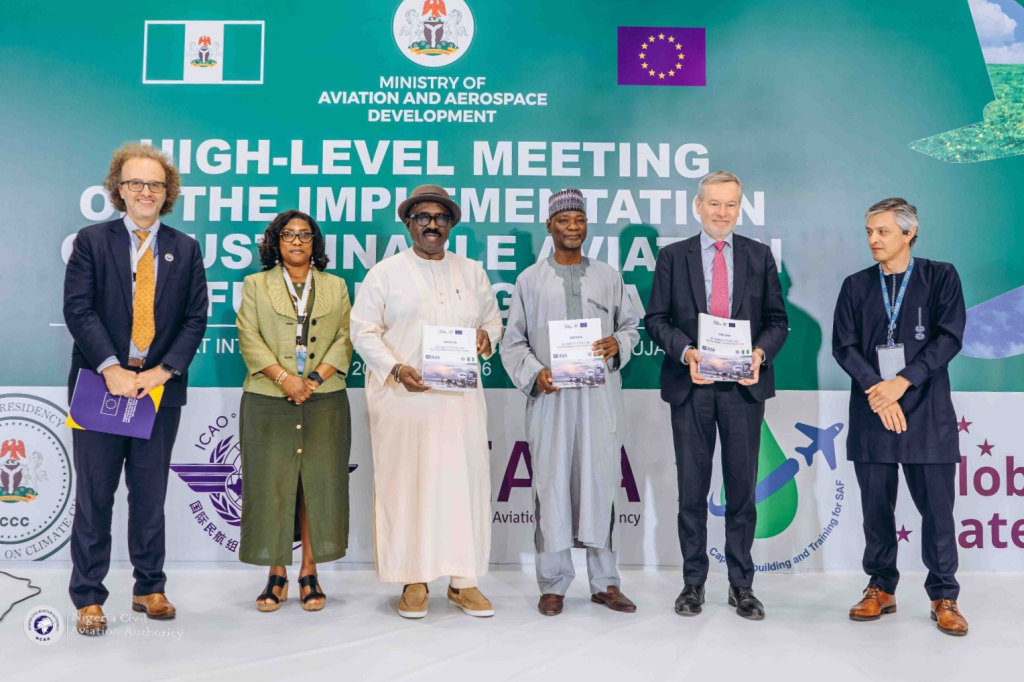
The first of two ICAO SAF Feasibility Studies developed under the EASA implemented ACT-SAF Africa-India Project was officially handed over by Mr Gautier Mignot, Ambassador of the European Union to Nigeria, to a representative of Nigeria’s Federal Ministry of Aviation and Aerospace Development.
The handover ceremony, organised by the Nigeria Civil Aviation Authority (NCAA) in Abuja on 20 July 2026, also marked the launch of Nigeria’s Sustainable Aviation Fuel Implementation Programme (SAFIP) and the kick-off of the ICAO Business Implementation Study.
Developed in line with the ICAO SAF Feasibility Study methodology (all Feasibility and Business Implementation Studies by ICAO and partners can be found here), the study builds on the groundwork established through the ACT-SAF project, including technical capacity-building and the creation of local Technical Working Groups. More than 50 national stakeholders and stakeholder groups representing the potential SAF value chain contributed to the study.
A key outcome was the establishment of a High-Level SAF Steering Committee, providing a platform to strengthen national coordination and support the development of Nigeria’s SAF ecosystem.
The study also identified concrete opportunities for SAF development, including co-processing at the existing Dangote Refinery and the potential development of an Alcohol-to-Jet facility using cassava residues. These opportunities will be further assessed through the follow-up Business Implementation Study. In addition, the study defined a National SAF Implementation Programme and a technical knowledge enhancement concept, providing a holistic framework for developing the capabilities, infrastructure and partnerships required to enable local SAF production over the coming years.
The ACT-SAF project will continue to support Nigeria’s SAF journey by providing expertise and resources for the implementation of the SAF Programme, strengthening the capacity of the Technical Working Groups and facilitating coordination of the pilot projects launched under the Programme.
We congratulate our Nigerian colleagues on their strong commitment and ambition to develop SAF production through different pathways in the years ahead. These efforts represent an important step towards the energy transition of Nigeria’s aviation sector and towards reducing its dependence on fossil fuels.
Agenda
The Feasibility study on Sustainable Aviation Fuels for Nigeria can be downloaded on the website of the Nigerian Civil Aviation Authority (NCAA) here or by clicking on the image of the cover page of the Feasibility Study above.
Contact
For any queries about the event you can contact: santiago.haya-leiva [at] easa.europa.eu (santiago[dot]haya-leiva[at]easa[dot]europa[dot]eu) and ralph.kossmann [at] easa.europa.eu (ralph[dot]kossmann[at]easa[dot]europa[dot]eu).