
Filters
AMC1 SPA.LVO.105(g) Specific approval criteria
ED Decision 2023/007/R
SAFETY ASSESSMENT — MONITORING, DATA COLLECTION AND PERFORMANCE INDICATORS FOR APPROACH OPERATIONS
(a)The operator should monitor LVOs and operations with operational credits in order to validate the effectiveness of the applicable aircraft flight guidance systems, training, flight crew procedures, and aircraft maintenance programme, and to identify hazards.
(b)Data should be collected whenever an LVO or an operation with an operational credit is attempted regardless of whether the approach is abandoned, is unsatisfactory, or is concluded successfully. The data should include records of the following:
(1)occasions when it was not possible to commence an approach due to deficiencies or unserviceabilities of related airborne equipment;
(2)occasions when approaches were discontinued, including the reasons for discontinuing the approach and the height above the runway at which the approach was discontinued;
(3)occasions when system abnormalities required pilot intervention to ensure a continued approach or safe landing;
(4)landing performance, whether or not the aircraft landed satisfactorily within the desired touchdown area with acceptable lateral velocity or cross-track error. The approximate lateral and longitudinal position of the actual touchdown point in relation to the runway centre line and the runway threshold, respectively, should be recorded.
(c)Data about LVOs should be collected by means of the operator’s flight data monitoring programme supplemented by other means including reports submitted by flight crew. Operators that do not have a flight data monitoring programme should use reports submitted by flight crew as the primary means of gathering data.
(d)Performance indicators should include the following:
(1)the rate of unsuccessful low-visibility approaches, i.e. the number of attempted approaches terminating in discontinued approaches, approaches where pilot intervention was required to ensure a continued approach or safe landing or where landing performance was unsatisfactory, compared to the number of low-visibility approaches attempted;
(2)measures of performance of the airborne equipment for low-visibility approaches or operations with operational credits;
(3)safety performance indicators related to other specific risks associated with LVOs.
(e)The following information should be retained for at least 5 years:
(1)the total number of low-visibility approaches or operations with an operational approval attempted or completed, including practice approaches, by aircraft type; and
(2)reports of unsatisfactory approaches and/or landings, by runway and aircraft registration, in the following categories:
(i)airborne equipment faults;
(ii)ground facility difficulties;
(iii)missed approaches because of air traffic control (ATC) instructions; or
(iv)other reasons.
AMC2 SPA.LVO.105(g) Specific approval criteria
ED Decision 2022/012/R
SAFETY ASSESSMENT PRIOR TO OBTAINING AN APPROVAL
(a)Prior to commencing LVOs or operations with operational credits, an operator should demonstrate to the competent authority that such operations will achieve an acceptable level of safety. This requires the operator to gather data from operations using the relevant systems and procedures and conduct safety assessments taking that data into account.
(b)The operator applying for the approval of low-visibility approach operations should determine the minimum number of approaches required to gather sufficient data to demonstrate an acceptable level of safety and the time period over which such data should be gathered.
(c)If an operator is applying for more than one LVO approval or an approval for operation with operational credits for a particular aircraft type, then data gathered from operations using the systems and procedures designed for one classification of operations or operation with operational credits may be used to support the application for another classification of operations or operation with operational credits provided the following elements are similar:
(1)type of technology, including:
(i)flight control/guidance system (FGS) and associated displays and controls;
(ii)flight management system (FMS) and level of integration with the FGS;
(iii)use of HUD or an equivalent display system; and
(iv)use of EFVS;
(2)operational procedures, including:
(i)alert height;
(ii)manual landing/automatic landing;
(iii)no DH operations;
(iv)use of HUD or an equivalent display system in hybrid operations; and
(v)use of EFVS to touchdown; and
(3)handling characteristics, including:
(i)manual landing from automatic or HUD or an equivalent display system guided approach;
(ii)manual missed approach procedure from automatic approach; and
(iii)automatic/manual roll-out.
(d)An operator holding an approval for low-visibility approach operations or operations with operational credits may use data gathered from approaches conducted using one aircraft type to support an application for approval for a different aircraft type or variants provided the following elements are similar:
(1)type of technology, including the following:
(i)FGS and associated displays and controls;
(ii)FMS and level of integration with the FGS;
(iii)use of HUD or an equivalent display system; and
(iv)use of EFVS;
(2)operational procedures, including:
(i)alert height;
(ii)manual landing/automatic landing;
(iii)no DH operations;
(iv)use of HUD or an equivalent display system in hybrid operations; and
(v)use of EFVS to touchdown; and
(3)handling characteristics, including:
(i)manual landing from automatic or HUD or an equivalent display system guided approach;
(ii)manual missed approach procedure from automatic approach; and
(iii)automatic/manual roll-out.
GM1 SPA.LVO.105(g) Specific approval criteria
ED Decision 2022/012/R
SPECIFIC APPROVAL CRITERIA — SUCCESSFUL APPROACH AND LANDING
(a)The purpose of this GM is to provide operators with supplemental information regarding the criteria for a successful approach and landing.
(b)An approach may be considered to be successful if:
(1)from 500 ft to start of flare:
(i)speed is maintained within +/- 5 kt of the intended speed, disregarding rapid fluctuations due to turbulence;
(ii)no relevant system failure occurs;
and
(2)from 300 ft to DH:
(i)no excess deviation occurs; and
(ii)no centralised warning gives a missed approach procedure command (if installed).
(c)A landing may be considered to be successful if:
(1)no relevant system failure occurs;
(2)no flare failure occurs;
(3)no de-crab failure occurs (if installed);
(4)longitudinal touchdown is beyond a point on the runway 150 m after the threshold and before the end of the touchdown zone (TDZ) (750 m from the threshold);
(5)lateral touchdown with the outboard landing gear is not outside the TDZ edge;
(6)sink rate is not excessive;
(7)bank angle does not exceed a bank angle limit; and
(8)no roll-out failure or deviation (if installed) occurs.
(d)More details can be found in CS AWO.A.ALS.106, CS AWO.B.CATII.113 and AMC AWO.B.CATII.113.
GM2 SPA.LVO.105(g) Specific approval criteria
ED Decision 2022/012/R
SAFETY PERFORMANCE MONITORING
(a)Data gathering for safety performance monitoring of LVOs and operations with operational credits will need to include sufficient information for the operator to identify hazards and assess the risks associated with LVOs and operations with operational credits.
(b)The following data relating to LVOs and operations with operational credits may be gathered via flight crew reports, flight data monitoring or other means, as appropriate:
(1)date and time;
(2)aircraft details (type and registration);
(3)airport, approach procedure, final approach and take-off area (FATO) and/or runway used;
(4)the type of LVO or operation with operational credits attempted or completed;
(5)weather conditions including wind, reported RVR and natural phenomena that restrict visibility;
(6)the reason for a discontinued approach (if applicable);
(7)details of any pilot intervention to ensure a continued approach or safe landing;
(8)adequacy of speed control;
(9)trim at time of automatic flight control system disengagement (if applicable);
(10)compatibility of automatic flight control system, flight director and raw data;
(11)an indication of the position of the aircraft relative to the centre line when descending through to 100 ft;
(12)touchdown position relative to the TDZ;
(13)an assessment of the sink rate, lateral velocity and bank angle at touchdown;
(14)the nature of any problems encountered by the crew in relation to operating procedures or training; and
(15)any human factors issues that arose in relation to the operation.
(c)Where data is gathered as part of the operator’s flight data monitoring programme, procedures should be established to ensure that information that is only available directly from the flight crew or other sources (e.g. weather information) is captured.
(d)In order to assess the risks associated with LVOs and operations with operational credits, operators may consider hazards with the potential to result in the following unacceptable safety outcomes:
(1)loss of control in flight;
(2)runway overrun or excursion;
(3)controlled flight into terrain;
(4)runway incursion and ground collision; and
(5)airborne conflict.
(e)Operators’ safety control processes will ensure that LVOs and operations with operational credits:
(1)meet the safety objectives and performance standards established in the operator’s safety policy;
(2)achieve at least the same level of safety as operations other than LVOs and operations without operational credits; and
(3)have a continuously improving safety performance.
(f)Two methods to determine the rate of unsuccessful low-visibility approaches are described below:
(1)Fail/pass method (binary): the rate of unsuccessful low-visibility approaches determined in accordance with GM1 SPA.LVO.105(g) should not exceed 5 %. If the unsuccessful operations appear to occur on a given aircraft, aircraft series or runway, specific mitigation measures need to be established and a separate specific rate may need to be calculated and monitored. Note: the term ‘aircraft series’ is explained in GM5 SPA.LVO.110. Operators may choose to apply a lower rate than 5 %.
(2)Continuous method: this method may be selected by operators with a flight data monitoring programme. This methodology is more refined and allows identifying undesirable trends earlier and possibly before they become severe. This method applies an event monitoring methodology in which the deviations from the nominal performance are categorised according to their severity (severity index). For each event (criterion), a level of deviation may be defined as follows:
(i)Low (‘green’: the deviation is small and within the limits of nominal behaviour. No action is required.)
(ii)Medium (‘yellow’): the deviation is above the criteria for low (‘green’) and below the criteria for high (‘red’). No corrective action should be required based on an isolated occurrence; however, a corrective action should be taken if the situation does not improve, or a negative trend is identified. The monitoring should then focus on the particular runway or aircraft series or combination of those.
(iii)High (‘red’): the deviation is undesirably high. Investigation and corrective action should be undertaken even based on an isolated occurrence. The threshold for level high (‘red’) may be based on the criteria of GM1 SPA.LVO.105(g).
GM3 SPA.LVO.105(g) Specific approval criteria
ED Decision 2022/012/R
DATA GATHERING FOR SAFETY ASSESSMENT PRIOR TO OBTAINING AN APPROVAL
(a)General
The intention of the safety assessment is to validate the use and effectiveness of the applicable aircraft flight control and guidance systems, procedures, flight crew training and aircraft maintenance programme. The intention is not to repeat the statistical analysis required for certification of equipment, but rather to demonstrate that the various elements of the ‘total system’ for LVOs work together for a particular operator.
(b)Data gathering for safety assessment — LVTOs
(1)If the procedures used for LVTOs are not significantly different from those used for standard take-offs, it may be sufficient for operators to conduct only a small number of take-offs using the procedures established for LVTOs for the purpose of data gathering. The following could be considered as a minimum:
(i)For LVTOs in an RVR of 125 m or more if procedures are similar to those used for standard take-offs: 1 take-off;
(ii)For LVTOs in an RVR of less than 125 m or any other LVTOs using specific procedures: 10 take-offs.
(2)An operator holding an approval for LVTOs on one aircraft type and applying the approval for LVTOs on another type or variant may use data from LVTOs conducted on the first type if the following are similar:
(i)level of technology, including flight deck displays, HUD or an equivalent guidance system;
(ii)operational procedures; and
(iii)handling characteristics.
(c)Data gathering for safety assessment — approach operations with a DH below 200 ft
The data required for the safety assessment needs to be gathered from approaches conducted in a representative sample of expected operating conditions. The operator needs to take seasonal variations in operating conditions such as prevalent weather, planned destinations and operating bases, and ensure that the approaches used for data gathering are conducted over a sufficient period of time to be representative of the planned operation.
In order to ensure that the data is representative of planned operations, approaches are conducted at a variety of airports and runways. If more than 30 % of the approaches are conducted to the same runway, the operator may increase the number of approaches required and take measures to ensure that the data is not distorted.
The number of approaches used for data gathering will depend on the performance indicators and analysis methods used by the operator. The operator will need to demonstrate that the operation for which approval is sought will achieve an acceptable level of safety. The following figures may be considered a minimum for an operator without previous experience of low-visibility approach operations:
(1)for approval of operations with a DH of not less than 50 ft: 30 approaches;
(2)for approval of operations with a DH of less than 50 ft: 100 approaches.
Approaches conducted for the purpose of gathering data in order to conduct a safety assessment prior to obtaining an LVO approval may be conducted in line operations or any other flight where the operator’s procedures are used. Approaches may also be conducted in an FSTD if the operator is satisfied that this would be representative of the operation.
The data gathered from these approaches will only be representative if all required elements of the total system for LVOs are in place. These include not only operating procedures and airborne equipment, but also airport and ATC procedures and ground- or space-based navigation facilities. If the operator chooses to collect data from approaches conducted without all required elements in place, then the data analysis takes into account the effect of at least the following:
(1)air traffic services (ATS) factors including situations where a flight conducting an instrument approach is vectored too close to the FAF for satisfactory lateral and vertical path capture, lack of protection of ILS sensitive areas or ATS requests to discontinue the approach;
(2)misleading navigation signals such as ILS localiser irregularities caused by taxiing aircraft or aircraft overflying the localiser array;
(3)other specific factors that could affect the success of LVOs that are reported by the flight crew.
(d)Safety considerations for approaches used for data gathering
If an operator chooses to collect data from approaches conducted without all required elements of the total system for LVOs in place, then the operator takes actions to ensure an acceptable level of safety.
(e)Sharing of data: operators may use data from other operators or aircraft manufacturers to support the safety assessment required to demonstrate an acceptable level of safety. The operator applying for a specific approval would need to demonstrate that the data used was relevant to the proposed operation.
(f)It is expected that operators will have more than 6 months or at least 1 000 hours of total operational experience on the aircraft model before they can have sufficient data to set up meaningful performance indicators and establish whether planned LVOs would achieve an acceptable level of safety.
SPA.LVO.110 Aerodrome-related requirements, including instrument flight procedures
Regulation (EU) 2021/2237
The operator shall ensure that only aerodromes, including instrument flight procedures, suitable for the intended operations are used for LVOs and operations with operational credits.
AMC1 SPA.LVO.110 Aerodrome-related requirements, including instrument flight procedures
ED Decision 2023/007/R
SUITABLE AERODROMES — APPROACH AND LANDING ASSESSMENT — AEROPLANES
(a)The assessment of the suitability of an aerodrome, including instrument flight procedures, for the intended operations comprises the availability of:
(1)suitable navigation facilities and associated instrument flight approach procedures;
(2)suitable aerodrome operating procedures, including LVPs, and the compatibility with the intended aircraft operations; and
(3)suitable runway and runway environment characteristics and facilities.
(b)The assessment of the suitability of an aerodrome, including instrument flight procedures, for the intended operations should be made by means of one or a combination of the following:
(1)An assessment of previous operational data for the particular aerodrome, runway and instrument flight procedures. This entails the verification of the availability of previous operational data, such as records of approaches flown in the same aerodrome, with the same procedures and aircraft type.
(2)A desktop assessment of the:
(i)aerodrome data;
(ii)instrument flight procedures; and
(iii)the aircraft data and capabilities.
This desktop assessment compares aircraft data and capabilities and the aerodrome and instrument approach characteristics. If the aircraft data is compatible with the aerodrome and instrument approach procedure characteristics, the aerodrome and runway should be considered suitable for the intended LVO;
(3)An operational assessment
This is meant to be used if the suitability of the aerodrome for the intended operations could not be positively assessed by means of the other methods. In that case, an operational assessment becomes necessary, and actual flights should be performed. The operational assessment should consider the level of complexity of the aerodrome characteristics.
ASSESSMENT OF PREVIOUS OPERATIONAL DATA
(c)Previous operational data refers to data from:
(1)the operator itself, or when not available;
(2)the following entities:
(i)the State of the aerodrome or the competent authority issuing the operator’s LVO approval;
(ii)the type certificate holder of the aircraft; or
(iii)other operators.
(d)Previous operational data should only be used if:
(1)it concerns the same runway and there were no relevant changes to the runway and runway environment;
(2)it is derived in accordance with Table 14 below for the intended operation; and
(3)there is no safety concern for such operation.
(e)Previous operational data may be credited to an aircraft if it is from:
(1)the same aircraft make and model, unless the credit from the same aircraft make and model is restricted by any of the entities in point (c)(2); or
(2)another aircraft model, if stated in the AFM or additional data from the TC/STC holder.
Table 14
Intended operation | Operation from which previous operational data was derived – subject to the conditions specified in points (c), (d) and (e) | Remark |
SA CAT I – automatic landing | CAT I/II/III — automatic landing SA CAT I — automatic landing SA CAT II — automatic landing LTS CAT I — automatic landing | Automatic landing in hybrid systems may also be used |
SA CAT I — HUDLS | CAT II/III — HUDLS SA CAT I — HUDLS SA CAT II — HUDLS LTS CAT I — HUDLS | |
SA CAT II — automatic landing | CAT II/III — automatic landing SA CAT II — automatic landing | Automatic landing in hybrid systems may also be used |
SA CAT II — HUDLS | SA CAT II — HUDLS CAT II/III — HUDLS | |
CAT II — HUD to below DH with manual landing | CAT II — HUD to below DH with manual landing CAT II or CAT III — automatic landing CAT II or CAT III HUDLS SA CAT II HUDLS | Data related to the LSAA should only be used in the case of HUDLS or automatic landing |
CAT II — auto-coupled to below DH with manual landing | CAT II — auto-coupled to below DH with manual landing CAT II or CAT III — automatic landing SA CAT II automatic landing | |
CAT II — automatic landing | CAT II — automatic landing SA CAT II — automatic landing CAT III automatic landing | Automatic landing in hybrid systems may also be used |
CAT II — HUDLS | CAT II or CAT III — HUDLS SA CAT II — HUDLS | |
CAT III — HUDLS | CAT III — HUDLS | |
CAT III— automatic landing | CAT III — automatic landing | If the hybrid system uses automatic landing, then the data may be used as any CAT III system. |
CAT III — hybrid system | CAT III — hybrid system based on same components | |
EFVS operations requiring flare prompt or flare command, i.e. EFVS-L | EFVS operations requiring flare prompt or flare commands |
Note: Previous operational data should be based on the same kind of xLS (e.g. ILS to ILS, MLS to MLS or GLS to GLS). Data related to landing system performance derived from infrastructure systems with lower performance may be used on systems with higher performance (e.g. data derived from a CAT II ILS may be used on a CAT III ILS). However, an ILS may qualify a GLS operation under the following conditions:
—The performance of the ILS installation on which the data is based can only be credited to the ILS point promulgate.
—An ILS facility performance category II installation can only be credited to an operation using GAST C.
—An ILS facility performance category III installation can only be credited to an operation GAST C or GAST D.
DESKTOP ASSESSMENT — AERODROME DATA, INSTRUMENT FLIGHT PROCEDURE AND AIRCRAFT DATA AND CAPABILITIES
(f)The desktop assessment should correspond to the nature and complexity of the operation intended to be carried out and should take into account the hazards and associated risks inherent in these operations.
(g)The assessment should include the AFM or additional data from the TC/STC holder, instrument flight procedures and aerodrome data. For landing systems, the runway or airport conditions should include as a minimum:
(1)the approach path slope;
(2)the runway elevation;
(3)the type of xLS navigation means intended to be used;
(4)the average slope of the LSAA; and
(5)the ground profile under the approach path (pre-threshold terrain). The distance should be calculated from the published threshold. It should be 300 metres, unless otherwise stated by the AFM or additional data from the TC/STC holder, the State of the aerodrome or AIP data, or the competent authority issuing the operator’s LVO approval.
Note: The above points assume a CAT II or CAT III runway. For other types of runways, the operator may need to consider other factors.
(h)In addition to (g), additional elements may need to be included in the assessment if stated by:
(1)the AFM, or additional data from the TC/STC holder; or
(2)the State of the aerodrome or AIP data; or
(3)the competent authority issuing the operator’s LVO approval.
(i)For EFVS operations, the following applies:
If the system used to perform an EFVS operation contains a flare cue, each aircraft type/equipment/runway combination should be verified before authorising the use of EFVS-L, on any runway with irregular pre-threshold terrain (not within the certification assumption for pre-threshold terrain), if the LSAA presents significant slope change.
OPERATIONAL ASSESSMENT
(j)When performing an operational assessment, the operator should verify each aircraft type and runway combination by successfully completing the determined number of approaches and landings according to the process in point (l) below and the conditions determined in Table 15.
Table 15
Meteorological conditions for approaches and landings intended for operational assessment
Type of approach | RVR/VIS |
CAT III | CAT II conditions if the approach was previously successfully assessed in CAT II operations |
CAT II & CAT III | CAT I conditions |
EFVS-A | As per instrument approach no EFVS credits |
SA CAT I & SA CAT II | CAT I conditions |
(k)The operational assessment should validate the use and effectiveness of the aircraft flight guidance systems, and operating procedures for the intended operation applicable to a specific instrument flight procedure and runway.
(l)The process to determine the number of approaches and landings should be based on identified risks and agreed with the competent authority, and comprise the following steps:
(1)Identify the risks related to the landing system (based on the AFM or additional data from the TC/STC holder) which may include limitations in the conditions during the operational assessment (e.g. to perform the assessment under a non-commercial flight).
(2)Determine complexity of the runway based on:
(i)a set of criteria based on the certification assumptions identified in the AFM or additional data from the TC/STC holder;
(ii)availability and quality of runway data supporting the risk assessment;
(iii)other known factors identified.
(3)Scale the number of required approaches based on complexity.
(m)The operational assessment may be performed in a commercial flight.
(n)If the operator has different variants of the same type of aircraft, utilising the same landing systems, the operator should show that the variants have satisfactory operational performance, but there is no need to conduct a full operational assessment for each variant/runway combination.
(o)The operator may replace partially or completely the approaches and landings to a particular runway, if approved by the competent authority, with:
(1)simulations made by the aircraft manufacturer or approved design organisations, if the terrain is properly modelled in the simulation;
(2)a verification using an FSTD, if the FSTD is suitable for the operational assessment.
ADDITIONAL VERIFICATION OF THE SUITABILITY OF RUNWAYS FOR EFVS OPERATIONS
(p)The assessment of the suitability of the aerodrome should include whether the approach and runway lights installed (notably incandescent or LED lights) are adequate for the EFVS equipment used by the operator.
(q)Additionally, the operator should assess obstacles for the following operations:
(1)NPA procedures;
(2)APV;
(3)category I PA procedures on runways where an OFZ is not provided; and
(4)approach procedures not designed in accordance with PANS-OPS or equivalent criteria.
(r)The assessment in point (q) should determine whether:
(1)obstacle protection can be ensured in the visual segment from DA/H to landing, without reliance on visual identification of obstacles or in the event of a balked landing; and
(2)obstacle lights installed (notably incandescent or LED lights) are adequate for the EFVS equipment used by the operator.
(s)If the assessment determines that:
(1)obstacle clearance cannot be ensured in the visual segment without reliance on visual identification of obstacles, the operator should not authorise EFVS operations to that runway or restrict the operation to the type and/or category of instrument approach operations where obstacle protection is ensured.
Note: Obstacles of a height of less than 50 ft above the threshold may be disregarded when assessing the VSS.
(2)obstacle protection is not assured in the event of a go-around initiated at any point prior to touchdown, the operator should not authorise the operation unless procedures to mitigate the risk of inadequate obstacle protection are developed and implemented.
(t)If the AFM stipulates specific requirements for approach procedures, the operational assessment should include a determination of whether these requirements can be met.
AMC2 SPA.LVO.110 Aerodrome-related requirements, including instrument flight procedures
ED Decision 2022/012/R
SUITABLE INSTRUMENT FLIGHT APPROACH PROCEDURES
(a)CAT II instrument approach operations should only be conducted using a CAT II IAP.
(b)CAT III instrument approach operations should only be conducted using a CAT III IAP.
(c)SA CAT I operations should only be conducted using a SA CAT I IAP or, if not available, a CAT I IAP that includes an OCH based on radio altimeter.
(d)SA CAT II operations should only be conducted using a SA CAT II IAP or, if not available, a CAT II IAP.
(e)EFVS operations should only be conducted using an IAP which is offset by a maximum of 3 degrees unless a different approach offset is stated in the AFM.
AMC3 SPA.LVO.110 Aerodrome-related requirements, including instrument flight procedures
ED Decision 2022/012/R
SUITABLE AERODROMES — RUNWAY AND RUNWAY ENVIRONMENT — NAVIGATION FACILITIES — APPROACH OPERATIONS OTHER THAN EFVS OPERATIONS
(a)For CAT II instrument approach operations, a PA runway category II or category III should be used. The following visual aids should be available:
(1)category II approach lights;
(2)standard runway markings;
(3)category II runway lights.
(b)For CAT III instrument approach operations, a PA runway category III should be used. The following visual aids should be available:
(1)category III approach lights;
(2)standard runway markings;
(3)category III runway lights.
(c)For SA CAT I operations:
(1)where an ILS or MLS or GLS is used, it should not be promulgated with any restrictions affecting its usability and should not be offset from the extended centre line;
(2)where an ILS or GLS is used, it should be at least the minimum ILS or GLS classification stated in the AFM and meet any of the required minimum performance parameters stated in the AFM;
(3)the glide path angle is 3.0o; a steeper glide path, not exceeding 3.5 o and not exceeding the limits stated in the AFM, can be approved provided that an equivalent level of safety is achieved; and
(4)runway markings, category I approach lights as well as runway edge lights, runway threshold lights, and runway end lights should be available.
(d)For SA CAT II operations:
(1)where an ILS or MLS or GLS is used, it should not be promulgated with any restrictions affecting its usability and should not be offset from the extended centre line;
(2)where an ILS or GLS is used, the following applies:
(i)if the AFM provides such data, the minimum ILS or GLS classification stated in the AFM; or
(ii)when such data is not provided:
(A)where an GLS is used, it should be certified to at least GAST-C and to the GBAS point D;
(B)where an ILS is used, it should be certified to at least class II/D/2;
(3)the glide path angle is 3.0o; a steeper glide path, not exceeding 3.2o, can be approved provided that the operator demonstrates an equivalent level of safety; and
(4)the following visual aids should be available:
(i)standard runway markings, category I approach lights as well as runway edge lights, runway threshold lights and runway end lights; and
(ii)for operations with an RVR of less than 400 m, centre line lights.
AMC4 SPA.LVO.110 Aerodrome-related requirements, including instrument flight procedures
ED Decision 2022/012/R
COLLECT AND DEVELOP AIRPORT DATA NOT CONTAINED IN THE AIP — AEROPLANES
When the operator wishing to use an aerodrome where its relevant data for the purpose of LVO is not provided or some data is not provided, the operator should develop procedures to collect or develop the necessary data. The procedure should be specific to the State of the aerodrome or the area of operation and should be approved by competent authority.
GM1 SPA.LVO.110 Aerodrome-related requirements, including instrument flight procedures
ED Decision 2023/007/R
ASSESSMENT OF AERODROMES FOR THE INTENDED OPERATIONS — AEROPLANES
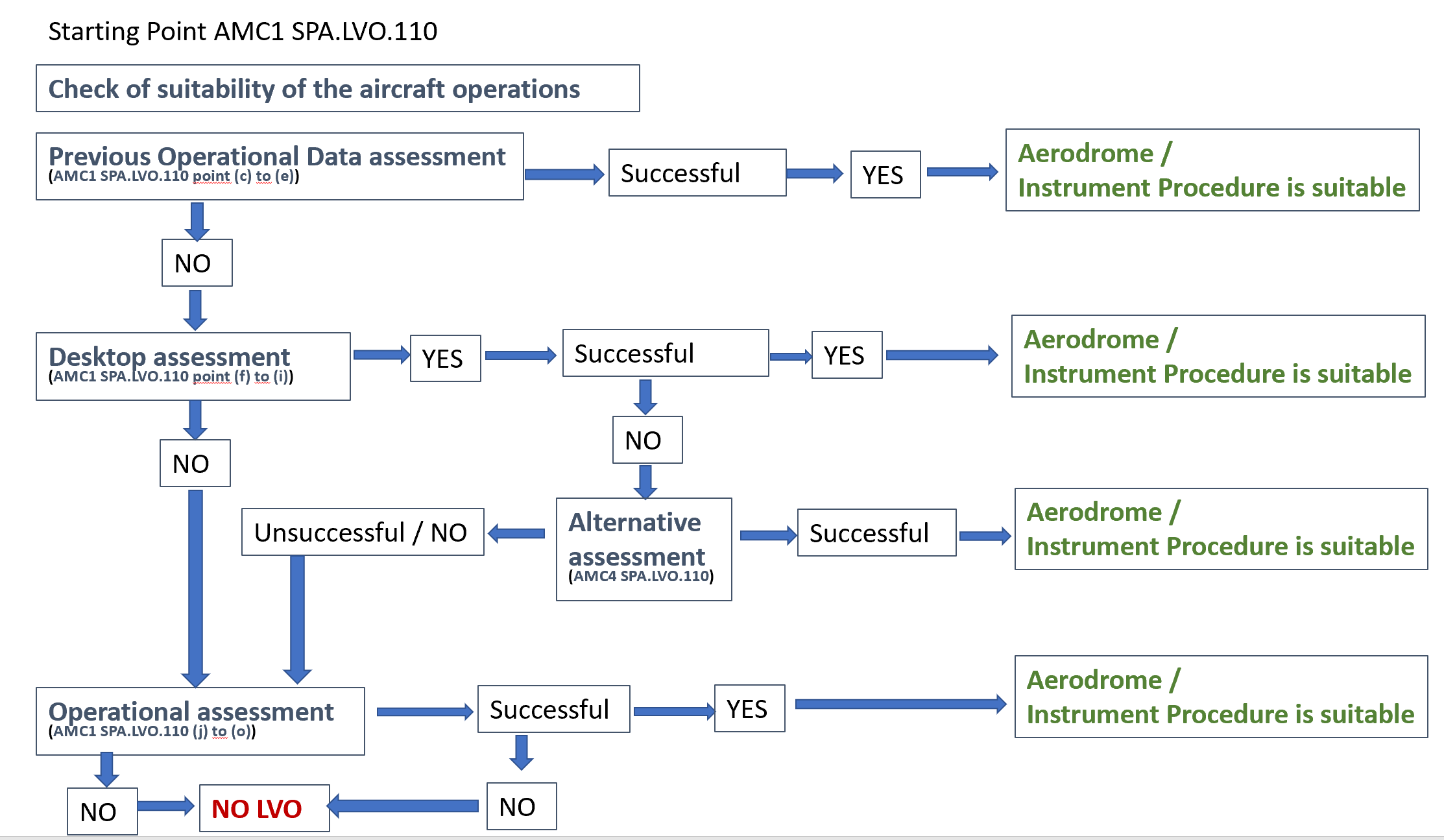
A diagram with a schematic of the assessment described in AMC1 SPA.LVO.110 Aerodrome-related requirements, including instrument flight procedures is provided below:
GM2 SPA.LVO.110 Aerodrome-related requirements, including instrument flight procedures
ED Decision 2022/012/R
SUITABLE AERODROMES — ASSESSMENT — AVAILABILITY OF SUITABLE NAVIGATION FACILITIES
As detailed in point (a) of AMC1 SPA.LVO.110, the assessment of the suitability of an aerodrome, including instrument flight procedures, for the intended operations comprises the availability of suitable navigation facilities and associated instrument flight approach procedures.
When assessing the availability of suitable navigation facilities, the following information is relevant.
(a)Classification for ILS: the ILS classification, e.g. ‘III/E/4’, II/T/3, ‘I/C/2’, etc., is defined in ICAO Annex 10 Volume 1 by using three characters:
(1)I, II or III: this character indicates conformance to the facility performance category which is usually associated with the approach operational category.
(2)A, B, C, T, D or E: this character defines the ILS points to which the localiser/glide path has been verified to be conformal to the course structure of a localiser CATII/III or glide path CAT II/III (where glide path is always limited to T).
(3)1, 2, 3 or 4: this number indicates the level of integrity and continuity of service. The integrity relates to the trust which can be placed in localiser or glide path not radiating false guidance signals. The continuity of service relates to the rarity of signal interruptions. The minimum levels of integrity and continuity of service are represented by a single descriptor ‘level’ which would typically be associated as follows:
(i)Level 1: the localiser’s or glide path’s integrity or continuity of service have not been demonstrated or they have been demonstrated but at least one of them does not meet the level 2 requirements.
(ii)Level 2 is the performance objective for ILS equipment used to support LVOs when ILS guidance for position information in the landing phase is supplemented by visual cues/references.
(iii)Level 3 is the performance objective for ILS equipment used to support operations which place a high degree of reliance on ILS guidance for positioning through touchdown.
(iv)Level 4 is the performance objective for ILS equipment used to support operations which place a high degree of reliance on ILS guidance throughout touchdown and roll-out.
Further information may be found in ICAO Annex 10 Volume 1.
(b)GBAS facility classification (GFC)
The facility classification, e.g. i.e. ‘C/G1/35/H’, refers to the station serving all approaches to a given airport and is defined in ICAO Annex 10 Volume 1 using four elements:
(1)Facility approach service type (FAST): (A-D) indicate the service types supported by the navigation facility, i.e. ‘C’ means FAST C, which denotes a facility meeting all the performance and functional requirements necessary to support GBAS approach service type (GAST) C. GAST C has been designed to meet requirements for CAT I as well as, with additional constraints, CAT II. GAST D has been designed to meet requirements for CAT III. A downgrade from GAST D to C is possible and announced in the avionics.
(2)Ranging source types: these indicate what ranging sources are augmented by the ground subsystem. i.e. ‘G1’ means GPS (‘G2’: SBAS, ‘G3’: GLONASS, ‘G4’: reserved for Galileo, etc.).
(3)Facility coverage: this defines the outer horizontal coverage of the GBAS positioning service expressed in nautical miles. ‘0’ is for facilities that do not provide positioning service. The facility coverage for position service does not indicate the coverage for the GBAS approach service. The information on the coverage for the approach service is contained in the ‘Service volume radius from the GBAS reference point’ to the nearest kilometre or nautical mile as described in point (d) below.
(4)Polarisation: this indicates the polarisation of the VHF Data Broadcast (VDB) signal. E indicates elliptical polarisation (option), and H indicates horizontal polarisation (standard). Aircraft operators that use vertically polarised receiving antennas will have to take this information into account when managing flight operations, including flight planning and contingency procedures.
Further information may be found in ICAO Annex 10 Volume 1.
(c)Approach facility designation (AFD) for GBAS
The approach facility designation, e.g. ‘EDDF/G25A/20748/S/C’ or ‘ABCD/XABC/21278/150/CD’, describing parameters for an individual approach procedure, is defined in ICAO Annex 10 using five elements:
(1)GBAS identification: 4-character facility identifier, e.g. ABCD.
(2)Approach identifier: 4-character approach identifier, e.g. XABC.
(3)Channel number: 5-digit channel number (20 001–39 999) associated with the approach.
(4)Approach service volume: this indicates the inner limit of the service volume either by a numerical value in feet corresponding to the minimum decision height (DH), e.g. ‘150’, or by the GBAS points (i.e. A, B, C, T, D, E, or S). The GBAS points are equivalent to the ILS points, where ‘S’ is only specific to GBAS and denotes the stop end of the runway.
(5)Supported service types: these designate the supported GBAS service types (A-D).
Further information may be found in ICAO Annex 10 Volume 1.
(d)Service volume radius from the GBAS reference point
Maximum use distance (Dmax): the maximum distance (slant range) from the GBAS reference point to the nearest kilometre or nautical mile within which pseudo-range corrections are applied by the aircraft system.
Note: This parameter does not indicate the distance within which VHF data broadcast field strength requirements for the approach service are met.
Further information may be found in ICAO Annex 10 Volume 1.
TYPE OF xLS NAVIGATION MEANS
(e)In the context of AMC1 SPA.LVO.110 point (g)(3), ‘type of xLS navigation means’ means the facilities external to the aircraft and the associated limitations (if any) which have been used as the basis for certification.
GM3 SPA.LVO.110 Aerodrome-related requirements, including instrument flight procedures
ED Decision 2022/014/R
SUITABLE AERODROMES — ASSESSMENT — SUITABLE RUNWAY AND RUNWAY ENVIRONMENT CHARACTERISTICS
(a)As detailed in point (a) of AMC1 SPA.LVO.110, the assessment of the suitability of an aerodrome, including instrument flight procedures, for the intended operations comprises the availability of suitable runway and runway environment characteristics.
(b)For operations based on radio altimeter or other device measuring the height over the ground:
(1)the suitability of the indication of the DH should be based on data covering the actual DH location. This indication should be expected to be stable and continuous;
(2)The suitability of the indication of the alert height (where applicable) should be based on data covering the actual alert height location. This indication should be expected to be stable and continuous.
(3)The primary source of information to determine the suitability should be the precision approach terrain chart (PATC). If the information is not conclusive, the operator may collect and develop airport data not contained in the AIP. More information can be found in GM10 SPA.LVO.110.
(c)For runways intended to be used for CAT III, CAT II, SA CAT II and SA CAT I operations, the State of aerodrome should provide a PATC. More information is provided in GM7 SPA.LVO.110.
(d)There should be a radio altimeter operating area for runways intended to be used for EFVSL, CAT III, CAT II, SA CAT II and SA CAT I operations. The ICAO aerodrome provisions detail that the radio altimeter operating area extends to at least 300 m from the runway threshold with a width of 60 metres on either side of the extended centre line of the runway. The width may be reduced to not less than ± 30 metres if such a reduction does not affect the safety of aircraft operations as assessed by the aerodrome operator in cooperation with affected stakeholders. Slope changes should be kept to a minimum.
(e)Information on pre-threshold terrain and its effect on radio altimeters and automatic flight control systems (AFCS) is contained in the Manual of All-Weather Operations (ICAO Doc 9365, Section 5.2.).
SUITABLE AERODROMES — ASSESSMENT — PREVIOUS OPERATIONAL DATA — RUNWAY AND RUNWAY ENVIRONMENT
(f)As detailed in point (d)(1) of AMC1 SPA.LVO.110, previous operational data should only be used to assess the suitability of an aerodrome for the intended operations when it concerns the same runway and there were no relevant changes to the runway and runway environment.
(g)Relevant changes to the runway and runway environment may include changes to:
(1)the pre-threshold terrain, including the radio altimeter operating area;
(2)runway dimensions;
(3)the average slope of the landing system assessment area (LSAA);
(4)visual aids including approach lights and runway lights;
(5)the obstacle free zone (OFZ);
(6)the visual segment surface (VSS) — only relevant for operational credits in the visual segment (EFVS).
GM4 SPA.LVO.110 Aerodrome-related requirements, including instrument flight procedures
ED Decision 2023/007/R
SUITABLE AERODROMES — ASSESSMENT — PREVIOUS OPERATIONAL DATA PROVIDED BY THE STATE OF THE AERODROME
(a)As detailed in point (b)(1) of AMC1 SPA.LVO.110, the assessment of the suitability of an aerodrome, including instrument flight procedures, for the intended operations, may be made considering previous operational data for the particular aerodrome, runway and instrument flight procedures.
(b)The following guidance is provided for the assessment of suitability of aerodromes for LVOs or operations with operational credits:
(1)If a State provides data related to airports or runways in its territory that are suitable for CAT II or CAT III operations with a specific aircraft model or group of aircraft models, those airports or runways may be considered suitable for the purpose of AMC1 SPA.LVO.110.
Note: A CAT II or CAT III approved runway does not necessarily mean that the airport is suitable for the purpose of AMC1 SPA.LVO.110 as the aerodrome’s provisions may not ensure that the requirements for certain aircraft models are fulfilled.
(2)If a State provides data related to airports or runways in its territory that are found suitable for SA CAT I or SA CAT II, those airports or runways may be considered suitable for the purpose of AMC1 SPA.LVO.110. Note: In some States the concept of SA CAT I and SA CAT II may be different from the EU concept. The operator should consider these differences.
(3)If a State provides data related to airports or runways in its territory that are approved for CAT II/III operations but are designated as restricted or non-standard or irregular, those designated runways should be considered not suitable. The remaining CAT II/III runways of that State may be considered regular.
(4)A competent authority may provide data related to airports or runways that can be considered suitable for defined LVOs. The suitability statement could be credited by operators under the oversight of that authority.
GM5 SPA.LVO.110 Aerodrome-related requirements, including instrument flight procedures
ED Decision 2022/012/R
SUITABLE AERODROMES — ASSESSMENT — PREVIOUS OPERATIONAL DATA — TERMINOLOGY: MAKE, MODEL, SERIES AND VARIANT
The following terms, in accordance with the ICAO Commercial Aviation Safety Team (CAST) taxonomy, are often used (e.g. AMC1 SPA.LVO.110):
(a)Aircraft make: The aircraft make is the name assigned to the aircraft by the aircraft manufacturer when each aircraft was produced. In most cases, the aircraft make is the common name of the aircraft manufacturer; for example, Airbus, Boeing, Embraer, etc.
(b)Aircraft model: An aircraft model is an aircraft manufacturer’s designation for an aircraft grouping with a similar design or style of structure. In EASA type certificate data sheet (TCDS), this means the aircraft type certificate; for example, A330, B777.
(c)Aircraft series: An aircraft series is an aircraft manufacturer’s designation to identify differences within an aircraft model grouping. It provides a further specification to the aircraft type; for example, B777-232 where the series is the number 232. Some manufacturers define the so-called master series: An aircraft master series creates a grouping of similar aircraft series for analytical purposes and to identify aircraft series that share airworthiness properties. A master series contains aircraft series from within one aircraft model. For example, A320-100 and A320200: the A320-100 master series only has one series (A320-111), while the A320-200 master series has many series (211, 212, 214, 215, 216, 231, 232, 233).
(d)Aircraft variant: a variant defines different sets of limiting structural masses (e.g. MTOW, MLW, MZFW, etc.) within a series. For example, A320-232-007 or the A330-243 RR engine’s variant 052. Variants are not covered in the ICAO Cast taxonomy; however, they may be specified in the EASA TCDS.
(e)More information can be found in ICAO documentation under: https://www.icao.int/publications/DOC8643/Pages/Search.aspx?msclkid=a28160bbd09311ecbbe633ef5f1957a4 and http://www.intlaviationstandards.org/.
GM6 SPA.LVO.110 Aerodrome-related requirements, including instrument flight procedures
ED Decision 2022/012/R
SUITABLE AERODROMES — DESKTOP ASSESSMENT — DATA NOT PROVIDED IN THE AFM
(a)When the AFM or additional data from the TC/STC holder does not provide the information needed in AMC1 SPA.LVO.110 points (g)(1) to (5), the operator may contact the TC/STC holder to request such information. Otherwise the operator may seek to use previous operational data or perform operational demonstration in accordance with AMC1 SPA.LVO.110.
SUITABLE AERODROMES — DESKTOP ASSESSMENT — USE OF PREVIOUS OPERATIONAL DATA
(b)In-service consolidated experience from already successfully demonstrated and consistently used runways with the specific aircraft type and with the same intended operations (typically CAT II/III) could be used to support the desktop assessment. The assessment criteria, for prethreshold terrain variation and LSAA slope, could then be defined by the prevailing complexity of the runway on which the operator already has in-service experience and where sufficient operational flight data is available to prove adequate performance of the automatic landing system.
GM7 SPA.LVO.110 Aerodrome-related requirements, including instrument flight procedures
ED Decision 2023/007/R
SUITABLE AERODROMES — DESKTOP ASSESSMENT — AERODROME DATA SOURCES
As detailed in point (b)(2) of AMC1 SPA.LVO.110, the assessment of the suitability of an aerodrome, including instrument flight procedures, for the intended operations, may be made by a desktop assessment, that should consider aerodrome data.
This GM describes some aerodrome data sources that ICAO Member States provide in accordance with ICAO Annex 4.
(a)Type A and Type B aerodrome obstacle charts
Aerodrome obstacle charts come in two forms. Type A and B charts may be combined, and the chart is called aerodrome obstacle chart (ICAO Comprehensive). Where a terrain and obstacle chart is provided in electronic form, there is no need to provide Type A or B aerodrome obstacle charts.
(b)Type A aerodrome obstacle chart (ICAO Annex 4, Chapter 3)
Type A aerodrome obstacle charts are found at most aerodromes approved for LVOs. The function of the Type A chart is to enable an operator to comply with the performance operating limitations in Annex 6. The Type A chart does not have to be provided if there are no take-off obstacles, but a note informing about this is needed according to ICAO Annex 4. The elevation is given to the nearest half-metre or nearest foot. Linear dimensions are shown to the nearest half metre.
(c)Type B aerodrome obstacle chart (ICAO Annex 4, Chapter 4)
Type B aerodrome obstacle charts contain information about the elevation (at the centre line) of both runways plus the elevation at each significant change of the slope of the runway. The function of the Type B chart is:
(1)the determination of minimum safe altitudes/heights including those for circling procedures;
(2)the determination of procedures for use in the event of an emergency during take-off or landing;
(3)the application of obstacle clearing and marking criteria; and
(4)the provision of source material for aeronautical charts.
Elevations and linear dimensions are shown to the nearest half metre.
(d)Aerodrome terrain and obstacle Chart – ICAO (Electronic) (ICAO Annex 4, Chapter 5)
The function of this chart is to:
(1)enable an operator to comply with the operating limitations of Annex 6, Part I, Chapter 5, and Part III, Section II, Chapter 3, by developing contingency procedures for use in the event of an emergency during a missed approach or take-off, and by performing aircraft operating limitations analysis; and
(2)support the following air navigation applications:
(i)instrument procedure design (including circling procedure);
(ii)aerodrome obstacle restriction and removal; and
(iii)provision of source data for the production of other aeronautical charts.
Note that this chart may also contain the information required for the PATC.
According to ICAO Annex 4, from November 2015, this chart is made available for aerodromes regularly used by international aviation. The chart is made available in printed form on request.
(e)Aerodrome chart (ICAO Annex 4, Chapter 13)
According to ICAO Annex 4, an aerodrome chart is provided for aerodromes regularly used by international aviation. The function of this chart is to provide information to facilitate the ground movement of aircraft and in general also to provide essential operational information.
This chart contains information about the height of the threshold and, for PA runways, the highest point of the TDZ. This information may also be included in the text part of the AIP, Chapter AD2 (normally paragraph 2.12 – Runway Physical Characteristics). The elevation is provided to the nearest half metre.
(f)Precision approach terrain chart (PATC) (Annex 4, Chapter 6)
According to ICAO Annex 4, a PATC is made available for all PA runways Categories II and III at aerodromes used by international civil aviation, except where the requisite information is provided in the aerodrome terrain and obstacle chart — ICAO (Electronic). The chart includes:
(1)a plan showing contours at 1 m (3 ft) intervals in the area of 60 m on either side of the extended centre line of the runway, to the same distance as the profile, the contours to be related to the runway threshold;
(2)an indication where the terrain or any object thereon, within the plan defined in (1), differs by ± 3 m in height from the centre line profile and is likely to affect a radio altimeter;
(3)a profile of the terrain to a distance of 900 m from the threshold along the extended centre line of the runway. Where the terrain at a distance greater than 900 m from the runway threshold is mountainous or otherwise significant to users of the chart, the profile of the terrain should be shown to a distance not exceeding 2 000 m from the runway threshold.
(g)Summary
(1)For the determination of runway slopes, the aerodrome obstacle chart, preferably the combined version, appears to provide the best information. The PATC appears to be the best source to determine the elevations and slopes in the approach area.
(2)If the information provided by different parts of the AIP is inconsistent, this may indicate an error in the data and should be reported to the State of aerodrome or AIP issuing authority, unless the inconsistency is insignificant. It should however be noted that there may be different requirements for accuracy and resolution between different AIP charts or sections, which might cause values to differ slightly.
(3)It may be difficult to conclusively state which chart is best for determining the runway slope in each case, but the primary source of information is the AIP, and therein the aerodrome obstacle chart and the PATC. As the aerodrome terrain and obstacle chart – ICAO (Electronic) becomes more available, it will probably take over as the primary source of information about both runways and pre-threshold terrain.
GM8 SPA.LVO.110 Aerodrome-related requirements, including instrument flight procedures
ED Decision 2023/007/R
SUITABLE AERODROMES — OPERATIONAL ASSESSMENT — PROCESS TO DETERMINE THE NUMBER OF APPROACHES AND LANDINGS — AEROPLANES
(a)When performing an operational assessment to determine the suitability of an aerodrome for the intended operations, the operator should have a process to determine the number of approaches and landings, in accordance with point (l) of AMC1 SPA.LVO.110. The following guidance provides examples of criteria that can be used to evaluate level complexity of the runway versus a landing system for the purpose of the determination of the number of approaches and landings. Depending on the landing system used, some criteria might not be relevant, or others might need to be considered.
(1)Pre-threshold terrain profile
The typical length of pre-runway threshold is calculated from the published threshold (displaced threshold if present) to 300 m on the extended centre line unless otherwise specified by the AFM or additional data from the TC/STC holder, the State of the aerodrome or AIP data, or the competent authority issuing the operator’s LVO approval. The complexity of the pre-threshold terrain profiles is described as follows:
(i)Simple
(A)approximately + 1 m variation from runway threshold elevation in the typical length; or
(B)previous experience in more constraining pre-threshold terrain in the same aircraft type or variant.
(ii)Moderate
(A)presence of ARAS; or
(B)approximately + 1 m variation from runway threshold elevation within the last 60 m prior to runway threshold; and
(C)prior to 60 m and up to typical length:
—moderate rising slope (less than 7 % rising); or
—moderate ‘sea wall’ (less than 3 m).
(iii)Complex
(A)approximately + 2 m variation from runway threshold elevation within the last 60 m prior to runway threshold; and
(B)prior to 60 m and up to typical length:
—significant rising slope (up to 15 % rising); or
—significant ‘see wall’ (up to 6 m); or
—significant change of slope (rising then descending or descending then rising close to the limit values).
(iv)Very complex
Outside any of the limits defined above for complex pre-threshold terrain profiles.
Note: The term ‘sea wall’ refers to sudden changes of terrain elevation that typically occur when runway thresholds are located near the sea. Sea level may change due to tides. Other cases of sudden terrain elevation may occur in other cases, a slope of 100 % may be considered as comparable to ‘sea wall’ (e.g. Boston USA).
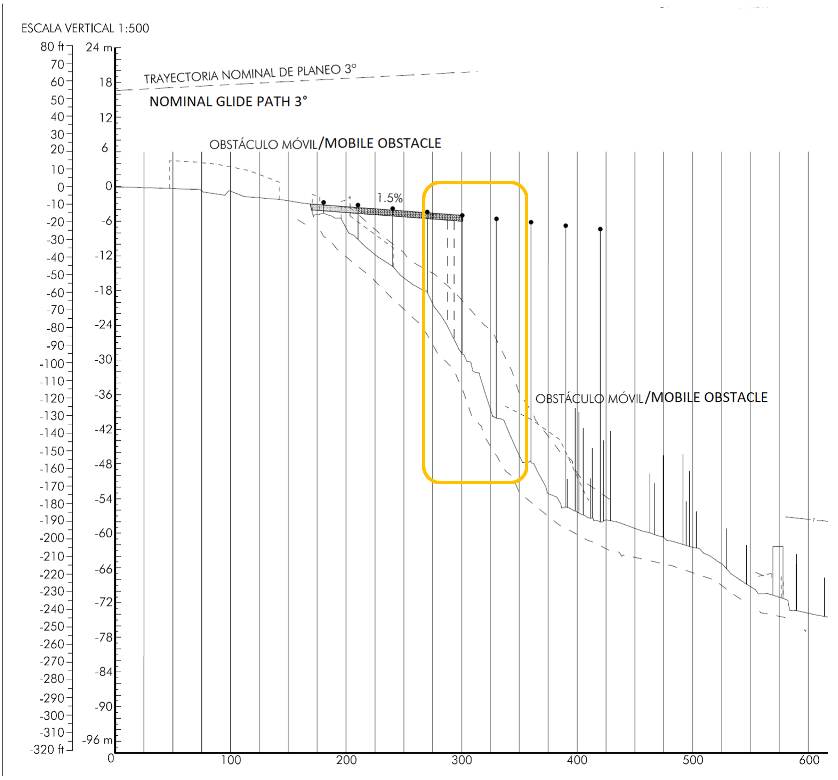
Figure 0: Typical example of ‘very complex’ with greater than 6 m ‘sea wall’ at 300 m (Asturias, LEAS 29 dated 2007) that after suitability assessment and due to the presence of ARAS, may be changed to ‘moderate’.
Example: A pre-threshold terrain with the following features would be considered as ‘moderate’.
(1)Less than 1 m variation of pre-threshold terrain elevation from runway threshold elevation, in the area from runway threshold up to 100 m prior to runway threshold
(2)Less than 3 m variation of pre-threshold terrain elevation from runway threshold elevation, in the area from 100 m prior to runway threshold up to 300 m prior to runway threshold
(2)Landing system assessment area (LSAA) slope
Note: 600 metres after the threshold is the standard length; however depending on the landing system, other lengths might be relevant.
Although not recommended by ICAO Annex 14 Volume 1, slope variation in the LSAA can exist (refer to point 3.1.15 to point 3.1.18) and represent a factor of risk to be considered. For the purpose of determining the relevant parameters characterising slope and slope variation, the following definitions may be used (Figure 1):
—Mean LSAA slope: Slope computed from runway threshold elevation up to runway elevation at 600 metres after the threshold.
—Deviation from mean LSAA slope: greatest elevation difference between any runway elevation inside LSAA and mean LSAA slope.
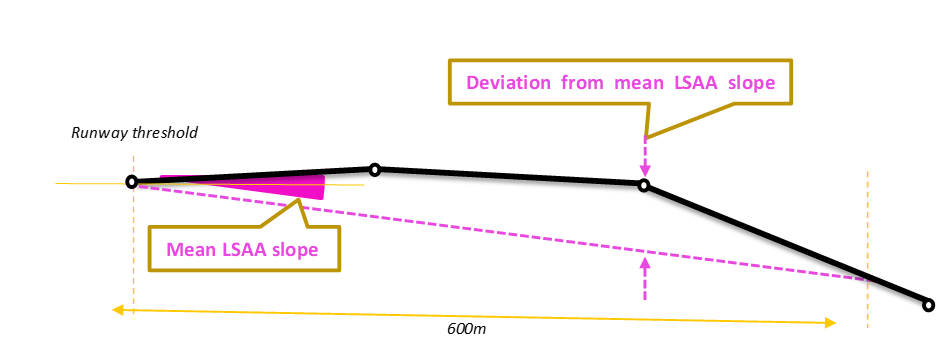
Figure 1: Mean LSAA slope & Deviation from mean LSAA slope
Note: Published runway profiles usually contain the position and elevation of each significant runway longitudinal slope change. Elevation at other location can be interpolated assuming straight slope between each published elevation. The highest/ lowest elevation of the LSAA might not be the one where the deviation from mean LSAA slope is the greatest.
(i)Simple
(A)Approximately + 0.4 % mean LSAA slope and less than 1 m (3 ft) variation around mean LSAA slope; or
(B)previous experience in more constraining touch down condition in the same aircraft type or variant.
(ii)Moderate
Approximately + 0.8 % mean LSAA slope and less than 2 m (6 ft) variation around mean LSAA slope.
(iii)Complex
Approximately + 1.0 % mean LSAA slope and less than 4 m (12 ft) variation around mean LSAA slope.
(iv)Very complex
Outside any of the limits defined above.
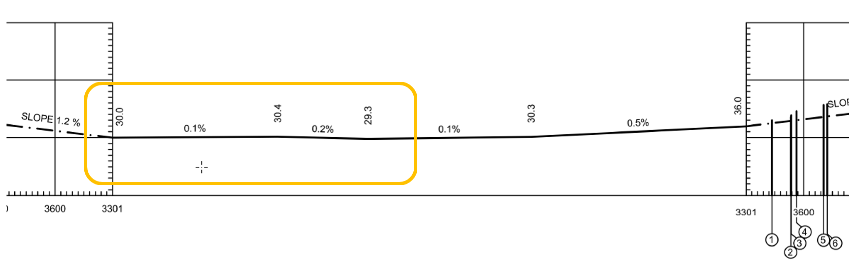
Figure 2: Typical example of ‘simple’ LSAA Slope (ESSA 01L dated 2018)
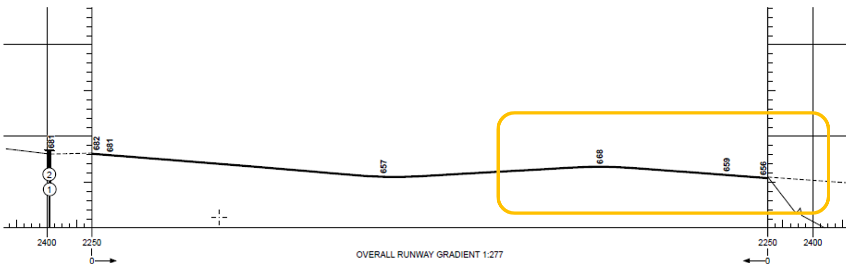
Figure 3: Typical example of ‘moderate’ LSAA slope due to variation around mean LSAA slope greater than 1 m but lower than 2 m (EGNM 32 dated 2018)
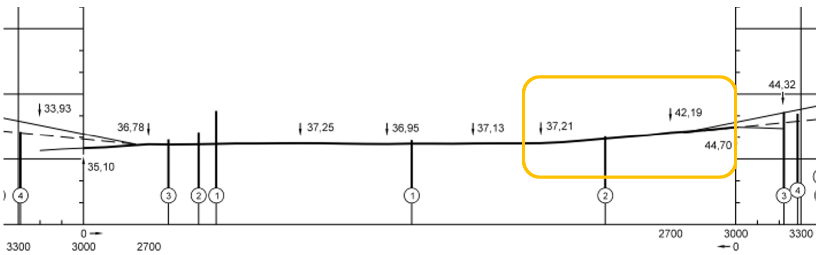
Figure 4: Typical example of ‘complex’ mean LSAA slope greater than 0.8 % but lower than 1 % (EDD 23L dated 2009)
(b)Operational assessment programme: the following guidance provides examples of typical flight programmes that can be used to demonstrate suitability of a landing system using the operational assessment method, considering the overall level of runway irregularities.
Note: For CAT II operations with no use of autoland nor guidance for the flare manoeuvre, the programmes could be alleviated.
The flight programmes are expected to depend on the level of runway irregularities. Table 1 provides examples of criteria that can be used to determine the level of runway irregularities.
Table 1
Level of runway irregularities to scale the flight programme
Pre-threshold LSAA slope | Simple | Moderate | Complex | Very complex |
Simple | Simple | Moderate | Complex | Very complex |
Moderate | Moderate | Moderate | Complex | Very complex |
Complex | Complex | Complex | Complex | Very complex |
Very complex | Very complex | Very complex | Very complex | Very complex |
(1)Simple runway
For simple runways, unless other factors can be identified as a source of concern, no in-flight approach and landing may be required.
(2)Moderate runway
For moderate runways, a minimum of one successful approach/landing using the procedures, equipment and operationally relevant heights (DH/AH) for the intended operations is performed in the meteorological conditions described in AMC1 SPA.LVO.110 Table 15. More approaches could be required if any issue is identified during this approach/landing.
(3)Complex runway
For complex runways, an initial minimum of three approaches/landings using the procedures, equipment and operationally relevant heights (DH/AH) for the intended operations is performed in the meteorological conditions described in AMC1 SPA.LVO.110 Table 15, with at least one of the landings close to the maximum landing weight for the intended operation and the other two with other different conditions; for example, with a mid-weight in one and low weight in another or with different wind conditions or aircraft configuration flap full/flap 3, or a combination of them. The flights for the assessment are conducted by pilots designated by the operator with defined minimum experience and qualifications, with procedures defined for the purpose. More approaches could be required if any issue is identified during these approaches/landings.
(4)Very complex runway
For very complex runways, an initial minimum of four to six approaches/landings using the procedures, equipment and operationally relevant heights (DH/AH) for the intended operations is performed in the meteorological conditions described in AMC1 SPA.LVO.110 Table 15 in typical aircraft weight conditions in flights with no commercial passengers.
If no anomaly is observed after the first four to six approaches/landings, extend the condition progressively close to the maximum landing weight for the intended operation with at least 15 successful approaches or landings and report any anomalies with the meteorological conditions described in AMC1 SPA.LVO.110 Table 14 and with different conditions, for example with different range of weight conditions (high, mid, low) or with different wind conditions or aircraft configuration flap full/flap 3, or a combination of them. The flights for the assessment should be conducted by pilots designated by the operator with defined minimum experience and qualifications, with procedures defined for the purpose.
(c)Operational assessment successful criteria
(1)Data to be recorded
To assess adequate performance of the landing system, some form of quantitative data should be recorded and reviewed with the competent authority as verification of performance. Acceptable methods of data collection include but are not limited to:
(i)Record of wind conditions and touch down point (can be observation).
(ii)Record of pertinent landing system parameters (typically from a digital flight data recorder, quick-access recorder or equivalent) with sufficient sampling rate (typically higher than 1 sample per second) for the part of the flight paths of interest (typically from 300 ft height above touch down through de-rotation after touch down) including typically:
—barometric altitude;
—radio altitude;
—glide path error;
—vertical speed;
—elevator command;
—pitch attitude;
—throttle position/thrust commanded;
—airspeed;
—mode transition or engagement.
(iii)Photo or video recording of pertinent instrument or instrument and outside view allowing post-flight replay and review of the above parameters.
(2)Data review and analysis to assess acceptable performance
The final approach, flare and touch down profile should be reviewed with the competent authority to ensure suitability of at least each of the following:
(i)suitability of the resulting flight path;
(ii)acceptability of any flight path deviation from the nominal path (e.g. glide path deviation, deviation from nominal flare profile);
(iii)proper mode switching;
(iv)suitable touch down point;
(v)suitable sink rate at touch down;
(vi)proper flare initiation altitude;
(vii)suitability flare quality (e.g. no evidence of early or late flare, no over-flare or under flare, no undue ‘pitch down’ tendency at flare initiation or during flare, no flare oscillation, no abrupt flare, no inappropriate pitch response during flare, no unacceptable floating tendency, or other unacceptable characteristic that a pilot could interpret as a failure or inappropriate response of the landing system);
(viii)no unusual flight control displacement (e.g. elevator control input spikes or oscillation);
(ix)appropriate throttle/thrust retard (e.g. no early or late retard, no failure to retard, no undue reversal of retard, no undue pitch/thrust coupling);
(x)appropriate speed decay in flare (e.g. no unusually low speed risking high pitch attitude and tail strike, no excessive float, appropriate seed decay even if well above Vref at flare initiation due to planned wind or gust compensation);
(xi)proper mode initiation or mode transition relating to altitude or radio altitude inputs (e.g. crosswind alignment).
GM9 SPA.LVO.110 Aerodrome-related requirements, including instrument flight procedures
ED Decision 2023/007/R
SUITABLE AERODROMES — OPERATIONAL ASSESSMENT — VERIFICATION USING AN FSTD
(a)When performing an operational assessment to determine the suitability of an aerodrome for the intended operations, the operator may replace partially or completely the approaches and landings by a verification using an FSTD, if the FSTD is suitable for the operational assessment, in accordance with point (o) of AMC1 SPA.LVO.110.
Using an FSTD to support an operational assessment can be useful when, for example, terrain criteria would qualify as ‘complex’ or ‘very complex’ (level of runway irregularities according to GM8 SPA.LVO.110).
FSTDs are usually designed with the objective of replicating the aspects relevant to the scope of flight training associated with the type and level of the FSTD qualification. FSTDs are usually not designed to be used in the context of an operational assessment of the aerodrome for the intended operations, and there may be limits to what an FSTD may be used for. It should be ensured that the capabilities of the FSTD can support the objectives of the operational assessment.
When using an FSTD, any relevant differences between the real aircraft and the FSTD should be taken into consideration. A full flight simulator (FFS) Level D certified for zero flight time training is generally the most suitable for such use.
TO APPLY A VERIFICATION USING AN FSTD, A SUITABLE FSTD SHOULD BE USED
(b)An FSTD should only be used if it is from:
(1)the same aircraft make and model, unless the same aircraft make and model is restricted by any of the entities in point (c)(2) AMC1 SPA.LVO.110; or
(2)another aircraft model, if stated in the AFM or additional data from the TC/STC holder.
The following factors should be considered:
(1)Aircraft systems
The FSTD replicates the aircraft system in regard to the configuration and behaviour of the approach system or landing system. It covers all systems that are relevant and includes — as a minimum — the guidance and control systems, the relevant displays and the automatic call-outs.
The FSTD may be composed of actual aircraft components or simulated components either by the aircraft manufacturer or by another supplier (e.g. the FSTD manufacturer). If a version or standard of a system or component differs from the aircraft, the operator verifies with the TC/STC holder whether the differences have an impact on the performance or behaviour of the approach system or landing system.
(2)Pre-threshold and runway terrain
The aircraft operator ensures that all relevant pre-threshold and runway profile data is fed into the FSTD and is representative of the real world. This could mean that additional features may need to be implemented in the terrain database of the FSTD, as the certification specifications for FSTDs require a realistic topography only for a very limited number of aerodromes.
If the pre-threshold terrain includes an artificial radio altimeter surface (ARAS), the ARAS may be verified in the FSTD, if it can be shown for this ARAS that the actual echoes of the radio altimeters can be adequately reproduced in the FSTD. This may be done by using flight data.
(3)Navigation facilities and associated instrument flight approach procedures
All relevant navigation facilities for the instrument flight approach procedures need to be adequately represented in the FSTD. It has to be taken into account that the FSTD representation of the signal in space is usually not realistic in the sense of the signal propagation and is limited to being a straight line in space, which is adequate for training purposes. Some FSTDs support, as a simulation feature for a failure case, a parallel displacement of target approach path; however, dynamic displacements (bends) or VHF noise in the signal are usually not simulated.
If the operation depends on a navigation aid, the use of the FSTD should be limited to the published service volume of the real-world navigation aid. The use of the FSTD outside this space is usually not meaningful as the signal performance and quality of the real-world navigation aid is not known.
(4)Runway environment characteristics and facilities
Whenever the flight operation relies on visual references in both natural or enhanced vision to control or monitor the flight path or to identify relevant obstacles, all relevant environment characteristics and facilities need to be suitably represented. In the case of an EFVS, the visual advantage of the system needs to be representative of the EFVS presentation in the aircraft. This could mean that additional features may need to be implemented in the visual database of the FSTD, as the certification specifications for FSTD require a realistic scenery only for a very limited number of aerodromes.
(5)Scope of FSTD verification
The minimum scope of the FSTD verification may be based on the level of runway irregularities as per GM8 SPA.LVO.110 (scaled approach).
GM10 SPA.LVO.110 Aerodrome-related requirements, including instrument flight procedures
ED Decision 2022/012/R
SUITABLE AERODROMES — ASSESSMENT — COLLECT AND DEVELOP AIRPORT DATA NOT CONTAINED IN THE AIP — AEROPLANES
An AIP should be the primary means to collect the necessary data to perform the assessment of aerodromes for the intended operation. However, sometimes the relevant data may not be available. In that case, AMC4 SPA.LVO.110 establishes that the operator should develop procedures to collect or develop the necessary data.
In this context, the operator may use surveys and/or collected data from aeroplane sensors or data recorders. This method could be typically used to determine the pre-threshold terrain profile and partially the LSAA if not published by a State authority.
These options should be part of the LVO approval and could include, among others:
(a)data from appropriate sensors (e.g. radio altimeter, GNSS position, LOC/GS deviations);
(b)data collected from appropriate sensors stored in recorders;
(c)FDM data, if appropriate.
Sensors and data accuracy, including recorded sampling rate, should be considered in the usage of the collected data.
When defined in the approval, the respective data might be used for other airplane types.
GM11 SPA.LVO.110 Aerodrome-related requirements, including instrument flight procedures
ED Decision 2022/012/R
SUITABLE AERODROMES — SUITABLE INSTRUMENT APPROACH PROCEDURES (IAPs) — SA CAT I AND SA CAT II
ICAO design criteria for IAPs are contained in PANS-OPS (Doc 8168), Volume II.
The design criteria for SA CAT I are the same as those used for standard CAT I approaches, except that the procedures used for SA CAT I should have an OCH based on radio altimeter height loss, since the use of a radio altimeter or other device capable of providing equivalent performance to determine the DH is prescribed.
PANS-OPS Volume II contains the following statement about OCH based on the use of a radio altimeter: ‘If the radio altimeter OCA/H is promulgated, operational checks shall have confirmed the repeatability of radio altimeter information.’ To assist in assessing the suitability of the approach area for the use of a radio altimeter, aerodromes may produce a precision approach terrain chart (PATC). Such a chart is a standard requirement for CAT II/III runways. The criteria for the PATC are contained in ICAO Annex 4, which explains the function as follows: ‘The chart shall provide detailed terrain profile information within a defined portion of the final approach so as to enable aircraft operating agencies to assess the effect of the terrain on DH determination by the use of radio altimeters.’ A DH of 150 ft is located approximately 600 m before the threshold on a 3o glide path.
For SA CAT I operations, the instrument approach chart should contain an OCH based on the use of a radio altimeter or other device capable of providing equivalent performance, and the information in Part C of the operations manual must contain a DH based on the use of a radio altimeter. This procedure may be titled ‘SA CAT I’ or ‘CAT I’.
For SA CAT II, the situation is similar. The design criteria are identical to those for CAT II approaches in PANS-OPS, the only exception being the lack of some lighting systems. The OCH and DH are based on the use of a radio altimeter or other device capable of providing equivalent performance.
Since some of the lighting systems are missing, it is unlikely that a State will publish the instrument approach chart as CAT II or OTS CAT II but preferably as SA CAT II, even though the design criteria are the same. If a State, however, promulgates such an instrument approach as CAT II, it can be used for SA CAT II operations.
SA CAT II operations can be conducted on regular CAT II runways and following CAT II procedures.
GM12 SPA.LVO.110 Aerodrome-related requirements, including instrument flight procedures
ED Decision 2022/012/R
SUITABLE AERODROMES — VERIFICATION OF THE SUITABILITY OF RUNWAYS FOR EFVS OPERATIONS
(a)EFVS operations allow operation below the DA/H without ‘natural’ visual reference. Obstacles may not be obvious to the crew using the EFVS and thus the approach descent slope used has to ensure that obstacle protection will be provided in the visual segment.
(b)When operating below the DA/H, pilots rely on the EFVS and, for EFVS-A operations, the pilot flying will need to acquire ‘natural’ visual reference at some point prior to touchdown (typically 100 ft above the threshold elevation). EFVS operations may present a higher probability of initiating a go-around below the DA/H than non-EFVS operations, depending on the equipment used.
(c)The purpose of the assessment of the suitability of aerodromes of Instrument Approach Procedures (IAPs) is to confirm that clearance from terrain and obstacles will be available at every stage of the approach including the visual segment and, in the event of a go-around initiated below the DH, the missed approach segment. The assessment of the visual segment should be done with reference to the visual segment surface (VSS).
(d)If a runway and an approach has been promulgated as suitable for EFVS operations, it may be assumed that the required obstacle clearance for the instrument segment and obstacle protection for the visual segment is assured and that the lighting systems are suitable. For EFVSL operations, the pre-threshold terrain and LSAA need to be evaluated with regard to the function of flare cues or flare commands. Additionally, for runways not promulgated as suitable for EFVS operations, the operator may include the switch-over time for electrical power supply for the approach or runway lights in the safety assessment.
(e)US TERPS and ICAO Doc 9905 ‘Required Navigation Performance Authorisation Required (RNP AR) Procedure Design Manual’ describe procedure design criteria that may be considered equivalent to PANS-OPS.
(f)Procedures not designed in accordance with PANS-OPS may have not been assessed for obstacle protection below the OCH and may not provide a clear vertical path to the runway at the normal descent angle. IAPs do not ensure obstacle clearance if a go-around is initiated below the DA/H. If an obstacle free zone (OFZ) is established, obstacle protection is provided for the go-around manoeuvre.
(g)For approach procedures where obstacle protection is not assured for a balked landing, operational procedures available to the operator could include one or more of the following actions:
(1)continue to the end of the runway and follow a published departure procedure for the landing runway (standard instrument departure or omnidirectional departure) in the event of a go-around below the DA/H;
(2)require that a go-around should be executed promptly if the required visual reference is not distinctly visible and identifiable to the pilot without reliance on the EFVS by a height above the threshold that will ensure that obstacle protection. This height might be greater than 100 ft or the height below which an approach should not be continued if the flight crew does not acquire natural visual reference as stated in the AFM;
(3)develop an alternative lateral profile to be followed in the event of a go-around below the DA/H; and
(4)impose an aircraft mass restriction for EFVS operations so that the aircraft can achieve a sufficient missed approach climb performance to clear any obstacles in the missed approach segment if a go-around is initiated at any point prior to touchdown.
(h)The terrain/obstacle clearance required in the missed approach phase for EFVS operations should be no less than for the same approach flown without EFVS.
(i)Certain EFVSs may have additional requirements for the suitability of the runways to be used. These could include verification of the accuracy of charting information for the runway threshold or the type of approach lighting installed (incandescent or LED). The assessment of the suitability of aerodromes should include the verification that all such requirements can be satisfied before EFVS operations are authorised for a particular runway.
SPA.LVO.120 Flight crew competence
Regulation (EU) 2021/2237
(a)The operator shall ensure that the flight crew is competent to conduct the intended operations.
(b)The operator shall ensure that each flight crew member successfully completes training and checking for all types of LVOs and operations with operational credits for which an approval has been granted. Such training and checking shall:
(1)include initial and recurrent training and checking;
(2)include normal, abnormal and emergency procedures;
(3)be tailored to the type of technologies used in the intended operations; and
(4)take into account the human factor risks associated with the intended operations.
(c)The operator shall keep records of the training and qualifications of the flight crew members.
(d)The training and checking shall be conducted by appropriately qualified personnel. In the case of flight and flight simulation training and checking, the personnel providing the training and conducting the checks shall be qualified in accordance with Annex I (Part-FCL) to Regulation (EU) No 1178/2011.
AMC1 SPA.LVO.120(a) Flight crew competence
ED Decision 2022/012/R
COMPETENCE OF THE FLIGHT CREW FOR THE INTENDED OPERATIONS — EXPERIENCE IN TYPE OR CLASS, OR AS PILOT-IN-COMMAND/COMMANDER
To ensure that the flight crew is competent to conduct the intended operations, the operator should assess the risks associated with the conduct of low-visibility approach operations by pilots new to the aircraft type or class and take the necessary mitigations. Where such mitigations include an increment to the visibility or RVR for LVOs, this should be stated in the operations manual.
AMC2 SPA.LVO.120(a) Flight crew competence
ED Decision 2022/012/R
COMPETENCE OF THE FLIGHT CREW FOR THE INTENDED OPERATIONS — RECENT EXPERIENCE FOR EFVS OPERATIONS
To be considered competent to conduct EFVS operations:
(a)Pilots should complete a minimum of two approaches on each type of aircraft operated using the operator’s procedures for EFVS operations during the validity period of each operator proficiency check or periodic demonstration of competence unless credits related to recent experience when operating more than one type are defined in the operational suitability data established in accordance with Regulation (EU) No 748/2012. When the operator is approved for both EFVS-L and EFVS-A, a minimum of one approach in each EFVS operation should be completed.
(b)If a flight crew member is authorised to operate as pilot flying and pilot monitoring during EFVS operations, the flight crew member should complete the required number of approaches in each operating capacity.
AMC3 SPA.LVO.120(a) Flight crew competence
ED Decision 2022/012/R
COMPETENCE OF THE FLIGHT CREW FOR THE INTENDED OPERATIONS — RECENT EXPERIENCE FOR SA CAT I, CAT II, SA CAT II AND CAT III APPROACH OPERATIONS
To be considered competent:
(a)Pilots authorised to conduct low-visibility approach operations or operations with operational credits should complete at least two approaches using the operator’s procedures for lowvisibility approach operations or operations with operational credits, during the validity period of each operator proficiency check or periodic demonstration of competence, unless credits related to recent experience when operating more than one type are defined in the operational suitability data established in accordance with Regulation (EU) No 748/2012.
(b)If the operator is approved for more than one piece of aircraft equipment used (e.g. autoland, HUD, auto-coupled approach with manual landing, SVGS, etc.), pilots should complete at least one additional approach in the lowest approved RVR (either to go-around or landing) for each piece of aircraft equipment used during the validity period of each operator proficiency check or periodic demonstration of competence (e.g. two approaches CAT II with autoland and one CAT II with auto-coupled to below DH with manual landing, two CAT II autoland and one CAT II HUD to below DH with manual landing or vice versa) unless credits related to recent experience when operating more than one type are defined in the operational suitability data established in accordance with Regulation (EU) No 748/2012.
(c)Pilots authorised to conduct low-visibility approach operations or operations with operational credits using HUDLS or equivalent display systems to touchdown should complete two approaches (e.g. an operator approved for CAT II/III HUDLS will do two CAT III HUDLS; other examples would be two CAT III autoland and two CAT III HUDLS to touchdown, two SA CAT II autoland and two SA CAT II HUDLS, or when combining several LVOs and equipment, two CAT III autoland and one CAT II auto-coupled to below DH with manual landing and two CAT III HUDLS to touchdown) using the operator’s procedures for low-visibility approach operations or operations with operational credits using HUDLS, during the validity period of each operator proficiency check or periodic demonstration of competence unless credits related to recent experience when operating more than one type are defined in the operational suitability data established in accordance with Regulation (EU) No 748/2012.
(d)If a flight crew member is authorised to operate as pilot flying and pilot monitoring, the flight crew member should complete the required number of approaches in each operating capacity.
GM1 SPA.LVO.120(a) Flight crew competence
ED Decision 2022/012/R
COMPETENCE OF THE FLIGHT CREW FOR THE INTENDED OPERATIONS — EXPERIENCE IN TYPE OR CLASS, OR AS PILOT-IN-COMMAND/COMMANDER
As general guidance, the operator may use the following reference to assess the experience in type or class or as pilot-in-command/commander referred to in AMC1 SPA.LVO.120(a):
(a)Before commencing CAT II operations, the following guidance applies to pilotsincommand/commanders or pilots to whom conduct of the flight may be delegated, who are new to the aircraft type:
(1)50 hours or 20 sectors on the type, including LIFUS; and
(2)100 m should be added to the applicable CAT II RVR minima when the operation requires a CAT II manual landing to touchdown until:
(i)a total of 100 hours or 40 sectors, including LIFUS, has been achieved on the type; or
(ii)a total of 50 hours or 20 sectors, including LIFUS, has been achieved on the type where the flight crew member has been previously qualified for CAT II manual landing operations with an EU operator;
(3)100 m may be added to the applicable CAT II RVR minima when the operation requires the use of CAT II HUDLS to touchdown until:
(i)a total of 40 sectors, including LIFUS, has been achieved on the type; or
(ii)a total of 20 sectors, including LIFUS, has been achieved on the type where the flight crew member has been previously qualified for CAT II HUDLS to touchdown with an EU operator.
The sector provision in point (a)(1) may always be applicable; the hours on type or class may not fulfil the provisions.
(b)Before commencing CAT III operations, the following additional provisions may apply to pilotsincommand/commanders or pilots to whom conduct of the flight may be delegated, who are new to the aircraft type:
(1)50 hours or 20 sectors on the type, including LIFUS; and
(2)100 m may be added to the applicable CAT II or CAT III RVR minima unless they have been previously qualified for CAT II or III operations with an EU operator, until a total of 100 hours or 40 sectors, including LIFUS, has been achieved on the type.
AMC1 SPA.LVO.120(b) Flight crew competence
ED Decision 2022/012/R
INITIAL TRAINING FOR LVTO IN AN RVR LESS THAN 400 M
The operator should ensure that the flight crew members have completed the following training and checking prior to being authorised to conduct take-offs in an RVR below 400 m unless credits related to training and checking for previous experience in LVTOs on similar aircraft types are defined in the operational suitability data established in accordance with Regulation (EU) No 748/2012:
(a)A ground training course including at least the following:
(1)characteristics of fog;
(2)effects of precipitation, ice accretion, low-level wind shear and turbulence;
(3)the effect of specific aircraft/system malfunctions;
(4)the use and limitations of RVR assessment systems;
(5)procedures to be followed and precautions to be taken with regard to surface movement during operations when the RVR is 400 m or less and any additional procedures required for take-off in conditions below 150 m;
(6)qualification requirements for pilots to obtain and retain approval to conduct LVOs; and
(7)the importance of correct seating and eye position.
(b)A course of FSTD/flight training covering system failures and engine failures resulting in continued as well as rejected take-offs. Such training should include at least:
(1)normal take-off in minimum approved RVR conditions;
(2)take-off in minimum approved RVR conditions with an engine failure:
(i)for aeroplanes, between V1 and V2 (take-off safety speed) or as soon as safety considerations permit;
(ii)for helicopters, at or after the take-off decision point (TDP); and
(3)take-off in minimum approved RVR conditions with an engine failure:
(i)for aeroplanes, before V1 resulting in a rejected take-off; and
(ii)for helicopters, before the TDP.
(c)The operator approved for LVTOs with an RVR below 150 m should ensure that the training specified in (b) is carried out in an FSTD. This training should include the use of any special procedures and equipment.
(d)The operator should ensure that a flight crew member has completed a check before conducting LVTOs in RVRs of less than 150 m. The check should require the execution of:
(1)at least one LVTO in the minimum approved visibility;
(2)at least one rejected take-off at minimum approved RVR in an aircraft or FSTD.
For pilots with previous experience with an EU operator of LVTOs in RVRs of less than 150 m, the check may be replaced by successful completion of the FSTD and/or flight training specified in (a), (b) and (c).
AMC2 SPA.LVO.120(b) Flight crew competence
ED Decision 2023/007/R
INITIAL TRAINING AND CHECKING FOR SA CAT I, CAT II, SA CAT II AND CAT III APPROACH OPERATIONS
Operators should ensure that flight crew members complete the following training and checking before being authorised to conduct SA CAT I, CAT II, SA CAT II and CAT III approach operations unless credits related to training and checking for previous experience on similar aircraft types are defined in the operational suitability data established in accordance with Regulation (EU) No 748/2012:
(a)For flight crew members who do not have previous experience of low-visibility approach operations requiring an approval under this Subpart with an EU operator:
(1)A course of ground training including at least the following:
(i)characteristics and limitations of different types of approach aids;
(ii)characteristics of the visual aids;
(iii)characteristics of fog;
(iv)operational capabilities and limitations of airborne systems to include symbology used on HUD/HUDLS or equivalent display systems, if appropriate;
(v)effects of precipitation, ice accretion, low level wind shear and turbulence;
(vi)the effect of specific aircraft/system malfunctions;
(vii)the use and limitations of RVR assessment systems;
(viii)principles of obstacle clearance requirements;
(ix)the recognition of failure of ground equipment or in satellite approaches, the loss of signal in space and the action to be taken in the event of such failures;
(x)procedures to be followed and precautions to be taken with regard to surface movement during operations when the RVR is 400 m or less and any additional procedures required for take-off in conditions below 150 m;
(xi)the significance of DHs based upon radio altimeters and the effect of terrain profile in the approach area on radio altimeter readings and on automatic approach/landing systems. This applies also to other devices capable of providing equivalent information;
(xii)the effect of the pre-threshold terrain and LSAA on airborne landing systems;
(xiii)the significance of alert height, if applicable, and action in the event of any failure above and below the alert height;
(xiv)qualification requirements for pilots to obtain and retain approval to conduct LVOs;
(xv)the importance of correct seating and eye position; and
(xvi)the significance of LVPs or equivalent procedures.
(2)A course of FSTD training and/or flight training in two phases as follows:
(i)Phase one (LVOs with aircraft and all equipment serviceable) — objectives
(A)understand the operation of equipment required for LVOs;
(B)understand the operating limitations resulting from airworthiness certification;
(C)practise the monitoring of automatic flight control systems and status annunciators;
(D)practise the use of HUD/HUDLS or equivalent display systems, where appropriate;
(E)understand the significance of alert height, if applicable;
(F)become familiar with the maximum lateral and vertical deviation permitted for different types of approach operation;
(G)become familiar with the visual references required at DH;
(H)master the manual aircraft handling relevant to low-visibility approach operations;
(I)practise coordination with other crew members; and
(J)become proficient at procedures for low-visibility approach operations with serviceable equipment.
(ii)Phase one of the training should include the following exercises:
(A)the required checks for satisfactory functioning of equipment, both on the ground and in flight;
(B)the use of HUD/HUDLS or equivalent display systems during all phases of flight, if applicable;
(C)approach using the appropriate flight guidance, autopilots, and control systems installed on the aircraft to the appropriate DH and transition to visual flight and landing;
(D)approach with all engines operating using the appropriate flight guidance, autopilots and control systems installed on the aircraft, including HUD/HUDLS or equivalent display systems, down to the appropriate DH followed by a missed approach, all without external visual reference;
(E)where appropriate, approaches using autopilot to provide automatic flare, hover, landing and roll-out; and
(F)where appropriate, approaches using approved HUD/HUDLS or equivalent display system to touchdown.
(iii)Phase two (low-visibility approach operations with aircraft and equipment failures and degradations) — objectives
(A)understand the effect of known aircraft unserviceability including use of the MEL;
(B)understand the effect of failed or downgraded equipment on aerodrome operating minima;
(C)understand the actions required in response to failures and changes in the status of automatic flight control/guidance systems including HUD/HUDLS or equivalent display systems;
(D)understand the actions required in response to failures above and below alert height, if applicable;
(E)practise abnormal operations and incapacitation procedures; and
(F)become proficient at dealing with failures and abnormal situations during low-visibility approach operations.
(iv)Phase two of the training should include the following exercises:
(A)approaches with engine failures at various stages of the approach;
(B)approaches with critical equipment failures, such as electrical systems, autoflight systems, ground or airborne approach aids and status monitors;
(C)approaches where failures of auto-flight or flight guidance systems, including HUDLS or equivalent display systems, require either:
(a)reversion to manual control for landing or go-around; or
(b)reversion to manual control or a downgraded automatic mode control for go-around from the DH or below, including those which may result in contact with the runway.
This should include aircraft handling if, during a CAT III fail-passive approach, a fault causes autopilot to disconnect at or below the DH when the last reported RVR is 300 m or less;
(D)failures of systems that will result in excessive lateral or vertical deviation both above and below the DH in the minimum visual conditions for the operation;
(E)incapacitation procedures appropriate to low-visibility approach operations; and
(F)failures and procedures applicable to the specific aircraft type.
(v)FSTD training should include:
(A)for approaches flown using HUDLS or equivalent display systems, a minimum of eight approaches;
(B)otherwise, a minimum of six approaches.
(vi)For aircraft for which no FSTDs representing the specific aircraft are available, operators should ensure that the flight training phase specific to the visual scenarios of low-visibility approach operations is conducted in a specifically approved FSTD. Such training should include a minimum of four approaches. Thereafter, type-specific training should be conducted in the aircraft.
(3)A check requiring the completion of at least the following exercises in an aircraft or FSTD:
(i)Low-visibility approaches in simulated instrument flight conditions down to the applicable DH, using the flight guidance system. Standard procedures of crew coordination (task sharing, call-out procedures, mutual surveillance, information exchange and support) should be observed. For CAT III operations, the operator should use an FSTD approved for this purpose;
(ii)Go-around after approaches as indicated in (2) at any point between 500 ft above ground level (AGL) and on reaching the DH; and
(iii)Landing(s) with visual reference established at the DH following an instrument approach. Depending on the specific flight guidance system, an automatic landing should be performed.
(4)For operators for which LIFUS is required by Part-ORO, practice in approaches during LIFUS, as follows:
(i)For low-visibility approach operations using a manual landing:
(A)if a HUDLS or equivalent display system is used to touchdown, four landings, or if the training required by (a)(2) was conducted in an FSTD qualified for zero flight-time training (ZFTT), two landings;
(B)otherwise, three landings, or if the training required by (a)(2) was conducted in an FSTD qualified for ZFTT, one landing;
(ii)For low-visibility operations using autoland:
(A)if the training required by (a)(2) was conducted in an FSTD qualified for ZFTT, one landing, or none if the fight crew member successfully completed a type rating based on ZFTT;
(B)otherwise, two landings.
(b)For flight crew members who have previous experience of low-visibility approach operations requiring an approval under this Subpart with an EU operator, when changing to an aircraft for which a new class or type rating is required, within the same operator:
(1)A course of ground training as specified in (a)(1), taking into account the flight crew member’s existing knowledge of low-visibility approach operations.
(2)A course of FSTD and/or flight training, as specified in (a)(2) above. If the flight crew member’s previous experience of low-visibility approach operations is on a type where the following were the same or similar:
(i)the technology used in the flight guidance and flight control system;
(ii)operating procedures;
(iii)handling characteristics; and
(iv)the use of HUD/HUDLS or equivalent display systems,
then the flight crew member may complete an abbreviated course of FSTD and/or flight training.
(3)An abbreviated course should meet the objectives described in (a)(2), it does not need to include the number of approaches required by (a)(2)(v), but should include at least the following number of landings:
(i)if a HUDLS or an equivalent display system is utilised to touchdown, then four approaches including a landing at the lowest approved RVR and a go-around; or
(ii)otherwise, two approaches including a landing at the lowest approved RVR and a go-around.
(c)For flight crew members who have previous experience of low-visibility approach operations requiring an approval under this Subpart with an EU operator, when joining another operator:
(1)A course of ground training as specified in (a)(1), taking into account the flight crew member’s existing knowledge of low-visibility approach operations.
(2)A course of FSTD and/or flight training as specified in (a)(2) above. If the flight crew member’s previous experience of low-visibility approach operations is on the same aircraft type and variant, or on a different type or variant where the following were the same or similar:
(i)the technology used in the flight guidance and flight control system;
(ii)operating procedures;
(iii)handling characteristics; and
(iv)the use of HUD/HUDLS or equivalent display systems,
then the flight crew member may complete an abbreviated course of FSTD and/or flight training. Such an abbreviated course should meet the objectives described in (a)(2), it does not need to include the number of approaches required by (a)(2)(v), but should include at least the following number of landings:
(A)if a HUDLS or an equivalent display system is utilised to touchdown, then four approaches including a landing at the lowest approved RVR and a go-around; or
(B)otherwise, two approaches including a landing at the lowest approved RVR and a go-around.
(3)Practice in approaches during LIFUS as required by (a)(3) above unless the flight crew member’s previous experience of low-visibility approach operations is on the same aircraft type and variant.
AMC3 SPA.LVO.120(b) Flight crew competence
ED Decision 2023/007/R
INITIAL TRAINING AND CHECKING FOR EFVS OPERATIONS
Operators should ensure that flight crew members complete the following training and checking before being authorised to conduct EFVS operations unless credits related to training and checking for previous experience on similar aircraft types are defined in the operational suitability data established in accordance with Regulation (EU) No 748/2012:
(a)For flight crew members who do not have previous experience of EFVS operations requiring an approval under this Subpart with an EU operator:
(1)A course of ground training including at least the following:
(i)characteristics and limitations of HUDs/HUDLSs or equivalent display systems including information presentation and symbology;
(ii)EFVS sensor performance, sensor limitations, scene interpretation, visual anomalies and other visual effects;
(iii)EFVS display, control, modes, features, symbology, annunciations and associated systems and components;
(iv)the interpretation of EFVS imagery;
(v)the interpretation of approach and runway lighting systems and display characteristics when using EFVS;
(vi)weather associated with low-visibility conditions and its effect on EFVS performance;
(vii)pre-flight planning and selection of suitable aerodromes and approach procedures;
(viii)principles of obstacle clearance requirements;
(ix)the use and limitations of RVR assessment systems;
(x)normal, abnormal and emergency procedures for EFVS operations;
(xi)the effect of specific aircraft/system malfunctions;
(xii)procedures to be followed and precautions to be taken with regard to surface movement during operations when the RVR is 400 m or less;
(xiii)for EFVS-L, the effect of the pre-threshold terrain and LSAA on airborne landing systems;
(xiv)human factors aspects of EFVS operations;
(xv)qualification requirements for pilots to obtain and retain approval for EFVS operations; and
(xvi)the significance of LVPs or equivalent procedures when operating below RVR 550 m.
(2)A course of FSTD training and/or flight training in two phases as follows:
(i)Phase one (EFVS operations with aircraft and all equipment serviceable) — objectives:
(A)understand the operation of equipment required for EFVS operations;
(B)understand operating limitations of the installed EFVS;
(C)practise the use of HUD/HUDLS or equivalent display systems;
(D)practise the set-up and adjustment of EFVS equipment in different conditions (e.g. day and night);
(E)practise the monitoring of automatic flight control systems, EFVS information and status annunciators;
(F)practise the interpretation of EFVS imagery;
(G)become familiar with the features needed on the EFVS image to continue approach below the DH;
(H)practise the identification of visual references using natural vision while using EFVS equipment;
(I)master the manual aircraft handling relevant to EFVS operations including, where appropriate, the use of the flare cue and guidance for landing;
(J)practise coordination with other crew members; and
(K)become proficient at procedures for EFVS operations.
(ii)Phase one of the training should include the following exercises:
(A)the required checks for satisfactory functioning of equipment, both on the ground and in flight;
(B)the use of HUD/HUDLS or equivalent display systems during all phases of flight;
(C)approach using the EFVSs installed on the aircraft to the appropriate DH and transition to visual flight and landing;
(D)approach with all engines operating using the EFVS, down to the appropriate DH followed by a missed approach, all without external visual reference;
(E)where appropriate, approaches using approved EFVS to touchdown.
(iii)Phase two (EFVS operations with aircraft and equipment failures and degradations) — objectives:
(A)understand the effect of known aircraft unserviceabilities including use of the MEL;
(B)understand the effect of failed or downgraded equipment on aerodrome operating minima;
(C)understand the actions required in response to failures and changes in the status of the EFVS including HUD/HUDLS or equivalent display systems;
(D)understand the actions required in response to failures above and below the DH;
(E)practise abnormal operations and incapacitation procedures; and
(F)become proficient at dealing with failures and abnormal situations during EFVS operations.
(iv)Phase two of the training should include the following exercises:
(A)approaches with engine failures at various stages of the approach;
(B)approaches with failures of the EFVS at various stages of the approach, including failures between the DH and the height below which an approach should not be continued if natural visual reference is not acquired, requiring either:
(a)reversion to head-down displays to control missed approach; or
(b)reversion to flight with no, or downgraded, guidance to control missed approaches from the DH or below, including those which may result in a touchdown on the runway;
(C)incapacitation procedures appropriate to EFVS operations; and
(D)failures and procedures applicable to the specific EFVS installation and aircraft type.
(v)FSTD training should include a minimum of eight approaches.
(vi)If a flight crew member is to be authorised to operate as pilot flying and pilot monitoring during EFVS operations, then the flight crew member should complete the required FSTD training for each operating capacity.
(3)For operators for which LIFUS is required by Part-ORO, practice in approaches during LIFUS, as follows:
(i)if EFVS is used to touchdown, four landings; or
(ii)otherwise, three landings.
(b)For flight crew members who have previous experience of EFVS operations requiring an approval under this Subpart with an EU operator, when changing to an aircraft for which a new class or type rating is required, with the same operator:
(1)A course of ground training as specified in (a)(1), taking into account the flight crew member’s existing knowledge of low-visibility approach operations.
(2)The course of FSTD and/or flight training required by (a)(2) above. If the flight crew member’s previous experience of low-visibility approach operations is on a type where the following were the same or similar:
(i)the technology used in the EFVS sensor, flight guidance and flight control system;
(ii)operating procedures; and
(iii)handling characteristics,
then the flight crew member may complete an abbreviated course of FSTD and/or flight training. Such an abbreviated course should meet the objectives described in (a)(2), it does not need to include the number of approaches required by (a)(2)(v), but should include at least the following number of landings:
(i)for EFVS to touchdown, four approaches including a landing at the lowest approved RVR and a go-around, or
(ii)otherwise, two approaches including a landing at the lowest approved RVR and a go-around.
(c)For flight crew members who have previous experience of EFVS operations requiring an approval under this Subpart with an EU operator, when joining another operator:
(1)A course of ground training as specified in (a)(1), taking into account the flight crew member’s existing knowledge of low-visibility approach operations.
(2)The course of FSTD and/or flight training required by (a)(2) above. If the flight crew member’s previous experience of EFVS operations is on the same aircraft type and variant with the same EFVS or on a different type or different EFVS where the following were the same or similar:
(i)the technology used in the EFVS sensor, flight guidance and flight control system;
(ii)operating procedures; and
(iii)handling characteristics,
then the flight crew member may complete an abbreviated course of FSTD and/or flight training.
(3)Such an abbreviated course should meet the objectives described in (a)(2), it does not need to include the number of approaches required by (a)(2)(v), but should include at least the following number of landings:
(i)for EFVS to touchdown, four approaches including a landing at the lowest approved RVR and a go-around, or
(ii)otherwise, two approaches including a landing at the lowest approved RVR and a go-around.
(4)Practice in approaches during LIFUS as required by (a)(3) above unless the flight crew member’s previous experience of low-visibility approach operations is on the same aircraft type and variant.
AMC4 SPA.LVO.120(b) Flight crew competence
ED Decision 2023/007/R
RECURRENT CHECKING FOR LVTO, SA CAT I, CAT II, SA CAT II AND CAT III APPROACH OPERATIONS
(a)The operator should ensure that the pilots’ competence to perform LVOs for which they are authorised is checked by completing at least the following exercises:
(1)One or more low-visibility rejected take-off at minimum approved RVR at least once over the period between two operator proficiency checks or once at every periodic demonstration of competence or, for an ATQP operator, at each required operator proficiency check or alternatively at each required LOE (i.e. approximately one or more RTO per year).
(2)Pilots authorised for LVTO operations in an RVR of less than 150 m should conduct at least one LVTO in the minimum approved visibility at each required operator proficiency check or periodic demonstration of competence (i.e. approximately one or more LVTO every semester).
(3)One or more low-visibility approaches in simulated instrument flight conditions down to a point between 500 ft AGL and the threshold (e.g. applicable DH), followed by goaround, at each required operator proficiency check or periodic demonstration of competence; and
(4)One or more low-visibility approach and landings with visual reference established at the DH at each required operator proficiency check or periodic demonstration of competence.
(b)Pilots authorised to conduct CAT III operations on aircraft with a fail-passive autoland system, or HUDLS or equivalent, should complete a missed approach at least once over the period of three consecutive operator proficiency checks or demonstrations of competence as the result of an equipment failure at or below the DH when the last reported RVR was less than 300 m. For ATQP operators, pilots authorised to conduct CAT III operations on aircraft with a failpassive autoland system, or HUDLS or equivalent, should complete a missed approach at least once every two OPCs or LOE (a period of about 2 years).
(c)CAT III approach operations should be conducted in an FSTD. Other exercises may be conducted in an FSTD or aircraft.
AMC5 SPA.LVO.120(b) Flight crew competence
ED Decision 2022/012/R
DIFFERENCES TRAINING FOR LVTO, SA CAT I, CAT II, SA CAT II AND CAT III APPROACH OPERATIONS
(a)The operator should ensure that the flight crew members are provided with differences training or familiarisation whenever they are required to conduct low-visibility approach operations or operations with operational credits requiring an approval under this Subpart for which they are not already authorised, or whenever there is a change to any of the following:
(1)the technology used in the flight guidance and flight control system;
(2)the operating procedures including:
(i)fail-passive/fail-operational;
(ii)alert height;
(iii)manual landing or automatic landing;
(iv)operations with DH or no DH operations;
(3)the handling characteristics;
(4)the use of HUD/HUDLS or equivalent display systems;
(5)the use of EFVS.
(b)The differences training should:
(1)meet the objectives of the appropriate initial training course;
(2)take into account the flight crew members’ previous experience; and
(3)take into account the operational suitability data established in accordance with Regulation (EU) No 748/2012.
AMC6 SPA.LVO.120(b) Flight crew competence
ED Decision 2022/012/R
RECURRENT CHECKING FOR EFVS OPERATIONS
(a)The operator should ensure that the pilots’ competence to perform EFVS operations is checked at each required demonstration of competence or operator proficiency check by performing at least two approaches of which one should be flown without natural vision, to the height below which an approach should not be continued if natural visual reference is not acquired.
(b)If a flight crew member is authorised to operate as pilot flying and pilot monitoring during EFVS operations, then the flight crew member should complete the required number of approaches in each operating capacity.
AMC7 SPA.LVO.120(b) Flight crew competence
ED Decision 2022/012/R
DIFFERENCES TRAINING FOR EFVS OPERATIONS
(a)The operator should ensure that the flight crew members authorised to conduct EFVS operations are provided with differences training or familiarisation whenever there is a change to any of the following:
(1)the technology used in the EFVS sensor, flight guidance and flight control system;
(2)the operating procedures;
(3)the handling characteristics.
(b)The differences training should:
(1)meet the objectives of the appropriate initial training course;
(2)take into account the flight crew members’ previous experience; and
(3)take into account the operational suitability data established in accordance with Regulation (EU) No 748/2012.