
Filters
GM1 SPA.HEMS.130(f)(1) Crew requirements
ED Decision 2023/007/R
HEMS TECHNICAL CREW MEMBER THEORETICAL TRAINING
(a)The HEMS technical crew member training and checking syllabus required by SPA.HEMS.130(f)(1) may be adapted to the knowledge of the technical crew member and structured as shown in Table 1.
Table 1 — HEMS technical crew member training
HEMS TECHNICAL CREW MEMBER TRAINING TRAINING TOPIC | Trainee with PPL(H)* | Trainee with PPL(A)** | Other Trainee |
(1)Applicable laws and regulations | |||
(i)introduction to the regulatory environment applicable to HEMS operations, including SERA | X | ||
(ii)HEMS philosophy and HEMS rules | X | X | X |
(iii)public interest sites (PISs) if applicable | X | X | X |
(2)Helicopter general knowledge | |||
(i)stowage, cabin safety and use of on-board medical equipment (A)safe storage of loose personal objects and medical equipment (B)securing patients on the EMS stretcher (C)influence of medical equipment usage on helicopter systems (e.g. defibrillator) | X | X | X X X |
(ii)general knowledge of helicopter operations (A)general principles of flight (B)helicopter mass and balance (C)helicopter performance (including definitions of helicopter certification as category A and performance classes 1, 2 and 3 ) (D)location and design of normal and emergency systems and equipment including all helicopter lights and operation of doors (E)intercommunication system | X | X X | X X X X X |
(3)Meteorology | |||
(i)meteorology as relevant to the operating area | X | ||
(ii)meteorology as a limiting factor for mission planning/execution | X | ||
(4)Operational procedures | |||
(i)company procedures (A)the relevant extracts of the organisation’s management manual and operations manual (B)operational control and supervision | X X | X X | X X |
(iii)response to HEMS dispatch flight planning, preparation, and in-flight operations | X | X | X |
(iv)HEMS operating site selection and use (A)minimum dimensions or equivalent criteria (B)effects of downwash (C)accessibility | X X X | X X X | X X X |
(v)patients (A)aspects of landing site selection for patient transport (B)patient on-/off-loading (C)medical consequences of air transport on patients including influence of noise, vibration, air pressure and temperature (D)consequences of hospital selection on flight (endurance, weather) (E)knowledge of hospital casualty reception | X X X X X | X X X X X | X X X X X |
(vi)portable electronic devices and electronic flight bags, as applicable | X | X | X |
(5)Crew coordination, including checklists | |||
(i)crew concept | X | X | X |
(ii)checklist reading philosophy, initiation, interruptions, and termination | X | X | X |
(iii)communication and call-outs | X | X | X |
(iv)effective use of intercommunication system | X | X | X |
(v)early identification of pilot incapacitation | X | X | X |
(vi)debriefing | X | X | X |
(6)Human performance and limitations, CRM: as per AMC1 ORO.FC.115 | X | X | X |
(7)Flight safety | |||
(i)general flight safety in helicopter operations (A)noise protection for crew members embarking/disembarking with running rotors (B)the dangers to self and others of rotor running helicopters, including loading of patients (C)effects of downwash on persons and objects (D)dangers of main and tail rotors hitting objects on ground and in flight (E)safety at the HEMS operating site (F)safety at other landing sites including the HEMS operating base | X X X X X X | X X X X X X | |
(ii)obstacle and traffic clearance (A)importance of lookout for collision avoidance and associated call-outs (B)sterile cockpit during critical phases of flight (C)identification of obstacles and conflicting terrain | X X X | ||
(iii)handling of abnormal and emergency situations including checklists (A)necessary coordination procedures between flight and technical/other crew members including checklists as applicable (B)early identification of pilot incapacitation (C)emergency evacuation | X X X | X X X | X X X |
(iv)dangerous goods (DGs), as relevant for HEMS operation (A)DGs that might be in medical passengers’ luggage including oxygen, if not part of the cabin design (B)awareness of DGs that might be in patients’ or other passengers’ luggage, backpacks or clothes | X X | ||
(8)Security | |||
(i)the operator’s security programme | X | X | X |
(ii)HEMS operating sites and operating base | X | X | X |
*applicable to trainees that have passed the theoretical knowledge examination for at least PPL(H) or that hold at least a PPL(H).
**applicable to trainees that have passed the theoretical knowledge examination for at least PPL(A) or that hold at least a PPL(A).
(b)The operator may consider that trainees that have passed the theoretical knowledge examination for at least PPL(A) or PPL(H) or that hold at least a PPL(A) or PPL(H) do not require additional navigation training. In all other cases, if the HEMS technical crew member is tasked to provide assistance in navigation, the navigation training may be structured as follows:
(1)Applicable parts of SERA, as relevant to the navigation tasks of the HEMS crew member;
(2)Basic navigation training:
(i)charts (convergence, scale, projections, symbology, plotting);
(ii)measuring distances and courses;
(iii)ability to keep track with helicopter position on map;
(iv)moving map if applicable;
(v)identification of obstacles and conflicting terrain;
(vi)time (local/UTC, sunrise/sunset) and speed;
(vii)units and unit conversion;
(3)Principles and use of navigation aids:
(i)navigation equipment and AFCS operations as applicable;
(ii)transponder;
(iii)ACAS, HTAWS, weather radar, moving map as applicable;
(iv)inadvertent IMC;
(4)Airspace, restricted areas, and noise-abatement procedures:
(i)air traffic services;
(ii)aerodrome procedures;
(iii)AIP;
(iv)NOTAMS;
(5)Crew coordination: assignment of navigation tasks.
(c)The operator may consider that trainees that have passed the theoretical knowledge examination for at least PPL(A) or PPL(H) or that hold at least a PPL(A) or PPL(H) licence do not require additional navigation training. In all other cases, if the HEMS technical crew member is tasked to provide assistance in radio communications, the radio communications training may be structured as follows:
(1)Operation of relevant radio equipment: radio licence as applicable to the frequencies used by the technical crew member
(2)Crew coordination: effective use of radio communication system
(d)If the HEMS technical crew member is tasked to provide assistance in monitoring, the training towards monitoring may be adapted to the knowledge of the technical crew member and structured as shown in Table 2.
Table 2 — HEMS technical crew member monitoring training
HEMS TECHNICAL CREW MEMBER MONITORING TRAINING TRAINING TOPIC | Trainee with PPL(H)* | Trainee with PPL(A)** | Other Trainee |
(1)General knowledge of helicopter operations | |||
(i)general knowledge of helicopter structure, power plant, systems, instruments, and airworthiness | X | X | |
(ii)limitations, normal and abnormal procedures, including Category A certification, performance class 1, performance class 2, and performance class 3, as applicable | X | X | X |
(2)Monitoring function | |||
(i)assignment of cockpit tasks | X | X | X |
(ii)parameters the HEMS crew member is tasked to monitor | X | X | X |
(iii)flight path monitoring in the context of collision avoidance and, if applicable, navigation | X | X | X |
(3)Crew coordination | |||
(i)assignment of monitoring tasks | X | X | X |
(ii)emphasis on call-outs and actions resulting from the monitoring process | X | X | X |
(4)Handling of abnormal and emergency situations, as applicable | |||
(i)definition of warnings, cautions and advisories | X | ||
(ii)identification of malfunctions (visual and aural) | X | ||
(iii)selection of appropriate abnormal or emergency procedure in checklist | X | ||
(iv)abnormal or emergency procedures checklist reading | X | ||
(v)monitoring of critical actions (e.g. engine shutdown) | X | ||
(vi)distress call and other means of emergency signalling | X | ||
*applicable to trainees that have passed the theoretical knowledge examination for at least PPL(H) or that hold at least a PPL(H).
**applicable to trainees that have passed the theoretical knowledge examination for at least PPL(A) or that hold at least a PPL(A).
(e)If the HEMS technical crew member is involved in flights under IFR, the additional training towards flights under IFR may be structured as follows:
(1)introduction to IFR operations covering IFR parts of the operations manual, including MEL
(2)applicable parts of SERA
(3)human performance and limitations
(4)navigation sources, charts, and procedures
(5)navigation equipment and AFCS operations as applicable
(6)flight instrument systems
(7)ACAS, HTAWS, weather radar, moving map as applicable
(8)air traffic control
(9)meteorology as relevant to the operating area
(10)flight planning
(f)If the HEMS technical crew member is tasked to provide assistance on the ground or is involved in operations under a specific approval, the training towards these tasks may be structured as in AMC2 SPA.HEMS.130(f)(1).
GM2 SPA.HEMS.130(f)(1) Crew requirements
ED Decision 2023/007/R
HEMS TECHNICAL CREW MEMBER OBSERVATION FLIGHTS
If the candidate HEMS crew member has no flight experience as technical crew member, flight crew member or student pilot in day VMC, night VMC or IMC, the operator may provide observation flights on HEMS missions in day/night VMC and IMC as relevant, prior to the helicopter/FSTD training, once the ground training and checking of the conversion course has been completed, as part of the detailed training syllabus defined in SPA.HEMS.130(f)(1).
GM3 SPA.HEMS.130(f)(1) Crew requirements
ED Decision 2023/007/R
USE OF HEMS OPERATING SITES FOR TRAINING AND CHECKING
In order to ensure that the training and checking is relevant to the duties of the crew members and ground personnel as required by ORO.GEN.110(e), the operator may define HEMS operating sites for the purpose of the HEMS training and checking required in SPA.HEMS.130, including training for HEMS HEC operations, except for the initial part of the training.
The training and checking may involve all personnel necessary to the HEMS mission.
AMC1 SPA.HEMS.130(f)(2)(ii)(B) Crew requirements
ED Decision 2012/019/R
LINE CHECKS
Where due to the size, the configuration, or the performance of the helicopter, the line check cannot be conducted on an operational flight, it may be conducted on a specially arranged representative flight. This flight may be immediately adjacent to, but not simultaneous with, one of the biannual proficiency checks.
AMC1 SPA.HEMS.130(g)(1) Crew requirements
ED Decision 2025/002/R
Operators should identify, as part of their safety risk assessment process, additional risks for flight crew members who have attained the age of 60 years and who perform single-pilot HEMS operations in accordance with point FCL.065(a) of Annex I (Part-FCL) to Regulation (EU) No 1178/2011, including the negative effects of fatigue as a cardiovascular and cerebrovascular risk factor, and take appropriate action to effectively mitigate those risks.
GM1 SPA.HEMS.130(g)(1) Crew requirements
ED Decision 2025/002/R
BEST PRACTICES FOR FLIGHT CREW MEMBERS ABOVE THE AGE OF 60 PERFORMING SINGLE-PILOT HEMS OPERATIONS
Several studies have found that, in general, the frequent exposure of working population to long working hours (≥55 hours per week), frequent overtime work (34 hours overtime) or shift work is associated with increased risk of cardiovascular disease (CVD) — including of fatal and non-fatal coronary heart disease (CHD) and atrial fibrillation — and cerebrovascular disease such as stroke.
In the context of the association of long work hours, overtime work and shift work with an increased CVD risk, some authors recommend for general population countermeasures such as a limit of operation time to 40 hrs/week and working time up to 10 hours within 24 hours (Virtanen et al., 2018). Although such operational limitations might be considered to apply for pilots from the age of 60 onwards, it is not clear, due to lack of dedicated studies, how that will affect the cumulative CVD risk after numerous years of exposure to long and irregular working hours before their 60th birthday. However, by limiting the working hours the risk for CVD and cerebrovascular disease will not be further increased due to fatigue and, with time passing, this risk is expected to gradually reduce. A working hour limitation could also lead to a reduction in fatigue and an increase in the recovery of older pilots.
With regard to the above-mentioned considerations, it should be emphasised that sufficient sleep of good quality is the key factor in preventing fatigue and maintaining optimal performance and good health. Ideally, a pilot should have a continuous 8-hour sleep opportunity per 24 hours. Sleep should be facilitated in a dark and quiet environment allowing horizontal rest. Where the ideal 8hour continuous rest is not possible due to operational constrains, the operator could consider additional mitigating measures within their FRMS/SMS. The operators should also give proper consideration to the period of the day when this rest period is scheduled in relation to the circadian rhythm of the flight crew members.
Operators could consider implementing an FRMS tailored to the specific operational demands of the company. Pilots and managers should be educated to stimulate awareness of the safety implications of fatigue, recognise the signs of fatigue, and how to prevent fatigue by sufficient sleep and strategic naps.
Basic principles to consider for HEMS operators:
(a)Form a fatigue safety action group including manager/head of flight operations, planner, pilot(s)
(b)Identify potential fatigue hazards, including accumulation of fatigue
(c)Assess fatiguing rosters (e.g. this can simply be done using the Karolinska Sleepiness Scale or the Samn-Perelli Fatigue Scale in conjunction with an assessment of the sleep duration and quality using a simple scale)
(d)Estimate risk associated with an identifiable hazard
(e)Redesign rosters/rotations in coordination with stakeholders
(f)Monitor reduction of risk (e.g. using the Karolinska Sleepiness Scale or the Samn-Perelli Fatigue Scale in conjunction with an assessment of the sleep duration and quality using a simple scale)
(g)Provide procedures and training (if necessary, this might be done by (an) external expert(s) and online)
(h)Make use of the continuous improvement plan-do-check-act principle of the SMS
AMC1 SPA.HEMS.130(g)(2) Crew requirements
ED Decision 2025/002/R
TRAINING AND CHECKING OF PILOTS ABOVE THE AGE OF 60 PERFORMING SINGLE-PILOT HEMS OPERATIONS
(a)Initial training for the personnel providing the training and checking for pilots above the age of 60 performing single-pilot HEMS operations should aim to raise their awareness regarding the signs and operational impact of mild cognitive decline, as well as the reporting process to the medical assessor of the licensing authority, and the confidentiality principles to be considered.
In developing such training, proper consideration should be given to the information provided in GM1 SPA.HEMS.130(g)(2) and GM2 SPA.HEMS.130(g)(2).
The duration of the training should not exceed 6 hours.
Recurrent training may be considered based on the operator’s assessment.
(b)The training should ensure that personnel providing training and checking for this category of pilots are able to perform the following tasks:
—detect and document, to the best of their abilities, any signs of cognitive decline;
—consider essential cognitive factors contributing to flight performance when conducting regular mandatory operator proficiency checks (OPCs). In order to do this, attention should be focused in particular on the ability to function under highly stressful demands, such as, but not limited to, abnormal and emergency procedures under high time pressure;
—discuss their concerns with the pilot in question encouraging them to self-report the problems to their AME/AeMC or to a peer support programme, and when any signs of cognitive decline have been identified or are suspected, share, without undue delay, the report with the medical assessor of the licensing authority, as defined in Part-MED, for further assessment, in accordance with principles of medical confidentiality.
GM1 SPA.HEMS.130(g)(2) Crew requirements
ED Decision 2025/002/R
(a)Information for examiners about operational signs of cognitive performance deficits
Cognition encompasses many aspects of intellectual functions and processes such as perception, attention, thought, the formation of knowledge, memory and working memory, judgement and evaluation, reasoning and computation, problem-solving and decision-making, comprehension and production of language. Cognitive processes use existing knowledge and discover new knowledge.
Cognitive decline is considered to begin from 40 years of age. There is large variation in the extent and functional effects of age-related impairment between people of the same age. The most important changes in cognition with normal ageing are declines in performance of cognitive tasks that require one to quickly process or transform information to make a decision, including measures of speed of processing, working memory and executive cognitive function.
(b)Cognitive functions and aviation
The cognitive functions that are generally assumed to impair with increasing age and considered important for the proper performance of all flying tasks are:
(1)problem-solving and decision-making (e.g. diagnosis of faults and defects and taking action);
(2)information processing within a required time frame (e.g. process the information of flight, navigation and engine instruments, primary flight displays, radar, TCAS, radio voice communications, data-link, direct vision, crew member communication, vibrations, noises and smells). With tasks involving both speed and accuracy, older people tend to attach greater importance to accuracy, thereby slowing their speed of response;
(3)perception (e.g. instrument monitoring);
(4)memory (e.g. recall information given by air traffic control);
(5)psychomotor coordination (e.g. flight control).
Signs of cognitive impairment can relate to any or all of the five functions listed above. It is generally accepted that experience can counter cognitive decline in active pilots up to a certain level.
When assessing cognitive function in relation to flight performance during the regular OPCs, the examiner may consider the List of competency elements and performance criteria described in points (g) through (o) of GM1 to Appendix 5 to Annex I (Part-FCL) to Regulation (EU) 1178/2011 with particular focus on the following points:
—attitudes and behaviours appropriate to the safe conduct of flight, including recognising and managing potential threats and errors;
—management of abnormal and emergency situations;
—communication with ATC, ground personnel and crew, and HEMS crew.
Particular attention on the ability to function under highly stressful demands, such as high time pressure, is expected to allow the examiner to detect deficits and refer the respective case to the medical assessor of the licensing authority.
GM2 SPA.HEMS.130(g)(2) Crew requirements
ED Decision 2025/002/R
(a)Considerations concerning confidentiality when reporting possible signs of cognitive performance deficits of a pilot to the licensing authority
EU and national personal data protection regulations should be observed in all cases involving processing of personal data, including transferring of personal data to competent authorities and medical professionals.
Medical confidentiality related to the aero-medical assessments is strictly protected by point MED.A.015 of Annex IV (Part-MED) to Regulation (EU) No 1178/2011. Regardless of the fact that the assessment of cognitive performance is not a medical examination and hence not covered by the provisions of point MED.A.015, the principles of confidentiality should be observed at all times.
Confidentiality of medical records is an important ethical and legal duty of all parties involved and can only be superseded by the requirement to address imminent and high risks of harm to involved or third parties. In the context of the application of point SPA.HEMS.130(g)(2), this means that, when processing information containing health-related data, examiners involved are subject to the requirements of EU and national personal data protection regulations. As a consequence, the information, that the examiner will report to medical assessor of the licensing authority of the pilot concerned, should be clearly described in a privacy notice provided to pilots prior to the proficiency check specified in point (b) of AMC1 SPA.HEM.130(g)(2). When examiners detect a cognitive performance deficit of pilots, the personal data of these pilots should be shared only with the medical assessor of the licensing authority of the pilot concerned. When such sharing of personal data is needed, the examiner should inform the pilot concerned.
(b)Additional considerations and examples
It is anticipated that in the context of recurrent checking tests examiners may not come in a position where they have to breach confidentiality related to observed signs of neurocognitive performance deficits.
Nevertheless, such situations may take place occasionally. Below we present several best practices to consider in various scenarios:
(1)If neurocognitive performance deficits (see the report ‘Extending age limits of HEMS pilots to 65 years – mental health and cognitive screening’) cause failure or partial failure of the proficiency check, the result of the check will be reported to the authority and the pilot will not be allowed to exercise the privileges of their licence/rating pending the results of a new evaluation. While the pilot is grounded, flight safety will not be imminently endangered; nevertheless, the examiner should report the situation to the medical assessor of the licensing authority of the pilot allowing for additional medical investigations. In such a case, the examiner should provide a report based on identifiable factual items explaining why the pilot’s performance did not meet the required standards. In case there are signs of a cognitive performance deficit, the medical assessor of the licensing authority may demand a neurophysiological assessment before a re-examination check is to be performed.
(2)If a result of a check is sufficient only by the narrowest margin and the examiner has found one or more possible sign(s) of cognitive performance deficit, the examiner should explain their concerns to the pilot and seek the consent of the pilot to share the concerns with the medical assessor of the licensing authority in order to discuss monitoring of possible cognitive decline by shortening the interval between the last and the next check and/or a neurophysiological assessment. In such cases, the examiner should describe their concerns in operational terms based on identifiable factual items explaining why the pilot’s performance is borderline to meet the required standards such as ‘situational assessment and decision-making on engine failures took longer time than commonly needed’ (which relates to the cognitive function of problemsolving and decision making). Where the pilot refuses to give consent regarding the notification to the licensing authority, the examiner performing the proficiency check should consider taking appropriate measures to remove the respective pilot from flying duties in the interest of flight safety, while at the same time reporting the situation to the medical assessor of the licensing authority of the pilot. In that case, the examiner could consider paying special attention to signs of cognitive performance deficit(s) during a next check.
(3)In the case that a pilot has successfully passed the check, demonstrating that their performance is sufficient to exercise the privileges of the licence/rating, it can be considered that there is no evidence of any cognitive decline that would negatively impact flight safety in the interval before the next check and, consequently, no further measures are needed.
SPA.HEMS.135 HEMS medical passenger and other personnel briefing
Regulation (EU) No 965/2012
(a)Medical passenger. Prior to any HEMS flight, or series of flights, medical passengers shall have been briefed to ensure that they are familiar with the HEMS working environment and equipment, can operate on-board medical and emergency equipment and can take part in normal and emergency entry and exit procedures.
(b)Ground emergency service personnel. The operator shall take all reasonable measures to ensure that ground emergency service personnel are familiar with the HEMS working environment and equipment and the risks associated with ground operations at a HEMS operating site.
(c)Medical patient. Notwithstanding CAT.OP.MPA.170, a briefing shall only be conducted if the medical condition makes this practicable.
AMC1 SPA.HEMS.135(a) HEMS medical passenger and other personnel briefing
ED Decision 2015/022/R
HEMS MEDICAL PASSENGER BRIEFING
The briefing should ensure that the medical passenger understands his/her role in the operation, which includes:
(a)familiarisation with the helicopter type(s) operated;
(b)entry and exit under normal and emergency conditions both for self and patients;
(c)use of the relevant on-board specialist medical equipment;
(d)the need for the commander’s approval prior to use of specialised equipment;
(e)method of supervision of other medical staff;
(f)the use of helicopter inter-communication systems;
(g)location and use of on board fire extinguishers; and
(h)the operator’s crew coordination concept including relevant elements of crew resource management.
AMC1.1 SPA.HEMS.135(a) HEMS medical passenger and other personnel briefing
ED Decision 2012/019/R
HEMS MEDICAL PASSENGER BRIEFING
Another means of complying with the rule as compared to that contained in AMC1 SPA.HEMS.135(a) is to make use of a training programme as mentioned in AMC1.1 CAT.OP.MPA.170.
AMC1 SPA.HEMS.135(b) HEMS medical passenger and other personnel briefing
ED Decision 2023/007/R
GROUND EMERGENCY SERVICE PERSONNEL
(a)The task of training large numbers of emergency service personnel is formidable. Wherever possible, helicopter operators should afford every assistance to those persons responsible for training emergency service personnel in HEMS support. This can be achieved by various means, such as, but not limited to, the production of flyers, publication of relevant information on the operator’s web site, development of applications and provision of extracts from the operations manual.
(b)The elements that should be covered include:
(1)two-way radio communication procedures with helicopters;
(2)the selection of suitable HEMS operating sites for HEMS flights;
(3)the physical danger areas of helicopters;
(4)crowd control in respect of helicopter operations; and
(5)the evacuation of helicopter occupants following an on-site helicopter accident.
GM1 SPA.HEMS.135(b) HEMS medical passenger and other personnel briefing
ED Decision 2023/007/R
GROUND EMERGENCY SERVICE PERSONNEL
(a)When covering the items in AMC1 SPA.HEMS.135(b), the following could be described:
(1)Definitions: List applicable definitions and abbreviations.
(2)Helicopter(s):
(i)A basic description of the type(s) of helicopter(s) in use and layout(s) such as doors for loading and offloading with text(s), figure(s) or photo(s); and
(ii)Describe hazardous areas with figure(s) or photo(s), emphasise dangers with respect to rotors and sloping terrain and carrying of patient(s) or item(s) under the rotor disc.
(3)Types, and selection, of HEMS operating sites as applicable to the operation:
(i)Describe different types of HEMS operating sites (for example, roads, mountains, gardens, fields, mountain ledges, steep terrain, football fields, school yards, presurveyed sites, aerodromes);
(ii)Describe different types of advantages and disadvantages, hazards (for example, weather and light conditions, the use of flashlights/searchlights, surface, dust, snow, fixed and loose obstacles, wires, downwash, open fires/fireplaces, traffic and bystanders), limitations and procedures associated with the different types of HEMS operating sites;
(iii)Describe challenges related to weather (temperature, wind, fog, low clouds, rain, snow) and light (night/non-NVIS/NVIS) conditions;
(iv)Describe HEMS operating site dimension(s) for the different type(s) of helicopter(s) with text(s), figure(s) or photo(s);
(v)Describe how to illuminate the HEMS operating site from the ground;
(vi)Describe light on skid/wheel;
(vii)Describe HHO or HEC with cargo sling;
(viii)Describe ground to helicopter signals;
(ix)Describe special hazards related to fire or chemical, biological, or radiological accidents and the importance of selecting a safe HEMS operating site(s) for the protection of both ground emergency services personnel and crew; and
(x)Describe communication between the ground emergency services personnel and helicopter during landing (radio communications or hand signals).
(b)The operator could make available a short checklist, covering, for example, the following items:
(1)Establish communication;
(2)Select operating site;
(3)Secure the operating site (public/bystanders/crowd control/obstacles/loose objects); and
(4)Communicate with the helicopter the position of/how to identify the operating site, weather, and hazards.
(c)It is advantageous if operators in the same operating area collaborate when developing checklists and when describing items covered in AMC1 SPA.HEMS.135(b).
SPA.HEMS.140 Information, procedures and documentation
Regulation (EU) 2023/1020
(a)The operator shall assess, mitigate, and minimise the risks associated with the HEMS environment as part of its risk analysis and management process. The operator shall describe the mitigating measures, including operating procedures, in the operations manual.
(b)The operator shall ensure that the HEMS commander assesses specific risks associated with the particular HEMS mission.
(c)Notwithstanding point CAT.OP.MPA.175 of Annex IV, the operator does not need to complete an operational flight plan if the HEMS mission includes a flight to or from a non-pre-surveyed HEMS operating site.
(d)Relevant extracts from the operations manual shall be made available to the organisation for which the operator performs HEMS operations.
AMC1 SPA.HEMS.140 Information, procedures and documentation
ED Decision 2023/007/R
OPERATIONS MANUAL
The operations manual should include all of the following:
(a)the use of portable equipment on board;
(b)guidance on take-off and landing procedures at previously unsurveyed HEMS operating sites;
(c)the final reserve fuel, in accordance with SPA.HEMS.150;
(d)operating minima;
(e)recommended routes for regular flights to surveyed sites, including the minimum flight altitude;
(f)guidance for the selection of the HEMS operating site in case of a flight to an unsurveyed site;
(g)the safety altitude for the area overflown;
(h)abnormal procedures including procedures to be followed in case of inadvertent entry into cloud;
(i)operational dispatch criteria;
(j)a description of the crew composition for all phases of flight and conditions, standard operating procedures for the described crew composition including any procedures to ensure the continuity of the crew concept;
(k)flight crew and technical crew training and checking syllabi, as required by SPA.HEMS.130.
AMC2 SPA.HEMS.140 Information, procedures and documentation
ED Decision 2023/007/R
HEMS RISK ASSESSMENT
The operator’s HEMS risk assessment should take into account, but not be limited to, all of the following for both day and night operations:
(a)adequate ground reference;
(b)reliability of weather reporting facilities;
(c)crew composition, minimum crew qualification, initial and recurrent training;
(d)flight time limitations and crew fatigue;
(e)operating procedures, including crew coordination;
(f)weather minima;
(g)equipment of the helicopter;
(h)additional considerations due to specific local conditions.
GM1 SPA.HEMS.140(b) Information, procedures and documentation
ED Decision 2023/007/R
HEMS TACTICAL RISK ASSESSMENT — SPECIFIC RISKS ASSOCIATED WITH THE HEMS MISSION
The commander’s HEMS tactical risk assessment may be included in the daily briefing and amended as necessary.
The following may be considered:
(a)operating environment, including airspace and local geography;
(b)weather;
(c)NOTAMs;
(d)performance;
(e)aircraft, equipment and defects, MEL, and medical equipment;
(f)fuel planning;
(g)crew fatigue, recency and qualifications;
(h)dispatch criteria;
(i)tasking, roles and responsibilities;
(j)in-flight replanning;
(k)for NVIS, the elements in GM4 SPA.NVIS.130(f); and
(l)relevant threats.
SPA.HEMS.145 HEMS operating base facilities
Regulation (EU) No 965/2012
(a)If crew members are required to be on standby with a reaction time of less than 45 minutes, dedicated suitable accommodation shall be provided close to each operating base.
(b)At each operating base the pilots shall be provided with facilities for obtaining current and forecast weather information and shall be provided with satisfactory communications with the appropriate air traffic services (ATS) unit. Adequate facilities shall be available for the planning of all tasks.
AMC1 SPA.HEMS.145(b) HEMS operating base facilities
ED Decision 2023/007/R
FACILITIES FOR OBTAINING CURRENT AND FORECAST WEATHER INFORMATION AT OPERATING BASES THAT ARE INTENDED TO BE USED AT NIGHT
At a HEMS operating base that is intended to be used for night operations, the operator should have access to one of the following:
(a)meteorological information from a certified service provider at the operating base;
(b)meteorological information from a certified service provider at an aerodrome or location where the operator determines that local meteorological conditions are likely to be similar to that of the operating base on most nights; or
(c)supplemental weather information at the operating base, as described in point (e)(4) of AMC1 CAT.OP.MPA.192, provided that the provisions of (e)(9) of AMC1 CAT.OP.MPA.192 are met.
[applicable from 25 May 2026 — ED Decision 2023/007/R]
SPA.HEMS.150 Fuel/energy supply – alleviation
Regulation (EU) 2021/1296
As an alternative to points CAT.OP.MPA.191(b), (c), and (d), when the helicopter emergency medical services (HEMS) mission is conducted under visual flight rules (VFR) within a local and defined geographical area, the fuel/energy policy shall ensure that on completion of the mission, the final reserve fuel/energy is sufficient for:
(a)30-minute flying time at best-range speed; or
(b)20-minute flying time at best-range speed by day, when operating within an area providing continuous and suitable operating sites.
SPA.HEMS.151 Aircraft tracking system
Regulation (EU) 2023/1020
The operator shall establish and maintain a monitored aircraft tracking system for HEMS operations for the entire duration of the HEMS mission.
AMC1 SPA.HEMS.151 Aircraft tracking system
ED Decision 2023/007/R
GENERAL
(a)The operator should track and monitor HEMS flights from take-off to landing.
(b)The operator should establish a detailed procedure describing how the aircraft tracking system is to be monitored, what actions are to be taken if a deviation or anomaly has been detected, and when those actions are to be taken.
OPERATIONAL PROCEDURE
(c)The procedure should take into account the following aspects:
(1)the outcome of the risk assessment made when the frequency of position reports was defined;
(2)the local environment of the intended operations; and
(3)the interface with the operator’s emergency response plan.
(d)Aircraft tracking data should be recorded on the ground and retained for at least 48 h. Following an accident or a serious incident subject to investigation, the data should be retained for at least 30 days, and the operator should be capable of providing a copy of this data without delay.
SPA.HEMS.155 Refuelling with passengers on board
Regulation (EU) 2021/1296
A refuelling procedure with either rotors stopped or rotors turning shall be provided in accordance with point CAT.OP.MPA.200 ‘Special refuelling or defuelling of the aircraft.
SUBPART K: HELICOPTER OFFSHORE OPERATIONS
SPA.HOFO.100 Helicopter offshore operations (HOFO)
Regulation (EU) 2016/1199
The requirements of this Subpart apply to:
(a)a commercial air transport operator holding a valid AOC in accordance with Part-ORO;
(b)a specialised operations operator having declared its activity in accordance with Part-ORO; or
(c)a non-commercial operator having declared its activity in accordance with Part-ORO.
SPA.HOFO.105 Approval for helicopter offshore operations
Regulation (EU) 2016/1199
(a)Prior to engaging in operations under this Subpart, a specific approval by the competent authority shall have been issued to the operator.
(b)To obtain such approval, the operator shall submit an application to the competent authority as specified in SPA.GEN.105, and shall demonstrate compliance with the requirements of this Subpart.
(c)The operator shall, prior to performing operations from a Member State other than the Member State that issued the approval under (a), inform the competent authorities in both Member States of the intended operation.
GM1 SPA.HOFO.105(c) Approval for offshore operations
ED Decision 2016/022/R
The requirement to inform both Member States (MSs) allows the MSs to mutually decide on how best to exercise their obligations in accordance with ARO.GEN.300(d) and (e) when operations are intended to be performed in a MS other than the MS issuing the approval for offshore operations.
SPA.HOFO.110 Operating procedures
Regulation (EU) 2016/1199
(a)The operator shall, as part of its safety management process, mitigate and minimise risks and hazards specific to helicopter offshore operations. The operator shall specify in the operations manual the:
(1)selection, composition and training of crews;
(2)duties and responsibilities of crew members and other involved personnel;
(3)required equipment and dispatch criteria; and
(4)operating procedures and minima, such that normal and likely abnormal operations are described and adequately mitigated.
(b)The operator shall ensure that:
(1)an operational flight plan is prepared prior to each flight;
(2)the passenger safety briefing also includes any specific information on offshore related items and is provided prior to boarding the helicopter;
(3)each member of the flight crew wears an approved survival suit:
(i)when the weather report or forecasts available to the pilot-in-command/commander indicate that the sea temperature will be less than plus 10°C during the flight; or
(ii)when the estimated rescue time exceeds the calculated survival time; or
(iii)when the flight is planned to be conducted at night in a hostile environment;
(4)where established, the offshore route structure provided by the appropriate ATS is followed;
(5)pilots make optimum use of the automatic flight control systems (AFCS) throughout the flight;
(6)specific offshore approach profiles are established, including stable approach parameters and the corrective action to be taken if an approach becomes unstable;
(7)for multi-pilot operations, procedures are in place for a member of the flight crew to monitor the flight instruments during an offshore flight, especially during approach or departure, to ensure that a safe flight path is maintained;
(8)the flight crew takes immediate and appropriate action when a height alert is activated;
(9)procedures are in place to require the emergency flotation systems to be armed, when safe to do so, for all overwater arrivals and departures; and
(10)operations are conducted in accordance with any restriction on the routes or the areas of operation specified by the competent authority or the appropriate authority responsible for the airspace.
AMC1 SPA.HOFO.110(a) Operating procedures
ED Decision 2016/022/R
RISK ASSESSMENT
The operator’s risk assessment should include, but not be limited to, the following hazards:
(a)collision with offshore installations, vessels and floating structures;
(b)collision with wind turbines;
(c)collision with skysails;
(d)collision during low-level instrument meteorological conditions (IMC) operations;
(e)collision with obstacles adjacent to helidecks;
(f)collision with surface/water;
(g)IMC or night offshore approaches;
(h)loss of control during operations to small or moving offshore locations;
(i)operations to unattended helidecks; and
(j)weather and/or sea conditions that could either cause an accident or exacerbate its consequences.
AMC1 SPA.HOFO.110(a)(4) Operating procedures
ED Decision 2022/005/R
REFUELLING PROCEDURE
If refuelling with the rotors turning is conducted, a procedure should be established and used in accordance with point CAT.OP.MPA.200.
AMC1 SPA.HOFO.110(b)(1) Operating procedures
ED Decision 2016/022/R
OPERATIONAL FLIGHT PLAN
The operational flight plan should contain at least the items listed in AMC1 CAT.OP.MPA.175(a) Flight preparation.
AMC1 SPA.HOFO.110(b)(2) Operating procedures
ED Decision 2016/022/R
PASSENGER BRIEFING
The following aspects applicable to the helicopter used should be presented and demonstrated to the passengers by audio-visual electronic means (video, DVD or similar), or the passengers should be informed about them by a crew member prior to boarding the aircraft:
(a)the use of the life jackets and where they are stowed if not in use;
(b)the proper use of survival suits, including briefing on the need to have suits fully zipped with, if applicable, hoods and gloves on, during take-off and landing or when otherwise advised by the
pilot-in-command/commander;
(c)the proper use of emergency breathing equipment;
(d)the location and operation of the emergency exits;
(e)life raft deployment and boarding;
(f)deployment of all survival equipment; and
(g)boarding and disembarkation instructions.
When operating in a non-hostile environment, the operator may omit items related to equipment that is not required.
AMC1.1 SPA.HOFO.110(b)(2) Operating procedures
ED Decision 2016/022/R
PASSENGER BRIEFING
This AMC is applicable to passengers who require more knowledge of the operational concept, such as sea pilots and support personnel for offshore wind turbines.
The operator may replace the passenger briefing as set out in AMC1 SPA.HOFO.110(b)(2) with a passenger training and checking programme provided that:
—the operator ensures that the passenger is appropriately trained and qualified on the helicopter types on which they are to be carried;
—the operator defines the training and checking programme for each helicopter type, covering all safety and emergency procedures for a given helicopter type, and including practical training;
—the passenger has received the above training within the last 12 calendar months; and
—the passenger has flown on the helicopter type within the last 90 days.
AMC1 SPA.HOFO.110(b)(5) Operating procedures
ED Decision 2016/022/R
AUTOMATIC FLIGHT CONTROL SYSTEM (AFCS)
To ensure competence in manual handling of the helicopter, the operator should provide instructions to the flight crew in the operations manual (OM) under which circumstances the helicopter may be operated in lower modes of automation. Particular emphasis should be given to flight in instrument meteorological conditions (IMC) and instrument approaches.
GM1 SPA.HOFO.110(b)(9) Operating Procedures
ED Decision 2016/022/R
Emergency flotation systems (EFSs) cannot always be armed safely before the approach when a speed limitation needs to be complied with. In such case, the EFS should be armed as soon as safe to do so.
SPA.HOFO.115 Use of offshore locations
Regulation (EU) 2016/1199
The operator shall only use offshore locations that are suitable in relation to size and mass of the type of helicopter and to the operations concerned.
AMC1 SPA.HOFO.115 Use of offshore locations
ED Decision 2016/022/R
GENERAL
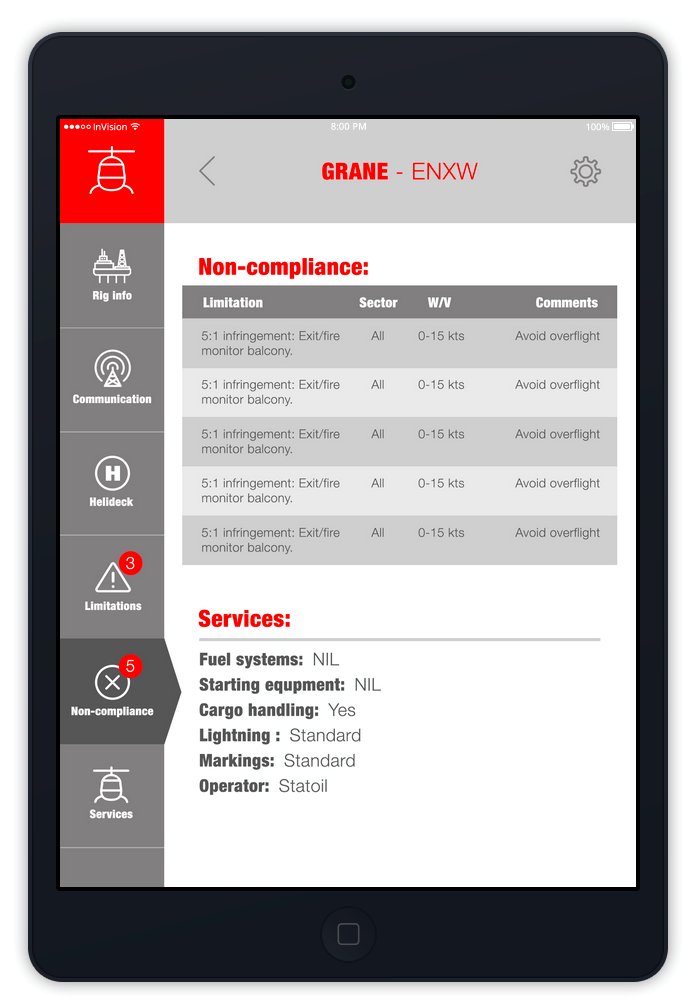
(a)The operations manual (OM) relating to the specific usage of offshore helicopter landing areas (Part C for CAT operators) should contain, or make reference to, a directory of helidecks (helideck directory (HD)) intended to be used by the operator. The directory should provide details of helideck limitations and a pictorial representation of each offshore location and its helicopter landing area, recording all necessary information of a permanent nature and using a standardised template. The HD entries should show, and be amended as necessary, the most recent status of each helideck concerning non-compliance with applicable national standards, limitations, warnings, cautions or other comments of operational importance. An example of a typical template is shown in Figure 1 of GM1 SPA.HOFO.115 below.
(b)In order to ensure that the safety of flights is not compromised, the operator should obtain relevant information and details in order to compile the HD, as well as the pictorial representation from the owner/operator of the offshore helicopter landing area.
(c)If more than one name for the offshore location exists, the common name painted on the surface of the landing area should be listed, but other names should also be included in the HD (e.g. radio call sign, if different). After renaming an offshore location, the old name should also be included in the HD for the following 6 months.
(d)Any limitations associated with an offshore location should be included in the HD. With complex installation arrangements, including combinations of installations/vessels (e.g. combined operations), a separate listing in the HD, accompanied by diagrams/pictures, where necessary, may be required.
(e)Each offshore helicopter landing area should be inspected and assessed based on limitations, warnings, instructions and restrictions, in order to determine its acceptability with respect to the following as a minimum:
(1)The physical characteristics of the landing area, including size, load-bearing capability and the appropriate ‘D’ and ‘t’ values.
Note 1: ‘D’ is the overall length of the helicopter from the most forward position of the main rotor tip to the most rearward position of the tail rotor tip plane path, or rearmost extension of the fuselage in the case of ‘Fenestron’ or ‘NOTAR’ tails.
Note 2: ‘t’ is the maximum allowable mass in tonnes.
(2)The preservation of obstacle-protected surfaces (an essential safeguard for all flights). These surfaces are:
(i)the minimum 210° obstacle-free surface (OFS) above helideck level;
(ii)the 150° limited-obstacle surface (LOS) above helideck level; and
(iii)the minimum 180° falling ‘5:1’ gradient with respect to significant obstacles below helideck level.
If these sectors/surfaces are infringed, even on a temporary basis, and/or if an adjacent installation or vessel infringes the obstacle-protected surfaces related to the landing area, an assessment should be made to determine whether it is necessary to impose operating limitations and/or restrictions to mitigate any non-compliance with the criteria.
(3)Marking and lighting:
(i)for operations at night, adequate illumination of the perimeter of the landing area, using perimeter lighting that meets national requirements;
(ii)for operations at night, adequate illumination of the location of the touchdown marking by use of a lit touchdown/positioning marking and lit helideck identification marking that meet national requirements;
(iii)status lights (for night and day operations, indicating the status of the helicopter landing area, e.g. a red flashing light indicates ‘landing area unsafe: do not land’) meeting national requirements;
(iv)dominant-obstacle paint schemes and lighting;
(v)condition of helideck markings; and
(vi)adequacy of general installation and structure lighting.
Any limitations with respect to non-compliance of lighting arrangements may require the HD to be annotated ‘daylight only operations’.
(4)Deck surface:
(i)assessment of surface friction;
(ii)adequacy and condition of helideck net (where provided);
(iii)‘fit for purpose’ drainage system;
(iv)deck edge safety netting or shelving;
(v)a system of tie-down points that is adequate for the range of helicopters in use; and
(vi)procedures to ensure that the surface is kept clean of all contaminants, e.g. bird guano, sea spray, snow and ice.
(5)Environment:
(i)foreign-object damage;
(ii)an assessment of physical turbulence generators, e.g. structure-induced turbulence due to clad derrick;
(iii)bird control measures;
(iv)air flow degradation due to gas turbine exhaust emissions (turbulence and thermal effects), flares (thermal effects) or cold gas vents (unburned flammable gas); and
(v)adjacent offshore installations may need to be included in the environmental assessment.
To assess for potential adverse environmental effects, as described in (ii), (iv) and (v) above, an offshore location should be subject to appropriate studies, e.g. wind tunnel testing and/or computational fluid dynamics (CFD) analysis.
(6)Rescue and firefighting:
(i)systems for delivery of firefighting media to the landing area, e.g. deck integrated firefighting system (DIFFS);
(ii)delivery of primary media types, assumed critical area, application rate and duration;
(iii)deliveries of complementary agent(s) and media types, capacity and discharge;
(iv)personal protective equipment (PPE); and
(v)rescue equipment and crash box/cabinet.
(7)Communication and navigation (Com/Nav):
(i)aeronautical radio(s);
(ii)radio-telephone (R/T) call sign to match the offshore location name with the side identification that should be simple and unique; and
(iii)radio log.
(8)Fuelling facilities:
in accordance with the relevant national guidance and legislation.
(9)Additional operational and handling equipment:
(i)windsock;
(ii)meteorological information, including wind, pressure, air temperature, and dew point temperature, and equipment recording and displaying mean wind (10-min wind) and gusts;
(iii)helideck motion recording and reporting system, where applicable;
(iv)passenger briefing system;
(v)chocks;
(vi)tie-down strops/ropes;
(vii)weighing scales;
(viii)a suitable power source for starting helicopters (e.g. ground power unit (GPU)), where applicable; and
(ix)equipment for clearing the landing area of snow, ice and other contaminants.
(10)Personnel:
trained helicopter-landing-area staff (e.g. helicopter landing officer/helicopter deck assistant and firefighters, etc.); persons required to assess local weather conditions or communicate with the helicopter by radio-telephony should be appropriately qualified.
(f)The HD entry for each offshore location should be completed and kept up to date, using the template and reflecting the information and details described in (e) above. The template should contain at least the following (GM1 SPA.HOFO.115 below is provided as an example):
(1)details:
(i)name of offshore location;
(ii)R/T call sign;
(iii)helicopter landing area identification marking;
(iv)side panel identification marking;
(v)landing area elevation;
(vi)maximum installation/vessel height;
(vii)helideck size and/or ‘D’ value;
(viii)type of offshore location:
(A)fixed, permanently manned installation;
(B)fixed, normally unattended installation;
(C)vessel type (e.g. diving support vessel, tanker, etc.);
(D)semi-submersible, mobile, offshore drilling unit:
(E)jack-up, mobile, offshore drilling unit:
(F)floating production, storage and offloading (FPSO);
(ix)name of owner/operator;
(x)geographical position, where appropriate;
(xi)Com/Nav frequencies and identification;
(xii)general drawing of the offshore location that shows the helicopter landing area with annotations indicating location of derrick, masts, cranes, flare stack, turbine and gas exhausts, side identification panels, windsock, etc.;
(xiii)plan view drawing, and chart orientation from the general drawing to show the above; the plan view should also show the 210-degree sector orientation in degrees true;
(xiv)type of fuelling:
(A)pressure and gravity;
(B)pressure only;
(C)gravity only; and
(D)none;
(xv)type and nature of firefighting equipment;
(xvi)availability of GPU;
(xvii)deck heading;
(xviii)‘t’ value ;
(xix)status light system (Yes/No); and
(xx)revision publication date or number; and
(2)one or more diagrams/photographs, and any other suitable guidance to assist pilots.
(g)For offshore locations for which there is incomplete information, ‘restricted’ usage based on the information available may be considered by the operator, subject to risk assessment prior to the first helicopter visit. During subsequent operations, and before any restriction on usage is lifted, information should be gathered and the following should apply:
(1)pictorial (static) representation:
(i)template blanks (GM1 SPA.HOFO.115 is provided as an example) should be available to be filled in during flight preparation on the basis of the information given by the offshore location owner/operator and of flight crew observations;
(ii)where possible, suitably annotated photographs may be used until the HD entry and template have been completed;
(iii)until the HD entry and template have been completed, conservative operational restrictions (e.g. performance, routing, etc.) may be applied;
(iv)any previous inspection reports should be obtained and reviewed by the operator; and
(v)an inspection of the offshore helicopter landing area should be carried out to verify the content of the completed HD entry and template; once found suitable, the landing area may be considered authorised for use by the operator; and
(2)with reference to the above, the HD entry should contain at least the following:
(i)HD revision date or number;
(ii)generic list of helideck motion limitations;
(iii)name of offshore location;
(iv)helideck size and/or ‘D’ value and ‘t’ value; and
(v)limitations, warnings, instructions and restrictions.
GM1 SPA.HOFO.115 Use of offshore locations
ED Decision 2016/022/R
Figure 1 — Example of a helicopter landing area template
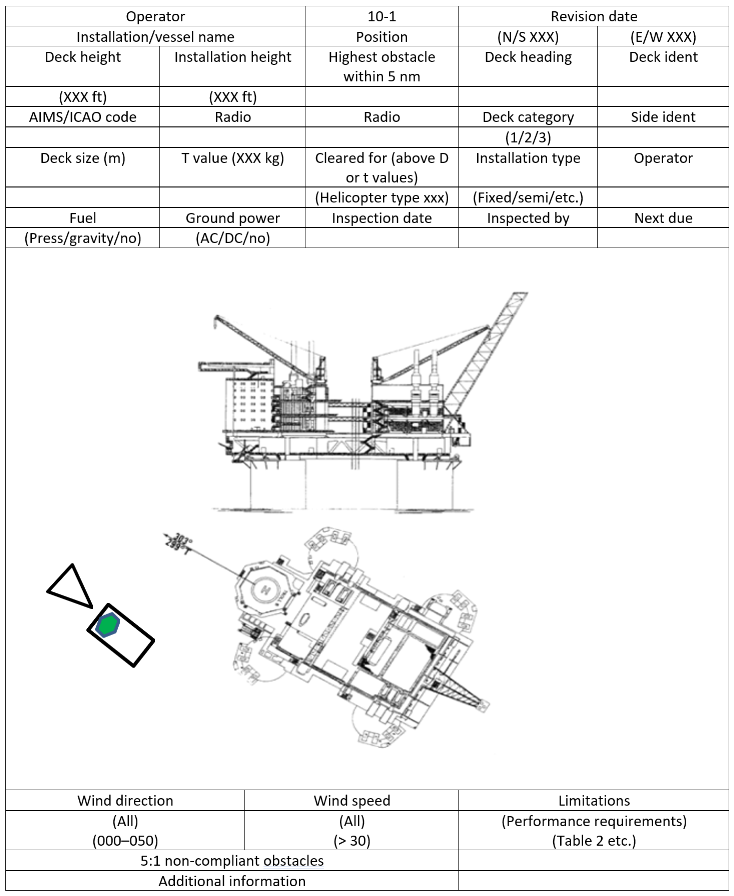
Figure 2 — Example of a helicopter landing area template

GM2 SPA.HOFO.115 Use of offshore locations
ED Decision 2016/022/R
Operators should use available standards and regulations provided for operations to offshore locations such as those contained in United Kingdom Civil Aviation Authority (UK CAA) CAP 437 ‘Standards for Offshore Helicopter Landing Areas’, Norwegian Civil Aviation Regulation BSL D 5-1 or similar national documentation, or ICAO Annex 14, Vol II ‘Heliports’.
SPA.HOFO.120 Selection of aerodromes and operating sites
Regulation (EU) 2021/2237
(a)Onshore destination alternate aerodrome. Notwithstanding points CAT.OP.MPA.192, NCC.OP.152 and SPO.OP.151, the pilot-in command/commander does not need to specify a destination alternate aerodrome in the operational flight plan when conducting flights from an offshore location to a land destination aerodrome provided that sufficient operational contingency is in place to ensure a safe return from offshore.
(b)Offshore destination alternate helideck. The operator may select an offshore destination alternate helideck when all of the following criteria are met:
(1)An offshore destination alternate helideck shall be used only after the point of no return (PNR) and when an onshore destination alternative aerodrome is not geographically available. Prior to the PNR, an onshore destination alternate aerodrome shall be used.
(2)One engine inoperative (OEI) landing capability shall be attainable at the offshore destination alternate helideck.
(3)To the extent possible, helideck availability shall be guaranteed prior to PNR. The dimensions, configuration and obstacle clearance of individual helidecks or other sites shall be suitable for its use as an alternate helideck by each helicopter type intended to be used.
(4)Weather minima shall be established taking into account the accuracy and reliability of meteorological information.
(5)The MEL shall contain specific provisions for this type of operation.
(6)An offshore destination alternate helideck shall only be selected if the operator has established a procedure in the operations manual.
AMC1 SPA.HOFO.120 Selection of aerodromes and operating sites
ED Decision 2022/012/R
DESTINATION AERODROME — SUFFICIENT OPERATIONAL CONTINGENCY
(a)Any alleviation from the requirement to select an alternate aerodrome under instrument flight rules (IFR) routing from offshore to a land destination should be based on an individual safety risk assessment with sufficient operational contingency to ensure a safe return from offshore.
REVISED AERODROME OPERATING MINIMA
(b)Unless the destination is a coastal aerodrome, the operator should ensure that all the following criteria are met:
(1)the destination aerodrome has a published instrument approach;
(2)the flight time is less than 3 hours; and
(3)the published weather forecast valid from 1 hour prior, and 1 hour subsequent to the expected landing time specifies that:
(i)the ceiling is at least 700 ft above the minima associated with the instrument approach, or 1 000 ft above the destination aerodrome, whichever is the higher; and
(ii)visibility is at least 2 500 m.
COASTAL AERODROME
(c)A coastal aerodrome is an aerodrome used for offshore operations within 5 nm of the coastline.
(d)If the coastal aerodrome has a published instrument approach, the operator should use the aerodrome operating minima defined in (b)(3).
(e)The operator may use the following operating minima by day only, as an alternative to (b)(3):
(1)the cloud base is at least 400 ft above the minima associated with the instrument approach; and
(2)visibility is at least 4 km.
(f)If descent over the sea is intended to meet VFR criteria, the operator should ensure that the coastal aerodrome is geographically sited so that the helicopter is able, within the rules of the air and within the landing forecast, to proceed inbound from the coast and carry out an approach and landing in full compliance with VFR for the associated airspace category(ies) and any notified route.
(g)If the operator makes use of the provisions in (e) or (f), the following should be taken into account as part of the risk assessment:
1)where the destination coastal aerodrome is not directly on the coast, the required usable fuel for the flight should be sufficient to return to the coast at any time after crossing the coastline, descend safely, carry out an approach under VFR and land, with the VFR fuel reserves intact;
(2)the descent to establish visual contact with the surface should take place over the sea away from the coastline and in an area clear of surface obstructions, or as part of the instrument approach;
(3)routings and procedures for coastal aerodromes nominated as such should be included in the operations manual (Part C for CAT operators);
(4)the MEL should reflect the requirement for airborne radar and radio altimeter for this type of operation; and
(5)operational limitations for each coastal aerodrome should be specified in the operations manual.
AMC2 SPA.HOFO.120 Selection of aerodromes and operating sites
ED Decision 2016/022/R
OFFSHORE DESTINATION ALTERNATE AERODROME
‘Aerodrome’ is referred to as ‘helideck’ in this AMC.
(a)Offshore destination alternate helideck landing environment
The landing environment at an offshore location proposed for use as an offshore destination alternate helideck should be pre-surveyed, together with the physical characteristics, such as the effect of wind direction and strength, as well as of turbulence established. This information, which should be available to the pilot-in-command/commander both at the planning stage and in-flight, should be published in an appropriate form in the operations manual (OM) (including the orientation of the helideck) so that the suitability of the alternate helideck can be assessed. This helideck should meet the criteria for size and obstacle clearance appropriate to the performance requirements of the type of helicopter concerned.
(b)Performance considerations
The use of an offshore destination alternate helideck should be restricted to helicopters that can achieve one engine inoperative (OEI) in ground effect (IGE) hover at an appropriate power rating above the helideck at the offshore location. Where the surface of the helideck or prevailing conditions (especially wind velocity) precludes an OEI IGE, OEI out-of-ground effect (OGE) hover performance at an appropriate power rating should be used to compute the landing mass. The landing mass should be calculated based on graphs provided in the operations manual (OM) (Part B for CAT operators). When this landing mass is computed, due account should be taken of helicopter configuration, environmental conditions and the operation of systems that have an adverse effect on performance. The planned landing mass of the helicopter, including crew, passengers, baggage, cargo plus 30-min final reserve fuel (FRF), should not exceed the OEI landing mass of the helicopter at the time of approach to the offshore destination alternate.
(c)Weather considerations
(1)Meteorological observations
When the use of an offshore destination alternate helideck is planned, the meteorological observations, both at the offshore destination and the alternate helideck, should be made by an observer acceptable to the authority responsible for the provision of meteorological services. Automatic meteorological-observation stations may be used.
(2)Weather minima
When the use of an offshore destination alternate helideck is planned, the operator should neither select an offshore location as destination nor as alternate helideck unless the weather forecasts for the two offshore locations indicate that during a period commencing 1 h before and ending 1 h after the expected time of arrival at the destination and the alternate helideck, the weather conditions will be at or above the planning minima shown in the following table:
Table 1 — Planning minima
Planning minima | ||
Day | Night | |
Cloud base | 600 ft | 800 ft |
Visibility | 4 km | 5 km |
(3)Conditions of fog
To use an offshore destination alternate helideck, it should be ensured that fog is not forecast or present within 60 nm of the destination helideck and alternate helideck during the period commencing 1 h before and ending 1 h after the expected time of arrival at the offshore destination or alternate helideck.
(d)Actions at point of no return
Before passing the point of no return, which should not be more than 30 min from the destination, the following actions should have been completed:
(1)confirmation that navigation to the offshore destination and offshore destination alternate helideck can be assured;
(2)radio contact with the offshore destination and offshore destination alternate helideck (or master station) has been established;
(3)the landing forecast at the offshore destination and offshore destination alternate helideck have been obtained and confirmed to be at or above the required minima;
(4)the requirements for OEI landing (see (b) above) have been checked in the light of the latest reported weather conditions to ensure that they can be met; and
(5)to the extent possible, having regard to information on the current and forecast use of the offshore alternate helideck and on prevailing conditions, the availability of the helideck on the offshore location intended as destination alternate helideck should be guaranteed by the duty holder (the rig operator in the case of fixed installations, and the owner in the case of mobile ones) until the landing at the destination, or the offshore destination alternate helideck, has been achieved or until offshore shuttling has been completed.
SPA.HOFO.125 Offshore standard approach procedures (OSAPs)
Regulation (EU) 2021/2237
(a)An operator shall establish procedures to ensure that offshore standard approach procedures (OSAPs) are followed only if:
(1)the helicopter is capable of providing navigation and real-time obstacle environment information for obstacle clearance; and
(2)either:
(i)the minimum descent height (MDH) is determined from a radio altimeter or a device that provides equivalent performance; or
(ii)the minimum descent altitude (MDA) is applied and it includes an adequate margin.
(b)If the operator follows OSAPs to rigs or vessels in transit, the flight shall be conducted in multipilot operations.
(c)The decision range shall provide adequate obstacle clearance in the missed approach from any destination for which an OSAP is planned.
(d)The approach shall only be continued beyond decision range or below the minimum descent altitude/height (MDA/H) when visual reference to the destination has been established.
(e)For single-pilot operations, appropriate increments shall be added to the MDA/H and decision range.
(f)When an OSAP is followed to a non-moving offshore location (i.e. fixed installation or moored vessel) and a reliable GNSS position for the location is available in the navigation system, the GNSS/area navigation system shall be used to enhance the safety of the OSAP.
(g)The operator shall include OSAPs in its initial and recurrent training and checking programmes.
AMC1 SPA.HOFO.125 Offshore standard approach procedures (OSAPs)
ED Decision 2022/012/R
AIRBORNE RADAR APPROACH (ARA)
(a)Before commencing the final approach, the pilot-in-command/commander should ensure that a clear path exists on the radar screen for the final and missed approach segments. If lateral clearance from any obstacle will be less than 1 nm, the pilot-in-command/commander should:
(1)approach to a nearby target structure and thereafter proceed visually to the destination structure; or
(2)make the approach from another direction leading to a circling manoeuvre.
(b)The cloud ceiling should be sufficiently clear above the helideck to permit a safe landing.
(c)Minimum descent height (MDH) should not be less than 50 ft above the elevation of the helideck:
(1)the MDH for an airborne radar approach should not be lower than:
(i)200 ft by day; or
(ii)300 ft by night; and
(2)the MDH for an approach leading to a circling manoeuvre should not be lower than:
(i)300 ft by day; or
(ii)500 ft by night.
(d)Minimum descent altitude (MDA) may only be used if the radio altimeter is unserviceable. The MDA should be a minimum of the MDH + 200 ft, and be based on a calibrated barometer at the destination or on the lowest forecast barometric pressure adjusted to sea level (QNH) for the region.
(e)The decision range should not be less than 0.75 nm.
(f)The MDA/MDH for a single-pilot ARA should be 100 ft higher than that calculated in accordance with (c) and (d) above. The decision range should not be less than 1 nm.
(g)For approaches to non-moving offshore locations, the maximum range discrepancy between the global navigation satellite system (GNSS) and the weather radar display should not be greater than 0.3 nm at any point between the final approach fix (FAF) at 4 nm from the offshore location and the offset initiation point (OIP) at 1.5 nm from the offshore location.
(h)For approaches to non-moving offshore locations, the maximum bearing discrepancy between the GNSS and the weather radar display should not be greater than 10° at the FAF at 4 nm from the offshore location.