
In the heart of winter, freezing temperatures, snow and ice are anticipated, prompting airlines and airports to combat these conditions and ensure safety remains the top priority for passengers. But what happens behind the scenes to facilitate this? From aircraft de-icing to specialised crew training, airlines and airports follow set procedures to prevent conditions that impact safety.
Winter conditions can cause icing at ground level or in the air, snow, sleet, freezing rain, slush, ice crystals and so on. Ice can range from freezing rain to rime formation. Icing conditions are likely to occur when the temperature is 10°C or lower combined with moisture in the clouds. They can lead to the presence of ice, snow lush, or standing water on ramps, taxi ways or runways.
There are two main challenges in relation to winter operations: keeping the airport clear and the aircraft safe for flying. Addressing these is important to ensure safety, help to minimize disruptions, and prevent accidents.
Aircraft design
During the design phase of an aircraft, certain features are incorporated to allow tolerance to winter conditions. For example, aircraft have smooth surfaces which are “de-iced” by various mechanical or heating de-icing systems to prevent ice from accumulating. Although it is possible to identify ice accumulation visually, most modern aircraft are fitted with technology that detects ice, warns crew of icy conditions, and protect the exposed surfaces from ice accretion. Some aircraft are equipped with more than one ice warning and de-icing mechanism.
Additionally, aircraft are supplied with Anti–Skid Braking systems that prevent the wheels from locking up on slippery runways. If a wheel starts to skid, the sensors detect this and adjust the brake pressure to maintain control and ensure safe landing and ground taxiing. Having carbon brakes can also help with a smooth landing as they are durable in icy and wet conditions.
Crew training
An aircraft cannot take off reliably without the correct training of its crew. Crew and ground staff are given training that ensures they are fully aware of the essential procedures that should be followed in the winter, including clearing the runway and de-icing the plane to guarantee safe take-offs and landings. The staff are equipped with proper clothing for freezing temperatures, including insulated uniforms, gloves and footwear that protect against cold and wet conditions.
De–icing the aircraft
De-icing the aircraft is a quintessential part of ground operation in the winter. The pilot in command is responsible for determining whether de-icing is needed before pushback. Whilst the pilot in command oversees the de-icing process, ground staff are responsible for facilitating open communication and reporting anything that might affect flight safety. Normally the aircraft is de-iced mechanically in the air through internal electric heating or pneumatic systems, or in case of ground icing conditions through using four different types of de-icing fluids, depending on the aircraft type.
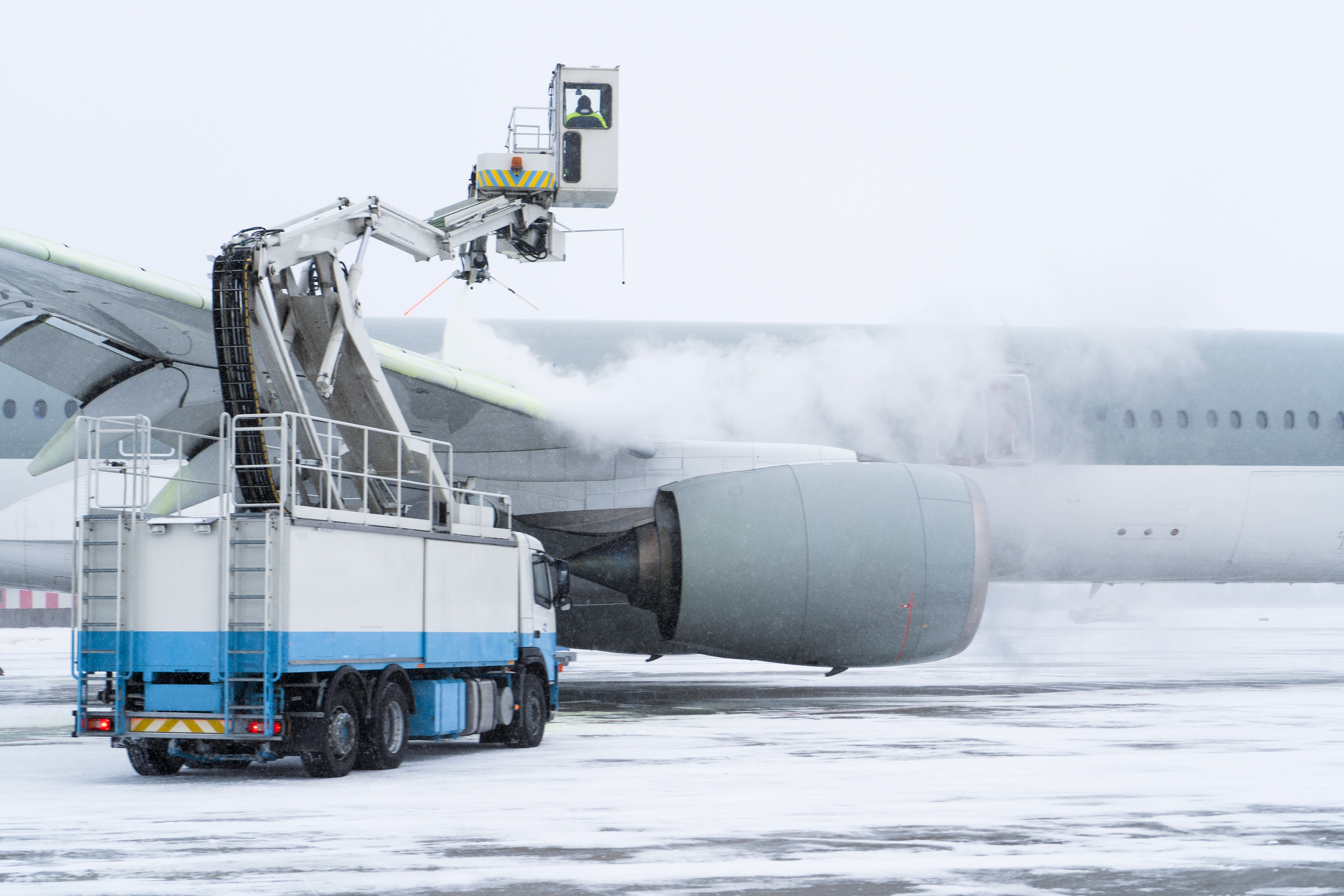
The importance of de-icing an aircraft cannot be overstated, as ice build-up can severely compromise an aircraft’s take off performance and stability. Ice, snow or frost contamination can lead to more weight on the aircraft and decreased aerodynamic and operational efficiency. For safety reasons, the aircraft should not take off if any critical surfaces are contaminated.
Runway operations
Ensuring runways are clear is a key part of winter operations. To reduce the risk of snow and ice forming, airport surfaces are commonly treated in advance with anti-icing agents. However, when weather conditions deteriorate beyond safe limits, runways may be shut down entirely. To avoid this, ground staff work to clear the snow/ice, which can be an ongoing activity, especially if the snowfall continues whilst runways are being cleared. If the airports are in locations that do not regularly receive snow, the snow-clearing process can be lengthy due to of lack of equipment and experience. For airports that do get a lot of snow, the snow-clearing process can be fast, with runways being cleared in as little as 20 minutes. On balance, the process of clearing runways is efficient as weather forecasts nowadays can predict harsh conditions early on, which gives ground staff and crew sufficient time to prepare.
Stay informed
Create an account and follow on EASA Light to stay up to date with EASA’s activities