
Have you ever wondered why there is a limit to the altitude that airplanes can fly? Typical airplanes as we know them normally don’t fly above Flight Level (FL) 550, meaning 55,000 feet – circa 17 kilometres. Some can go a bit higher, like the long-retired Concorde, or military or research aircraft, and, in some countries, Air Traffic Control Services are provided up to FL 660 – around 20 kilometres, even though most aircraft cannot operate at those heights.
To answer the initial question, the altitude limit for most aircraft stems from their design constraints, including engine performance, the lift they can generate, cabin pressurisation, and reliance on ground-based navigation systems. At extreme altitudes, air density becomes too thin for conventional jet engines, and older, ground-based navigation aids are not approved and are unreliable for higher altitudes.
But there is more “airspace” up there. There aren’t yet clearly defined or agreed-upon borders, but between the sky where airplanes fly and what we know as “space”, there is an area that EASA refers to as “higher airspace”, which can also be used for services and air transport. While certain vehicles can already operate at such heights, more development is required to expand their capabilities and support regular use.
With an ever-evolving aviation industry, operations in higher airspace might be one of the next big things. And because EASA wants to be ready for innovation, the Agency is already looking closely into the impact, opportunities, challenges and a possible regulatory framework for Higher Airspace Operations.
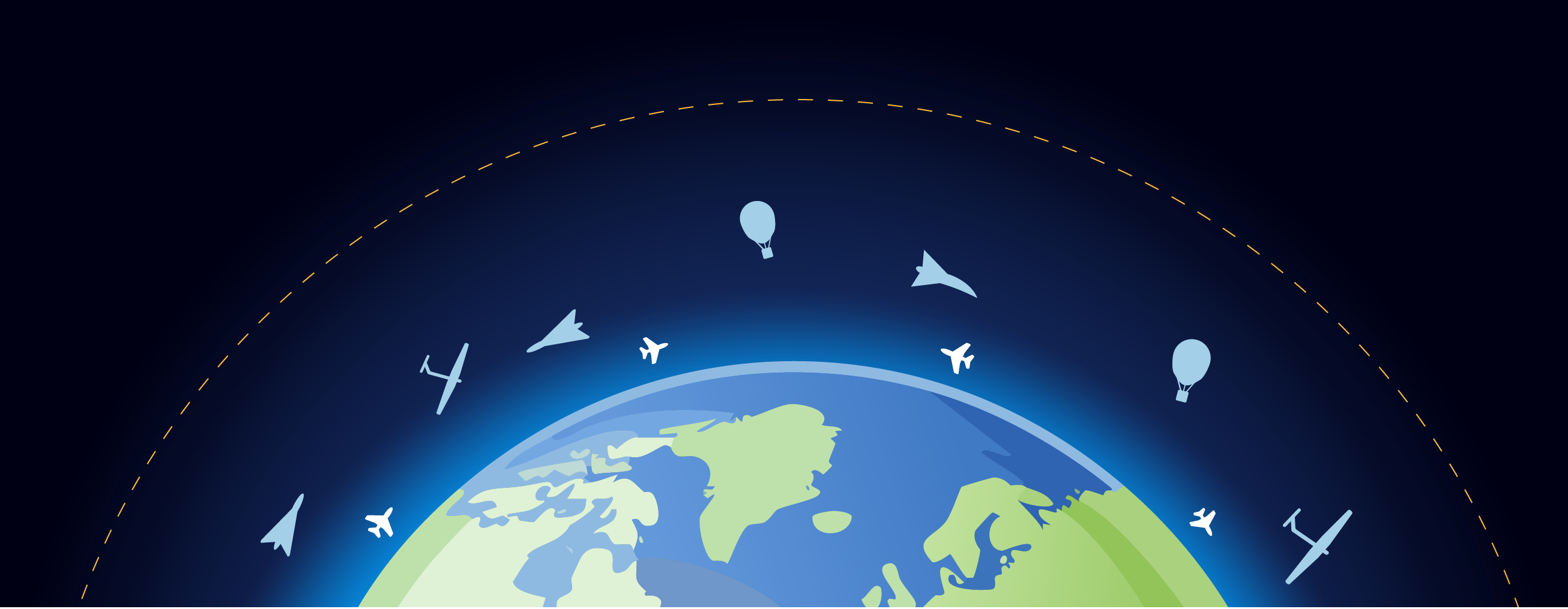

Kármán Line - generally accepted as the “beginning of space”

Traditional Aviation Operations
 Higher Airspace Operations
 Space
Space
Uses and benefits
Different kinds of aircraft will be populating the higher airspace, such as the so-called High-Altitude Platform Systems (or pseudo-satellites) and balloons, which can deliver improvements to services we all use, like telecommunications or navigation purposes, for instance, and allow for better tools for scientific research. The industry is also looking into supersonic and hypersonic passenger aircraft, which would make air travel much faster; and capsules carried by stratospheric balloons for “near-space” tourism. So, the spectrum of vehicle types ranges from very slow to very fast.
Research related to making operations in higher airspace a widespread reality will bring benefits for other areas, including conventional aviation, particularly in terms of innovation and environmental performance. It can also bring socioeconomic benefits by generating more employment. We dive deeper into the benefits and the aircraft that will be using the higher airspace in the article: Higher Airspace Operations: What to expect?
Looking ahead: EASA’s work on Higher Airspace Operations
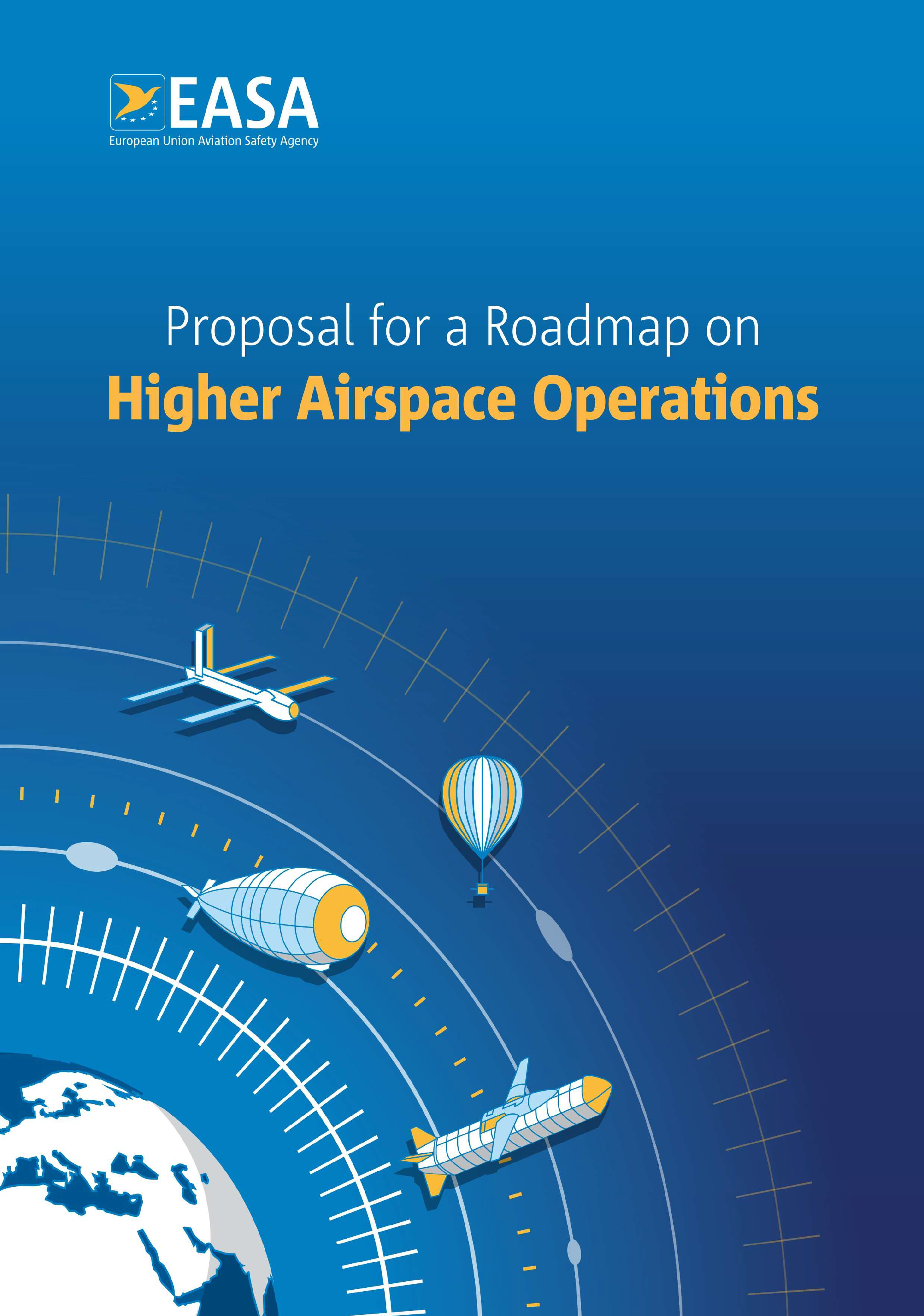 In 2023, EASA published a Proposal for a Roadmap on Higher Airspace Operations, an initial but comprehensive assessment of the challenges of future operations in higher airspace.
The work of the Agency in this area continues with the following objectives:
- enhance the European Union institutions' and public know-how on the future Higher Airspace Operations;
- provide scientific data to support future decision-making;
- perform regulatory impact assessments and gap analyses, based on scientific and objective data;
- develop a regulatory framework to enable Higher Airspace Operations in the European Union airspace based on validated options.
To achieve the above by end 2027, EASA is leading a number of activities to:
- build awareness on Higher Airspace Operations;
- conduct scientific studies that cover topics such as safety, sustainability, cybersecurity, human health and medical standards;
- draft a Notice of Proposed Amendment, one of the steps in the rulemaking process, for Higher Airspace Operations. You can read more on Rulemaking on EASA Light.
You can follow the developments and studies on Higher Airspace Operations on EASA Pro (available only in English).
Exploring the higher airspace poses a wide array of opportunities and challenges and there are certainly still many questions to be answered. While the technology is still maturing, prototypes and demonstration flights are already taking place around the world. Over the coming years, research results, operational trials and regulatory work will progressively shape how Higher Airspace Operations can be introduced safely in Europe.
Higher Airspace Operations are a global topic, and EASA is working in coordination with international partners, including other national aviation authorities and organisations such as ICAO, to support a harmonised approach to future operations. All this groundwork by EASA is needed to ensure a safety continuum and that safety remains at the highest level and proportionate to the type of operations. While it still might take some years to see more happening in higher airspace, EASA’s work on this topic is another example of the Agency’s commitment to innovation and aviation safety – in the sky without limits.