
This article was originally published on November 14, 2025, in the EASA Community Rotorcraft under the title iConspicuity Solutions for General Aviation.
The video featured in this article illustrates a flight scenario in uncontrolled airspace where a light helicopter equipped with ADS‑B and a light aeroplane equipped with ADS‑L avoid a potential mid‑air collision. It demonstrates that visual scanning alone is insufficient and highlights the importance of interoperable iConspicuity solutions for transmitting and receiving position information. The scenario underscores how correct equipment selection and use enhance situational awareness and safety.
iConspicuity solutions

Video iConspicuity Solutions for General Aviation
Interoperable iConspicuity: enhancing situational awareness and preventing collisions in uncontrolled airspace
Equipping General Aviation (GA) aircraft with iConspicuity systems is a key step in reducing the risk of mid‑air collisions involving light, non‑commercial aircraft — a priority highlighted in EASA Annual Safety Review (ASR) and European Plan for Aviation Safety (EPAS).
Traditional See and Avoid practices remain essential, but their limitations in poor visibility, high workload, or distraction underline the need for electronic support. iConspicuity technology enhances situational awareness by making aircraft electronically visible to others in the same airspace.
A major advance has been the introduction of ADS‑L (Automatic Dependent Surveillance–Light), a simplified and affordable version of ADS‑B tailored for GA. ADS‑L provides interoperable, GNSS‑based position and speed data, enabling air‑air and air‑ground communication across a wide range of devices.
Developed with EASA’s support, ADS‑L is designed for easy integration, often through software updates, and offers two practical options:
- ADS‑L systems with direct radio line‑of‑sight capability, sometimes complemented by mobile network connectivity.
- ADS‑L smartphone applications, particularly useful for flights below 2,500 ft AGL, though requiring onboard power due to higher energy demand.
Note: Depending on terrain topology, it is not unusual to receive transmissions at much higher altitudes, such as around 10,000 ft AGL in the Alps. Based for instance on SafeSky traffic statistics, LTE over UDP provides approximately 80% coverage up to 5,000 ft AGL across Europe.
Note: As ADS‑L uncertified equipment and ADS‑L applications on tablets are classified as Electronic Flight Bags (EFBs), their use is not permitted in CAT operations. Refer to AMC1 CAT.GEN.MPA.141(b) Use of electronic flight bags (EFBs), Application Classification.
ADS‑L devices are useful in any airspace, including in U‑spaces. They are lower‑power, non‑certified devices. They are not meant to replace transponders, which are necessary in some airspaces providing separation between aircraft (CTR or TMA). However, they improve situational awareness of surrounding traffic for both pilots and controllers.
Video pitch
This video presents a flight scenario in uncontrolled airspace involving a light helicopter flown by a professional pilot and a light aeroplane flown by a private pilot. The helicopter is equipped with ADS‑B, while the aeroplane carries an ADS‑L device. Visual scanning alone (the traditional See and Avoid method) proves insufficient due to factors such as limited visibility, pilot distraction, or attention diverted to other flight tasks.
By using interoperable iConspicuity systems, the two aircraft succeed in avoiding a potential mid‑air collision. The video illustrates that while iConspicuity devices enable aircraft to transmit their position so they can be detected by others, interoperability is critical: an ADS‑B‑equipped helicopter cannot detect an ADS‑L‑equipped aeroplane unless it has an additional ADS‑L‑compatible application or device.
The demonstration underscores the importance of selecting and correctly using appropriate iConspicuity equipment to ensure the detection of most airborne targets. Beyond simple position transmission, iConspicuity also enables the reception of information, with the primary objective of enhancing situational awareness and flight safety in uncontrolled airspace.
Key messages
Situations such as the one illustrated in this video highlight the limitations of See and Avoid as the sole means of conflict detection to prevent mid‑air collisions, and the advantages of technology. Conversely, technology complements and supports See and Avoid — it does not replace it.

It is important for all aircraft to Be Seen by being equipped with Electronic Conspicuity devices that transmit their position, making them electronically conspicuous to other airspace users.
Different systems such as ADS‑B, ADS‑L, ADS‑L‑based mobile applications, or FLARM aren’t however mutually compatible when used in isolation. This is where iConspicuity applications and systems help by collecting inputs from different sources, enabling pilots to be aware of other traffic around them.
The technology behind these systems is developing rapidly. Some can also transmit additional information, such as weather data, radio frequencies in use, NOTAMs, and airspace information, greatly enhancing situational awareness.
The exact type of system you choose for your operation or aircraft will depend on where you fly most frequently. Use ADS‑B systems if you primarily operate in controlled airspace, while iConspicuity solutions compatible with the ADS‑L standard are best suited for uncontrolled airspace, where there is a greater mix of traffic.
If your helicopter or aircraft is not equipped with a TCAS or ADS‑B IN system, an iConspicuity solution is an excellent, a low low‑cost way to Be Seen and significantly improve your situational awareness.
These iConspicuity systems require no certification and can be deployed via dedicated equipment or as an app on your smartphone or tablet (e.g., as an initial solution, albeit with reduced capability to receive ADS‑L and ADS‑B directly).
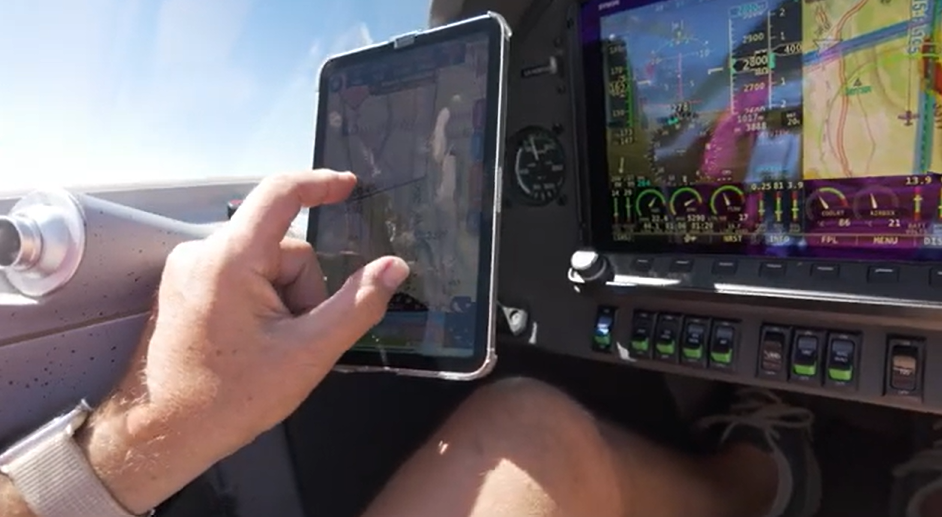
The ideal solution should also be capable of detecting aircraft using other equipment such as ADS‑B, Mode S, or FLARM. However, it will not detect transponders operating in Mode A and C, or Mode S if not transmitting GPS coordinates.
Takeaway
Be Seen, Be Aware, and Stay Safe
- Be Seen - See & Avoid isn’t enough
Join the ¡Conspicuity community by equipping your aircraft with an interoperable electronic conspicuity device to broadcast your position.
- Be Aware - Choose the right ¡Conspicuity solution for you
There are three interoperable ways to be aware of surrounding traffic in flight:
- Certified ADS-B
- Non-certified ADS-L systems using direct transmissions
- ADS-L based mobile applications
Additional proprietary solutions exist, though they may not be fully compatible with each other.
ADS-L applications and systems collect inputs from different sources and provide the highest possible interoperability today and in the future.
- Stay Safe – Train on your system
Know and understand your system’s performance and limitations.

Additional information on iConspicuity
For more information on iConspicuity and associated safety considerations, refer to:
- The EASA webpage and video of the research project iConspicuity Interoperability of Electronic Conspicuity Systems for General Aviation (see the References section).
- The EASA ADS‑L Coalition: an EASA–industry partnership where members commit to advancing ADS‑L to improve situational awareness for everyone, in the air and on the ground.

References and further reading
Annual Safety Review 2025 | EASA
European Plan for Aviation Safety (EPAS) 2025 - 14th edition | EASA
EASA launches new initiatives to prevent mid-air collisions in General Aviation | EASA
i-Conspicuity — Interoperability of Electronic Conspicuity Systems for General Aviation | EASA
https://www.safesky.app (Application demonstrated in the video)
Preventing mid-air collisions — ADS-L and ¡Conspicuity | EASA
Sunny Swift: ADS-L: see and be seen - Issue 41 | EASA
Sunny Swift: See and Avoid - Issue 29 | EASA
Sunny Swift: Collision avoidance - make yourself seen - Issue 22 | EASA
Electronic conspicuity devices | UK Civil Aviation Authority
UK CAA Human Factors advice for pilots using electronic conspicuity devices
UK CAA research on Human Factors in using Electronic Conspicuity devices | EASA Community
For the ADS-B and ADS-L solitions specified under the U-space electronic conspicuity mandate, refer to SERA.6005(c) (eRule format), along with the associated AMC and GM under Regulation (EU) 2021/666.
Regulation (EU) No. 965/2012 Air Operations (eRule format), AMC1 and AMC2 NCO.GEN.125 – Portable Electronic Devices (PEDs), and AMC1 and AMC2 SPO.GEN.131(a) Use of electronic flight bags (EFBs), and AMC1 CAT.GEN.MPA.141(b) – Use of Electronic Flight Bags (EFBs)
Please log in or sign up to comment.