
Hi Larry,
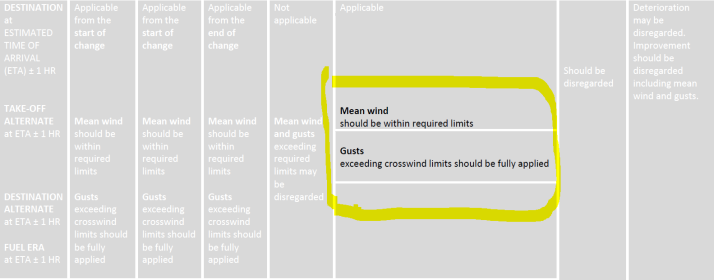
in practice I would argue that meeting the regulatory intent of Articles 139 and 140 of 2018/1139 should be prioritized over legally reflecting the (inadvertent?) delayed adoption of Article 140 (2) by the regulator beyond the deadline it set itself.
Maybe a way to address this and prevent confusion is to clearly state "in accordance with Reg (EC) 216/2008 until adaption of Reg (EC) 2018/1139" or something to that effect? Article 139 (4) also states "References to the repealed Regulations referred to in paragraphs 1 (Regulation (EC) No 216/2008), 2 (Regulation (EC) No 552/2004) and 3 (Regulation (EEC) No 3922/91) shall be construed as references to this Regulation and, where appropriate, read in accordance with the correlation table in Annex X.", so references to the old regulation I guess technically would remain valid indefinitely, until this article gets repealed by a future regulation.
Air Operations
Public communityPublic - visible to all visitors to the platform.
Open to join - users can join this community without approval.
Invite only - users can only join this community if they are added/invited by community managers.
-
Kieran Byrne posted in Air Operations
2 years ago PublicHi all
Perhaps someone can assist on this.
Does AMC3 ORO.MLR.100 mandate the operations manuals to explicitly follow this table of contents?
My understanding of the AMC requirement is for the items to be included in the OM but the actual manual structure (aside from OM-A, -B, etc) can be as per the operator requirements.
Appreciate additional clarity.
Kieran
-
Comment
Robert Gottwald commented on Larry Bateson's topic in Air Operations
-
Michel MASSON posted in Air Operations
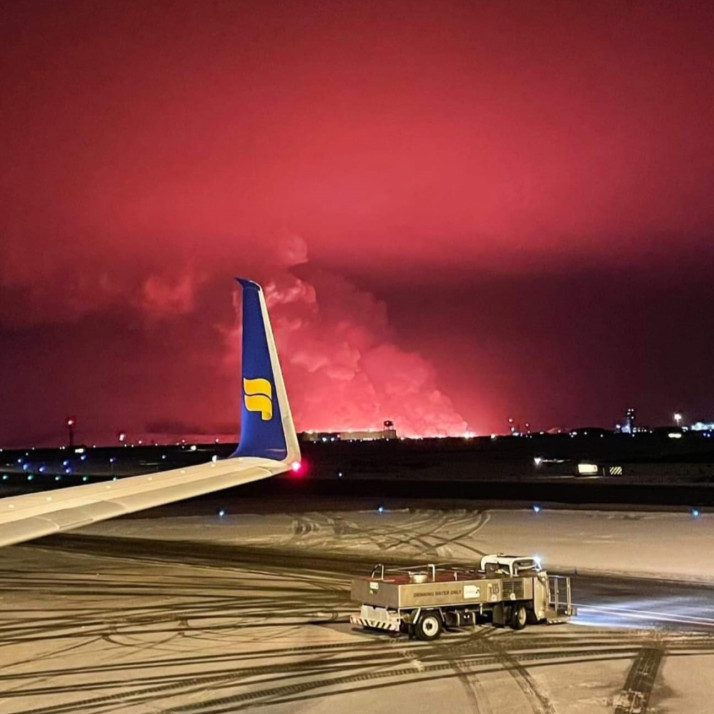
2 years ago PublicEASA monitoring situation regarding possible eruption of Icelandic volcano Fagradalsfjall, Nov.14 2023
https://www.easa.europa.eu/en/newsroom-and-events/news/easa-monitoring-…
EASA is monitoring the situation in Iceland regarding potential eruption of the Fagradalsfjall volcano. In the event of an eruption and development of an ash cloud, the Agency will work with other aviation actors to assess the impact for aviation and make recommendations accordingly.
The EASA webpage Volcanic Ash (https://www.easa.europa.eu/en/domains/safety-management/volcanic-ash) gives information on the 2010 eruption and actions subsequently taken. EASA will be updating this page as appropriate in the context of the current situation. Please see also SIB 2010-17R7 (https://ad.easa.europa.eu/ad/2010-17R7), last updated in 2015, containing relevant general information on this topic.
Photo: Steam rises from a fissure in a road near the town of Grindavík, Iceland. Photograph: Brynjar Gunnarsson/AP:
-
Michel MASSON created a topic in Air Operations
-
Benjamin Hari posted in Air Operations
2 years ago PublicGood afternoon,
Recently I had a chat with a flight crew training specialist from Volocopter. He said that most competencies for pilots will stay the same. Only Flight Path Management - Automation (FPM-A) and Flight Path Management - Manual (FPM-M) will experience a change in their performance marker.
Generally there will be more focus on FPM-A due to the novel flight control system of VTOLs.
Neither EASA SC-VTOL nor Opinion No 03/2023 does not specify this topic but confirms a new training approach for future VTOL-pilots due to the aforementioned challenges in flight control systems. EASA EPAS 2023-2025 mentions Aircraft Upset as the most pressing issue of VTOLs.
1) Are there any EASA GM, Opinion Papers or Regulations on that topic?
2) Will there be an update of the IATA EBT Manual in the future?
Thank you in advance.
Kind regards,
Benjamin -
asparuh Asenov posted in Air Operations
2 years ago PublicLondon
-
Adel Ghobbar posted in Air Operations
2 years ago PublicI have an enquiry about Pilot Retirement as we do have a short of Captains. My question here under EASA rules can we extend the age of retirement from 65 to 67 or more if their health allows that.
Your reply would be appreciated.Prof. Dr. Adel Ghobbar
a.a.ghobbar@sorteng.de -
Michel MASSON posted in Air Operations
2 years ago PublicPilot Rules: Things You Didn't Know Pilots Do
Why pilots think deeply about time.Article by Jack Herstam, Simple Flying, Nov. 5, 2023
Photo by Aer LingusNice article promoted in Flight Safety Information of Nov. 6 that I wish sharing with you: https://simpleflying.com/little-known-pilot-rules-guide/.
Summary:
- Pilots must carefully manage their time, especially when facing delays or extended duty periods, to comply with regulations and ensure a smooth operation.
- Fuel management is crucial for pilots, as they need to consider delay fuel, engine warm-up time, and their planned takeoff amount to avoid any complications during the flight.
- Pilots closely monitor their duty time limits and work with ground controllers to expedite their taxi or find alternative routes when nearing their maximum duty time to get passengers to their destinations on time.
-
Larry Bateson created a topic in Air Operations
-
Michel MASSON created a topic in Air Operations