
Staying Ahead of the Risks You Can't Always See Coming
Summer weather has once again reminded us that blue skies do not always mean easy operations.
Across Europe, recent weeks have seen heatwaves affecting airport operations, rapidly developing thunderstorms disrupting air traffic, turbulence leading to injuries, and operational pressure building as busy schedules meet challenging weather conditions. While each event is different, they all reinforce the same message: summer weather is as much about people as it is about meteorology.
Earlier this summer, EASA launched its Go Safe This Summer – Together campaign and published the latest edition of Conversation Aviation, highlighting the operational challenges that emerge during the busiest months of the year.
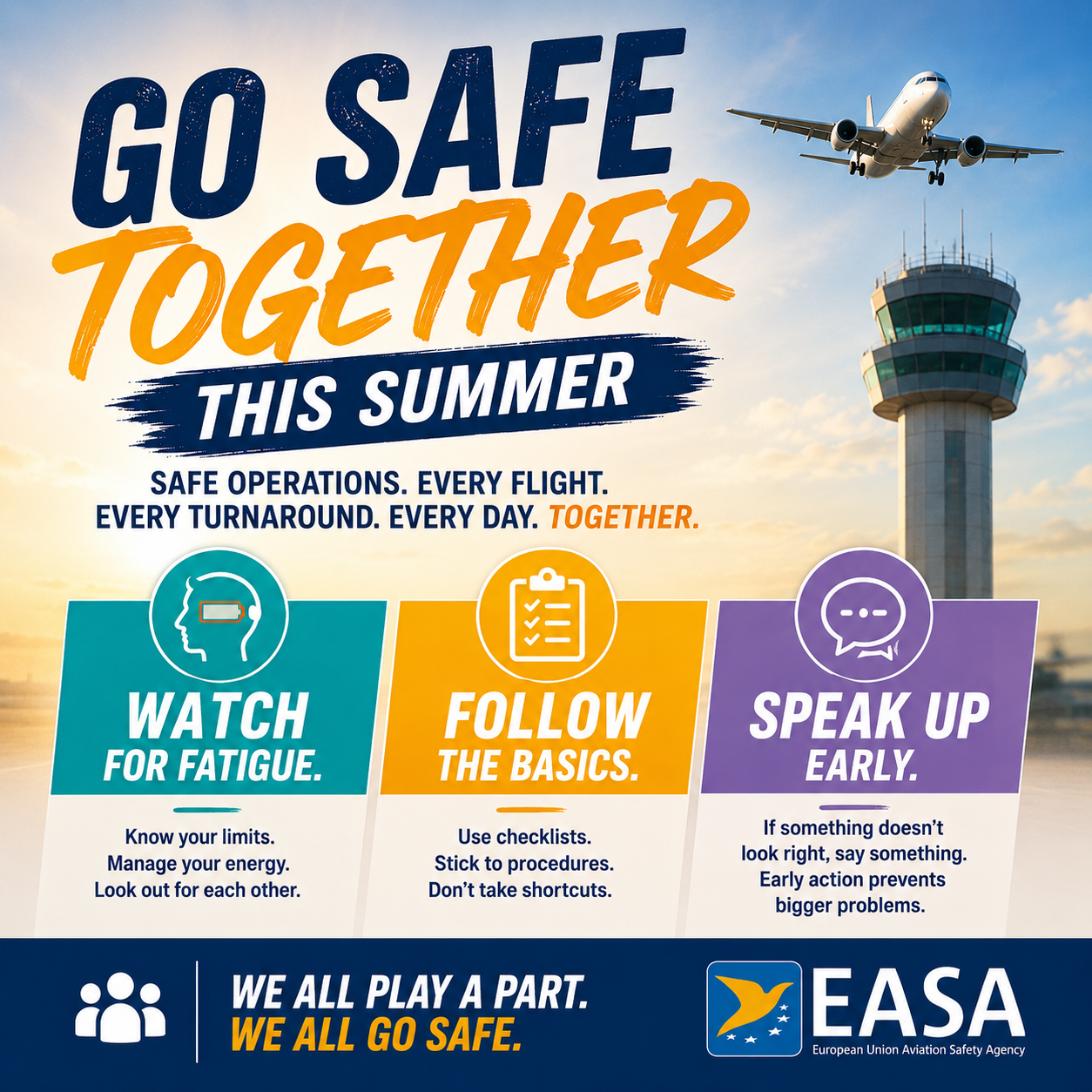
As the season continues, now is a good time to revisit one of those themes.
Summer weather creates its own unique safety challenges across the aviation system. From heat stress on the ramp to turbulence injuries in the cabin, rapidly developing thunderstorms and aircraft sitting on hot stands with hundreds of passengers onboard, the risks often develop faster than we expect.
Unlike many winter hazards, summer weather can change in minutes rather than hours. A clear sky can become a thunderstorm within the hour, a smooth flight can suddenly encounter severe turbulence, and a routine turnaround can quickly become physically demanding during a heatwave. Modern aircraft are designed and certified to operate safely in these environments—but operational pressure on people can become the greater safety concern.
Heat on the Ramp: The Human Factor
Few operational environments become more physically demanding in summer than the airport ramp.
High ambient temperatures combined with direct sunlight, reflected heat from concrete surfaces, aircraft exhausts and physically demanding work can quickly create exhausting conditions for ground personnel. During busy summer operations, turnaround teams may be working in extreme heat while also operating under significant time pressure. Hydration, fatigue and concentration can all become safety issues.
The important point is that heat stress does not always arrive dramatically.
People often continue working while gradually becoming dehydrated, fatigued, distracted, slower to react or less able to concentrate properly. In an environment filled with moving vehicles, aircraft, fuelling operations, loading activities, passenger stairs and high-tempo turnarounds, those subtle changes in human performance can have significant safety consequences.
Simple measures continue to make a significant difference:
- Stay hydrated throughout the shift.
- Take advantage of shade whenever possible.
- Use appropriate sun protection.
- Pace physically demanding tasks realistically.
- Take planned breaks.
- Most importantly, look out for one another.
Operational pressure should never override basic wellbeing. In many cases, protecting people from heat stress is also protecting the safety of the operation itself.
The Cabin Challenge
Passengers often experience the effects of summer weather long before departure.
Aircraft cabins can heat up rapidly during boarding, particularly when aircraft are parked on remote stands or delays extend turnaround times. Full cabins, direct sunlight and limited airflow can quickly create uncomfortable—or even distressing—conditions for passengers and crew alike.
During hot weather, effective cabin cooling becomes operationally important for both passengers and crew. Auxiliary Power Units (APUs) often play an important role in providing air conditioning while aircraft are on stand.
At the same time, aviation continues working to reduce its environmental impact by minimising unnecessary APU use where suitable ground power and pre-conditioned air are available. Some airports restrict or discourage APU use because of noise and emissions, creating operational challenges during periods of extreme heat.
Across the industry, work continues to improve understanding of these competing priorities so that environmental objectives, passenger wellbeing and operational safety can all be managed together. System-wide solutions and infrastructure improvements will take time, making good operational judgement essential in the meantime.
When cabins become excessively warm, passengers who are already delayed, tired or anxious may become more vulnerable to illness, frustration or disruptive behaviour. Cabin crew may also be working in difficult conditions while managing boarding, safety procedures and passenger communication.
Once again, the lesson is simple: environmental conditions affect people first—and people remain at the centre of operational safety.
When the Weather Changes Faster Than the Plan
Summer weather also brings some of the most dynamic operating conditions of the year.
Thunderstorms, convective weather and rapidly changing local conditions can disrupt operations across entire regions within a very short period of time. A flight planned into clear conditions may suddenly face rerouting, airborne holding, runway changes, windshear warnings, diversions or rapidly deteriorating approach conditions.
At busy airports, those disruptions rarely remain local. Delays spread through the network, increasing workload for flight crews, dispatchers, air traffic controllers, airport operators and ground handling teams.
That is why communication and shared situational awareness become so important.
Pilots, operational control centres, dispatch teams, ATC and airport operations all need a common understanding of evolving weather risks, operational limitations, fuel implications and diversion options.
Managing summer weather is seldom about one dramatic decision. More often, it is about organisations continuously adapting safely as conditions evolve—and doing so together.
Turbulence: The Invisible Summer Hazard
One of the most significant summer weather risks is also one that passengers often least expect.
Turbulence injuries remain a real operational safety challenge every year, particularly during the summer when convective weather activity increases. Importantly, turbulence is not always visible. Flights operating in apparently good weather can still encounter clear air turbulence, wake turbulence or rapidly developing convective activity.
Modern aircraft are designed to withstand severe turbulence safely, but people inside the cabin remain vulnerable if they are not properly secured.
Cabin crew are particularly exposed because they may be standing, moving through the cabin or conducting service activities when unexpected turbulence occurs.
This is why clear communication and proactive decision-making matter so much.
Passengers should be encouraged to keep their seatbelts fastened whenever seated—even when the seatbelt sign is switched off. Flight crews and cabin crews should continue using turbulence forecasts, weather information and operational judgement proactively rather than reactively.
Summer operations can sometimes create pressure to continue cabin service or maintain passenger comfort despite increasing turbulence risk.
But turbulence does not negotiate with schedules.
Sometimes the safest operational decision is to pause the service early, secure the cabin sooner and prioritise safety before conditions deteriorate further.
A simple message for passengers also remains one of the most effective:
If you're seated, keep your seatbelt fastened.
Summer Safety Map — Weather Operations
🧠 Mindset
Summer weather can change quickly. Stay mentally ahead of the operation, particularly during disruption, heat and periods of high workload.
👥 People
Heat, fatigue and turbulence affect people first. Protect crews, ground personnel and passengers through hydration, communication, realistic work pacing and good operational judgement.
⚙️ Equipment
Aircraft systems are designed to operate safely in demanding conditions, but they depend on correct operational use, effective cooling, accurate weather information and disciplined procedures.
📋 Compliance
Weather minima, turbulence procedures, turnaround controls and operational limitations exist for a reason. Busy summer operations should never normalise reduced safety margins.
⚠️ Risks
The greatest danger often comes from pressure building around the weather—the cumulative effects of delays, workload, fatigue and operational recovery pressures across the wider aviation system.
📚 Learning
Every summer disruption, turbulence event or heat-related operational challenge provides an opportunity to improve coordination, communication and operational resilience for the future.
Summer Isn't Standing Still
As we move through the busiest part of the summer season, weather will continue to test aviation's resilience. Heatwaves, thunderstorms and turbulence are likely to remain familiar operational challenges, placing pressure on schedules, increasing workload and demanding sound operational judgement.
The good news is that aviation already knows how to manage these risks. Aircraft are designed for demanding environments, weather forecasting continues to improve, and crews, controllers, dispatchers, airports and ground teams work together every day to adapt safely as conditions evolve.
The challenge is not simply understanding the weather—it's understanding how the weather affects people.
Look after colleagues working on the ramp.
Protect passengers in hot cabins.
Make conservative decisions when thunderstorms develop.
Secure the cabin before turbulence becomes a hazard.
Give yourself time to think rather than allowing operational pressure to dictate decisions.
Those are the actions that make the difference.
As the Go Safe This Summer – Together campaign continues, the message remains the same:
- Look after people.
- Communicate early.
- Respect operational limits.
Never allow pressure to erode good judgement.
Because whether the challenge is heat on the ramp, turbulence in the cabin or storms across the network, summer safety ultimately depends on people making safe decisions—together.
Please log in or sign up to comment.