
Shared by Thomas Hytten, Flight Ops Inspector, CAA Norway
Published in the August issue of the GA Newsletter Norway
Authored by Hans Edvard Sundem CAA Norway, Bjarne Aurstad and Espen Kurthi, Avinor A/S, and Thomas Fredriksen, Norwegian Airsports Federation
What is a stop bar?
A stop bar is a row of red lights inset into the surface of a taxiway. It is usually located at a holding position, but not always. Its purpose is to prevent aircraft or vehicles from entering a runway or a protected area without clearance. Put simply, it is a traffic light that is either red or off.
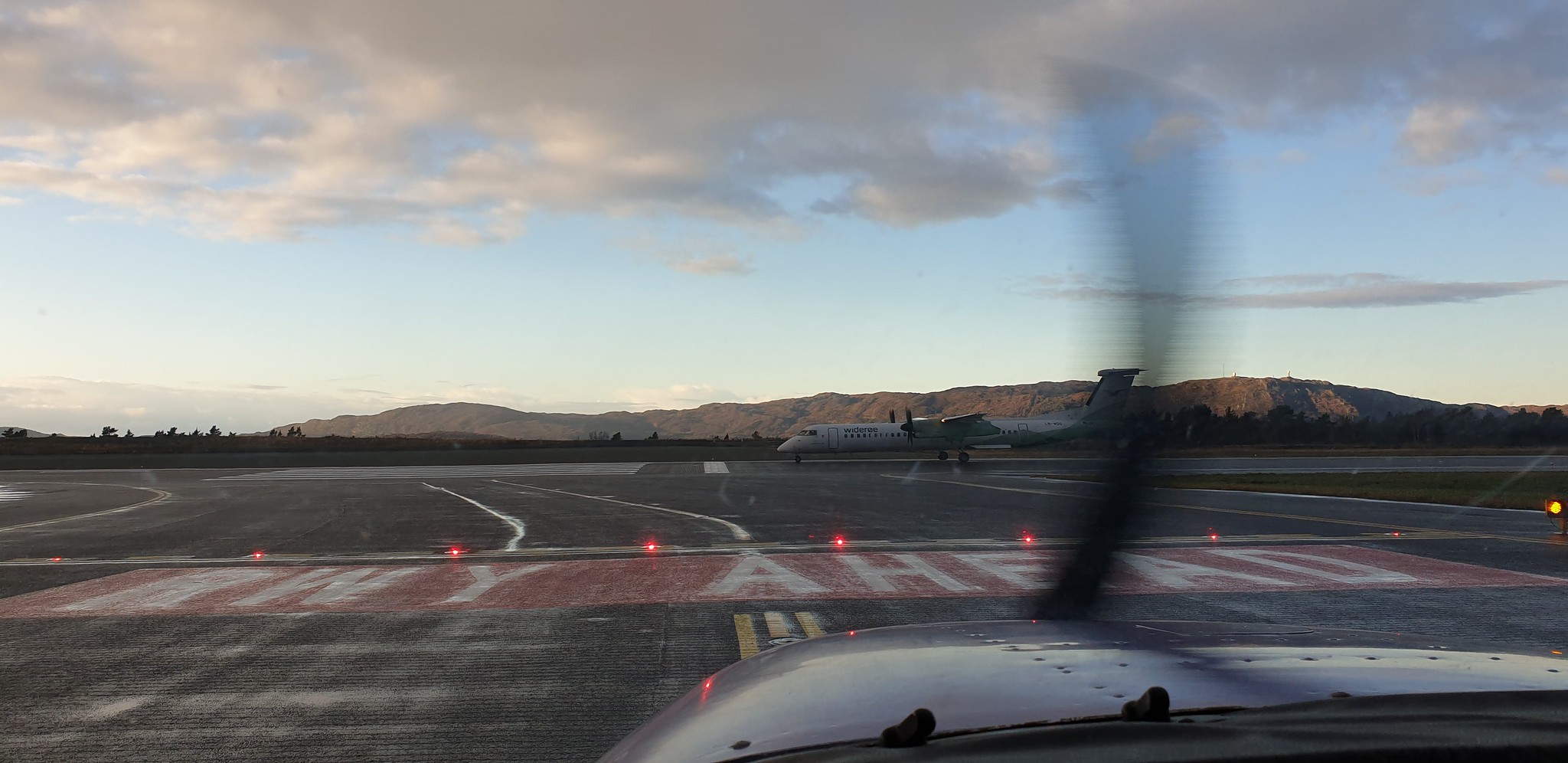
Photo: Thomas Fredriksen, Norwegian Airsports Federation
Stop bars are recognised worldwide as an effective measure to prevent runway incursions.
Look at the chart of Trondheim Airport, Værnes, below. Rows of red dots are shown across the yellow (taxiway) lines marking the holding positions. All the runway holding positions have stop bars, but notice that there is also one on the taxiway running parallel to the runway.
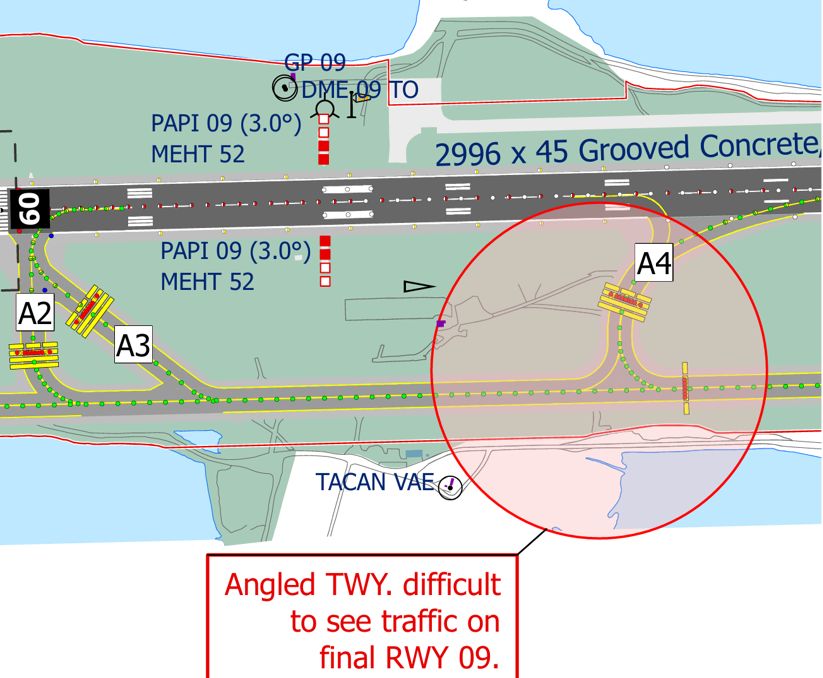
Source: AIP Norway
What do you need to know?
First and foremost: do not cross an illuminated stop bar. If the lights are red, stop!
They indicate that the necessary clearance has not been issued.
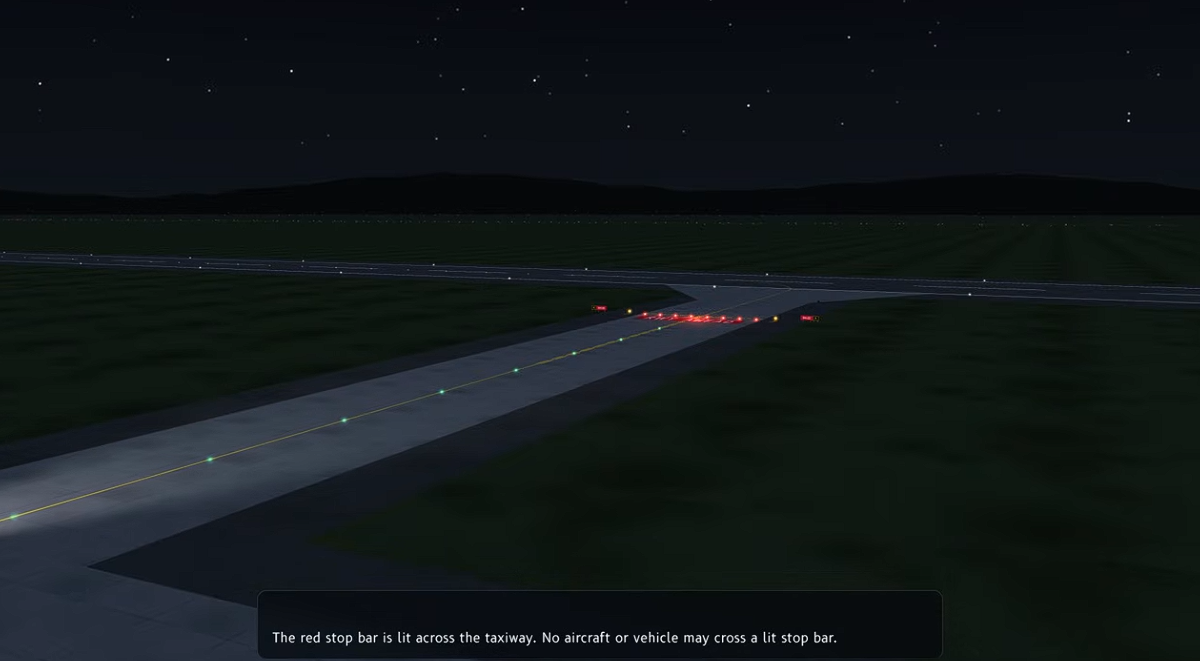
Stop bars - normal operations - YouTube
That was the easy part. Problems arise when you have received a clearance, but the red lights remain illuminated. The basic rule remains the same: stop. Do not cross an illuminated stop bar. Ask ATC to confirm the clearance and switch off the stop bar. This will usually resolve the situation.
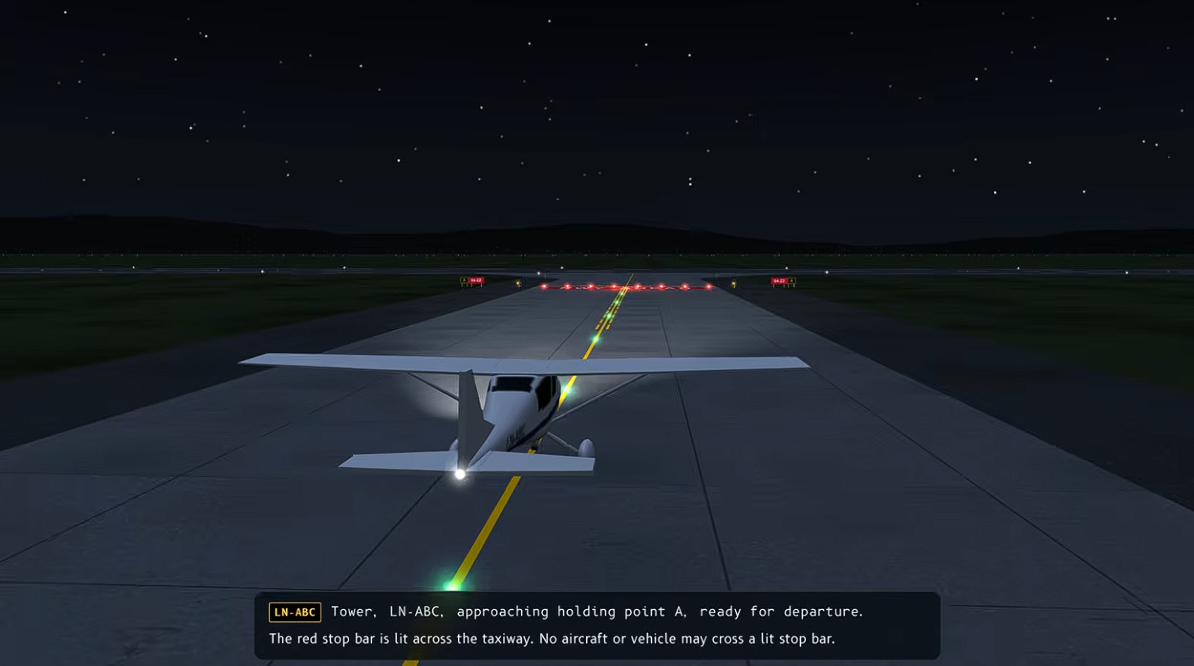
Stop bars - forgotten on - YouTube
Conditional clearance
“After the 737 on short final, line up and wait behind.” It is easy to focus on the condition - the landing 737 - and overlook the stop bar. In practice, two conditions must be met: the landing aircraft must have passed, and the stop bar must also have been switched off.
Do not cross an illuminated stop bar, even if the first condition has been met!
H24 operation
Stop bars were introduced to prevent runway incursions during low-visibility operations. Their installation gained momentum after the Linate accident in 2001. Initially, they were not used during normal daylight operations.
Operational experience has since shown that stop bars are most effective when used at all times wherever they are installed. This helps pilots and drivers develop the habit of checking and complying with the lights at those locations.
It is therefore now recommended that stop bars remain in use at all times, regardless of visibility or light conditions.
Please log in or sign up to comment.