
Published in August 2026 GA Newsletter Norway
Sikkerhetsbrev fra Luftfartstilsynet ✈ August 2026
Article author: Thomas Hytten, Flight Ops Inspector, CAA Norway
Republished with permission in the EASA Community General Aviation to support aviation safety
Variable winds can turn an otherwise normal landing into a demanding situation in a very short time. Wind speed changes, the aircraft’s airspeed varies, and workload increases. This happens during a phase of flight when altitude and airspeed are low and there is little time to correct deviations. You should therefore assess the conditions and set your limits before starting the approach.
Variable winds and gusts - Where do you draw the line?
What are wind gusts?
A wind report of:
290 degrees, 12 knots, gusting 25 knots (METAR 29012G25KT)
means that the mean wind speed is 12 knots, while the strongest recorded gusts are 25 knots. The difference between the mean wind and the gusts is 13 knots. This is often referred to as the gust factor.
Wind gusts can cause rapid changes in indicated airspeed and lift. On final approach, the aircraft may first experience an increase in headwind and then suddenly lose part of that headwind component. This can result in a rapid reduction in airspeed.
If your airspeed is already low, you may find yourself uncomfortably close to the stall speed. At low altitude, there is little time and limited space to recover.
Should you adjust your approach speed?
For some aircraft types and operations, it may be appropriate to add part of the gust factor to the normal approach speed. One commonly used method is to add half the difference between the mean wind and the gust speed.
In the example above, half the gust factor would be approximately 6 knots.
This is not a general rule that applies to all aircraft. You must follow the Aircraft Flight Manual (AFM), Pilot’s Operating Handbook (POH), and the applicable procedures for the aircraft you are flying.
It is important to take a conscious and considered approach to speed adjustments. Arbitrarily increasing the landing speed does not necessarily improve safety. For some aircraft types, it may actually reduce safety margins and, in the worst case, contribute to an accident.
Excessive approach speed may result in:
- Increased landing distance
- Increased risk of bouncing or landing in an incorrect attitude or configuration
- Reduced or lost directional control
- Increased loads on the landing gear
- Reduced safety margins on short or wet runways
The objective is not to fly the approach as fast as possible. The objective is to use the correct airspeed with adequate safety margins for the prevailing conditions.
Headwinds can also be challenging
It is easy to assume that the wind is not a problem as long as it is aligned with the runway. That is not always the case.
Strong and variable headwinds can make it difficult to maintain a stable airspeed and approach. During the flare, the aircraft may rise, sink or drift sideways as the wind changes. After touchdown, strong gusts may also make directional control difficult.
Local conditions can make the situation worse. Terrain, buildings, trees and hangars can create turbulence and significant variations in wind direction and speed close to the ground.
The reported wind therefore does not always provide the complete picture.
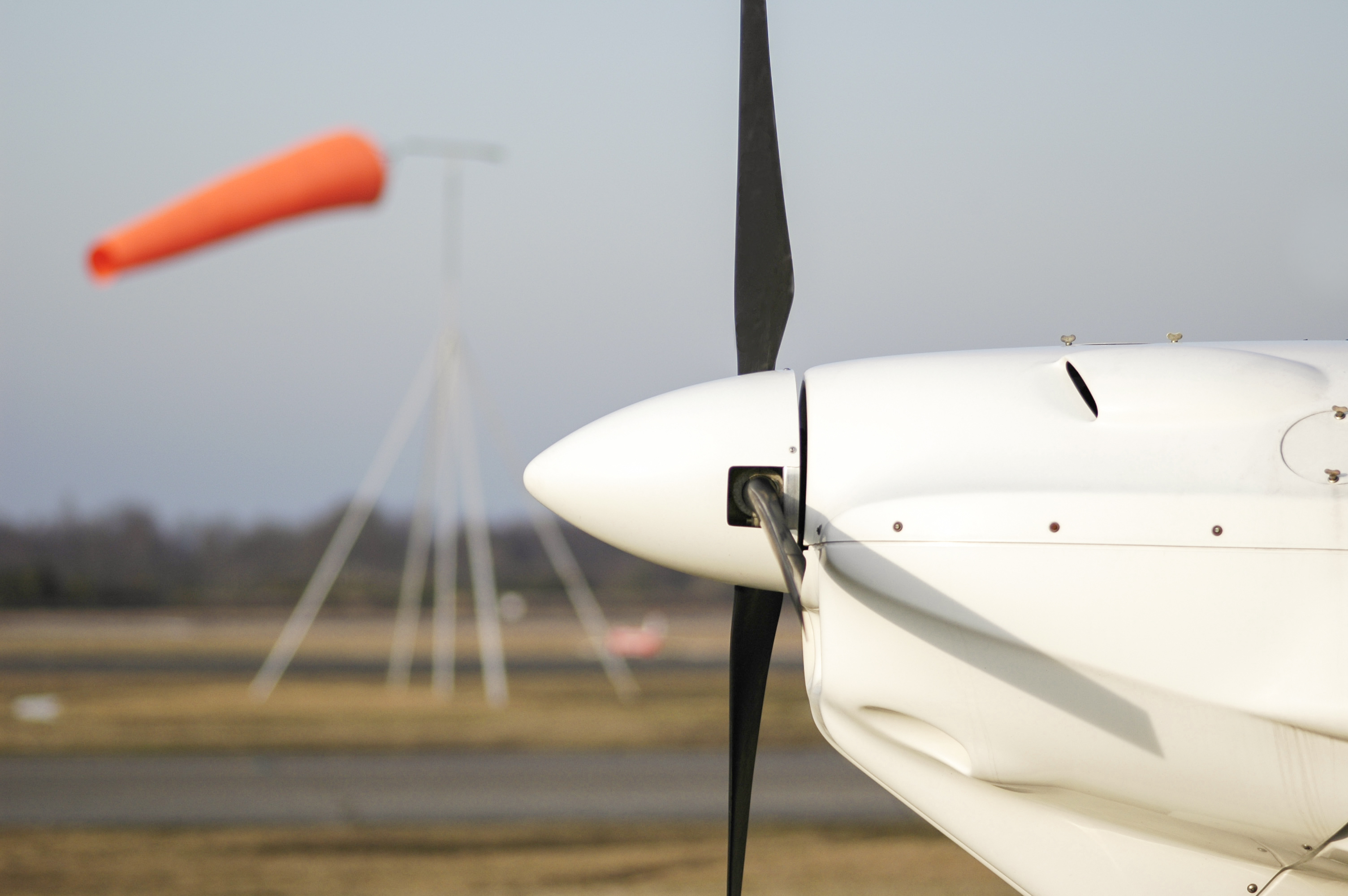
Picture from the August 2026 GA newsletter Norway
Use PAVE before the flight
PAVE is a simple method for structuring your pre-flight risk assessment.
Pilot
Assess your own experience and fitness for flight.
- When did you last fly in strong or gusty winds?
- Have you practised crosswind landings recently?
- Do you have experience flying this aircraft type in these conditions?
- Are you rested and prepared?
- Have you established clear personal limits?
A limit that was appropriate when you were flying frequently may not be appropriate after a prolonged period with little flying.
Aircraft
Consider the aircraft’s characteristics and limitations.
- What does the AFM or POH say?
- What is the maximum demonstrated crosswind component?
- How does the aircraft respond to turbulence and gusty conditions?
- Do you have sufficient control authority?
- How do weight and centre of gravity affect the aircraft’s handling characteristics
- How much runway will you need if you use an increased approach speed?
The maximum demonstrated crosswind component is not necessarily an operational limit. Nor is it a guarantee that you will be able to handle the conditions.
enVironment
Consider the complete weather and aerodrome picture.
- What is the mean wind?
- How strong are the gusts?
- What is the crosswind component?
- Is wind shear or turbulence forecast or reported?
- Could terrain or buildings affect the wind?
- Is the runway wet, slippery, short or narrow?
- Is another runway or aerodrome available with more favourable conditions?
- How are the weather conditions expected to develop?
Be particularly cautious if the gusts are increasing, the wind direction varies significantly, or the conditions are close to your limits.
External pressures
Consider what may influence your decision-making.
- Do you have passengers who expect to reach the destination?
- Is the aircraft booked by someone else later in the day?
- Do you want to get home before the weather deteriorates?
- Do you feel pressure because other pilots are flying?
- Are you concerned that discontinuing the flight might be perceived as a failure?
External pressures can be difficult to recognise because they often appear to be practical considerations. Nevertheless, they may cause you to accept smaller safety margins than you otherwise would.
From PAVE to Threat and Error Management
PAVE helps you identify relevant threats. Threat and Error Management (TEM) is about deciding what you are going to do about them.
It is not enough to think:
“Threat: strong and variable crosswind.”
You must also decide how the threat will be managed.
For example:
Identify the threat
Threat: Gusty wind with significant variations in wind speed and direction.
Describe the consequence
Possible consequence: Unstable approach, low airspeed, drift, or loss of control during the flare and landing.
Mitigation measures
- Use the runway with the lowest crosswind component
- Establish your maximum acceptable wind and gust factor before departure
- Use the correct airspeed adjustment in accordance with the AFM or POH
- Fly a stabilised approach
- Go around if airspeed, track or approach path is not stabilised
- Plan an alternate aerodrome
- Carry sufficient fuel to discontinue the approach and proceed elsewhere
- Fly with an instructor if you need additional training
A threat that has been identified but not managed is still a threat!
Set your limits before the flight
Personal limits should be specific. This makes it easier to make a sound decision when workload increases.
You can, for example, establish personal limits for:
- Maximum mean wind
- Maximum wind speed
- Maximum gust factor
- Maximum crosswind component
- Minimum runway length
- Requirement for a dry or firm runway surface
- Daylight operations
- When you should fly with an instructor
Your limits should be more conservative when:
- You have limited recent experience
- The aerodrome is unfamiliar
- The runway is short or narrow
- Turbulence or wind shear may be present
- You are flying an unfamiliar aircraft type
- Several risk factors are present at the same time
An operation may be within each individual limit and still be too demanding when all factors are considered together.
Have a plan
Before starting the approach, you should have decided:
- Which runway you will use
- Which airspeed you will fly
- Which criteria apply for a stabilised approach
- When you will go around
- How many landing attempts you are prepared to make, and what you will do when those attempts have been used
- Which alternate aerodrome you will use
- How much fuel you need to reach the alternate
It is too late to start considering your options when the aircraft is drifting away from the centreline, the airspeed is fluctuating, and a large part of your mental capacity is already being used simply to control the aircraft.
Other pilots are not a good benchmark
The fact that another aircraft takes off or lands does not mean that the conditions are acceptable for you.
The other pilot may have:
- More experience
- More recent training
- A different aircraft type
- Different personal limits
- Better knowledge of the aerodrome
It is also possible that the other pilot has made a poor decision.
You should therefore not use the decisions of other pilots as confirmation that it is safe for you to fly.
Good airmanship is not about demonstrating how much wind you can handle. It is about making good decisions before the situation becomes demanding.
Use PAVE to identify the threats and TEM to decide how you will manage them. Set your limits in advance, and have a clear plan for what you will do if the conditions do not develop as expected.
Reference and related material
Sikkerhetsbrev fra Luftfartstilsynet ✈ August 2026
EGAST Leaflet GA 2 Decision Making
CAA UK SafetySense Leaflet 1 Good Airmanship
CAA UK SafetySense Leaflet 23 Polits – It's Your Decision
Federal Aviation Administration (FAA). (n.d.). The PAVE Checklist. FAA Safety Team,
available at https://www.faa.gov/sites/faa.gov/files/2022-11/PAVE_0.pdf
Please log in or sign up to comment.