
Published in August 2026 GA Newsletter Norway
Sikkerhetsbrev fra Luftfartstilsynet ✈ August 2026
Article author: Hans Edvard Sunde, CAA Norway
Promoted by Thomas Hytten, Flight OPS inspector, CAA Norway
Republished with permission in the EASA Community General Aviation to support aviation safety
Vapour lock is a phenomenon in which a liquid turns into gas and blocks the flow of the liquid. As you can imagine, this is particularly undesirable if it affects the fuel supply to an aircraft engine.
Light Aircraft and Fuel
The physics
A liquid can change into a gas in what we somewhat imprecisely call evaporation. This can happen in two ways: either by adding energy in the form of heat, or by reducing the pressure. It can also occur through any combination of the two.
Remember that water boils at 100 degrees Celsius, provided the pressure is 1013.25 hPa. From school, we may remember that water boils at a lower temperature in the mountains. At the summit of Mount Everest, water boils at around 68 degrees Celsius. You therefore need to boil your egg much longer there than you would at home to achieve the same result.
A pressure cooker works the opposite way. It increases the pressure and therefore raises the boiling temperature, allowing potatoes to cook in a fraction of the normal time.
When a liquid changes into a gas, its volume increases. Petrol expands approximately 175 times.
What happens?
In summer, we are exposed to higher temperatures than in winter, but this is not necessarily the main reason why vapour lock occurs more frequently in warmer weather.
If there is a high demand for fuel, the fuel flow can reduce the pressure in the fuel system. It does not take much vaporised petrol to produce a large volume of gas.
Vapour typically forms just upstream of the fuel pump. This can prevent the pump from picking up fuel properly, causing the engine to stop.
Different boiling characteristics
We do not want petrol to boil on its way to the engine. This should only happen in the carburettor or during fuel injection.
This is why 100LL is particularly resistant to vaporisation. Resistance to vaporisation is measured using Reid Vapour Pressure, or RVP.
100LL has an RVP of around 45. Automotive petrol typically has an RVP of around 55 in summer. In winter, however, automotive petrol contains lighter fuel components to improve cold starting. This makes the petrol slightly less energy-dense, but can also increase the RVP to around 90.
The higher the number, the more readily the fuel vaporises.
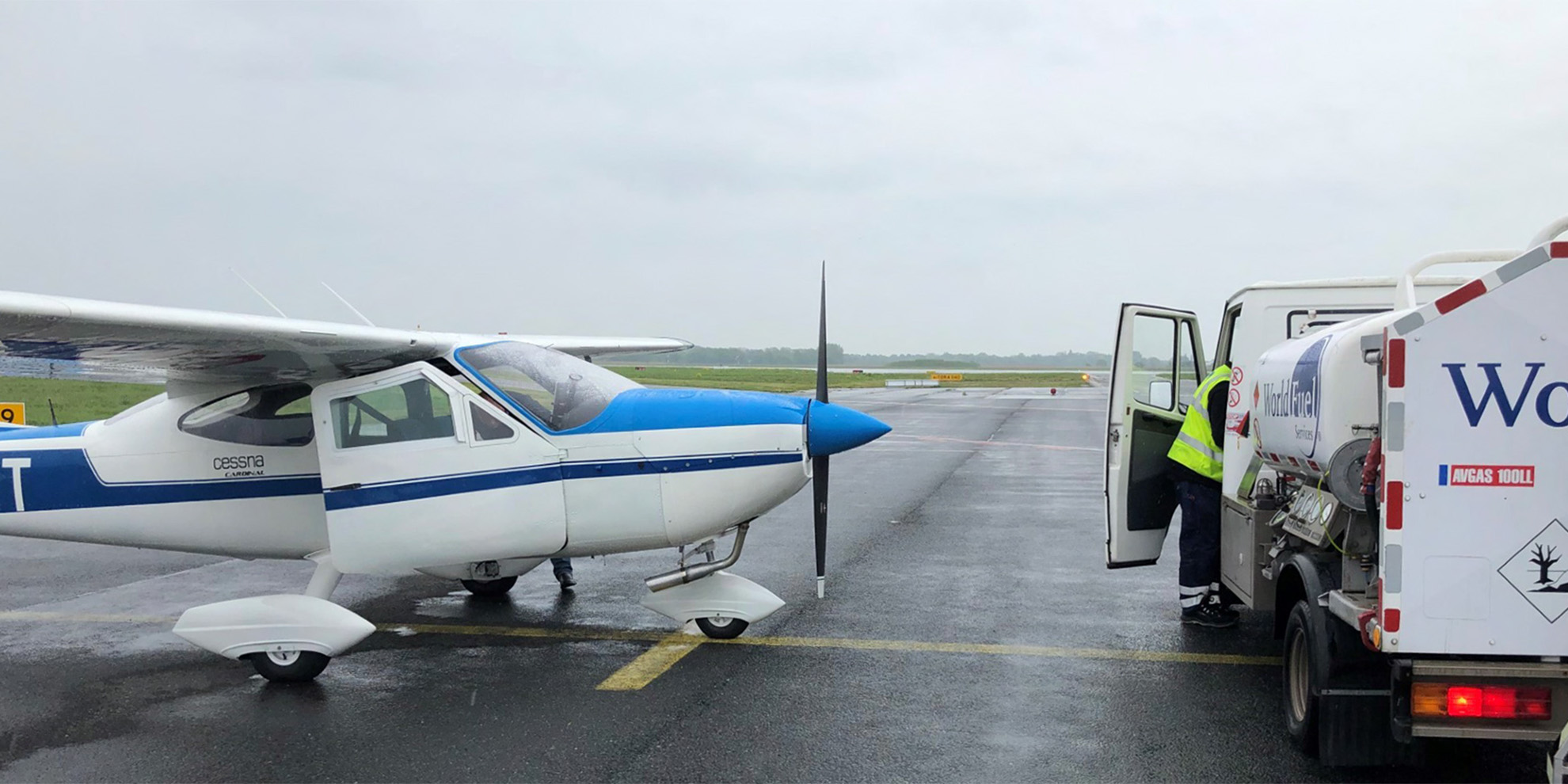
Picture from the August 2026 GA newsletter Norway
Converting to automotive petrol?
The same engine may experience vapour lock when running on automotive petrol even though it operates perfectly on 100LL.
Remember that 100LL does not have the same seasonal variation in RVP, while automotive petrol can vary considerably.
If you fly very little during spring, you may still have fuel with an RVP of 90 in the tanks when you fly on a warm day. If you then climb to FL100, where atmospheric pressure falls to approximately 70 per cent of sea-level pressure, you may be entering conditions where vapour lock can occur in the fuel system.
What can you do?
Some aircraft have more than one fuel pump. A common arrangement is an engine-driven mechanical pump combined with an electrically driven pump.
Vapour lock often occurs upstream of the mechanical fuel pump.
If you only have one pump, the engine may need to cool down before it will restart. If you also have an electric fuel pump, however, this may provide a solution.
The electric pump is often located upstream of the mechanical pump and may, in some cases, push fuel through the mechanical pump, allowing the engine to restart.
Certified aircraft may have STCs for conversion to automotive petrol. These often include the installation of additional electric fuel pumps, preferably as early as possible in the fuel system and ideally in the fuel tank itself.
The idea is to push the fuel rather than simply pull it towards the engine. The objective is to maintain positive pressure, rather than negative pressure, in the fuel supply system.
Tips
- Avoid abrupt throttle application or high-G loading.
- Use the electric fuel pump.
- Use up fuel purchased during winter before summer arrives.
Reference and related material
Sikkerhetsbrev fra Luftfartstilsynet ✈ August 2026
AOPA Fuel Awareness, SAFETY ADVISOR, Operations & Proficiency No. 5
Please log in or sign up to comment.