
Published in August 2026 GA Newsletter Norway
Sikkerhetsbrev fra Luftfartstilsynet ✈ August 2026
Article author: Hans Edvard Sunde, CAA Norway
Promoted by Thomas Hytten, Flight OPS inspector, CAA Norway
Republished with permission in the EASA Community General Aviation to support aviation safety
Lighting is your friend during night flying
Good lighting is your friend during night flying. A lit runway provides essential visual references during approach and landing. However, you can still be deceived by the so-called "black hole effect." A dark approach with few or no visual references surrounding the runway can create an illusion that causes you to fly lower than intended. Pay particular attention to your altitude and approach profile.
If you suddenly lose sight of the runway lights, do not assume there is a power outage. Apply full power and correct climb speed. Hopefully the runway lights will reappear over the terrain between you and the runway.
You need light to distinguish the sky from the terrain. Controlled Flight Into Terrain (CFIT) presents a greater risk at night because many of the visual references you normally rely on are no longer available.
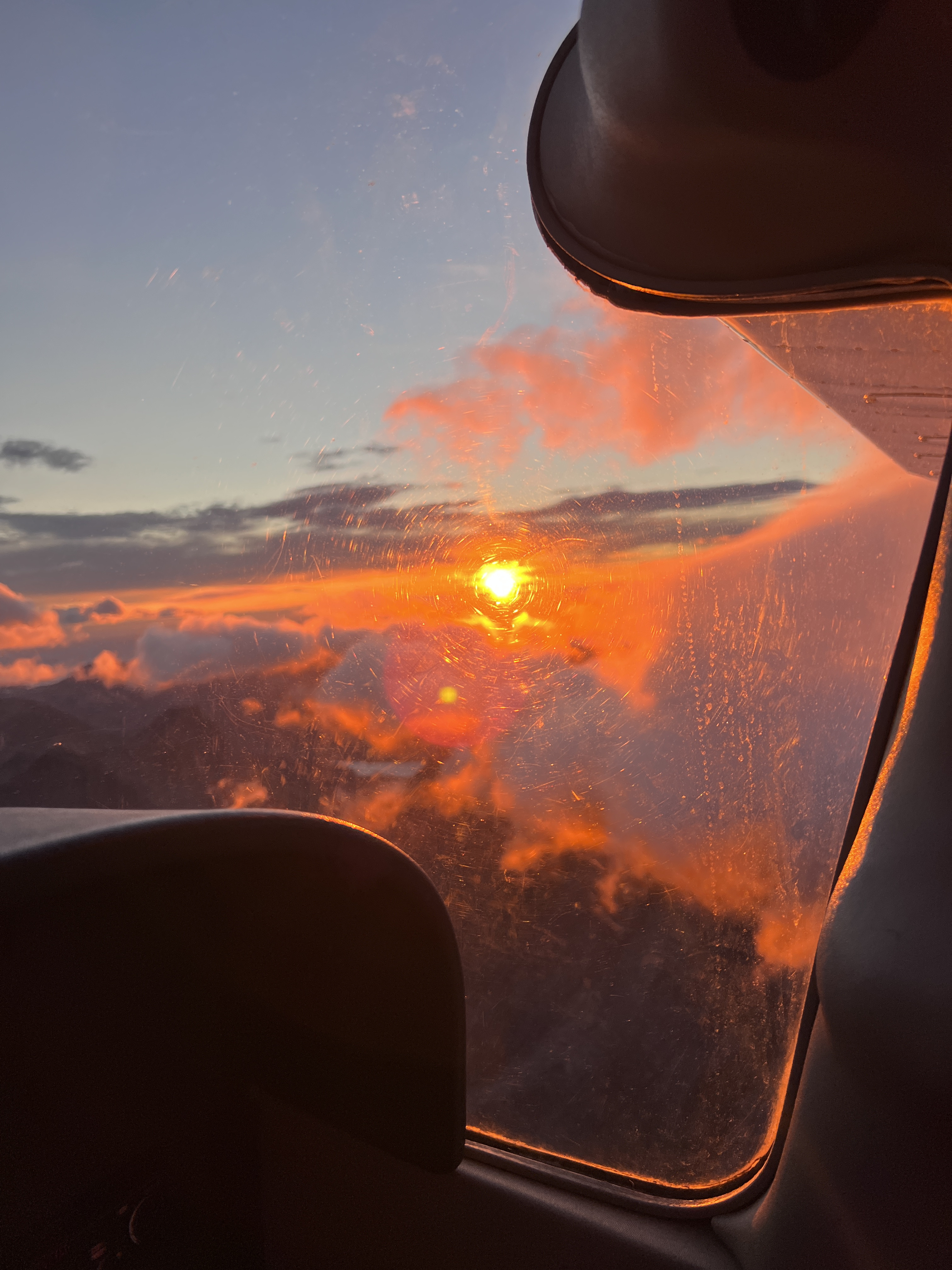
Picture from the August 2026 GA newsletter Norway
When conditions are completely dark, fog and clouds can be extremely difficult to detect before you have already entered IMC (Instrument Meteorological Conditions). Once again, light is your friend. Moonlight, ground lighting, and other light sources can make clouds and reduced visibility easier to detect. Towns and cities often illuminate clouds from below, making them clearly visible. Bu you may assume there are clouds at the same height also where there isno illumination from below. If lightning illuminates large clouds ahead, you have at least received a clear indication of where you should not be flying.
Darkness can also deceive your senses. Without external visual references, the vestibular system can, among other things, interpret acceleration as a climb. This is a well-known spatial disorientation illusion. Visible external references is the best medicine against such misperceptions.
Obstacles, birds, drones, and other aircraft are also more difficult to detect at night. Aircraft lighting may be crucial in allowing you to spot other traffic in sufficient time.
Night VFR requires good safety margins
Night VFR operations involve a number of additional risks. If you hold the appropriate qualifications and are capable of operating under instrument flight rules, IFR may be the better option in many situations.
If IFR is not an option, you should take advantage of daylight and twilight as much as practicable. Night does not necessarily mean complete darkness - and the light is your friend.
In aviation regulations, night is defined based on the end of evening civil twilight and the beginning of morning civil twilight. In Norway, this is determined by the position of the sun being 6 degrees below the horizon.
Your local civil twilight time is available, for instance, at https:// www.timeanddate.com/.
Other similar websites and applications are also available.
Please log in or sign up to comment.