
Flying in the mountains: are you really prepared?
Few flying experiences can match the beauty and satisfaction of navigating through mountainous terrain. Yet mountains remain one of the most demanding environments in aviation, requiring specific knowledge, skills and sound decision-making.
Recognising these unique challenges, the French Civil Aviation Safety Directorate (DSAC) has just published the English version of its practical guide, Flying in the Mountains – Best Practices, originally released in French in January 2026.
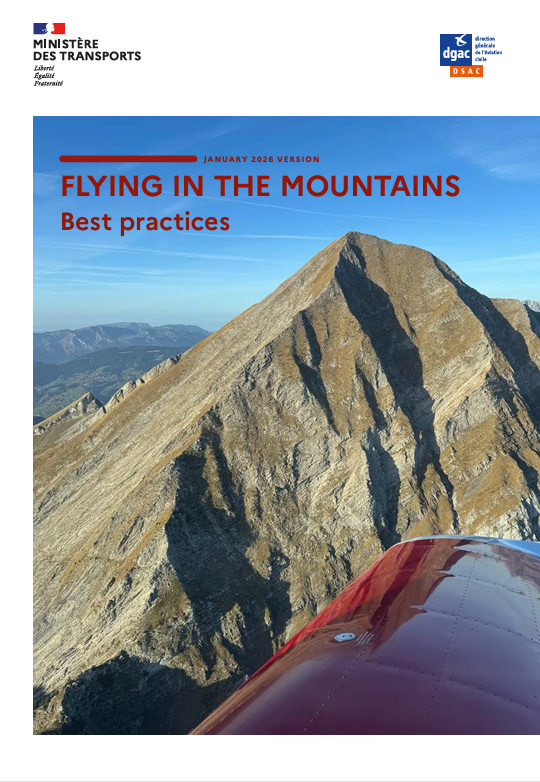
Quote from the guide: "Flying in the mountains is one of the most rewarding flying experiences. However, this environment presents specific threats and dangers that it is essential to be aware of before venturing there."
The guide explains that mountain flying inherently carries a higher level of risk than operations in the lowlands and requires additional knowledge, skills and preparation to achieve an acceptable level of safety.
Who is this guide for?
The guide is primarily intended for aeroplane, microlight and helicopter pilots with little or no experience of mountain flying.
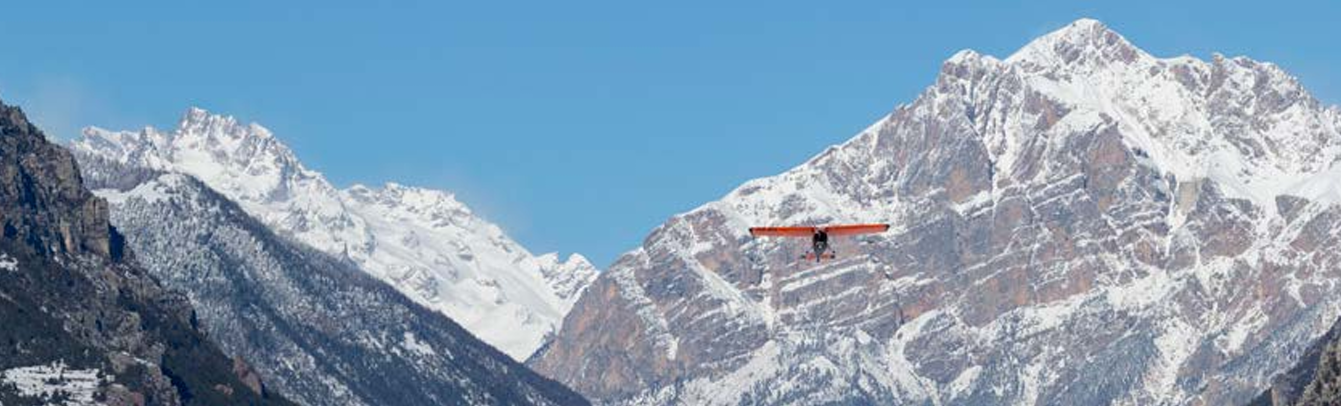
It sets out the key recommendations and best practices that pilots should be familiar with before undertaking such flights. Pilots already qualified for mountain flying will nevertheless find useful reminders, clarifications and recommendations throughout the document.
Although written with operations in France in mind, many of the principles and lessons presented are equally applicable to flying in mountainous terrain elsewhere.
What does It cover?
The guide focuses on navigation in mountainous terrain and does not cover operations to mountain airfields or altiports. Instead, it concentrates on raising awareness of the hazards associated with mountain flying and promoting the knowledge, judgement and skills required to operate safely in this unique environment.
Through practical recommendations and best practices, it addresses topics such as flight preparation, weather, aerology, aircraft performance, route selection, collision avoidance, radio communication, human factors and decision-making.
Why mountain flying Is different
The guide reminds us that mountain flying involves hazards rarely encountered in the lowlands:
- Rapidly changing and sometimes severe weather conditions
- Complex wind effects, turbulence, updrafts and downdrafts
- Reduced aircraft performance due to density altitude
- Visual illusions and horizon perception challenges
- Limited manoeuvring space in valleys and near mountain passes
- Collision risks with cables, pylons, birds, gliders and paragliders
- Physiological effects of altitude, fatigue, dehydration and hypoxia
- The need for sound judgement, continuous risk assessment, and a readiness to turn back when conditions dictate
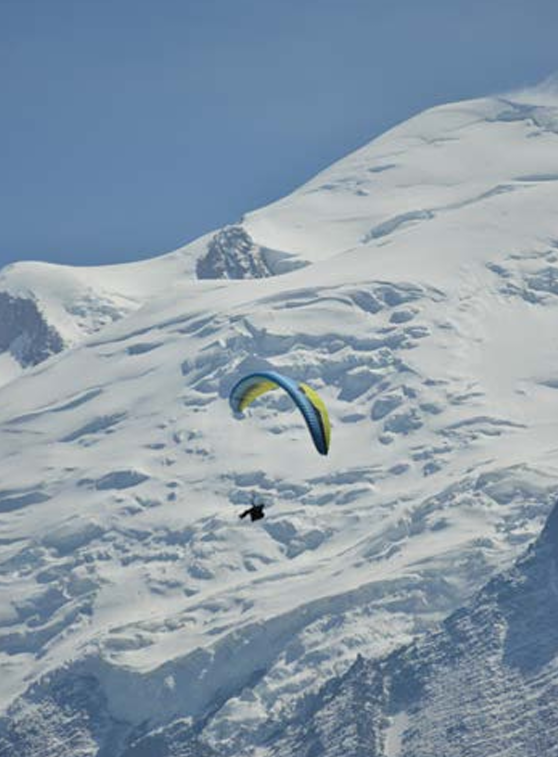
Importantly, the publication stresses that mountain flying is not simply lowland flying at a higher elevation. Additional training is strongly recommended before undertaking a flight in mountainous terrain without prior experience in such an environment. Furthermore, maintaining regular practice and currency is essential to fly safely.
The 11 commandments of mountain flying
One of the guide's most useful features is its concise summary of the 11 Commandments of Mountain Flying, reproduced below in abbreviated form.
The recommendations contained throughout the guide can be distilled into eleven simple principles applicable to every mountain flight:
- Be trained for mountain flying
- Prepare every flight thoroughly
- Consider density altitude and aircraft performance limitations
- Avoid flying in the afternoon, in strong winds, or during extreme heat
- Be aware of optical illusions and horizon perception issues.
- Use routes appropriate for mountainous terrain.
- Minimise disturbance to people and wildlife.
- Remain vigilant for cables, pylons, other aircraft and birds of prey.
- Communicate clearly and keep your transponder on.
- Recognise the effects of altitude on the human body.
- Postpone the flight whenever doubt exists about completing it safely.
And above all: always maintain an adequate safety margin!
Learning from experience
The guide also includes references to recent accident investigation reports involving mountain operations, providing valuable lessons learned from real-world occurrences and reinforcing the importance of preparation, judgement and discipline when operating in mountainous terrain.
A Collaborative safety effort
This publication was developed with contributions from several organisations within the French mountain flying community, including the French Aeronautical Federation (FFA), the French Microlight Federation (FFPLUM) through its National Mountain Flying Centre (PNVM), and the French Association of Mountain Pilots (AFPM). The Civil Aviation Safety Directorate (DSAC) expressly acknowledges their support and contribution to the development of this valuable safety resource.
Download the Guide
English version: https://www.ecologie.gouv.fr/sites/default/files/documents/A5_DSAC_CE%20Guide-Montagne_Anglais.pdf
Original French version, January 2026: Guide_bonnes_pratiques_vol_en_montagne_version_janvier_2026_1.pdf
Many thanks to DSAC, the FFA, the FFPLUM, the PNVM, the AFPM, and all those who contributed to making this practical safety resource available to the wider aviation community.
This article was published on behalf of Eric Videau, DGAC DSAC, Safety Promotion, member of the Safety Promotion Network of the EASA Member States.
Please log in or sign up to comment.