
Article by Thomas Hytten, CAA Norway
In the wrong place at the wrong time?
Being in the wrong place at the wrong time can in aviation have serious consequences. An airspace infringement occurs when an aircraft enters controlled airspace without the necessary clearance or does not follow the given clearance. This can lead to dangerous situations and, in the worst case, collisions between aircraft.
Complex airspace design
The airspace in Europe is in some places extremely complex, making it challenging even for experienced pilots to avoid infringements. Many factors contribute to these incidents, including poor navigation skills and lack of situational awareness. In 2022 alone, there were nearly 250 reported near-misses, many of which were due to airspace infringements.
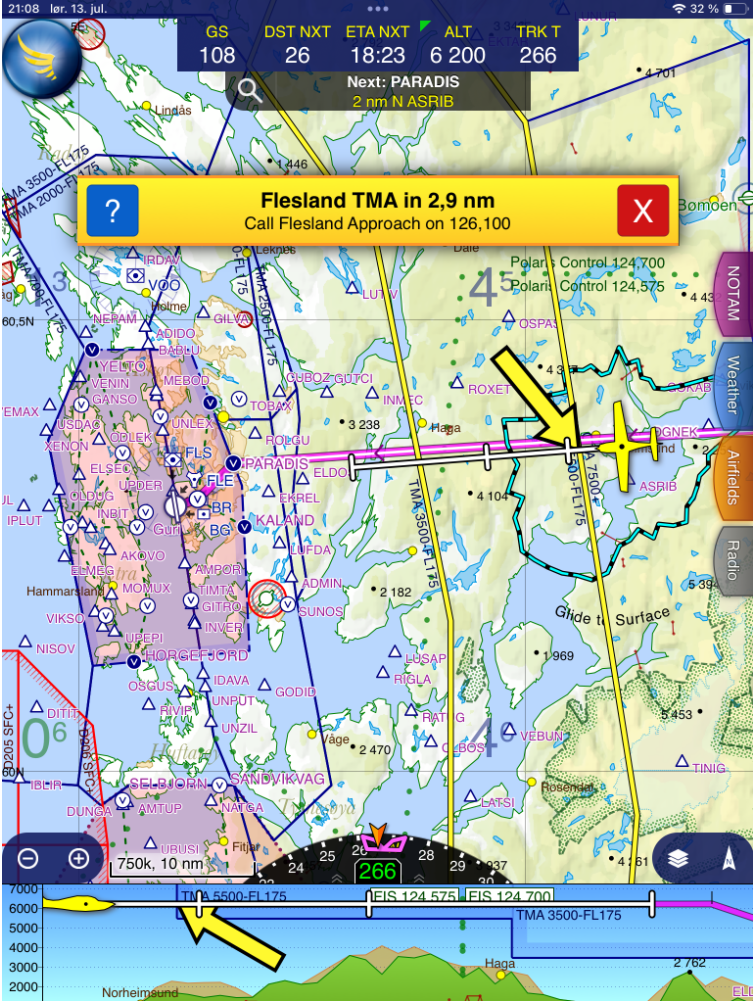
Image courtesy of SkyDemon
Causes of airspace infringements
One of the main causes of airspace infringements is poor navigation. This can result in flying into controlled airspace without clearance or into airspace that requires special permission.
Lack of attention and misjudgments are also significant contributing factors to these incidents.
Poor and non-intuitive airspace design is another example of a contributor to airspace infringements.
Consequences and risk countermeasures
The consequences of airspace infringements can be severe, including the risk of collisions, rerouting, and delays for other traffic. Additionally, it may create a significantly higher workload for both air traffic services and other airspace users. To avoid such incidents, it is crucial for everyone to stay updated on airspace information and use reliable navigation tools. Regular training and awareness of airspace structures can also help reduce the risk of being in the wrong place at the wrong time.
5 Tips to avoid airspace infringements
- Use electronic navigation and iconspicuity tools
Use modern and reliable navigation tools to ensure accurate position awareness and avoid airspace infringements. Choose an application that alerts you about the airspace you are approaching. You may also combine the navigation app with ADS-L and iconspicuity solutions and you have a pretty good overview of other traffic. - Plan and prepare carefully
Ensure thorough route planning and check airspace restrictions before departure. Use updated maps and airspace information. - Establish and maintain a good situational awareness
Continuously monitor your position in relation to airspace boundaries and other navigation aids. - Communicate with air traffic services
Allways establish contact with ATS. Ensure clear and precise communication with air traffic services and always read back received clearances. - Always use a transponder
While this may not prevent airspace infringements, it helps air traffic services manage and resolve the situation more effectively. Remember, if a transponder is installed in the aircraft, it is required by law to be turned on.
Should you find yourself in the wrong place at the wrong time, remember to report it within 72 hours. It is often known that an aircraft has been involved in an airspace infringement, but in many cases, we do not know why.
Original article
Sikkerhetsbrev fra Luftfartstilsynet ✈ juli 2024 (campaign-archive.com)
Related content
General aviation guide for Norway - Overview | Rise 360 (articulate.com)
Airspace Infringement | EASA (europa.eu)
Airspace Infringement | SKYbrary Aviation Safety
Sunny Swift: Airspace Complexity - Part 1 - Issue 19 | EASA (europa.eu)
Sunny Swift: Airspace Complexity - Part 2 - Issue 20 | EASA (europa.eu)
Please log in or sign up to comment.