
Filters
GM1 ATS.OR.210(a) Safety criteria
ED Decision 2017/001/R
SAFETY CRITERIA IN TERMS OF PROXIES FOR SAFETY RISKS
(a)In the safety assessment of functional systems, it may not always be possible or desirable to specify safety criteria in terms of quantitative values of risk. Instead, safety criteria may be defined in terms of other measures that are related to risk. These measures are called proxies and they need to meet the requirements for a proxy as stated in AMC2 ATS.OR.210(a). For examples of their use, see GM1 to AMC1 ATS.OR.205(b)(4).
(b)A proxy is some measurable property that can be used to represent the value of something else. In the safety assessment of functional systems, the value of a proxy may be used as a substitute for a value of risk, providing it meets the requirements for a proxy as stated in AMC2 ATS.OR.210(a). Examples of proxies are the frequency of airspace infringements, runway incursions, false alert rate, head-down time, limited sight, level of situation awareness, fraction of read back errors, reduced vigilance, amount of turbulence, distraction of controller’s attention, inappropriate pilot behaviour, system availability, information integrity and service continuity.
An example of the concept of using a different but specific quantity to assess an actually relevant quantity is the transposition/measure of an aircraft’s altitude which is in terms of barometric pressure or the transposition/measure of an aircraft’s airspeed which is in terms of dynamic pressure.
(c)A proxy is a measure of a certain property along the causal trajectory between the hazard/event and the harmful effects of the hazard/event in question (see Figure 5). The causal relationship between the proxy and the accident must be justified in the safety case, i.e. it must satisfy AMC2 ATS.OR.210(a). This means that the accident trajectory must be modelled and analysed such that the causal relationship can be assured but without the need to evaluate the quantitative nature of this relationship. It is assumed that since the proxy lies between the hazard/event and the accident, then there is a quantitative causal relationship between the rate of the hazard/event’s occurrence and the rate of the proxy’s occurrence. As a consequence, the variation of values of the proxy correlates with values of the hazards/events rate of occurrence and the value of the rate at which the harmful effects occur, i.e. the accident rate, and this relationship is a monotonically increasing one. This means that when the proxy value, e.g. Proxy1, increases/decreases, the associated risk value of the related accident, e.g. Accident1, increases/decreases accordingly.
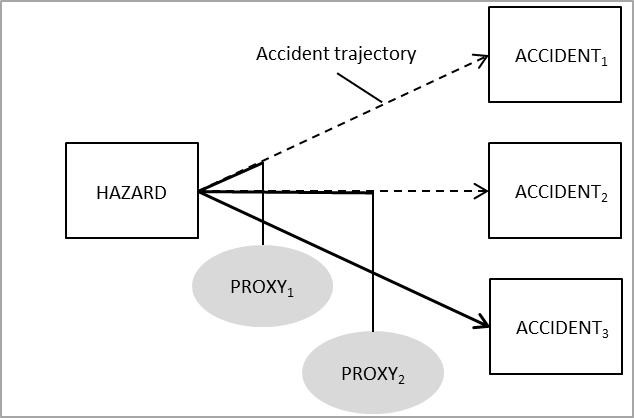
Figure 5: Use of proxies along accident trajectories
(d)Proxies might be preferred where the extra effort needed to identify, describe and analyse a complete set of sequences of events from the occurrence of a hazard to the occurrence of an accident or incident has no added value in the safety assessment. The intrinsic reasons for the amount of the extra effort are the number of significantly different event sequences, the complexity of some accident scenarios, the existence of many barriers preventing the occurrence of a hazard developing into an accident and the lack of evidence on the probability of some events or the frequency of occurrence of some external circumstances and factors. The usage of proxies might then make the safety assessment more tractable and comprehensible and increase the quality of the risk analysis.
(e)The main advantages of proxies are the easy recognition of safety issues by operational staff involved in the safety assessment, and the direct focus on the analysis and mitigation of the identified hazards and safety issues introduced or affected by the change.
(f)The main disadvantage of using proxies is that it is not possible to express risk by a uniform measure. However, the value of the proxy should be measurable.
(g)For further details on the use of proxies, please refer to GM1 to AMC1 ATS.OR.205(b)(4), which contains two examples to assist in the selection and use of proxies in safety analysis.
ATS.OR.215 Licensing and medical certification requirements for air traffic controllers
Regulation (EU) 2017/373
An air traffic services provider shall ensure that air traffic controllers are properly licensed and hold a valid medical certificate, in accordance with Regulation (EU) 2015/340.
SECTION 3 — SPECIFIC HUMAN FACTORS REQUIREMENTS FOR AIR TRAFFIC CONTROL SERVICE PROVIDERS
ATS.OR.300 Scope
Regulation (EU) 2017/373
This section establishes the requirements to be met by the air traffic control service provider with regard to human performance in order to:
(a)prevent and mitigate the risk that air traffic control service is provided by air traffic controllers with problematic use of psychoactive substances;
(b)prevent and mitigate the negative effects of stress on air traffic controllers to ensure the safety of air traffic;
(c)prevent and mitigate the negative effects of fatigue on air traffic controllers to ensure the safety of air traffic.
ATS.OR.305 Responsibilities of air traffic control service providers with regard to the problematic use of psychoactive substances by air traffic controllers
Regulation (EU) 2017/373
(a)An air traffic control service provider shall develop and implement a policy, with related procedures, in order to ensure that the problematic use of psychoactive substances does not affect the provision of air traffic control service.
(b)Without prejudice to provisions laid down in Directive 95/46/EC of the European Parliament and of the Council39 and to the applicable national legislation on testing of individuals, the air traffic control service provider shall develop and implement an objective, transparent and non-discriminatory procedure for the detection of cases of problematic use of psychoactive substances by air traffic controllers. This procedure shall take into account provisions laid down in point ATCO.A.015 of Regulation (EU) 2015/340.
(c)The procedure in point (b) shall be approved by the competent authority.
AMC1 ATS.OR.305(a) Responsibilities of air traffic control service providers with regard to the problematic use of psychoactive substances by air traffic controllers
ED Decision 2017/001/R
POLICY AND PROCEDURES
Within the context of the policy, the air traffic control service provider should:
(a)provide training or educational material to air traffic controllers relating to:
(1)the effects of psychoactive substances on individuals and subsequently on air traffic control service provision;
(2)established procedures within its organisation regarding this issue; and
(3)their individual responsibilities with regard to legislation and policies on psychoactive substances.
(b)make available appropriate support for air traffic controllers who are dependent on psychoactive substances;
(c)encourage air traffic controllers who think that they may have such a problem to seek and accept help made available by their air traffic control service provider;
(d)ensure that air traffic controllers are treated in a consistent, just and equitable manner as regards the problematic use of psychoactive substances; and
(e)establish and implement principles and procedures for occurrence investigation and analysis to consider the problematic use of psychoactive substances as a contributing factor.
GM1 ATS.OR.305(a) Responsibilities of air traffic control service providers with regard to the problematic use of psychoactive substances by air traffic controllers
ED Decision 2017/001/R
POLICY
(a)Guidance for the development and implementation of the policy is contained in ICAO Doc 9654 ‘Manual on Prevention of Problematic Use of Substances in the Aviation Workplace’, First Edition - 1995, and in particular:
(1)Attachment A (pp. 27–34) as regards elements for the definition and the implementation of policy and programme;
(2)Chapter 3 (pp. 9–12) as regards the identification, treatment, and rehabilitation of staff, with related supporting material, available in Attachment C (pp. 61–68); and
(3)Attachment D (pp. 69–75) as regards the employment consequences of problematic use of substances.
TRAINING AND EDUCATION PROGRAMMES
(b)Guidance for the development and implementation of training and education programmes is contained in ICAO Doc 9654 ‘Manual on Prevention of Problematic Use of Substances in the Aviation Workplace’, First Edition - 1995, in particular:
(1)Chapter 2 (pp. 6–7) as regards the education of the workforce and educational material, with related supporting material available in Attachment A (pp. 35–48); and
(2)Attachment B (pp. 49–59) and Attachment F (pp. 87–94), where extracts from the ICAO Manual of Civil Aviation Medicine are provided
GM2 ATS.OR.305(a) Responsibilities of air traffic control service providers with regard to the problematic use of psychoactive substances by air traffic controllers
ED Decision 2017/001/R
THIRD PARTY ASSISTANCE TO AIR TRAFFIC CONTROLLERS
The air traffic control service provider may employ third-party assistance. Such assistance should be made freely available to air traffic controllers who are dependent on psychoactive substances.
AMC1 ATS.OR.305(b) Responsibilities of air traffic control service providers with regard to the problematic use of psychoactive substances by air traffic controllers
ED Decision 2017/001/R
PROCEDURE FOR THE DETECTION OF CASES OF PROBLEMATIC USE OF PSYCHOACTIVE SUBSTANCES
The objective, transparent and non-discriminatory procedure should specify:
(a)the mechanisms and responsibilities for its initiation;
(b)its applicability in terms of timing and locations;
(c)the person(s)/body responsible for testing the individual;
(d)the testing process;
(e)thresholds for psychoactive substances;
(f)the process to be followed in case of detection of problematic use of psychoactive substances by an air traffic controller; and
(g)the appeal process.
GM1 ATS.OR.305(b) Responsibilities of air traffic control service providers with regard to the problematic use of psychoactive substances by air traffic controllers
ED Decision 2017/001/R
PROCEDURE FOR THE DETECTION OF CASES OF PROBLEMATIC USE OF PSYCHOACTIVE SUBSTANCES
Guidance for the development and implementation of the procedure for detection of cases of psychoactive substances is contained in ICAO Doc 9654 ‘Manual on Prevention of problematic use of Substances in the Aviation Workplace’, First Edition - 1995, particularly in Chapter 5 (pp. 15–23) and Attachment E (pp. 77–85) as regards biochemical testing programmes, with related supporting material.
ATS.OR.310 Stress
Regulation (EU) 2017/373
In accordance with point ATS.OR.200, an air traffic control service provider shall:
(a)develop and maintain a policy for the management of air traffic controllers' stress, including the implementation of a critical incident stress management programme;
(b)provide air traffic controllers with education and information programmes on the prevention of stress, including critical incident stress, complementing human factors training provided in accordance with Sections 3 and 4 of Subpart D of Annex I to Regulation (EU) 2015/340.
GM1 ATS.OR.310 Stress
ED Decision 2017/001/R
EXPLANATION OF THE FUNDAMENTALS OF STRESS
(a)Introduction
(1)The job of an air traffic controller is considered to be responsible and demanding, and at times can lead to the experience of high levels of stress. The combination of skills and knowledge required to complete air traffic control tasks is wide. Visual spatial skills, perception, information processing, image and pattern recognition, prioritising, logical problem-solving, application of rules and procedures and decision-making form core skills to which we can add interpersonal communication, teamwork and technical vocabulary usage.
(2)Air traffic control also requires to constantly adapt to an ever-changing traffic picture and work environment within restricted time constraints. This has the potential to lead to considerable work pressure. In contrast, there may be times when traffic flows are low and controllers experience relatively low levels of activity. For some controllers, this may bring its own kind of stress due to the increased efforts required to maintain vigilance under light traffic load.
(3)Thus, the work of an air traffic controller has the potential to induce high levels of stress; however, the stress experienced by controllers is always unique to the individual and their interaction with their environment.
(4)‘Stress’ is a term that is in common use within everyday language and can mean different things to different people depending on the context in which it is used. In lay terms, stress is often used to describe an external pressure experienced by an individual whilst at the same time encompassing the subjective experience of this pressure. Usually the term is used in a negative way. In this sense, the lay use of the term ‘stress’ encompasses both the cause and the effect, and this can lead to confusion as to its meaning.
(b)Technical definitions of stress
(1)Even in its technical use, the word ‘stress’ is sometimes used when the term ‘stressor’ (or pressure) would be more appropriate, referring to the cause of a stress experience. Stressors can be internal (cognitive or physical) or external (environmental) to the individual and may be defined as any activity, event or other stimulus that causes the individual to experience stress.
(2)It is helpful to clarify the way the term ‘stress’ and other technical terms are used. For the purposes of this guidance material, stress is defined following the Transactional Model of Stress. This views stress as the outcomes experienced by an individual when faced with a potentially stressful event. The experience of the event as negatively stressful (distress), neutral or positive (eustress) is based on the individual’s perception of their ability to manage the event. Under this definition, stress is a manifestation in the individual of usually negative effects, which can lead to a decrease in performance and negative health effects.
(3)A stressor can also act to improve performance when it is a stimulus to increase arousal and improves the outputs of an individual in the short to medium term. Too much arousal paradoxically leads to an inverse effect and subsequent detriment in performance.
(4)Acute stress is, as its name suggests, episodic and occurring for short periods of time. In most cases, the cause of the stress is eliminated by the air traffic controller taking action to manage the situation leading to stress. High levels of acute stress may lead to hyper-arousal and may leave an air traffic controller feeling exhausted. It is important to identify work situations that lead to this acute stress and manage this within the work schedule.
(5)Chronic stress differs from acute stress only in that it is ongoing and even low levels of continuous chronic stress can lead to performance degradation and serious health implications, if it is not addressed. Chronic stress is insidious in its nature and a sufferer may become so accustomed to the sensations that they are unaware of the long-term negative effects. Chronic stress commonly leads to a sense of inability to cope.
(6)Both acute and chronic stresses have the potential to lead individuals into hyper-aroused states which may result in panic where task and skill performance, planning, reasoning and judgement are significantly impaired. In such instances, a well-practised but incorrect action, for that particular circumstance, may be performed when an alternative and more appropriate response is required.
(7)Chronic stress may result in a condition known as burnout. Burnout is generally identified by the following characteristics: disaffection with the job leading to a decrease in motivation with an associated decrease, perceived or otherwise, in performance.
(c)Sources of stress
Broadly speaking, the stress experienced by an air traffic controller at work is a function of their underlying background levels of stress, related to lifestyle, health and well-being, personality, organisational/work environment, levels of satisfaction with life generally, and the acute stress imposed by and operational conditions at any given time. There are three major sources of stress: environmental, work-related, and personal.
(1)Environmental/physical stressors
(i)Physical stressors are underlying conditions that can either be internal to the body (e.g. pain, hunger, lack of sleep, exhaustion), or external environmental factors (e.g. noise pollution, overcrowding, excess heat). The common factor among all of these stressors is that they all create a physically uncomfortable environment that can cause stress. Stress is not solely dependent on the intensity of a stimulus, but also on the duration of exposure. For example, a low-pitched but persistent noise can cause as much stress as a sudden loud noise.
(ii)In the air traffic control room, some common environmental/physical stressors could be:
(A)uncomfortable temperature;
(B)cramped workspace;
(C)air quality;
(D)lighting conditions; and
(E)intrusive noise or vibration.
(2)Work-related stressors
(i)Stress in the workplace can come from a variety of sources besides physical stimuli. Some of these include:
(A)continuing high levels of workload near or above the maximum traffic handling capacity of an air traffic controller;
(B)a heterogeneous traffic mix where aircraft have varying levels of equipment and considerable variability in pilot skills;
(C)unsuitable or unreliable equipment;
(D)inappropriate, vague procedures;
(E)complex equipment which is insufficiently understood or mistrusted;
(F)supervision of trainees or less experienced colleagues;
(G)workload and task breakdown not being matched to the level of technical skill of the controller, lack of support or too much support (interference);
(H)role ambiguity, where it is unclear where the responsibilities lie;
(I)interpersonal conflict with colleagues, other professionals;
(J)poor management relations (social dialogue), working conditions, e.g. rostering; and
(K)unusual or emergency situations.
(ii)Incidents, including emergencies and accidents, that lead controllers to feel that they are not coping may lead to the experience of critical incident stress; this, in turn, may impair performance in varying degrees.
(3)Personal stressors
(i)Personal stressors include the range of events that occur throughout people’s lives but external to the workplace. The belief that such stressors can be left at home, however, is a myth, and these personal stressors accompany air traffic controllers to work every day.
(ii)Personal issues such as health, personal life, living situation and major life events (deaths, births, marriages, and moving house) add to the background level of stress that individuals have to cope with. Where these are excessive, they can interfere with work due to the distraction they cause and the mental effort they require to resolve them.
(iii)Stress is also considered to have a contagious quality, which happens when a stressed person or stressed persons create stressful situations for those around them.
(d)Signs of stress in the individual
Signs of stress are many and varied. Some of the most commonly observed are shown below:
(1)Physiological
(i)Cardiovascular: increased pulse rate, elevated blood pressure, chest pains;
(ii)Respiratory: shortness of breath, tightness of chest, hyperventilation, dizziness;
(iii)Gastrointestinal: loss of appetite, gas pain, abdominal cramps, indigestion, diarrhoea, nausea;
(iv)Sweaty palms;
(v)Aching neck, jaw and back muscles;
(vi)Trembling;
(vii)Sleep disturbance, tiredness;
(viii)Itching;
(ix)Getting easily startled;
(x)Susceptibility to minor illnesses; and
(xi)Other: headaches, muscular tension, general weakness, psychosomatic symptoms.
(2)Psychological
(i)Emotional: anger, guilt, mood swings, low self-esteem, depression and anxiety;
(ii)Concentration problems, forgetfulness;
(iii)Pessimism;
(iv)Difficulty in making decisions;
(v)Irritability;
(vi)Loss of interest;
(vii)Loss of self-control; and
(viii)Loss of confidence.
(3)Behavioural
(i)Self-medication, drugs or alcohol;
(ii)Excess fatigue;
(iii)Sleep disruption;
(iv)Social withdrawal;
(v)Absenteeism;
(vi)Staff turnover rates; and
(vii)Job performance decrements.
(e)Impact of stress on air traffic controllers’ performance of air traffic control tasks
Any source of stress has the potential to create unique subjective experiences in different individuals, and these may be positive or negative experiences or something in between.
(f)Negative experiences of stress
There is a number of ways in which stress experienced by air traffic controllers can be manifested in the performance of air traffic control tasks. Some of these are listed in Table 1, but, in general terms, performance of tasks decreases due to the detrimental effects that high levels of stress can have on perception, awareness, decision-making and judgement. In the longer term, health and well-being may also be compromised, leading to decreased performance of air traffic controllers.
Table 1 below shows the effects on air traffic controller performance which can be linked to stress and which can potentially have very significant implications for the safety performance of an operation.
Difficulty in concentrating and reduced vigilance — easily distracted. |
Errors, omissions, mistakes, incorrect actions, poor judgment and memory. |
Tendency to cut corners, skip items and look for the easiest way out. |
Either slowness (due to lack of interest) or hyperactivity (due to adrenaline). |
Focusing on easily manageable details while ignoring serious threats. |
Tendency to pass responsibility on to others. |
Fixation on single issues or even a mental block. |
Unwillingness to make decisions — decisions are postponed or take longer to be made. |
Fewer plans and backup plans are made. |
Increase in risk-taking, leading to an increase in the number of violations, especially when frustrated with failures. |
Excessively hurried actions — due to adrenaline and alertness level, there is a tendency to act very quickly even when there is no time pressure. Hurried actions increase the chance of errors. |
In cases of significantly high stress, a controller will often: (1)return to old procedures that may no longer be applicable, appropriate or safe; (2)use non-standard phraseology when communicating; (3)return to the use of one’s native language; and/or (4)look for items in a place where they used to be, but are no longer located. |
Table 1: Effects of stress on physical and mental performance of air traffic control tasks
(g)Mitigation of stress in the individual and the organisation
Air traffic control service providers have a duty to take care of their employees and the customers of their services. They should aim at mitigating the negative effects of stress. This is best achieved by ensuring that a range of preventative measures as well as countermeasures are in place. These include:
(1)adoption of a stress policy and/or a critical incident stress management policy within the organisation;
(2)completion of regular risk assessment of sources of occupational stress and its effects on individuals and operations;
(3)employee stress level monitoring;
(4)adoption of stress intervention/mitigation/prevention practices and, where the organisation identifies a source of stress, use of a stress team/committee;
(5)stress management training for all levels of employees;
(6)education and prevention programmes on stress; and
(7)staff support mechanisms (e.g. peer counselling, professional support from health practitioners, critical incident stress management (CISM) programmes);
(8)adequate rostering allowing time to evacuate stress; and
(9)promotion of sports or relaxation activities.
AMC1 ATS.OR.310(a) Stress
ED Decision 2017/001/R
STRESS MANAGEMENT POLICY
(a)The air traffic controllers’ stress management policy should:
(1)declare the commitment to proactively and systematically monitor and manage stress, and describe the expected benefits for the safety of operations;
(2)be signed by the accountable manager;
(3)reflect organisational commitments regarding the implementation of a critical incident stress management programme;
(4)be communicated, with visible endorsement, throughout the air traffic control service provider;
(5)include the commitment to:
(i)provide appropriate resources;
(ii)consider the best practices;
(iii)enforce stress management programme(s) as a responsibility of managers, staff involved in stress management and air traffic controllers;
(6)be periodically reviewed to ensure it remains relevant and appropriate.
(b)In accordance with the policy in point (a), the air traffic control service provider should establish and implement:
(1)procedures for critical incident stress management;
(2)principles and procedures to enable stress reporting;
(3)principles and procedures for occurrence investigation and analysis to consider stress as contributing factor; and
(4)method(s) for the identification and management of the effect of air traffic controllers’ stress on the safety of operations.
GM1 ATS.OR.310(a) Stress
ED Decision 2017/001/R
CRITICAL INCIDENT STRESS MANAGEMENT
The purpose of critical incident stress management (CISM) programmes is to prepare an organisation for the potential aftermath of an incident. These programmes come in a number of different forms, but have the added benefit of providing education on the effects of stress, how stress affects performance and stress management, even when the incident is relatively minor and perhaps personal to the individual.
Guidance for the implementation of a CISM programme may be found in the EUROCONTROL document: ‘Human Factors — Critical Incident Stress Management: User Implementation Guidelines’, edition 2.0 of 24 October 2008.
GM1 ATS.OR.310(b) Stress
ED Decision 2017/001/R
INFORMATION AND EDUCATION PROGRAMMES
Scientific material proposed as guidance for information and education programmes on stress may be found in the EUROCONTROL document ‘Human Factors Module — Stress’, edition 1.0 of 15 March 1996.
ATS.OR.315 Fatigue
Regulation (EU) 2017/373
In accordance with point ATS.OR.200, an air traffic control service provider shall:
(a)develop and maintain a policy for the management of air traffic controllers' fatigue;
(b)provide air traffic controllers with information programmes on the prevention of fatigue, complementing human factors training provided in accordance with Sections 3 and 4 of Subpart D of Annex I to Regulation (EU) 2015/340.
GM1 ATS.OR.315 Fatigue
ED Decision 2017/001/R
EFFECTS OF FATIGUE
Guidance material on fatigue and its effects on safety-relevant aviation professionals may be found in Chapter 2 ‘Scientific principles for fatigue management’ of ICAO Doc 9966 ‘Manual for the Oversight of Fatigue Management Approaches’, second edition 2016.
AMC1 ATS.OR.315(a) Fatigue
ED Decision 2017/001/R
FATIGUE MANAGEMENT POLICY
(a)The air traffic controllers’ fatigue management policy should:
(1)declare the commitment to proactively and systematically monitor and manage fatigue and describe the expected benefits for the safety of operations;
(2)be signed by the accountable manager;
(3)address the mitigation of the operational impact of air traffic controllers’ fatigue;
(4)be communicated, with visible endorsement, throughout the air traffic control service provider;
(5)include a commitment to:
(i)consider the best practices;
(ii)provide appropriate resources; and
(iii)enforce fatigue management as a responsibility of managers, staff involved in fatigue management procedures and air traffic controllers;
(6)be periodically reviewed to ensure it remains relevant and appropriate.
(b)In accordance with the policy in point (a), the air traffic control service provider should establish and implement:
(1)principles and procedures to enable fatigue reporting;
(2)principles and procedures for occurrence investigation and analysis to consider fatigue as contributing factor;
(3)procedures for the identification and management of the effect of fatigue on the safety of operations.
GM1 to AMC1 ATS.OR.315(a) Fatigue
ED Decision 2017/001/R
FATIGUE TAXONOMY
When establishing procedures to enable air traffic controllers to report when fatigued, an associated taxonomy for fatigue should be established.
GM2 to AMC1 ATS.OR.315(a) Fatigue
ED Decision 2017/001/R
FATIGUE IN OCCURRENCE INVESTIGATION AND ANALYSIS
Fatigue may have a significant impact on the performance of air traffic controllers and consequently on the safety of air operations. Therefore, when investigating occurrences, the air traffic control service providers should analyse the occurrence for fatigue as a contributing factor.
The analysis of available occurrence reports where fatigue was identified as contributing factor, generated by the air traffic control service providers or by other sources, could support the implementation and the improvement of fatigue management.
GM3 to AMC1 ATS.OR.315(a) Fatigue
ED Decision 2017/001/R
IDENTIFICATION AND MANAGEMENT OF THE EFFECT OF FATIGUE ON THE SAFETY OF OPERATIONS
(a)The following non exhaustive list contains some of the initiatives that the air traffic control service provider may undertake in order to identify air traffic controllers’ fatigue:
(1)establishment of a procedure allowing air traffic controllers to report when fatigued, and promotion of its use. Templates for such reporting procedure could be established;
(2)utilisation of system support to manage rostering principles and thresholds established in accordance with ATS.OR.320, also highlighting criticalities in advance;
(3)undertaking fatigue surveys;
(4)application of scientific principles on fatigue and fatigue management and their effect on the operational and organisational context.
(b)The knowledge and understanding of the underlying scientific principles of fatigue, as well of its potential impact on the safety of operations, may represent a considerable added value for the effectiveness of fatigue management arrangements established within the organisation. For this purpose, the air traffic control service provider might consider making available education and information programmes for staff involved in fatigue management, such as operational and safety managers, staff in charge of managing the rostering system, staff in charge of occurrence investigation.
(c)Activities air traffic control service providers could undertake to monitor the effectiveness of the established fatigue management arrangements may be but are not limited to the following:
(1)verification of the allocation and implementation of duty and rest periods in accordance with the rostering principles established in ATS.OR.320;
(2)collection and analysis of data related to planned versus achieved rosters, and in particular:
(i)exceedances of planned working hours and reasons generating exceedances;
(ii)variation of the nature of the duty (office work, operational air traffic control service provision, training, etc.);
(iii)operational circumstances which required a modification of established duty and rest periods; and
(iv)swapped shifts between air traffic controllers and impact on the established fatigue management principles;
(3)verification of the use and of the effectiveness of the procedure allowing air traffic controllers to self-declare fatigue, when such procedure is established; and
(4)analysis if specific roster patterns generate fatigue and, as a consequence, sickness or cases of provisional inability in accordance with Commission Regulation (EU) 2015/340.
GM1 ATS.OR.315(b) Fatigue
ED Decision 2017/001/R
INFORMATION PROGRAMMES
Information programmes may consist of lectures, leaflets, posters, CDs, and any other informative material to raise the awareness of the effects of fatigue on the individuals and on air traffic control service provision, and to advise on the need and the means to manage it. When choosing the most appropriate information programme and the medium, the air traffic control service provider should evaluate the level of awareness of its staff of fatigue management, the type of operations (e.g. single-person operations, nightshifts), and the periodicity of human factors training in the scope of refresher training.
GM2 ATS.OR.315(b) Fatigue
ED Decision 2017/001/R
INFORMATION PROGRAMMES
Scientific material proposed as guidance for information programmes on fatigue may be found in the document ‘Fatigue and Sleep Management: Personal strategies for decreasing the effects of fatigue in air traffic control’ (Brussels: Human Factors Management Business Division (DAS/HUM), EUROCONTROL, 2005).
ATS.OR.320 Air traffic controllers' rostering system(s)
Regulation (EU) 2017/373
(a)An air traffic control service provider shall develop, implement and monitor a rostering system in order to manage the risks of occupational fatigue of air traffic controllers through a safe alternation of duty and rest periods. Within the rostering system, the air traffic control service provider shall specify the following elements:
(1)maximum consecutive working days with duty;
(2)maximum hours per duty period;
(3)maximum time providing air traffic control service without breaks;
(4)the ratio of duty periods to breaks when providing air traffic control service;
(5)minimum rest periods;
(6)maximum consecutive duty periods encroaching the night time, if applicable, depending upon the operating hours of the air traffic control unit concerned;
(7)minimum rest period after a duty period encroaching the night time;
(8)minimum number of rest periods within a roster cycle.
(b)An air traffic control services provider shall consult those air traffic controllers who will be subject to the rostering system, or, as applicable, their representatives, during its development and its application, to identify and mitigate risks concerning fatigue which could be due to the rostering system itself.
GM1 ATS.OR.320(a) Air traffic controllers’ rostering system(s)
ED Decision 2017/001/R
STRUCTURE AND VALUES OF THE ROSTERING SYSTEM
The selection and the regular revision of an appropriate structure and of appropriate values of the rostering system, in accordance with ATS.OR.320(a) and which fit the intended operations, should be based upon:
(1) scientific principles;
(2) data gathered by the air traffic control service provider; and
(3) best practices.
AMC1 ATS.OR.320(a)(6);(7) Air traffic controllers’ rostering system(s)
ED Decision 2017/001/R
NIGHT TIME
Night time should be considered as the time between midnight and 05.59.
GM1 ATS.OR.320(b) Air traffic controllers’ rostering system(s)
ED Decision 2017/001/R
AIR TRAFFIC CONTROLLERS’ INVOLVEMENT
Additional guidance concerning the involvement of air traffic controllers in the definition of rostering systems is available in EUROCONTROL Study on Shiftwork practices — ATM and related Industries, edition 1.0 of 14 April 2006.
SECTION 4 - REQUIREMENTS FOR COMMUNICATIONS
ATS.OR.400 Aeronautical mobile service (air-ground communications) – general
Regulation (EU) 2023/1771
(a)An air traffic services provider shall use voice or data link, or both, in air–ground communications for air traffic services purposes.
(b)When air-ground voice communications are based on 8,33 kHz channel spacing, an air traffic services provider shall ensure that:
(1)all items of equipment for air–ground voice communications include the 8,33 kHz channel spacing capability and are able to tune to 25 kHz spaced channels;
(2)all voice frequency assignments have the 8,33 kHz channel spacing capability;
(3)the procedures applicable to aircraft equipped with radios having the 8,33 kHz channel spacing capability and to aircraft which are not equipped with such equipment, subject to transfer between air traffic services units, are specified in the letters of agreement between those ATS units;
(4)aircraft not equipped with radios having the 8,33 kHz channel spacing capability can be accommodated, provided they can be safely handled within the capacity limits of the air traffic management system on UHF or on 25 kHz frequency assignments; and
(5)it communicates, on an annual basis, to the Member State that has designated it their plans for the handling of State aircraft which are not equipped with radios having the 8,33 kHz channel spacing capability, taking into account the capacity limits associated with the procedures published by the Member States in their national aeronautical information publications (AIPs).
(c)When direct pilot–controller two-way voice or data link communications are used for the provision of air traffic control service, recording facilities shall be provided by the air traffic services provider on all such air– ground communication channels.
(d)When direct air–ground two-way voice or data link communications are used for the provision of flight information service, including aerodrome flight information service (AFIS), recording facilities on all such air– ground communication channels shall be provided by the air traffic services provider, unless otherwise prescribed by the competent authority.
GM1 ATS.OR.400(a) Aeronautical mobile service (air-ground communications) — general
ED Decision 2020/008/R
RELIABILITY AND AVAILABILITY OF RADIO COMMUNICATIONS AND NAVIGATION AIDS
When providing ATS surveillance service, the air traffic services provider should ensure that the levels of reliability and availability of communication systems are such that the possibility of system failures or significant degradations is very remote, and that adequate backup facilities are provided.
Guidance material and information pertaining to system reliability and availability may be found in ICAO Annex 10 Volume I, and in particular in Attachment F ‘Guidance material concerning reliability and availability of radio communications and navigation aids’ thereto.
ATS.OR.405 Use and availability of the VHF emergency frequency
Commission Implementing Regulation (EU) 2020/469
(a)As laid down in Article 3d, the VHF emergency frequency (121,500 MHz) shall be used for genuine emergency purposes, including any of the following:
(1)to provide a clear channel between aircraft in distress or emergency and a ground station when the normal channels are being utilised for other aircraft;
(2)to provide a VHF communication channel between aircraft and aerodromes, not normally used by international air services, in case of an emergency condition arising;
(3)to provide a common VHF communication channel between aircraft, either civil or military, and between such aircraft and surface services, involved in common search and rescue operations, prior to changing when necessary to the appropriate frequency;
(4)to provide air-ground communication with aircraft when airborne equipment failure prevents the use of the regular channels;
(5)to provide a channel for the operation of emergency locator transmitters (ELTs), and for communication between survival craft and aircraft engaged in search and rescue operations;
(6)to provide a common VHF channel for communication between civil aircraft and intercepting aircraft or intercept control units and between civil or intercepting aircraft and air traffic services units in the event of interception of the civil aircraft.
(b)An air traffic services provider shall provide the frequency 121.500 MHz at:
(1)all area control centres and flight information centres;
(2)aerodrome control towers and approach control units serving international aerodromes and international alternate aerodromes;
(3)any additional location designated by the competent authority, where the provision of that frequency is considered necessary to ensure immediate reception of distress calls or to serve the purposes specified in point (a).
GM1 ATS.OR.405 Use and availability of the VHF emergency frequency
ED Decision 2020/008/R
LISTENING WATCH OF THE VHF EMERGENCY CHANNEL
Requirements for air traffic services units to maintain continuous guard on the emergency frequency 121.500 MHz are specified in SERA.14080(b) of Regulation (EU) No 923/2012.
GM1 ATS.OR.405(a)(3) Use and availability of the VHF emergency frequency
ED Decision 2020/008/R
USE OF VHF EMERGENCY CHANNEL IN CASE OF HANDLING OF DISTRESS TRAFFIC
The use of the frequency 121.500 MHz for the purpose outlined in point (a)(3) of ATS.OR.405 is to be avoided if it interferes in any way with the efficient handling of distress traffic.
GM1 ATS.OR.405(b) Use and availability of the VHF emergency frequency
ED Decision 2020/008/R
VHF EMERGENCY CHANNEL
Where two or more of the air traffic services units listed in point (b) of ATS.OR.405 are co-located, provision of the frequency 121.500 MHz at one would meet the requirement.
ATS.OR.410 Aeronautical mobile service (air-ground communications) – flight information service
Commission Implementing Regulation (EU) 2020/469
(a)An air traffic services provider shall ensure, to the practicable extent and as approved by the competent authority, that air-ground communication facilities enable two-way communications to take place between a flight information centre and appropriately equipped aircraft flying anywhere within the flight information region.
(b)An air traffic services provider shall ensure that air-ground communication facilities enable direct, rapid, continuous and static-free two-way communications to take place between an AFIS unit and appropriately equipped aircraft operating within the airspace referred to in point ATS.TR.110(a)(3).
GM1 ATS.OR.410(a) Aeronautical mobile service (air-ground communications) — flight information service
ED Decision 2020/008/R
Whenever practicable, air-ground communication facilities for flight information service should permit direct, rapid, continuous and static-free two-way communications.
ATS.OR.415 Aeronautical mobile service (air-ground communications) – area control service
Regulation (EU) 2023/1771
An air traffic services provider shall ensure that:
(a)air–ground communication facilities enable two-way voice communications to take place between a unit providing area control service and appropriately equipped aircraft flying anywhere within the control area or areas; and
(b)air–ground communications facilities enable two-way data communications to take place between a unit providing area control service and appropriately equipped aircraft flying within the airspace referred to in point AUR.COM.2001 of Commission Implementing Regulation (EU) 2023/1770 (40), to operate the data link services referred to point (1) (a) of point AUR.COM.2005 of that Implementing Regulation.
AMC1 ATS.OR.415 Aeronautical mobile service (air-ground communications) — area control service
ED Decision 2020/008/R
Whenever practicable, air-ground communication facilities for area control service should permit direct, rapid, continuous and static-free two-way communications.
GM1 ATS.OR.415 Aeronautical mobile service (air-ground communications) — area control service
ED Decision 2020/008/R
Where air-ground voice communication channels are used for area control service by air-ground communicators, suitable arrangements should be made to permit direct pilot-controller voice communications, as and when required.
ATS.OR.420 Aeronautical mobile service (air-ground communications) – approach control service
Commission Implementing Regulation (EU) 2020/469
(a)An air traffic services provider shall ensure that air-ground communication facilities enable direct, rapid, continuous and static-free two-way communications to take place between the unit providing approach control service and appropriately equipped aircraft under its control.
(b)Where the unit providing approach control service functions as a separate unit, air-ground communications shall be conducted over communication channels provided for its exclusive use.
ATS.OR.425 Aeronautical mobile service (air-ground communications) – aerodrome control service
Commission Implementing Regulation (EU) 2020/469
(a)An air traffic services provider shall ensure that air-ground communication facilities enable direct, rapid, continuous and static-free two-way communications to take place between an aerodrome control tower and appropriately equipped aircraft operating at any distance within 45 km (25 NM) of the aerodrome concerned.
(b)Where conditions warrant, an air traffic services provider shall provide separate communication channels for the control of traffic operating on the manoeuvring area.
GM1 ATS.OR.425(b) Aeronautical mobile service (air-ground communications) — aerodrome control service
ED Decision 2020/008/R
Guidance on the establishment of communication channels for the control of traffic operating on the manoeuvring area may be found in Appendix A to Chapter 8, Section 2 of ICAO Doc 9426 ‘Air Traffic Services Planning Manual’.
ATS.OR.430 Aeronautical fixed service (ground-ground communications) – general
Regulation (EU) 2023/1771
(a)An air traffic services provider shall ensure that direct-speech or data link communications, or both, are used in ground–ground communications for air traffic services purposes.
(b)When communication for ATC coordination purposes is supported by automation, an air traffic services provider shall ensure that:
(1)the appropriate means are implemented to automatically receive, store, process, extract and display, and transmit the relevant flight information;
(2)the failures or anomalies of such automated coordination are presented clearly to the air traffic controller or controllers responsible for coordinating flights at a transferring unit;
(3)the warnings related to system information exchange are presented to the relevant working positions;
(4)the information about the relevant system information exchange processes is provided to the air traffic controllers;
(5)air traffic controllers are provided with the means to modify the flight information exchanged.
GM1 ATS.OR.430(a) Aeronautical fixed service (ground-ground communications) — general
ED Decision 2020/008/R
Indication by time of the speed with which the communication should be established is provided as a guide to communication services, particularly to determine the types of communication channels required, e.g. that ‘instantaneous’ is intended to refer to communications which effectively provide for immediate access between air traffic controllers; ‘15 seconds’ to accept switchboard operation and ‘5 minutes’ to mean methods involving retransmission.
GM1 ATS.OR.430(b) Aeronautical fixed service (ground-ground communications) — general
ED Decision 2020/008/R
FAILURE OF AUTOMATED COORDINATION
In case of failure of the automated coordination, the air traffic controller should facilitate the required coordination using prescribed alternative methods, as established by the air traffic services provider in operation manuals.
ATS.OR.435 Aeronautical fixed service (ground-ground communications) – communication within a flight information region
Commission Implementing Regulation (EU) 2020/469
(a)Communications between air traffic services units
(1)An air traffic services provider shall ensure that a flight information centre has facilities for communications with the following units providing a service within its area of responsibility:
(i)the area control centre;
(ii)approach control units;
(iii)aerodrome control towers;
(iv)AFIS units.
(2)An air traffic services provider shall ensure that an area control centre, in addition to being connected with the flight information centre as prescribed in point (1), has facilities for communications with the following units providing a service within its area of responsibility:
(i)approach control units;
(ii)aerodrome control towers;
(iii)AFIS units;
(iv)air traffic services reporting offices, when separately established.
(3)An air traffic services provider shall ensure that an approach control unit, in addition to being connected with the flight information centre and the area control centre as prescribed in points (1) and (2), has facilities for communications with:
(i)the associated aerodrome control tower or towers;
(ii)with relevant AFIS unit or units;
(iii)the associated air traffic services reporting office or offices, when separately established.
(4)An air traffic services provider shall ensure that an aerodrome control tower or an AFIS unit, in addition to being connected with the flight information centre, the area control centre and the approach control unit as prescribed in points (1), (2) and (3), has facilities for communications with the associated air traffic services reporting office, when separately established.
(b)Communications between air traffic services units and other units
(1)An air traffic services provider shall ensure that a flight information centre and an area control centre have facilities for communications with the following units providing a service within their respective area of responsibility:
(i)appropriate military units;
(ii)the meteorological services provider or providers serving the centre;
(iii)the aeronautical telecommunication station serving the centre;
(iv)appropriate aircraft operators’ offices;
(v)the rescue coordination centre or, in the absence of such centre, any other appropriate emergency service;
(vi)the international NOTAM office serving the centre.
(2)An air traffic services provider shall ensure that an approach control unit, an aerodrome control tower and an AFIS unit have facilities for communications with the following units providing a service within their respective area of responsibility:
(i)appropriate military units;
(ii)rescue and emergency services (including ambulance, firefighting etc.);
(iii)the meteorological services provider serving the unit concerned;
(iv)the aeronautical telecommunication station serving the unit concerned;
(v)the unit providing apron management service, when separately established.
(3)The communication facilities required under points (b)(1)(i) and (b)(2)(i) shall include provisions for rapid and reliable communications between the air traffic services unit concerned and the military unit or units responsible for control of interception operations within the area of responsibility of the air traffic services unit, in order to fulfil obligations set out in Section 11 of the Annex to Implementing Regulation (EU) No 923/2012.
(c)Description of communication facilities
(1)The communication facilities required under point (a), point (b)(1)(i) and points (b)(2)(i), (b)(2)(ii) and (b)(2)(iii) shall include provisions for:
(i)communications by direct speech alone, or in combination with data link communications, whereby for the purpose of transfer of control using radar or ADS-B, the communications are established instantaneously, and for other purposes, the communications are normally established within 15 seconds;
(ii)printed communications, when a written record is required; the message transit time for such communications is no longer than 5 minutes.
(2)In all cases not covered by point (c)(1), the communication facilities shall include provisions for:
(i)communications by direct speech alone, or in combination with data link communications, whereby the communications are normally established within 15 seconds;
(ii)printed communications, when a written record is required; the message transit time for such communications are no longer than 5 minutes.
(3)In all cases where automatic transfer of data to or from air traffic services computers, or both ways, is required, suitable facilities for automatic recording shall be provided.
(4)The communication facilities required under points (b)(2)(i);(ii);(iii) shall include provisions for communications by direct speech arranged for conference communications whereby the communications are normally established within 15 seconds.
(5)All facilities for direct-speech or data link communications between air traffic services units and between air traffic services units and other units described under points (b)(1) and (b)(2) shall be provided with automatic recording.
GM1 ATS.OR.435(a) Aeronautical fixed service (ground-ground communications) — communication within a flight information region
ED Decision 2020/008/R
PROCEDURES FOR DIRECT-SPEECH COMMUNICATIONS
An air traffic services provider should develop appropriate procedures for direct-speech communications to permit immediate connections to be made for very urgent calls concerning the safety of aircraft, and the interruption, if necessary, of less urgent calls in progress at the time.
GM1 ATS.OR.435(a);(b) Aeronautical fixed service (ground-ground communications) — communication within a flight information region
ED Decision 2020/008/R
SUPPLEMENTARY FACILITIES TO THOSE PRESCRIBED FOR COMMUNICATION
The communication facilities in points (a) and (b) of ATS.OR.435 could be supplemented, as and where necessary, by facilities for other forms of visual or audio communications; for example, closed-circuit television or separate information processing systems.
GM1 ATS.OR.435(c)(4) Aeronautical fixed service (ground-ground communications) — communication within a flight information region
ED Decision 2020/008/R
FACILITY FOR DIRECT SPEECH
The facility for direct speech does not necessarily refer to permanently dedicated point-to-point telephone lines.
ATS.OR.440 Aeronautical fixed service (ground-ground communications) – communication between flight information regions
Commission Implementing Regulation (EU) 2020/469
(a)An air traffic services provider shall ensure that flight information centres and area control centres have facilities for communications with all adjacent flight information centres and area control centres. Those communication facilities shall in all cases include provisions for messages in a form suitable for retention as a permanent record, and delivery in accordance with transit times specified by ICAO regional air navigation agreements.
(b)An air traffic services provider shall ensure that facilities for communications between area control centres serving contiguous control areas, in addition, include provisions for direct-speech and, where applicable, data link communications, with automatic recording, whereby for the purpose of transfer of control using ATS surveillance data, the communications are established instantaneously, and for other purposes, the communications are normally established within 15 seconds.
(c)When so required by agreement between the States concerned in order to eliminate or reduce the need for interceptions in the event of deviations from assigned track, an air traffic services provider shall ensure that facilities for communications between adjacent flight information centres or area control centres other than those mentioned in point (b):
(1)include provisions for direct speech alone, or in combination with data link communications;
(2)permit communications to be established normally within 15 seconds;
(3)are provided with automatic recording.
(d)An air traffic services provider concerned shall ensure that adjacent air traffic services units are connected in all cases where special circumstances exist.
(e)Wherever local conditions are such that it is necessary to clear aircraft into a controlled airspace prior to departure, the air traffic services provider or providers concerned shall ensure that the air traffic services units delivering the clearance to the aircraft are connected with the air traffic control unit serving the adjacent controlled airspace.
(f)The communication facilities supporting connections to be established in accordance with points (d) and (e) shall include provisions for communications by direct speech alone, or in combination with data link communications, with automatic recording, whereby for the purpose of transfer of control using ATS surveillance, the communications are established instantaneously, and for other purposes, the communications are normally established within 15 seconds.
(g)An air traffic services provider shall provide suitable facilities for automatic recording in all cases where automatic exchange of data between air traffic services computers is required.
GM1 ATS.OR.440(d) Aeronautical fixed service (ground-ground communications) — communication between flight information regions
ED Decision 2020/008/R
Special circumstances may be due to traffic density, types of aircraft operations and/or the manner in which the airspace is organised and may exist even if the control areas and/or control zones are not contiguous or have not (yet) been established.
ATS.OR.445 Communications for the control or management of vehicles other than aircraft on manoeuvring areas at aerodromes
Commission Implementing Regulation (EU) 2020/469
(a)Except where communication by a system of visual signals is deemed to be adequate, an air traffic services provider shall ensure two-way radiotelephony communication facilities for either of the following services:
(1)aerodrome control service for the control of vehicles on the manoeuvring area;
(2)AFIS for the management of vehicles on the manoeuvring area where such service is provided in accordance with point ATS.TR.305(f).
(b)The need for separate communication channels for the control or for the management of the vehicles on the manoeuvring area shall be determined subject to a safety assessment.
(c)Automatic recording facilities on all channels referred to in point (b) shall be provided.
GM1 ATS.OR.445(a) Communications for the control or management of vehicles other than aircraft on manoeuvring areas at aerodromes
ED Decision 2024/006/R
SYSTEM OF VISUAL SIGNALS FOR COMMUNICATION BETWEEN AERODROME AIR TRAFFIC SERVICES UNITS AND VEHICLES ON THE MANOEUVRING AREA
(a)When communications by a system of visual signals is deemed to be adequate, or in the case of radio communication failure, the signals given hereunder should have the meaning indicated in the table below.
LIGHTS SIGNAL FROM AERODROME CONTROL | MEANING |
Green flashes | Permission to cross landing area or to move onto taxiway |
Steady red | Stop |
Red flashes | Move off the landing area or taxiway and watch out for aircraft |
White flashes | Vacate manoeuvring area in accordance with local instructions |
(b)In emergency conditions or if the signals in point (a) are not observed, the signal given hereunder should be used for runways or taxiways equipped with a lighting system and should have the meaning indicated in the table below.
LIGHT SIGNAL | MEANING |
Flashing runway or taxiway lights | Vacate the runway and observe the tower for light signal |
[applicable until 30 April 2025 - ED Decision 2020/008/R]
ATS.OR.446 Surveillance data
Regulation (EU) 2023/1771
(a)Air traffic services providers shall not use data from Mode S interrogators that operate under the responsibility of a third country if the allocation of the interrogator code has not been coordinated.
(b)Air traffic services providers shall ensure that the necessary capabilities are implemented to allow air traffic controllers to establish individual aircraft identification using the downlinked aircraft identification feature, as detailed in Appendix 1.
(c)Air traffic service providers shall ensure seamless operations within the airspace under their responsibility and at the boundary with adjacent airspaces by applying appropriate minimum requirements for the separation of aircraft.
ATS.OR.450 Automatic recording of surveillance data
Commission Implementing Regulation (EU) 2020/469
An air traffic services provider shall ensure that surveillance data from primary and secondary radar equipment or other systems (e.g. ADS-B, ADS-C), used as an aid to air traffic services, are automatically recorded for use in accident and incident investigations, search and rescue, air traffic services and surveillance systems evaluation and training.
GM1 ATS.OR.450 Automatic recording of surveillance data
ED Decision 2020/008/R
RECORDING OF VISUAL SURVEILLANCE SYSTEM DATA
‘Other systems’ include also visual surveillance systems utilised in the remote provision of aerodrome air traffic services.
ATS.OR.455 Retention of recorded information and data
Commission Implementing Regulation (EU) 2020/469
(a)An air traffic services provider shall retain for a period of at least 30 days the following:
(1)recordings of communications channels, as specified in points ATS.OR.400(b) and (c);
(2)recordings of data and communications, as specified in points ATS.OR.435(c)(3) and (5);
(3)automatic recordings, as specified in point ATS.OR.440;
(4)recordings of communications, as specified in point ATS.OR.445;
(5)recordings of data, as specified in point ATS.OR.450;
(6)paper flight progress strips, electronic flight progress and coordination data.
(b)When the recordings and logs listed in point (a) are pertinent to accident and incident investigations, they shall be retained for longer periods until it is evident that they will no longer be required.
ATS.OR.460 Background communication and aural environment recording
Commission Implementing Regulation (EU) 2020/469
(a)Unless otherwise prescribed by the competent authority, air traffic services units shall be equipped with devices that record background communication and the aural environment at air traffic controller’s, or the flight information service officer’s, or the AFIS officer’s work stations, as applicable, capable of retaining the information recorded during at least the last 24 hours of operation.
(b)Such recordings shall only be used for the investigation of accidents and incidents which are subject to mandatory reporting.
SECTION 5 – REQUIREMENTS FOR INFORMATION
ATS.OR.500 Meteorological information – General
Commission Implementing Regulation (EU) 2020/469
(a)An air traffic services provider shall ensure that up-to-date information on existing and forecast meteorological conditions is made available to the relevant air traffic services units as necessary for the performance of their respective functions.
(b)An air traffic services provider shall ensure that available detailed information on the location, vertical extent, direction and rate of movement of meteorological phenomena in the vicinity of the aerodrome, and particularly in the climb-out and approach areas, which could be hazardous to aircraft operations, is supplied to the relevant air traffic services units.
(c)The information in points (a) and (b) shall be supplied in such a form as to require a minimum of interpretation on the part of air traffic services personnel and with a frequency which satisfies the requirements of the air traffic services units concerned.
ATS.OR.505 Meteorological information for flight information centres and area control centres
Commission Implementing Regulation (EU) 2020/469
(a)An air traffic services provider shall ensure that flight information centres and area control centres are supplied with the meteorological information stipulated in point MET.OR.245(f) of Annex V, particular emphasis being given on the occurrence or expected occurrence of deterioration in a weather element as soon as this can be determined. Those reports and forecasts shall cover the flight information region or control area and such other areas, if so prescribed by the competent authority.
(b)An air traffic services provider shall ensure that flight information centres and area control centres are provided, at suitable intervals, with current pressure data for setting altimeters, for locations specified by the flight information centre or area control centre concerned.
GM1 ATS.OR.505(a) Meteorological information for flight information centres and area control centres
ED Decision 2020/008/R
INFORMATION CONCERNING WEATHER DETERIORATION
Certain changes in meteorological conditions are construed as deterioration in a weather element, although they are not ordinarily considered as such. An increase in temperature may, for example, adversely affect the operation of certain types of aircraft.
ATS.OR.510 Meteorological information for units providing approach control service
Commission Implementing Regulation (EU) 2020/469
(a)An air traffic services provider shall ensure that units providing approach control service are supplied with meteorological information for the airspace and the aerodromes with which they are concerned, as stipulated in point MET.OR.242(b) of Annex V.
(b)An air traffic services provider shall ensure that, where multiple anemometers are used, the displays to which they are related are clearly marked to identify the runway and section of the runway monitored by each anemometer.
(c)An air traffic services provider shall ensure that units providing approach control service are provided with current pressure data for setting altimeters, for locations specified by the unit providing approach control service.
(d)An air traffic services provider shall ensure that units providing approach control service for final approach, landing and take-off are equipped with surface wind display or displays. The display or displays shall be related to the same location or locations of observation and be fed from the same sensor or sensors as the corresponding display or displays in the aerodrome control tower or AFIS unit, or both, and in the aeronautical meteorological station, where such a station exists.
(e)An air traffic services provider shall ensure that units providing approach control service for final approach, landing and take-off at aerodromes where runway visual range values are assessed by instrumental means, are equipped with display or displays permitting read-out of the current runway visual range values. The display or displays shall be related to the same location or locations of observation and be fed from the same sensor or sensors as the corresponding display or displays in the aerodrome control tower or AFIS unit, or both, and in the aeronautical meteorological station, where such a station exists.
(f)An air traffic services provider shall ensure that units providing approach control service for final approach, landing and take-off at aerodromes where the height of cloud base is assessed by instrumental means, are equipped with display or displays permitting read-out of the current values of the height of cloud base. The displays shall be related to the same location or locations of observations and be fed from the same sensor or sensors as the corresponding display or displays in the aerodrome control tower or AFIS unit, or both, and in the aeronautical meteorological station, where such a station exists.
(g)An air traffic services provider shall ensure that units providing approach control service for final approach, landing and take-off are supplied with available information on wind shear which could adversely affect aircraft on the approach or take-off paths or during circling approach.
ATS.OR.515 Meteorological information for aerodrome control towers and AFIS units
Commission Implementing Regulation (EU) 2020/469
(a)An air traffic services provider shall ensure that aerodrome control towers and, unless otherwise prescribed by the competent authority, AFIS units are supplied with meteorological information for the aerodrome with which they are concerned as stipulated in point MET.OR.242(a) of Annex V.
(b)An air traffic services provider shall ensure that aerodrome control towers and AFIS units are provided with current pressure data for setting altimeters for the aerodrome concerned.
(c)An air traffic services provider shall ensure that aerodrome control towers and AFIS units are equipped with surface wind display or displays. The display or displays shall be related to the same location or locations of observation and be fed from the same sensor or sensors as the corresponding display or displays in the aeronautical meteorological station, where such a station exists. Where multiple sensors are used, the displays to which they are related shall be clearly marked to identify the runway and section of the runway monitored by each sensor.
(d)An air traffic services provider shall ensure that aerodrome control towers and AFIS units at aerodromes where runway visual range values are measured by instrumental means, are equipped with display or displays permitting read-out of the current runway visual range values. The display or displays shall be related to the same location or locations of observation and be fed from the same sensor or sensors as the corresponding display or displays in the aeronautical meteorological station, where such a station exists.
(e)An air traffic services provider shall ensure that aerodrome control towers and AFIS units at aerodromes where the height of cloud base is assessed by instrumental means, are equipped with display or displays permitting read-out of the current values of the height of cloud base. The displays shall be related to the same location or locations of observations and be fed from the same sensor or sensors as the corresponding display or displays in the aerodrome control tower and AFIS units and in the aeronautical meteorological station, where such a station exists.
(f)An air traffic services provider shall ensure that aerodrome control tower and AFIS units are supplied with available information on wind shear which could adversely affect aircraft on the approach or take-off paths or during circling approach, and aircraft on the runway during the landing roll or take-off run.
(g)An air traffic services provider shall ensure that aerodrome control towers and AFIS units and/or other appropriate units are supplied with aerodrome warnings, in accordance with point MET.OR.215(b) of Annex V
ATS.OR.520 Information on aerodrome conditions and the operational status of associated facilities
Commission Implementing Regulation (EU) 2020/469
An air traffic services provider shall ensure that aerodrome control towers, AFIS units and units providing approach control service are kept currently informed of the operationally significant conditions of the movement area, including the existence of temporary hazards, and the operational status of any associated facilities at the aerodrome or aerodromes with which they are concerned, as reported by the aerodrome operator.
ATS.OR.525 Information on the operational status of navigation services
Commission Implementing Regulation (EU) 2020/469
(a)An air traffic services provider shall ensure that air traffic services units are kept currently and timely informed of the operational status of radio navigation services and visual aids essential for take-off, departure, approach and landing procedures within their area of responsibility, and of those radio navigation services and visual aids essential for surface movement.
(b)An air traffic services provider shall establish appropriate arrangements in accordance with point ATM/ANS.OR.B.005(f) of Annex III to ensure that information in point (a) of this point with regard to the GNSS services is provided.
GM1 ATS.OR.525(a) Information on the operational status of navigation services
ED Decision 2020/008/R
PROVISION OF INFORMATION WITH RESPECT TO VISUAL AND NON-VISUAL NAVIGATION AIDS
Guidance material regarding the provision of information to air traffic services units with respect to visual and non-visual navigation aids is contained in ICAO Doc 9426 ‘Air Traffic Services Planning Manual’ (Appendix A to Chapter 10, Part I).
AMC1 ATS.OR.525(b) Information on the operational status of navigation services
ED Decision 2020/008/R
PROVISION OF INFORMATION WITH RESPECT TO GNSS
The air traffic services provider should establish formal arrangements with the European Satellite Service Provider (ESSP) and, when feasible, with other providers of satellite services operating within the area of responsibility of the air traffic services provider.
GM1 ATS.OR.525(b) Information on the operational status of navigation services
ED Decision 2020/008/R
PROVISION OF INFORMATION WITH RESPECT TO GNSS
Service providers of satellite-based augmentation systems should be considered as CNS providers within the scope of Regulation (EU) 2017/373, hence they should be duly certified. The ESSP has been certified and is overseen by EASA; as such, this provider is obliged to comply with the requirement in ATM/ANS.OR.B.005(f) in Annex III and to conclude appropriate agreements with the air navigation service (including air traffic services) providers concerned. Currently, these arrangements are stipulated in accordance with Section 9.3 of Attachment D to ICAO Annex 10, Volume I. When these arrangements are established, the ESSP provides information on the availability of its services to the relevant air navigation services providers.
ATS.OR.530 Forwarding of braking action information
Commission Implementing Regulation (EU) 2020/469
If an air traffic services provider receives by a voice communication a special air-report concerning braking action which does not correspond to what was reported, it shall inform without delay the appropriate aerodrome operator.
SUBPART B — TECHNICAL REQUIREMENTS FOR PROVIDERS OF AIR TRAFFIC SERVICES (ATS.TR)
SECTION 1 — GENERAL REQUIREMENTS
ATS.TR.100 Objectives of the air traffic services (ATS)
Commission Implementing Regulation (EU) 2020/469
The objectives of the air traffic services shall be to:
(a)prevent collisions between aircraft;
(b)prevent collisions between aircraft on the manoeuvring area and obstructions on that area;
(c)expedite and maintain an orderly flow of air traffic;
(d)provide advice and information useful for the safe and efficient conduct of flights;
(e)notify appropriate organisations regarding aircraft in need of search and rescue aid, and assist such organisations as required.
ATS.TR.105 Divisions of the air traffic services
Commission Implementing Regulation (EU) 2020/469
The air traffic services shall comprise the services identified as follows:
(a)the air traffic control service, to accomplish the objectives as in points (a), (b) and (c) of point ATS.TR.100, this service being divided in three parts as follows:
(1)area control service: the provision of air traffic control service for controlled flights, except for those parts of such flights described in points (2) and (3) of this point, in order to accomplish the objectives established in points (a) and (c) of point ATS.TR.100;
(2)approach control service: the provision of air traffic control service for those parts of controlled flights associated with arrival or departure, in order to accomplish the objectives established in points (a) and (c) of point ATS.TR.100; and
(3)aerodrome control service: the provision of air traffic control service for aerodrome traffic, except for those parts of flights described in point (2) of this point, in order to accomplish the objectives established in points (a), (b) and (c) of point ATS.TR.100.
(b)the flight information service or air traffic advisory service, or both, to accomplish the objective established in point (d) of point ATS.TR.100;
(c)the alerting service, to accomplish the objective established in point (e) of point ATS.TR.100
AMC1 ATS.TR.105(b) Divisions of the air traffic services
ED Decision 2020/008/R
AIR TRAFFIC ADVISORY SERVICE IMPLEMENTATION
Class F airspace should only be implemented where the air traffic services are inadequate for the provision of air traffic control service and the limited advice on collision hazards otherwise provided by flight information service is not adequate. Where air traffic advisory service is implemented, this should be considered as a temporary measure only until such time as it can be replaced by air traffic control service or, in cases where the traffic situation changes such that advisory service is no longer required, replaced by flight information service.
AMC2 ATS.TR.105(b) Divisions of the air traffic services
ED Decision 2020/008/R
COORDINATION IN RESPECT OF THE AIR TRAFFIC ADVISORY SERVICE PROVISION
Air traffic services units providing air traffic advisory service should apply the coordination procedures in ATS.TR.230 and ATS.OR.150 with respect to such aircraft having elected to use this type of service.
GM1 ATS.TR.105(b) Divisions of the air traffic services
ED Decision 2020/008/R
AIR TRAFFIC ADVISORY SERVICE
(a)The air traffic advisory service within airspace class F should be provided with the objective of making information on collision hazards more effective than it would be in the mere flight information service provision.
(b)The air traffic advisory service may be provided to aircraft conducting instrument flight rules (IFR) flights in advisory airspace or on advisory routes (class F airspace), specified by the State concerned.
(c)Air traffic advisory service does not afford the degree of safety and cannot assume the same responsibilities as air traffic control service in respect of the avoidance of collisions, since information regarding the disposition of traffic in the area concerned available to the unit providing air traffic advisory service may be incomplete.
(d)The efficiency of air traffic advisory service will depend largely on the procedures and practices in use. Its establishment in line with the organisation, procedures and equipment of area control service, taking into account the basic differences of the two services, will help to ensure a high degree of efficiency and promote uniformity in the various provisions of air traffic advisory service. For example, exchange of information by the units concerned on the progress of an aircraft from one advisory area into an adjacent control area or terminal control area (TMA), and vice versa, will help to relieve pilots from repeating details of their flight plans already filed; also, use of standard ATC phraseology, preceded by the verbs ‘suggest’ or ‘advise’, will facilitate the pilot’s understanding of air traffic advisory service intelligence.
(e)Air traffic services units providing air traffic advisory service:
(1)advise the aircraft to depart at the time specified and to cruise at the levels indicated in the flight plan if they do not foresee any conflict with other known traffic;
(2)suggest to aircraft a course of action by which a potential hazard may be avoided, giving priority to an aircraft already in advisory airspace over other aircraft desiring to enter such advisory airspace; and
(3)pass on to aircraft traffic information comprising the same information as that prescribed for area control service.
(f)The criteria used as a basis for action under points (e)(2) and (e)(3) should be at least those laid down for aircraft operating in controlled airspace and should take into account the limitations inherent in the provision of air traffic advisory service, navigation facilities and air-ground communications prevailing in the region.
ATS.TR.110 Establishment of the units providing air traffic services
Commission Implementing Regulation (EU) 2020/469
(a)The air traffic services shall be provided by units established as follows:
(1)flight information centres shall be established to provide flight information service and alerting service within flight information regions unless the responsibility of providing such services within a flight information region is assigned to an air traffic control unit having adequate facilities for the discharge of such responsibility;
(2)air traffic control units shall be established to provide air traffic control service, flight information service and alerting service within control areas, control zones and at controlled aerodromes;
(3)AFIS units shall be established to provide flight information service and alerting service at AFIS aerodromes and within the airspace associated with such aerodromes.
(b)Air traffic services reporting office or offices or other arrangements shall be established for the purpose of receiving reports concerning air traffic services and flight plans submitted before departure.
GM1 ATS.TR.110(b) Establishment of the units providing air traffic services
ED Decision 2020/008/R
ATS REPORTING OFFICE
The reference to an ATS reporting office denotes the functions to be performed by such an office. When addressing the provision of air traffic services, Member States should ensure that the functions of an ATS reporting office are fully implemented by:
(a)establishing physical offices; and/or
(b)assigning the duties to any air traffic services unit; and/or
(c)agreeing with one or more Member State(s) to provide a joint service; and/or
(d)establishing proper arrangements for the provision of the service by an external agency or external agencies.
ATS.TR.115 Identification of air traffic services units
Commission Implementing Regulation (EU) 2020/469
(a)Air traffic services units shall be unambiguously named as follows:
(1)an area control centre or flight information centre shall normally be identified by the name of a nearby town or city or geographic feature or area;
(2)an aerodrome control tower or approach control unit shall normally be identified by the name of the aerodrome at which it is providing services or by the name of a nearby town or city or geographic feature or area;
(3)an AFIS unit shall normally be identified by the name of the aerodrome at which it is providing services or by the name of a nearby town or city or geographic feature or area.
(b)The name of the air traffic services units and services shall be complemented by one of the following suffixes, as appropriate:
(1)area control centre – CONTROL;
(2)approach control – APPROACH;
(3)approach control radar arrivals – ARRIVAL;
(4)approach control radar departures – DEPARTURE;
(5)air traffic control unit (in general) when providing ATS surveillance services – RADAR;
(6)aerodrome control – TOWER;
(7)surface movement control – GROUND;
(8)clearance delivery – DELIVERY;
(9)flight information centre – INFORMATION;
(10)AFIS unit – INFORMATION.
GM1 ATS.TR.115(b)(9);(10) Identification of air traffic services units
ED Decision 2020/008/R
NAMING OF FLIGHT INFORMATION CENTRE AND AFIS UNIT
Particular attention should be paid when naming flight information centres and AFIS units providing services in contiguous portions of airspace, in order to avoid duplications which could lead to misunderstandings. In this case, the names attached to the respective suffixes of the two units should be different. In this way, compliance with point (a) of ATS.TR.115 concerning unambiguous identification of air traffic services units is ensured.
ATS.TR.120 Language for communication between air traffic services units
Commission Implementing Regulation (EU) 2020/469
Except when communications between air traffic services units are conducted in a mutually agreed language, the English language shall be used for such communications.
ATS.TR.125 Expression of vertical position of aircraft
Commission Implementing Regulation (EU) 2020/469
(a)For flights in areas where a transition altitude is established, the vertical position of the aircraft shall, except as provided for in point (b), be expressed in terms of altitudes at or below the transition altitude and in terms of flight levels at or above the transition level. While passing through the transition layer, the vertical position shall be expressed in terms of flight levels when climbing and in terms of altitudes when descending.
(b)When an aircraft which has been given clearance to land, or when at AFIS aerodromes an aircraft which has been informed that the runway is available for landing, is completing its approach using atmospheric pressure at aerodrome elevation (QFE), the vertical position of the aircraft shall be expressed in terms of height above aerodrome elevation during that portion of its flight for which QFE may be used, except that it shall be expressed in terms of height above runway threshold elevation:
(1)for instrument runways if the threshold is 2 m (7 ft) or more below the aerodrome elevation;
(2)for precision approach runways.
ATS.TR.130 Determination of the transition level
Commission Implementing Regulation (EU) 2020/469
(a)The appropriate air traffic services unit shall establish the transition level to be used in areas where a transition altitude is established, for the appropriate period of time on the basis of QNH (altimeter subscale setting to obtain elevation when on the ground) reports and forecast mean sea level pressure, if required.
(b)The transition level shall be located above the transition altitude such that at least a nominal 300 m (1 000 ft) vertical separation minimum is ensured between aircraft flying concurrently at the transition altitude and at the transition level.
GM1 ATS.TR.130 Determination of the transition level
ED Decision 2020/008/R
DETERMINATION OF A COMMON TRANSITION LEVEL FOR TWO OR MORE AERODROMES
Where a common transition altitude has been established for two or more aerodromes which are so closely located as to require coordinated procedures, the appropriate air traffic services units should establish a common transition level to be used at any given time in the vicinity of the aerodrome and, when relevant, in the TMA concerned.
GM1 ATS.TR.130(b) Determination of the transition level
ED Decision 2020/008/R
EXPLANATION FOR THE CONSISTENT NEED FOR THE TERM ‘NOMINAL’ IN EU REGULATORY MATERIAL
(a)Introduction
ICAO Doc 4444 ‘PANS ATM’ Section 5.3.2 stipulates that the ‘vertical separation minimum shall be a ‘nominal’ 300 m (1 000 ft) below Flight Level 290’. However, the term ‘nominal’ is used inconsistently in ICAO provisions which relate to the vertical separation minimum. An example of such inconsistency may be found in ICAO Doc 7030 ‘EUR Regional Supplementary Procedures’ Chapter 6.3.1.2 (transposed with some modifications as point (b) of ATS.TR.130) which states that ‘the transition level shall be located at least 300 m (1 000 ft) above the transition altitude to permit the transition altitude and the transition level to be used concurrently in cruising flight, with vertical separation ensured’.
In transposing ICAO provisions into the EU regulatory framework, it is considered that consistent descriptions should be used in relation to the determination of the transition level, in order to ensure that the flexibility permitted by ICAO through the use of the term ‘nominal’ is maintained.
(b)History of the vertical separation minimum
The advent in the early 1950s of commercial turbo jet aircraft operating at high levels necessitated a re-evaluation of the vertical separation minimum and thus, in June 1954, ICAO established the Vertical Separation Minima Panel. Based on the work of this Panel, the use of 1 000 ft vertical separation minimum between IFR traffic below 29 000 ft was agreed by ICAO at the 1958 RAC/SAR Divisional Meeting and incorporated within PANS ATM Section 5.3.2 as highlighted above.
Although ICAO does not define ‘nominal’, when transposing ICAO provisions into EU legislation, it is necessary to have clear and consistent understanding of the terms in relation to the establishment of a transition level. Accordingly, the Agency notes the following factors relating to the use of the term ‘nominal’:
(1)300 m is equal to 984.3 ft, whilst 1 000ft is equal to 304.8 m;
(2)the vertical distance between flights at two altitudes or two flight levels, for example FL 090 and FL 100, will only be 300 m (1 000 ft) under conditions where the ICAO Standard Atmosphere (ISA) — ICAO Doc 7488 ‘Manual of the ICAO Standard Atmosphere’ prevails. When conditions in the atmosphere differ from the ICAO ISA, the vertical distance will be greater/less than 300 m (1 000 ft) respectively.
Moreover, in addition to the equivalence between 300 m and 1 000 ft, other factors including variances between aircraft altimeter settings, aircraft total vertical error (TVE) and the dimensions of an aircraft above and below its static pressure source are encompassed within the term ‘nominal’.
(c)Determination of the transition level
The transition level is a function of the transition altitude of the aerodrome concerned and the difference between the aerodrome QNH altimeter setting value and the standard pressure setting. Regarding the relationship between pressure and height, the following is to be noted:
(1)The relationship between height and pressure is non-linear. The specification of the ISA is set out in ICAO Doc 7488 ‘Manual of the ICAO Standard Atmosphere’.
(2)The real atmosphere is rarely consistent with the ISA. Consequently, variations in the conditions specified in the ISA generate differences in the vertical distances between surfaces of equal atmospheric pressure, dependent upon an aircraft’s level within a particular column of air.
(3)Altimeters are calibrated against the ISA as defined in ICAO Doc 7488.
(4)The standard pressure setting is 1013.25 hPa as defined in ICAO Doc 7488.
In those instances where an aerodrome QNH of 1 013 hPa exists, a vertical difference of 6.8 ft exists between 1 013 hPa and 1 013.25 hPa (equivalent to a vertical distance of 27.3 ft per 1 hPa at mean sea level in accordance with the ISA). Where a transition altitude of 6 000 ft exists, this would result in a transition level of FL 75 as detailed below:
(1)Transition altitude 6 000 ft + 1 000 ft (ICAO Doc 7030 EUR Chapter 6.3.1.2) = 7 000 ft
(2)(1 013.25 hPa – 1 013 hPa) x 27.3 ft = 6.825 ft = 7 ft
(3)Transition level = 7 000 ft + 7 ft rounded up to nearest 500 ft increment = FL 75
Consequently, in those instances when the reported aerodrome QNH is 1 013 hPa, a flight level is ‘lost’ through the need to ‘round up’ by 493 ft; thus providing a vertical separation of 1 493 ft between aircraft cruising concurrently at the transition altitude and the transition level. In high-density/high-complexity airspace, the loss of airspace capacity that this represents, coupled with the second order effect of increased controller workload, is considered to have a significant impact by industry.
Through the application of a vertical separation minimum of 300 m and considering the ‘nominal’ equivalence between 300 m and 1 000 ft, ICAO implicitly endorses a vertical separation of only 984.3 ft. Continuing the example given above, the inclusion of the term ‘nominal’ would permit the transition level to be FL 70, resulting in a vertical separation of 993 ft between aircraft cruising concurrently at the transition altitude and the transition level; a value which remains within the 300 m/984.3 ft equivalence. In this instance, the practical safety effect of a 7 ft reduction in the vertical distance between aircraft is considered to be operationally insignificant.
ATS.TR.135 Minimum cruising level for IFR flights
Commission Implementing Regulation (EU) 2020/469
(a)Air traffic control units shall not assign cruising levels below the minimum flight altitudes established by the Member States, except when specifically authorised by the competent authority.
(b)Air traffic control units shall:
(1)determine the lowest usable flight level or levels for the whole or parts of the control area for which they are responsible;
(2)assign flight levels at or above such level or levels;
(3)pass the lowest usable flight level or levels on to pilots on request.
GM1 ATS.TR.135(b) Minimum cruising level for IFR flights
ED Decision 2020/008/R
The lowest usable flight level is that flight level which corresponds to, or is immediately above, the established minimum flight altitude.
ATS.TR.140 Provision of altimeter setting information
Commission Implementing Regulation (EU) 2020/469
(a)The appropriate air traffic services units shall at all times have available for transmission to aircraft in flight, on request, the information required to determine the lowest flight level which will ensure adequate terrain clearance on routes or on segment of routes for which this information is required.
(b)Flight information centres and area control centres shall have available for transmission to aircraft, on request, an appropriate number of QNH reports or forecast pressures for the flight information regions and control areas for which they are responsible, and for those adjacent.
(c)The flight crew shall be provided with the transition level in due time prior to reaching it during descent.
(d)Except when it is known that the aircraft has already received the information in a directed transmission, an QNH altimeter setting shall be included in:
(1)the descent clearance, when first cleared to an altitude below the transition level;
(2)approach clearances or clearances to enter the traffic circuit;
(3)taxi clearances for departing aircraft.
(e)An QFE altimeter setting as described in point ATS.TR.125(b) shall be provided to aircraft on request or on a regular basis in accordance with local arrangements.
(f)The appropriate air traffic services units shall round down the altimeter settings provided to aircraft to the nearest lower whole hectopascal.
GM1 ATS.TR.140(c) Provision of altimeter setting information
ED Decision 2020/008/R
The transition level may be included in the approach clearances or provided when requested by the pilot.
GM2 ATS.TR.140(c) Provision of altimeter setting information
ED Decision 2020/008/R
The provision of transition level may be accomplished by voice communications, ATIS broadcast or data link.
ATS.TR.145 Suspension of visual flight rules operations on and in the vicinity of an aerodrome
Commission Implementing Regulation (EU) 2020/469
(a)Any or all VFR operations on and in the vicinity of an aerodrome may be suspended whenever safety requires such action by any of the following units, persons or authorities:
(1)the approach control unit or the appropriate area control centre;
(2)the aerodrome control tower;
(3)the competent authority.
(b)When any or all VFR operations on and in the vicinity of an aerodrome are suspended, the aerodrome control tower shall observe the following procedures:
(1)hold all VFR departures;
(2)recall all local flights operating under VFR or obtain approval for special VFR operations;
(3)notify the approach control unit or area control centre as appropriate of the action taken;
(4)notify all operators, or their designated representatives, of the reason for taking such action, if necessary or requested.
GM1 ATS.TR.145 Suspension of visual flight rules operations on and in the vicinity of an aerodrome
ED Decision 2020/008/R
All such suspensions of VFR operations should be accomplished through or notified to the aerodrome control tower.
ATS.TR.150 Aeronautical ground lights
Commission Implementing Regulation (EU) 2020/469
An air traffic services provider shall establish procedures for the operation of aeronautical ground lights, whether or not they are on or in the vicinity of an aerodrome.
AMC1 ATS.TR.150 Aeronautical ground lights
ED Decision 2020/008/R
PROCEDURES FOR THE OPERATION OF AERONAUTICAL GROUND LIGHTS
(a)Except as provided in point (b), all aeronautical ground lights should be operated:
(1)continuously during the hours of darkness or during the time the centre of the sun’s disc is more than 6 degrees below the horizon, whichever requires the longer period of operation, unless otherwise provided hereafter or otherwise required for the control of air traffic; and
(2)at any other time when their use, based on meteorological conditions, is considered desirable for the safety of air traffic.
(b)Lights on and in the vicinity of aerodromes that are not intended for en-route navigation purposes may be turned off, subject to further provisions hereafter, if no likelihood of either regular or emergency operation exists, provided that they can be again brought into operation at least one hour before the expected arrival of an aircraft.
(c)At aerodromes equipped with lights of variable intensity, a table of intensity settings, based on conditions of visibility and ambient light, should be provided for the guidance of air traffic services personnel in effecting adjustment of these lights to suit the prevailing conditions. When so requested by an aircraft, further adjustment of the intensity should be made whenever possible.
(d)In addition to point (a), approach lighting should also be operated:
(1)by day when requested by an approaching aircraft; and
(2)when the associated runway lighting is operated.
(e)The lights of a visual approach slope indicator system should be operated during the hours of daylight as well as of darkness and irrespective of the visibility conditions when the associated runway is being used.
(f)Runway lighting should not be operated if that runway is not in use for landing, take-off or taxiing purposes unless required for runway inspections or maintenance.
(g)If runway lighting is not operated continuously, lighting following a take-off should be provided as specified below:
(1)at aerodromes where air traffic control service is provided and where lights are centrally controlled, the lights of one runway should remain lighted after take-off as long as is considered necessary for the return of the aircraft due to an emergency occurring during or immediately after take-off;
(2)at aerodromes without air traffic control service or without centrally controlled lights, the lights of one runway should remain lighted until such time as would normally be required to reactivate the lights in the likelihood of the departing aircraft returning for an emergency landing, and in any case not less than 15 minutes after take-off.
(h)Stopway lights should be operated whenever the associated runway lights are operated.
(i)Where required to provide taxi guidance, taxiway lighting should be turned on in such order that a continuous indication of the taxi path is presented to taxiing aircraft. Taxiway lighting or any portion thereof may be turned off when no longer needed.
(j)Stop bars should be switched on to indicate that all traffic shall stop, and switched off to indicate that traffic may proceed.
(k)Obstacle lighting associated with the approach to or departure from a runway or channel, where the obstacle does not project through the inner horizontal surface, as described in the applicable aerodrome design specifications, may be turned off and on simultaneously with the runway or channel lights.
(l)Unserviceability lights should not be turned off as permitted under point (k) while the aerodrome is open.
(m)ATS personnel should make use of automatic monitoring facilities, when provided, to ascertain whether the lighting is in good order and functioning according to selection.
(n)In the absence of an automatic monitoring system or to supplement such a system, air traffic services personnel should visually observe such lighting as can be seen from the aerodrome control tower and use information from other sources such as visual inspections or reports from aircraft to maintain awareness of the operational status of the visual aids.
(o)On receipt of information indicating a lighting fault, air traffic services personnel should take such action as is warranted to safeguard any affected aircraft or vehicles, and initiate action to have the fault rectified.
GM1 to AMC1 ATS.TR.150 Aeronautical ground lights
ED Decision 2020/008/R
OPERATION OF AERONAUTICAL GROUND LIGHTS
(a)Approach lighting includes such lights as simple approach lighting systems, precision approach lighting systems, visual approach slope indicator systems, circling guidance lights, approach light beacons and runway alignment indicators.
(b)Runway lighting includes such lights as edge, threshold, centre line, end, touchdown zone and wing bar lights.
(c)Where obstacle lighting is operated simultaneously with runway lighting as provided in point (k) of AMC1 ATS.TR.150, particular care should be taken to ensure that it is not turned off until no longer required by the aircraft.
(d)Taxiway lighting includes such lights as edge lights, centre line lights, stop bars and clearance bars.
(e)Stop bars, which are used exclusively when aerodrome control service is provided, are located across taxiways at the point where it is desired that traffic stop, and consist of lights, showing red, spaced across the taxiway.
(f)Obstacle lighting includes such lights as obstacle and unserviceability lights and hazard beacons.
ATS.TR.155 ATS surveillance services
Commission Implementing Regulation (EU) 2020/469
(a)An air traffic services provider may use ATS surveillance systems in the provision of air traffic services. In such case, the air traffic services provider shall specify the functions for which ATS surveillance information is used.
(b)When providing ATS surveillance services, an air traffic services provider shall:
(1)ensure that the ATS surveillance system or systems in use provide for a continuously updated presentation of surveillance information, including position indications;
(2)when air traffic control service is provided:
(i)determine the number of aircraft simultaneously provided with ATS surveillance services which can be safely handled under the prevailing circumstances;
(ii)provide air traffic controllers at all times with full and up-to-date information regarding:
A.established minimum flight altitudes within the area of responsibility;
B.the lowest usable flight level or levels determined in accordance with points ATS.TR.130 and ATS.TR.135;
C.established minimum altitudes applicable to procedures based on tactical vectoring and direct routing, including the necessary temperature correction or method to correct the effect of low temperatures on minimum altitudes.
(c)An air traffic services provider shall, in accordance with the functions for which ATS surveillance information is used in the provision of air traffic services, establish procedures for:
(1)establishing identification of aircraft;
(2)providing position information to aircraft;
(3)vectoring aircraft;
(4)providing navigation assistance to aircraft;
(5)providing information regarding adverse weather, if applicable;
(6)transferring of control of aircraft;
(7)failure of ATS surveillance system or systems;
(8)SSR transponder failure, in accordance with the provisions of Section 13 of the Annex to Implementing Regulation (EU) No 923/2012;
(9)ATS surveillance-based safety-related alerts and warnings, when implemented;
(10)interruption or termination of ATS surveillance service.
(d)Before providing an ATS surveillance service to an aircraft, identification shall be established and the pilot informed. Thereafter, identification shall be maintained until the termination of the ATS surveillance service. If identification is subsequently lost, the pilot shall be informed accordingly and, when applicable, appropriate instructions shall be issued.
(e)When an identified controlled flight is observed to be on a conflicting path with an unknown aircraft, deemed to constitute a collision hazard, the pilot of the controlled flight shall, whenever practicable:
(1)be informed of the unknown aircraft, and, if the pilot so requests or if the situation so warrants in the opinion of the controller, avoiding action shall be suggested; and
(2)be notified when the conflict no longer exists.
(f)Unless otherwise prescribed by the competent authority, verification of the pressure-altitude-derived level information displayed shall be effected at least once by each suitably equipped air traffic services unit on initial contact with the aircraft concerned or, if this is not feasible, as soon as possible thereafter.
(g)Only verified pressure-altitude-derived level information shall be used to determine that aircraft performed either of the following actions:
(1)maintain a level;
(2)vacate a level;
(3)pass a level in climb or descent;
(4)reach a level.
GM1 ATS.TR.155 ATS surveillance services
ED Decision 2020/008/R
USE OF INFORMATION DERIVED FROM ATS SURVEILLANCE SYSTEMS FOR AIR TRAFFIC CONTROL SERVICE PURPOSES
Information derived from ATS surveillance systems, including safety-related alerts and warnings such as conflict alert and minimum safe altitude warning, should be used to the extent possible in the air traffic control service provision in order to improve capacity and efficiency as well as to enhance safety.
AMC1 ATS.TR.155(a) ATS surveillance services
ED Decision 2020/008/R
FUNCTIONS OF THE ATS SURVEILLANCE SYSTEMS IN AIR TRAFFIC SERVICES PROVISION
(a)Functions in the area control service and approach control service
The information provided by ATS surveillance systems and presented on a situation display may be used to perform one or more of the following functions in the provision of area control service or approach control service:
(1)provide ATS surveillance services as necessary in order to improve airspace utilisation, reduce delays, provide for direct routings and more optimum flight profiles, as well as to enhance safety;
(2)provide vectoring to departing aircraft for the purpose of facilitating an expeditious and efficient departure flow and expediting climb to cruising level;
(3)provide vectoring to aircraft for the purpose of resolving potential conflicts;
(4)provide vectoring to arriving aircraft for the purpose of establishing an expeditious and efficient approach sequence;
(5)provide vectoring to assist pilots in their navigation, e.g. to or from a radio navigation aid, away from or around areas of adverse weather;
(6)provide separation and maintain normal traffic flow when an aircraft experiences communication failure within the area of coverage;
(7)maintain flight path monitoring of air traffic;
(8)when applicable, maintain a watch on the progress of air traffic, in order to provide a procedural air traffic controller with:
(i)improved position information regarding aircraft under control;
(ii)supplementary information regarding other traffic; and
(iii)information regarding any significant deviations by aircraft from the terms of their respective ATC clearances, including their cleared routes as well as levels, when appropriate.
(b)Additional functions in the approach control service
In addition to the functions listed in point (a), the position indications presented on a situation display may be used to perform one or more of the following functions in the provision of approach control service:
(1)provide vectoring of arriving traffic on to pilot-interpreted final approach aids;
(2)provide flight path monitoring of parallel ILS approaches and instruct aircraft to take appropriate action in the event of possible or actual penetrations of the no transgression zone (NTZ);
(3)provide vectoring of arriving traffic to a point from which a visual approach can be completed;
(4)provide vectoring of arriving traffic to a point from which a surveillance radar approach can be made;
(5)provide flight path monitoring of other pilot-interpreted instrument approach procedure;
(6)in accordance with prescribed procedures, conduct surveillance radar approaches; and
(7)provide separation between:
(i)succeeding departing aircraft;
(ii)succeeding arriving aircraft; and
(iii)a departing aircraft and a succeeding arriving aircraft.
(c)Functions in the aerodrome control service
(1)When authorised and subject to procedures and conditions prescribed by the air traffic services provider, ATS surveillance systems may be used in the provision of aerodrome control service to perform the following functions:
(i)flight path monitoring of aircraft on final approach;
(ii)flight path monitoring of other aircraft in the vicinity of the aerodrome;
(iii)establishing an appropriate longitudinal and/or distance-based separation based on ATS surveillance systems in between succeeding departing aircraft;
(iv)maintaining separation between succeeding aircraft on the same final approach; and
(v)providing navigation assistance to VFR flights
(2)In prescribing conditions and procedures for the use of ATS surveillance systems in the provision of aerodrome control service, the air traffic services provider should ensure that the availability and use of an ATS surveillance system will not be detrimental to visual observation of aerodrome traffic.
(d) Functions in the flight information service
The information presented on a situation display may be used to provide identified aircraft with information:
(1) regarding any aircraft observed to be on a conflicting path with the identified aircraft and suggestions or advice regarding avoiding action;
(2) on the position of significant weather and, as practicable, advice to the aircraft on how best to circumnavigate any such areas of adverse weather. When doing so, attention is to be paid to the fact that under certain circumstances the most active area of adverse weather may not be displayed; and
(3) to assist the aircraft in its navigation.
GM1 ATS.TR.155(a) ATS surveillance services
ED Decision 2020/008/R
ATS SURVEILLANCE SERVICES PROVISION IN PRESENCE OF CONTROLLED BUT UNIDENTIFIED AIRCRAFT
In the event that the air traffic controller has been notified of a controlled flight entering or about to enter the airspace within which a separation minimum based on ATS surveillance systems is applied, but has not identified the aircraft, the air traffic controller may, if so prescribed by the air traffic services provider, continue to provide ATS surveillance services to identified aircraft, provided that:
(a)reasonable assurance exists that the unidentified controlled flight will be identified using SSR and/or ADS-B and/or MLAT or the flight is being operated by an aircraft of a type which may be expected to give an adequate return on primary radar in the airspace within which the separation is applied; and
(b)the separation is maintained between identified flights and any other observed ATS surveillance system position indications until either the unidentified controlled flight has been identified or procedural separation has been established.
GM1 ATS.TR.155(b)(1) ATS surveillance services
ED Decision 2020/008/R
ATS SURVEILLANCE SYSTEM — PERFORMANCE CHECKS
(a)The air traffic controller, FIS officer, and AFIS officer that utilise ATS surveillance systems should adjust the situation display(s) and carry out adequate checks on the accuracy thereof, in accordance with the technical instructions prescribed by the air traffic services provider.
(b)The air traffic controller, FIS officer, and AFIS officer that utilise ATS surveillance systems should be satisfied that the available functional capabilities of the ATS surveillance system as well as the information presented on the situation display(s) are adequate for the functions to be performed.
GM2 ATS.TR.155(b)(1) ATS surveillance services
ED Decision 2023/018/R
ATS SURVEILLANCE SYSTEM — PERFORMANCE REQUIREMENTS
Performance requirements for ATS surveillance systems and their constituents are specified in the detailed specifications for ATM/ANS equipment subject to certification or declaration in accordance with Commission Delegated Regulation (EU) 2023/1768 — DS-GE.CER/DEC — Issue 1 (or later).
AMC1 ATS.TR.155(b)(2)(i) ATS surveillance services
ED Decision 2020/008/R
FACTORS DETERMINING THE NUMBER OF AIRCRAFT SIMULTANEOUSLY PROVIDED WITH AIR TRAFFIC CONTROL SERVICE USING ATS SURVEILLANCE SYSTEMS
When determining the number of aircraft simultaneously provided with ATS surveillance services, the air traffic services provider should take into account, as a minimum:
(a)the structural complexity of the control area or sector concerned;
(b)the functions to be performed within the control area or sector concerned;
(c)assessments of air traffic controller workloads, taking into account different aircraft capabilities, and sector capacity; and
(d)the degree of technical reliability and availability of the primary and backup communications, navigation and surveillance systems, both in the aircraft and on the ground.
AMC1 ATS.TR.155(c)(1) ATS surveillance services
ED Decision 2023/018/R
METHODS OF IDENTIFICATION
Identification of aircraft should be established by at least one of the following methods:
(a)ADS-B identification procedures
Where ADS-B is used for identification, aircraft may be identified by one or more of the following procedures:
(1)direct recognition of the aircraft identification in an ADS-B label;
(2)transfer of ADS-B identification; and
(3)observation of compliance with an instruction to ‘TRANSMIT ADS-B IDENT’.
(b)SSR and/or MLAT identification procedures
(1)Where SSR and/or MLAT is used for identification, aircraft may be identified by one or more of the following procedures:
(i)recognition of the aircraft identification in an SSR and/or MLAT label, in accordance with point (b) of ATS.OR.446;
(ii)recognition of an assigned discrete code, the setting of which has been verified, in an SSR and/or MLAT label, in accordance with point (b) of ATS.OR.446, and in particular with points (e) to (i) of Appendix 1 to Part-ATS;
(iii)direct recognition of the aircraft identification of a Mode S-equipped aircraft in an SSR and/or MLAT label, in accordance with point (b) of ATS.OR.446, and in particular points with (a) to (d) of Appendix 1 to Part-ATS, unless otherwise prescribed by the competent authority for the use of this method for the identification of local flights;
(iv)by transfer of identification;
(v)observation of compliance with an instruction to set a specific code; and
(vi)observation of compliance with an instruction to squawk ‘IDENT’.
(2)When a discrete code has been assigned to an aircraft, a check should be made at the earliest opportunity to ensure that the code set by the pilot is identical to that assigned for the flight. Only after this check has been made, the discrete code should be used as a basis for identification.
(c)PSR identification procedures
(1)Where PSR is used for identification, aircraft may be identified by one or more of the following procedures:
(i)by correlating a particular radar position indication with an aircraft reporting its position over, or as bearing and distance from, a point shown on the situation display, and by ascertaining that the track of the particular radar position is consistent with the aircraft path or reported heading;
(ii)by correlating an observed radar position indication with an aircraft which is known to have just departed, provided that the identification is established within 2 km (1 NM) from the end of the runway used. Particular care should be taken to avoid confusion with aircraft holding over or overflying the aerodrome, or with aircraft departing from or making a missed approach over adjacent runways;
(iii)by transfer of identification;
(iv)when air traffic control service is provided, by ascertaining the aircraft heading, if circumstances require, and following a period of track observation:
(A)instructing the pilot to execute one or more changes of heading of 30 degrees or more and correlating the movements of one particular radar position indication with the aircraft’s acknowledged execution of the instructions given; or
(B)correlating the movements of a particular radar position indication with manoeuvres currently executed by an aircraft having so reported.
(2)When using these methods, the air traffic controller/FIS officer/AFIS officer, as appropriate, should:
(i)verify that the movements of not more than one radar position indication correspond with those of the aircraft; and
(ii)ensure that the manoeuvre(s) will not carry the aircraft outside the coverage of the radar or the situation display.
(d)Additional identification method
When two or more position indications are observed in close proximity, or are observed to be making similar movements at the same time, or when doubt exists as to the identity of a position indication for any other reason, the identification procedure in point (c)(1)(iv) should be used (only in case of air traffic control service provision), or additional methods of identification should be employed, until all risk of error in identification is eliminated.
AMC2 ATS.TR.155(c)(1) ATS surveillance services
ED Decision 2020/008/R
METHODS OF IDENTIFICATION — USE OF ATS SURVEILLANCE SYSTEMS IN SURFACE MOVEMENT CONTROL OR MANAGEMENT
Where an ATS surveillance system is used in surface movement control or management, the air traffic controller/AFIS officer may identify aircraft by one or more of the following procedures:
(a)correlating a particular position indication with an:
(1)aircraft position visually observed by the air traffic controller/AFIS officer; or
(2)aircraft position reported by the pilot; or
(3)identified position indication displayed on a situation display;
(b)transfer of identification when authorised by the competent authority; and
(c)automated identification procedures when authorised by the competent authority.
AMC3 ATS.TR.155(c)(1) ATS surveillance services
ED Decision 2020/008/R
METHODS OF IDENTIFICATION — TRANSFER OF IDENTIFICATION
(a)Transfer of identification from one air traffic controller/FIS officer/AFIS officer to another should only be attempted when it is considered that the aircraft is within the accepting air traffic controller’s/FIS officer’s/AFIS officer’s surveillance coverage.
(b)Transfer of identification should be effected by one of the following methods:
(1)designation of the position indication by automated means, provided that only one position indication is thereby indicated and there is no possible doubt of correct identification;
(2)notification of the aircraft’s discrete SSR code;
(3)notification of the automated or system-to-system aircraft address;
(4)notification that the aircraft is SSR Mode S-equipped with an aircraft identification feature when SSR Mode S coverage is available;
(5)notification that the aircraft is ADS-B-equipped with an aircraft identification feature when compatible ADS-B coverage is available;
(6)direct designation (pointing with the finger) of the position indication if the two situation displays are adjacent or if a common ‘conference’ type of situation display is used;
(7)designation of the position indication by reference to, or in terms of bearing and distance from, a geographical position or navigational facility accurately indicated on both situation displays, together with the track of the observed position indication if the route of the aircraft is not known to both air traffic controllers/FIS officers/AFIS officers;
(8)where applicable, issuance of an instruction to the aircraft by the transferring air traffic controller/FIS officer/AFIS officer to change SSR code and the observation of the change by the accepting air traffic controller/FIS officer/AFIS officer; or
(9)issuance of an instruction to the aircraft by the transferring air traffic controller/FIS officer/AFIS officer to squawk/transmit IDENT and observation of this response by the accepting air traffic controller/FIS officer/AFIS officer.
GM1 to AMC3 ATS.TR.155(c)(1) ATS surveillance services
ED Decision 2020/008/R
METHODS OF IDENTIFICATION — TRANSFER OF IDENTIFICATION
(a)When applying the identification method described in point (b)(6) of AMC3 ATS.TR.155(c)(1), attention is to be paid to any errors which might occur due to parallax effects.
(b)When applying the identification method described in point (b)(7) of AMC3 ATS.TR.155(c)(1), caution is to be exercised before transferring identification using this method, particularly if other position indications are observed on similar headings and in close proximity to the aircraft to which air traffic services are provided. Inherent radar deficiencies, such as inaccuracies in bearing and distance of the radar position indications displayed on individual situation displays and parallax errors, may cause the indicated position of an aircraft in relation to the known point to differ between the two situation displays. The air traffic services provider may therefore prescribe additional conditions for the application of this method, e.g.:
(1)a maximum distance from the common reference point used by the affected air traffic controller(s)/FIS officer(s)/AFIS officer(s), as applicable; and
(2)a maximum distance between the position indication as observed by the accepting air traffic controller/FIS officer/AFIS officer and the one stated by the transferring air traffic controller/FIS officer/AFIS officer.
(c)The use of procedures in points (b)(8) and (b)(9) of AMC3 ATS.TR.155(c)(1) requires prior coordination between the air traffic controllers/FIS officers/AFIS officers, since the indications to be observed by the accepting air traffic controller/FIS officer/AFIS officer are of short duration.
GM1 ATS.TR.155(c)(1) ATS surveillance services
ED Decision 2020/008/R
METHODS OF IDENTIFICATION — SSR AND/OR MLAT IDENTIFICATION PROCEDURES
When applying this method of identification, the air traffic controller/FIS officer/AFIS officer should consider that some aircraft equipped with first generation ADS-B avionics do not have the capability of squawking IDENT while the emergency and/or urgency mode is selected.
GM2 ATS.TR.155(c)(1) ATS surveillance services
ED Decision 2020/008/R
METHODS OF IDENTIFICATION — PSR IDENTIFICATION PROCEDURE
(a)Caution is to be exercised when employing this method since a position reported in relation to a point may not coincide precisely with the radar position indication of the aircraft on the situation display. The air traffic services provider may, therefore, prescribe additional conditions for the application of this method, e.g.
(1)a level or levels above which this method may not be applied in respect of specified navigation aids; or
(2)a distance from the radar site beyond which this method may not be applied.
(b)The term ‘a point’ refers to a geographical point suitable for the purposes of identification. It is normally a reporting point defined by reference to a radio navigation aid or aids.
AMC1 ATS.TR.155(c)(2) ATS surveillance services
ED Decision 2020/008/R
POSITION INFORMATION
(a)An aircraft provided with ATS surveillance services should be informed of its position in the following circumstances:
(1)upon identification, except when the identification is established:
(i)based on the pilot’s report of the aircraft position or within one nautical mile of the runway upon departure and the observed position on the situation display is consistent with the aircraft’s time of departure; or
(ii)by use of ADS-B aircraft identification, Mode S aircraft identification or assigned discrete SSR codes and the location of the observed position indication is consistent with the current flight plan of the aircraft; or
(iii)by transfer of identification;
(2)when the pilot requests this information;
(3)when a pilot’s estimate differs significantly from the air traffic controller’s estimate based on the observed position;
(4)unless otherwise prescribed by the competent authority, when the pilot is instructed by the air traffic controller to resume own navigation after vectoring if the current instructions had diverted the aircraft from a previously assigned route; and
(5)when air traffic control service is provided, immediately before termination of ATS surveillance services if the aircraft is observed to deviate from its intended route.
(b)Position information should be passed on to aircraft in one of the following forms:
(1)as a well-known geographical position;
(2)magnetic track and distance to a significant point, an en-route navigation aid, or an approach aid;
(3)direction (using points of the compass) and distance from a known position;
(4)distance to touchdown if the aircraft is on final approach; or
(5)distance and direction from the centre line of an ATS route.
(c)Whenever practicable, position information should relate to positions or routes pertinent to the navigation of the aircraft concerned and shown on the situation display map.
AMC1 ATS.TR.155(c)(3) ATS surveillance services
ED Decision 2020/008/R
VECTORING INSTRUCTIONS IN AIR TRAFFIC CONTROL SERVICE PROVISION — GENERAL
(a)When vectoring an aircraft, an air traffic controller should comply with the following:
(1)when an aircraft is given its initial vector diverting it from a previously assigned route, the pilot should be informed what the vector is to accomplish, and, the limit of the vector should be specified when the assigned heading is such that a loss of communications may result in a safety risk (e.g. to ... position, for ... approach);
(2)except when transfer of control is to be effected, aircraft should not be vectored closer than 4.6 km (2.5 NM) or, where the minimum permissible separation is greater than 9.3 km (5 NM), a distance equivalent to one-half of the prescribed separation minimum, from the limit of the airspace for which the air traffic controller is responsible, unless local arrangements have been made to ensure that separation will exist with aircraft operating in adjoining areas;
(3)controlled flights should not be vectored into uncontrolled airspace except in the case of emergency or in order to circumnavigate adverse meteorological conditions (in which case the pilot should be so informed), or at the specific request of the pilot; and
(4)when an aircraft has reported unreliable directional instruments, the pilot should be requested, prior to the issuance of manoeuvring instructions, to make all turns at an agreed rate and to carry out the instructions immediately upon receipt.
(b)Special VFR flights should not be vectored unless special circumstances, such as emergencies, dictate otherwise.
(c)In terminating vectoring of an aircraft, the air traffic controller should instruct the pilot to resume own navigation, giving the pilot the aircraft’s position and appropriate instructions, as necessary, in the form prescribed in point (b)(2) of AMC1 ATS.TR.155(c)(2), if the current instructions had diverted the aircraft from a previously assigned route.
GM1 to AMC1 ATS.TR.155(c)(3) ATS surveillance services
ED Decision 2020/008/R
VECTORING INSTRUCTIONS IN AIR TRAFFIC CONTROL SERVICE PROVISION — GENERAL
(a)Vectoring is achieved by issuing to the pilot specific headings which will enable the aircraft to maintain the desired track.
(b)Whenever practicable, air traffic controllers should vector aircraft along tracks on which the pilot can monitor the aircraft position with reference to pilot-interpreted navigation aids; this will minimise the amount of navigational assistance required and alleviate the consequences resulting from an ATS surveillance system failure.
(c)Air traffic controllers should exercise caution when vectoring VFR flights so as to ensure that the aircraft concerned does not inadvertently enter instrument meteorological conditions (IMC).
GM2 to AMC1 ATS.TR.155(c)(3) ATS surveillance services
ED Decision 2020/008/R
VECTORING INSTRUCTIONS IN AIR TRAFFIC CONTROL SERVICE PROVISION — GENERAL
With reference to point (a)(2) of AMC1 ATS.TR.155(c)(3): the establishment of a limit of the airspace beyond which aircraft should not be vectored is to ensure that the prescribed separation minimum is achieved between controlled flights within adjoining volumes of controlled airspace without the need to effect coordination. Where a volume of controlled airspace is adjacent to uncontrolled airspace, there is no requirement to apply such a limit. However, competent authorities may set a limit beyond which aircraft should not be vectored in order to mitigate the risk of collision resulting from airspace infringement and the likelihood of ACAS nuisance alerting against aircraft operating close to the airspace boundary in uncontrolled airspace.
GM3 to AMC1 ATS.TR.155(c)(3) ATS surveillance services
ED Decision 2020/008/R
VECTORING INSTRUCTIONS IN AIR TRAFFIC CONTROL SERVICE PROVISION — GENERAL
(a)With reference to point (a)(2) of AMC1 ATS.TR.155(c)(3): When a controlled flight has been vectored into uncontrolled airspace in an emergency or in order to circumnavigate adverse meteorological conditions, air traffic controllers may provide advice or issue clearances to the extent necessary to:
(1)assist the aircraft in a state of emergency; or
(2)to permit the aircraft to rejoin controlled airspace once clear of the adverse meteorological conditions.
(b)When an aircraft has been cleared to follow own navigation or accepts a vector in order to avoid adverse meteorological conditions, it should be requested to report when able to return its current flight plan.
AMC2 ATS.TR.155(c)(3) ATS surveillance services
ED Decision 2020/008/R
VECTORING FOR APPROACH CONTROL
(a)Prior to, or upon commencement of, vectoring for approach, the air traffic controller should advise the pilot of the type of approach as well as the runway to be used.
(b)The air traffic controller should advise the pilot of an aircraft being vectored for an instrument approach of its position at least once prior to commencement of final approach.
(c)When giving distance information, the air traffic controller should specify the point or navigation aid to which the information refers.
(d)Aircraft vectored for final approach should be given a heading or a series of headings calculated to close with the final approach track. The final vector should enable the aircraft to be established on the final approach track prior to intercepting the specified or nominal glide path of the approach procedure from below, and should provide an intercept angle with the final approach track of 45 degrees or less.
(e)Whenever an aircraft is assigned a vector which will take it through the final approach track, it should be advised accordingly, stating the reason for the vector.
(f)When an aircraft is vectored to a pilot-interpreted final approach aid:
(1)the aircraft should be instructed to report when established on the final approach track;
(2)the transfer of communications to the aerodrome air traffic controller should be effected at such a point or time that clearance to land or alternative instructions can be issued to the aircraft in a timely manner.
(g)When an aircraft is vectored for visual approach:
(1)the reported ceiling is to be above the minimum altitude applicable to vectoring and meteorological conditions such that, with reasonable assurance, a visual approach and landing can be completed; and
(2)clearance for visual approach is to be issued after the pilot has reported the aerodrome or the preceding aircraft in sight, at which time vectoring would normally be terminated.
GM1 to AMC2 ATS.TR.155(c)(3) ATS surveillance services
ED Decision 2020/008/R
VECTORING TO PILOT-INTERPRETED FINAL APPROACH AIDS
(a)The air traffic controller should issue the clearance for the approach prior to the time the aircraft reports are established unless circumstances preclude the issuance of the clearance at such time. Vectoring will normally terminate at the time the aircraft leaves the last assigned heading to intercept the final approach track.
(b)When clearance for the approach is issued, the aircraft is expected to maintain the last assigned level until intercepting the specified or nominal glide path of the approach procedure. If the air traffic controller requires an aircraft to intercept the glide path at a level other than a level flight segment depicted on the instrument approach chart, the air traffic controller should instruct the pilot to maintain the particular level until established on the glide path.
(c)The approach air traffic controller is normally responsible for maintaining separation based on ATS surveillance systems between succeeding aircraft on the same final approach, except that the responsibility may be transferred to the aerodrome air traffic controller in accordance with procedures prescribed by the air traffic services provider, and provided an ATS surveillance system is available to the aerodrome air traffic controller.