-
John FRANKLIN created a topic in Rotorcraft
-
John FRANKLIN created a topic in Rotorcraft
-
John FRANKLIN posted in Rotorcraft
5 years ago PublicCheck out the latest news from EASA and EHA on our news page here:
https://www.easa.europa.eu/community/content/latest-rotorcraft-news-apr…
-
Simon Von Niederhäusern posted in Rotorcraft
5 years ago PublicWishing you a very Happy Easter 2021 spent with the ones you love most. Stay safe and well! Your VRM Switzerland-Family
-
Michel MASSON posted in Rotorcraft
5 years ago PublicImminent IMC video by Bruce Webb, Airbus Helicopters
Bruce Webb, Director of Aviation Education at Airbus Helicopters, has released on March 30, 2021 an excellent video on Imminent IMC.The video describes an effective recovery technique consisting of stabilised climbing to VMC above you can use if despite prevention measures you find yourself caught in a cloud or similar Degraded Visual Environment (DVE): https://youtu.be/G8mh9FDaSKY
This video delivers live saving messages!

-
John FRANKLIN posted in Rotorcraft
5 years ago PublicFor info, there is now an updated version of the guidelines for Aircrew and Air Operations (Issue 2) on the use of extended exemptions as per article 71 of the Basic Regulation.
- News item, https://www.easa.europa.eu/newsroom-and-events/news/easa-publishes-upda…
- Update of resources page, https://www.easa.europa.eu/easa-covid-19-resources -
Richard Mornington-Sanford posted in Rotorcraft
5 years ago PublicIt is my understanding that the UK sky will be open to GA on 12th April 2021.
So I thought we should have a nice cup of tea and some biscuits whilst we ponder on a few thoughts before your first flight after having had such a long ‘downtime’.
Hopefully, all pilots will have some sort of routine that they follow after a timeout from flying; an example of this would be after you return from a holiday and then climb back into the cockpit.
I strongly recommend that the pilot should book a session with an instructor prior to their ‘first’ flight.
From a planning point of view, the pilot’s first port of call should be the POH or flight manual, which then needs to be checked against the manufactures latest revision.
A good and comprehensive read and digest (via brain and not stomach!) over a nice...yes, a nice cup of tea and biscuits!
This should include the safety tips at the back of the POH and any supplements that may affect the operational changes due to equipment fitted.
Robinson in particular are very good at publishing information about previous causes of accidents; better to learn from them than learn by experience as you might not survive it!!!
A good refresher on ‘critical flight conditions’ is a must.
Fully understand what they are, when, where and how to recognise the incipient stages of the relevant condition and how to safely recover from them.
Check the manufacturers website for published safety information as they often publish this in a letter or other type of document prior to it’s inclusion into the POH or flight manual.
The pilot should be very aware of any Airworthiness Directives that are pertinent to the type they fly and its equipment.
Of course, as the UK has now gained its independence, the UK. CAA has been busy publishing information on the new regulations and it is of paramount importance that the pilot is fully aware of anything that may affect them. Ignorance is no excuse!
Check your aviation maps are up to date.
Review the latest relevant accident reports issued by the AAIB and NTSB etc.A good, long, preflight check will help with the transition from lockdown inactivity back into the aviation world.
Go and sit in the cockpit a few times in a static condition and quietly re familiarise yourself with pre start, start, pre takeoff and hover checks using the latest amended information.
Go through touch emergency procedures until you are happy with the actions, sequence of actions, and the correct response leading to a safe landing.Revisit the different actions required to a caution or warning light.
A red warning light indicates a hazard that may require immediate corrective action by the pilot; revise the systems they are in and the manufactures required actions
An amber caution light indicates the possible need for future corrective action; revise the systems they are in and the manufactures required actions
The pilot has to understand that their stress levels will be elevated on the first few flights so going through procedures safely on the ground will stand the pilot in good stead in flight. There will just not be the spare capacity to safely deal with a problem in flight if the pilot has to try and drag the information out of the dim and distant past.
Get some flying hours in before you think about taking passengers flying.
Passengers are a serious distraction which the pilot does not initially want due to their (the pilot’s) elevated stress levels and therefore reduced capacity.
Keep it simple. There is always another day as long as the pilot is still around to see another day!
Those flying the Robinson product ...please ensure that you are not ‘the’ pilot who destroys the UK’s brilliant ‘no product fatal accident’ run. We only have a few months to go to 10 years.
If you get us to 10 years then I will organise a fly in at Sloane Helicopters facility at Sywell and will ‘stand’ the tea and biscuits!
Also as an extra incentive I may stop harping on.Just a word of warning; do not try and cram this knowledge into a short period of time i.e. last minute. Too much information is potentially as dangerous as too little because the brain is unable to retain it all as it’s a case of in one ear and out the other. Do not get information overload; just take your time and keep checking your recall of previously covered areas.
The above are just a few pointers and are not supposed to be anything like the ‘definitive should do’ guide. The pilot should be in no doubt that when things are going wrong they usually do so very quickly so there is just not sufficient time for the pilot to clear the cobwebs searching for the relevant response!
So clear any cobwebs on the ground prior to your flight.Sloane Helicopter’s and Balearic Helicopter’s are now hosting my
‘Tea and Biscuits’ Zoom sessions which are very much informal question and answer chats.
If you are interested in joining in then please contact either
Tinie of SHL (THofmeyr@sloanehelicopters.com) or
Jonny of Balearic Helicopters (jonny@balearic-helicopters.com)I wish you all a safe and enjoyable return to your passion whilst I go back to my lawnmower.
Knowledge is flight safety, helping to keep your RPM in the green.
R
-
John FRANKLIN created an event in Rotorcraft
-
Declan Daly posted in Rotorcraft
5 years ago PublicHello,
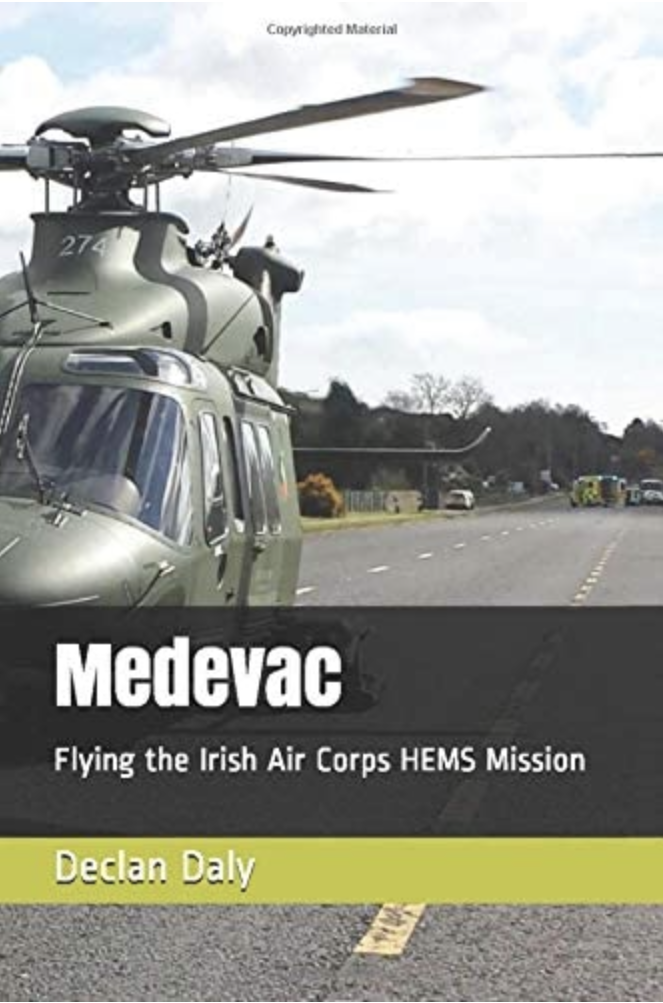
Like many here, my background is in helicopters ,in both civil and military life, and I’ve put some of it down on paper as a book about the introduction of HEMS in Ireland.
For those who want a look, it’s available through the link below. If anyone would like to ask any questions about it, or has any points of discussion from it that we can all learn from, I’m happy to answer them here as much as I can.
Safe flying
Declan
https://www.amazon.de/-/en/dp/1671808177/ref=cm_sw_r_cp_awdb_imm_M6RZRD…
-
Sudhir Rajput posted in Rotorcraft
5 years ago PublicHello friends, I am Sudhir from India. I work in the domain of helicopter avionics. I am very enthusiastic & concerned about safety aspects of the aircraft, particularly Helicopter Autopilot designs to improve upon the safety of the flying machine. I feel blessed to hit on this community where many experienced similar minded people are part of; sharing their ideas and learning from others. I am very eager to learn from you all & share my ideas to improve on the Rotorcraft safety..