
Rotorcraft Safety Technologies Promoted by EASA and International Safety Teams
Introduction
Reducing rotorcraft accidents remains a strategic priority for the European aviation community. Through the Rotorcraft Safety Roadmap | EASA (2018–2028), developed by industry experts, EASA works closely with the European Safety Promotion Network Rotorcraft (ESPN-R) | EASA and international partners such as USHST – U.S. Helicopter Safety Team, both members of the Vertical Aviation Safety Team (VAST), to promote the voluntary uptake of safety‑critical technologies with demonstrable operational safety benefits.
These initiatives encourage a systemic approach to prevention, targeting improvements in situational awareness, aircraft integrity, pilot support, training effectiveness, and crash survivability. Collectively, they support the objective of achieving a 50% reduction in rotorcraft accidents over the Roadmap period while fostering a proactive, data‑driven safety culture across Europe and beyond.
1. Situational awareness, detection and avoidance technologies
International safety teams promote a range of technologies that enhance the pilot’s awareness of weather, terrain, obstacles, traffic and aircraft energy state, particularly in demanding visual environments and low‑level operations. These systems provide earlier cues, improved visualisation of threats, and additional layers of protection when margins become reduced.
Promoted technologies include:
- Helicopter Terrain Awareness and Warning System (HTAWS)
- Enhanced Ground Proximity Warning System (EGPWS – rotorcraft variants)
- Rotor Strike Alerting System (RSAS)
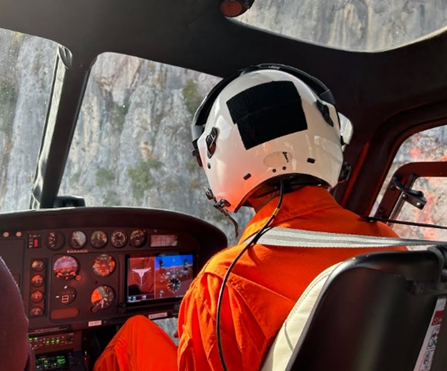
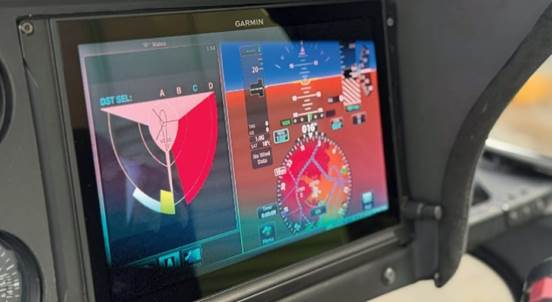
Aerotec & Concept RSAS system available for H125
- Obstacle Awareness and Warning Systems (OWS)
- Wire Strike Protection Systems (WSPS)
- Wire Detection and Warning Systems
- Traffic Advisory Systems (TAS)
- Airborne Collision Avoidance Systems (ACAS) adapted to rotorcraft environments
- Electronic Conspicuity / iConspicuity devices
Note: eConspicuity merges all systems that are related to traffic detection such as TAS, ACASxx, ADS-B, ADS-L and FLARM system. iConspicuity represents, to date, the willingness to have inter-operability of all systems which are not, as a matter of fact, compatible between then to the full extend. - Automatic Dependent Surveillance (ADS‑B) OUT / ADS‑B IN (where operationally suitable)
- Flight Path Prediction Displays
- Synthetic Vision Systems (SVS)
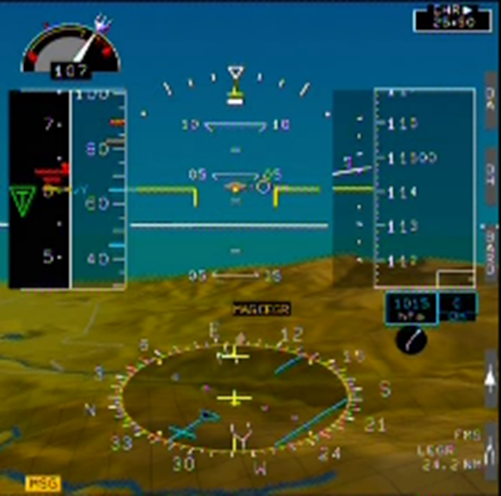
Illustration of an SVS feature enhancing pilot situational awareness
- Vortex Ring State condition alerting systems
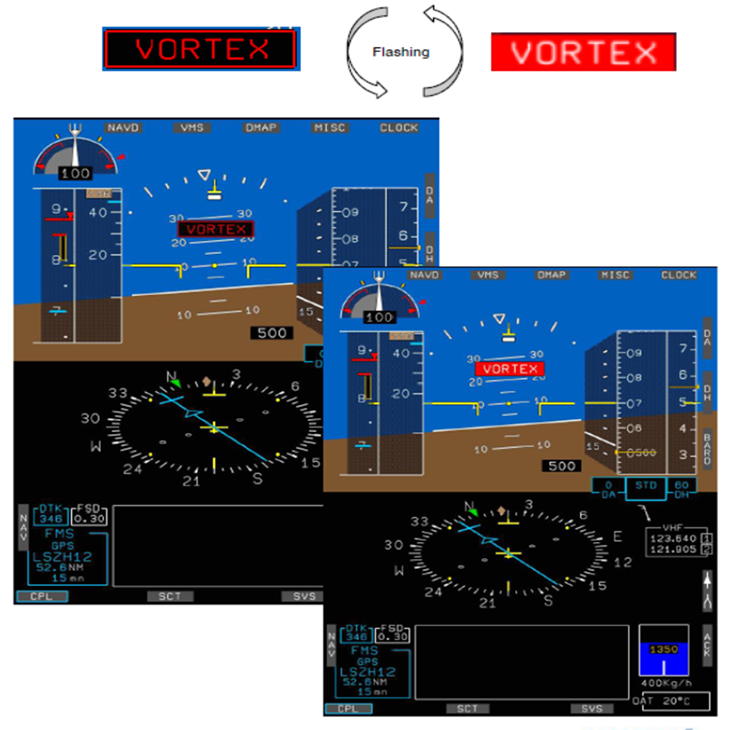
Vortex Ring State condition alerting system (Airbus Helionix)
Note: For aircraft, particularly light helicopters, that cannot be equipped with such or similar systems, consider installing a so-called “Woolometer,” a fully analog device:
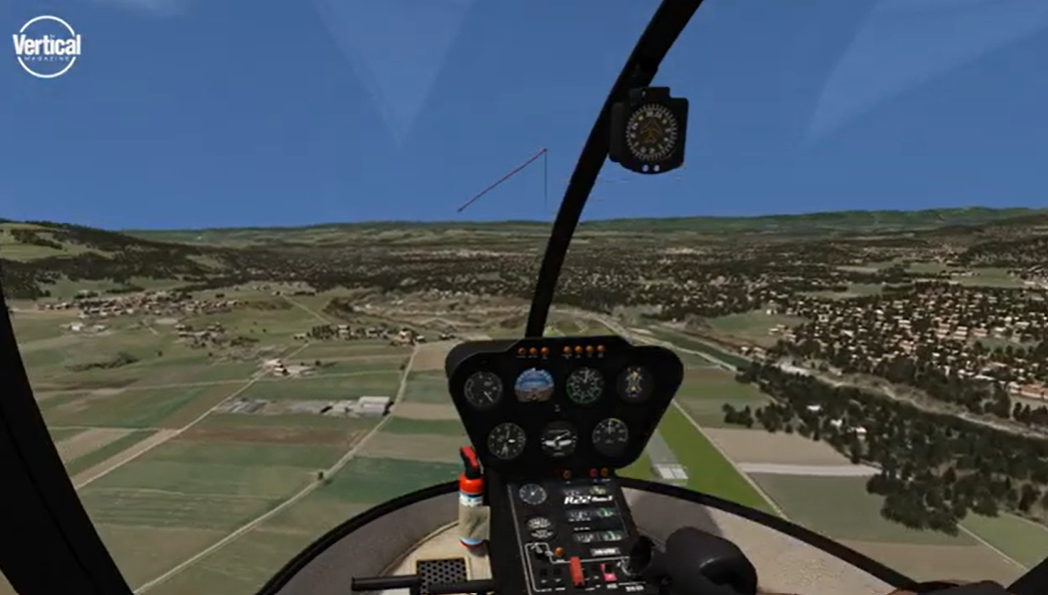
"Woolometer" behaviour indicating the onset of VRS conditions
(from the Vertical video Claude Vuichard Reviews VRM Switzerland’s VR Flight Simulator)
2. Health and usage monitoring and predictive maintenance technologies
To strengthen aircraft technical integrity and support early detection of degradation, safety promotion activities highlight procedures and technologies that combine reactive maintenance with predictive models. These systems provide operators with objective condition data, supporting informed decision‑making and more resilient maintenance planning.
Key technologies include:
- Continued Integrity Verification Programme (CIVP)
- Health and Usage Monitoring Systems (HUMS)
- Vibration Health Monitoring (VHM) systems
- Integrated engine, rotor and transmission monitoring systems
- Chip detection systems for oil debris monitoring
- Condition‑Based Maintenance (CBM) tools enabled by monitoring data
3. Flight control, cockpit and automation technologies
control systems and cockpit design play a significant role in managing pilot workload, improving handling qualities, and supporting stable aircraft control across a wide operating envelope. Safety teams promote solutions that enhance pilot support without diminishing situational awareness or basic airmanship.
Highlighted technologies include:
- Fly‑by‑Wire (FBW) flight control systems
- Stability Augmentation Systems (SAS)
- Automatic Flight Control Systems (AFCS)
- Upper‑mode autopilot functions and hover‑assist modes
- Coupled autopilot modes for approach and hover
- Improved cockpit display integration and alerting logic
- Assisted Take-Off feature
- Enhanced cockpit visibility and pilot field of view
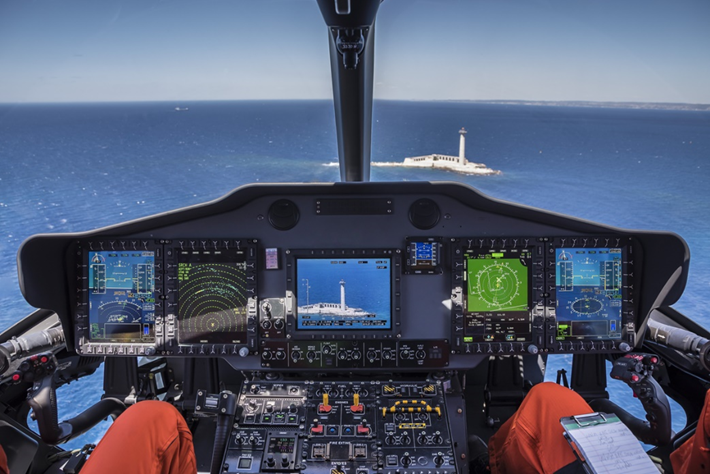
H175 cockpit with enhanced vision (Helionix Avionics)
and advanced AFCS
4. Training and simulation technologies
Technology‑enabled training capabilities are recognised as a cornerstone of modern rotorcraft safety strategies. High‑fidelity simulation and data‑informed training frameworks allow operators to better prepare crews for complex operational scenarios and emerging risks.
Promoted approaches include:
- Level D Full Flight Simulators for rotorcraft
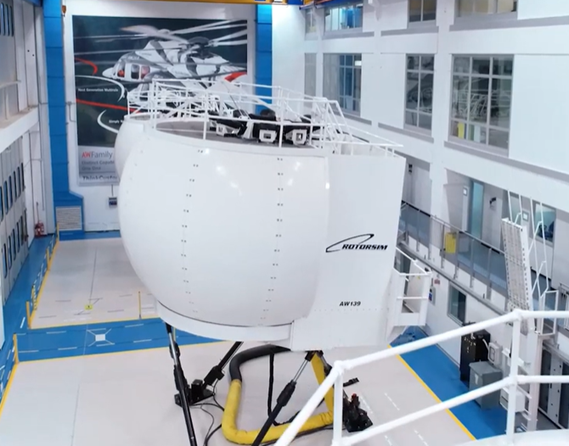
Rotorsim AW139 Level D Full Flight Simulator (FFS)
(from the Leonardo Helicopters video LOC- I Prevention and Mitigation Challenges)
- Level III Helicopter Training Devices (HTDs)
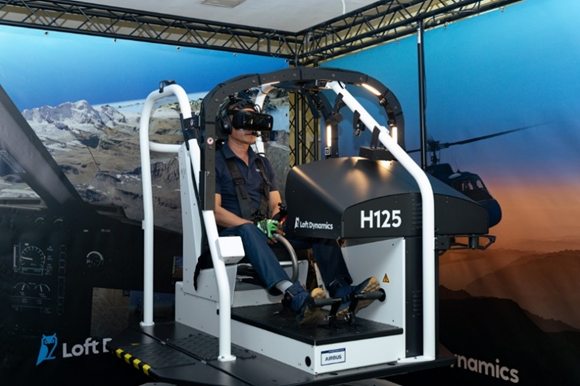
Loft Dynamics H125 Level III Flight Training Device (FTD)
- Virtual, Augmented and Mixed Reality (VR / AR / MR) training tools
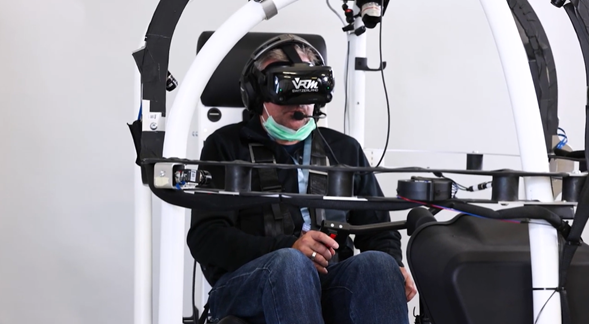
Loft Dynamics R22 VR simulator
(from the Loft Dynamics video Rick Maurer (Rega) – Review R22)
- Evidence‑Based Training (EBT) frameworks
- Data‑driven recurrent training aligned with operational experience
5. Occupant protection, aircraft structure and crashworthiness
While prevention remains the primary objective, international safety teams also promote design features that improve occupant protection and survivability in the event of an accident. These technologies aim to reduce injury severity and improve post‑impact outcomes.
Key features include:
- Helmet, pilot suit and other Personal Protective Equipment (PPE)
- Crash Resistant Fuel Systems (CRFS), including retrofit kits
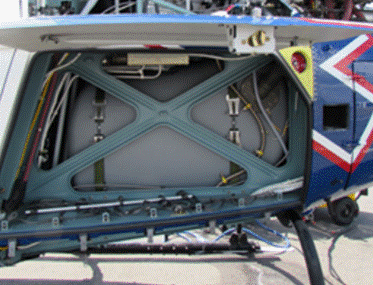
Standard Aero CFRS retrofit kit (designed for the AS350 and EC130)
- Energy‑absorbing airframe structures
- Crashworthy seats and restraint systems
- Bird‑strike‑resistant windshields and structures
- Improved emergency egress design
- Emergency flotation systems
6. Operation‑specific safety technologies
Certain rotorcraft operations present distinct operational challenges that benefit from tailored technological solutions. Safety promotion activities therefore also address operation‑specific equipment that enhances control, awareness and crew protection during specialised operations.
Examples include:
- Enhanced rescue hoist systems
- Hoist load‑limiting devices
- External load monitoring systems
- Night Vision Imaging System (NVIS)‑compatible cockpit design and lighting
- Operation‑specific obstacle and terrain databases
Promotion
EASA supports the uptake of these technologies through the Rotorcraft Safety Roadmap [1], ESPN‑R working group activities, articles published in the EASA Community Rotorcraft, and presentations delivered in the Rotorcraft Safety Zone at EUROPEAN ROTORS. The focus remains on voluntary, risk‑based implementation, supported by awareness‑raising, training, and the sharing of operational experience across the rotorcraft community.
Refer also to Annex 1 – Mapping of Promoted Technologies to Rotorcraft Accident Categories, and Annex 2 – Technology Checklist for Rotorcraft Operators.
References
Rotorcraft Safety Roadmap | EASA (2018–2028) and associated safety promotion publications
Combined USHST & ESPN R Helicopter Safety Technology Emphasis Items, Rev. 15 December 2021, VAST https://vast.aero/wp-content/uploads/2022/10/VAST_Combined_Safety_Technologies_15Dec2021.pdf
EASA ESPN-R article Technologies with Safety Benefits | EASA Community
Report NLR‑TP‑2014‑311 The Potential of Technologies to Mitigate Helicopter Accident Factors
(EHEST Specialist Team Technology study identifying and rating 145 technologies and highlighting 15 “highly promising” ones).
https://reports.nlr.nl/bitstream/handle/10921/986/TP-2014-311.pdf
Report NLR‑TP‑2018‑470 The Potential of Technologies to Mitigate Helicopter Accident Factors – Status Update and Way Forward
(Follow‑up study reviewing maturity, deployment and ongoing safety promotion actions, aligned with EPAS and the Rotorcraft Safety Roadmap).
https://reports.nlr.nl/bitstream/handle/10921/1462/TP-2018-470.pdf
Acknowledgements
Sincere thanks are extended to Tim Fauchon (BHA), Gabriel Zuber (Airbus Helicopters), and Jan Loncke (EASA) for contributing to and reviewing this article.
Appreciation is also extended to all companies whose images are featured in this article.
Annex 1 – Mapping of Promoted Technologies to Rotorcraft Accident Categories
Controlled Flight into Terrain (CFIT)
Mitigating technologies:
- SAS and AFCS and its upper modes
- HTAWS
- EGPWS (rotorcraft variants)
- Obstacle Awareness and Warning Systems
- Synthetic Vision Systems
- Flight Path Prediction Displays
- NVIS‑compatible cockpit designs
- Level D / Level III simulator training for CFIT scenarios
- Evidence‑Based Training addressing CFIT precursors
Note: If misused, certain technologies like SAS and AFCS can actually increase the risk of CFIT.
Obstacle, wire and rotor strike
Mitigating technologies:
- Rotor Strike Alerting System (RSAS)
- Wire Strike Protection Systems (WSPS)
- Wire Detection and Warning Systems
- Obstacle databases integrated into navigation systems
- Enhanced cockpit visibility and pilot field‑of‑view
Mid‑Air Collisions (MAC) and loss of separation
Mitigating technologies:
- Electronic Conspicuity / iConspicuity devices
- ADS‑B OUT / ADS‑B IN (as appropriate)
- Traffic Advisory Systems (TAS)
- Rotorcraft‑appropriate ACAS capabilities
Loss of Control In‑Flight (LoC‑I)
Mitigating technologies:
- Fly‑by‑Wire (FBW)
- Stability Augmentation Systems (SAS)
- Automatic Flight Control Systems (AFCS)
- Upper‑mode autopilot and hover‑assist functions
- Improved cockpit alerting and human‑machine interface design
- High‑fidelity simulator‑based upset prevention and recovery training
System failures and mechanical malfunctions
Mitigating technologies:
- HUMS
- VHM systems
- Integrated engine / rotor / transmission monitoring
- Chip detection systems
- HUMS‑based condition‑based maintenance
Human Factors (HF) and training‑related events
Mitigating technologies and methods:
- Level D and Level III simulators
- VR, AR and MR training tools
- Evidence‑Based Training
- Data‑driven recurrent training aligned with occurrence analysis
Crash survivability and post‑Impact events
Mitigating technologies:
- Helmet, pilot suit and other Personal Protective Equipment (PPE)
- Crash Resistant Fuel Systems (CRFS)
- Energy‑absorbing airframe design
- Crashworthy seats and restraints
- Bird‑strike‑resistant windshields
- Improved emergency egress
- Emergency flotation systems
Operation‑specific risks
Mitigating technologies:
- Improved rescue hoist systems
- Hoist load‑limiting devices
- External load monitoring systems
- NVIS‑compatible cockpit and lighting
- Operation‑specific obstacle awareness tools
Annex 2 – Technology Checklist for Rotorcraft Operators
Purpose of this Annex
This annex invites rotorcraft operators to use this checklist as a structured self‑assessment tool to:
- Assess the current level of implementation of safety‑enhancing technologies within their organisation
- Document their own assessment of technology maturity for each item
- Identify realistic next steps for safety improvement, considering operational context, operation profile, and resources
This checklist is non‑mandatory and non‑exhaustive. It is intended for internal use within an operator’s Safety Management System (SMS), safety reviews, or strategic safety planning discussions.
Instructions for operators
For each technology listed, the operator is invited to:
- Assess the current level of implementation in their own organisation, considering:
- Fleet coverage
- Operational use (routine vs. exceptional)
- Integration into SOPs, training, and safety processes
- Select the maturity level that best reflects the current state, not an aspirational target:
- Baseline
- Enhanced
- Best Practice
- Use the outcome to:
- Support internal safety discussions
- Identify gaps or improvement opportunities
- Prioritise actions within the SMS or safety plan
The selected maturity level should reflect the operator’s present situation, not regulatory expectations or future intentions.
Technology maturity levels – Indicative definitions
- Baseline
The technology is not installed, only partially available, or not systematically used. Safety risk is primarily mitigated through procedures, training, and organisational controls. - Enhanced
The technology is installed and used for selected aircraft, operations, or environments. It is partially integrated into SOPs and training. - Best Practice
The technology is broadly implemented across the applicable fleet and operations, and fully integrated into SOPs, training programmes, and safety management processes.
Variation
For each listed technology, assess only fleet coverage (in % or as Not Applicable).
A. Situational awareness & collision avoidance
Helicopter Terrain Awareness and Warning System (HTAWS)
☐ Baseline ☐ Enhanced ☐ Best Practice ☐ Not Applicable (NA)
Obstacle Awareness Systems, Wire Strike Protection, obstacle databases
☐ Baseline ☐ Enhanced ☐ Best Practice ☐ NA,
Rotor Strike Alerting System (RSAS)
☐ Baseline ☐ Enhanced ☐ Best Practice ☐ NA
Traffic awareness and conspicuity
(ADS‑B, TAS, electronic conspicuity / iConspicuity)
☐ Baseline ☐ Enhanced ☐ Best Practice ☐ NA
B. Health monitoring & predictive maintenance
Health and Usage Monitoring / Vibration Health Monitoring (HUMS / VHM)
☐ Baseline ☐ Enhanced ☐ Best Practice ☐ NA
Chip detection systems
☐ Baseline ☐ Enhanced ☐ Best Practice ☐ NA
Condition‑based maintenance supported by monitoring data
☐ Baseline ☐ Enhanced ☐ Best Practice ☐ NA
C. Flight Control, Cockpit and Automation
Stability augmentation / Automatic Flight Control Systems (AFCS)
☐ Baseline ☐ Enhanced ☐ Best Practice ☐ NA
Fly‑by‑wire or advanced handling technologies
☐ Baseline ☐ Enhanced ☐ Best Practice ☐ NA
Cockpit alerting and display integration
☐ Baseline ☐ Enhanced ☐ Best Practice ☐ NA
D. Training & simulation
Simulator access
(Level D Full Flight Simulator or Level III HTD)
☐ Baseline ☐ Enhanced ☐ Best Practice ☐ NA
Virtual / Augmented / Mixed Reality training tools
☐ Baseline ☐ Enhanced ☐ Best Practice ☐ NA
Evidence‑Based Training (EBT)
☐ Baseline ☐ Enhanced ☐ Best Practice ☐ NA
E. Occupant protection, aircraft structure and crashworthiness
Helmet, pilot suit and other Personal Protective Equipment (PPE)
☐ Baseline ☐ Enhanced ☐ Best Practice ☐ NA
Crash Resistant Fuel Systems and structural features
☐ Baseline ☐ Enhanced ☐ Best Practice ☐ NA
Seating, restraints and emergency egress
☐ Baseline ☐ Enhanced ☐ Best Practice ☐ NA
F. Operation‑specific safety technologies
Rescue hoist and external load safety systems
☐ Baseline ☐ Enhanced ☐ Best Practice ☐ NA
NVIS‑compatible night operations
☐ Baseline ☐ Enhanced ☐ Best Practice ☐ NA
Use of Results
Operators are encouraged to use the results of this self‑assessment to:
- Inform SMS safety reviews and management discussions
- Identify priority areas for safety improvement
- Support voluntary adoption of technologies promoted by EASA, ESPN‑R, and international safety teams
- Monitor progress and adjust objectives over time
Please log in or sign up to comment.