Time for a cup of tea and a nice biscuit!
The performance of your main rotor blade is several compromised if you allow dirt, bugs, pollen, grass cutting etc to build up on their leading edges. On a typical R44 for example this type of contamination can steal as much as 5HP circa 7KIAS.
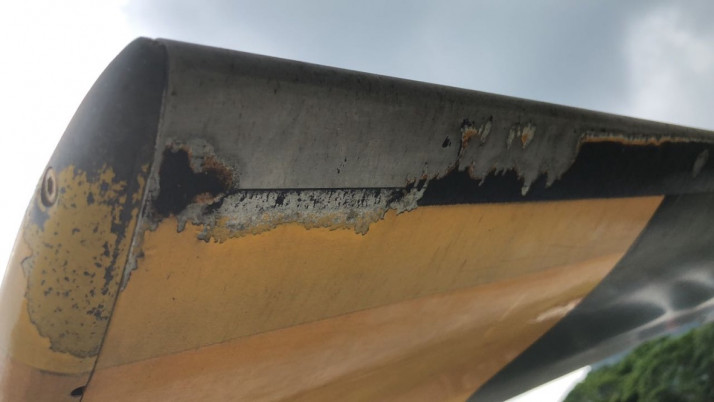
Paint erosion on the main rotor blade leading edge can have the same effect if the paint edge is not feathered!!
Waxing the blades with a carnauba-type wax, also has a dramatic positive effect on the blades performance.
At a flying school in the UK, the school Chief Flying Instructor was discussing the seemingly low power problem with an R22 with me, asking for advice.
I went out to the said aircraft with him and inspected the main rotor blades, having seen the state of them the aircraft was hovered and the manifold pressure indication recorded.
We cleaned and waxed the blades and the aircraft was flown again. The was a positive drop of indicated manifold pressure, circa 1.5in.
Simple and easy way to re establish the aircraft’s performance.
Of course, washing and waxing you blades also has a very positive effect on the damage caused by corrosion.
With the blade always rotating with positive pitch and particulates in the air, the paint on the lower surface of the blade will be eroded and very small pin prick type holes will be punched through the paint surface, leaving minute areas of aluminium skin
exposed to the elements. If left, corrosion will set in and cause serious damage. If you keep your blades waxed, the wax will fill in the blemishes and prevent the corrosion!
In a salt water environment, the main and tail rotor blades should be washed after the last flight of the day, mild soapy water, if it is safe to put your hands in it, the it should be ok for the blades!!!
Never use anything other than hand power to feather the blade paint surfaces and always use a span wise hand movement, never cord wise!!
Simple, yes. Obvious, yes. You would be amazed how many operators/owners I have encountered around the World, who have never been given this simple information!
I should also mention the fact that the main rotor skin to spar bond line should never be exposed. Always have the bond line painted, so that the paint is sacrificial and prevents damage to the blonding material.
Knowledge is flight safety, helping to keep your RPM in the green.
R