

Filters
GM1 UAS.SPEC.030(2) Application for an operational authorisation
ED Decision 2022/002/R
APPLICATION FORM FOR AN OPERATIONAL AUTHORISATION
Depending on the level of the risk of the operation, the technical characteristics of the UAS may play an important role in mitigating the risk. In that case, the UAS operator may provide additional information to the NAA on the characteristics of the UAS to be operated. The NAA will, in any case, ask for additional data when needed.
As an example regarding how to structure the additional information, the UAS operator may supplement the application for the authorisation with the additional elements shown below. Elements from the example may be added or removed as required.
LANDING GEAR | yes no | ||||
Type | Fixed Retractable Other | ||||
Characteristics | Wheels Skids Legs Other | ||||
CONSPICUITY CHARACTERISTICS (2) | |||||
Paint (1): | |||||
Lights (2) | yes no | Intensity: | |||
Aircraft visibility lights: | |||||
Control lights (flight mode or alert indicators, etc.): | |||||
PROPULSION (3) | |||||
Electrical Combustion Hybrid Other Description: Note:Provide a brief description (for example, push/pull systems, coaxial systems in the case of multirotors, combined systems, etc.). | |||||
SYSTEMS | |||||
Propellers Turbines Other Description: | |||||
Control and/or positioning system (4) | |||||
FLIGHT CONTROLLER (5) | |||||
Manufacturer: Model: Description: | |||||
FLIGHT TERMINATION SYSTEM (6) | |||||
Description: | |||||
FLIGHT MODES (7) | |||||
Description: | |||||
GROUND CONTROL STATION (8) | |||||
Radio emitter: Manufacturer: Model: | |||||
Mobile/computer application: Manufacturer: Model: | |||||
Other: Manufacturer: Model: | |||||
CONTROL COMMUNICATION LINK | |||||
Description (frequency): | |||||
TELEMETRY COMMUNICATION LINK | yes no | ||||
Description (frequency): | |||||
VIDEO SYSTEM COMMUNICATION LINK (FPV) | yes no | ||||
Description (frequency): | |||||
PAYLOAD COMMUNICATION LINK | yes no | ||||
Description (frequency): | |||||
PAYLOAD (9) | yes no | ||||
TYPE | |||||
Fixed Interchangeable Description: | |||||
OPERATION LIMITS (10) | |||||
Maximum operating height: | |||||
Max airspeed: | |||||
Weather conditions: | |||||
SAFETY SYSTEMS/SAFETY NETS AND AWARENESS (11) | |||||
DETECT AND AVOID yes no Description: | |||||
GEO-FENCING OR GEO-CAGING yes no Description: | |||||
TRANSPONDER yes no Description: | |||||
SYSTEMS FOR LIMITING IMPACT ENERGY yes no Description: | |||||
OTHER Description: | |||||
(1)PAINT
Describe any painted elements that are visible (marks) and significant (colour, shape, etc.).
(2)LIGHTS
Describe the lights, including their colours and locations.
(3)PROPULSION
Mark the type of propulsion used, indicating (in the space provided) the manufacturer and model, and detailing relevant information such as the number of motors/engines, the configuration, etc. Powerplant design diagrams may be attached if necessary.
(4)CONTROL AND/OR POSITIONING SYSTEM
As a general instruction for this section, in addition to the description and information deemed necessary to define these systems, provide any certification and rating for the systems, such as those related to electromagnetic compatibility or any other European directive satisfied by the equipment installed on the aircraft, for consideration during the specific risk assessment conducted using the specific operations risk assessment (SORA) or any other risk assessment methodology that is followed to evaluate and authorise operations.
(5)FLIGHT CONTROLLER
Indicate the manufacturer and model of the flight controller. Describe the relevant aspects affecting flight safety.
(6)FLIGHT TERMINATION SYSTEM
Describe and include the technical characteristics of the system, its modes of operation, system activation and any certification and rating for the components, as well as proof of its electromagnetic compatibility for consideration during the SORA or any other risk assessment methodology that is followed to evaluate and authorise operations.
(7)FLIGHT MODES
Describe the flight modes (i.e. manual, artificial stability with controller, automatic, autonomous). For each flight mode, describe the variable that controls the aircraft: increments in position, speed control, attitude control, type of altitude control (which sensor is used for this purpose), etc.
(8)GROUND CONTROL STATION
For ‘encrypted’ links, describe the encryption system used, if any.
(9)PAYLOAD
Describe each of the different payload configurations that affect the mission or that, without changing it, impact the weight and balance, the electrical charge or the flight dynamics. Include all relevant technical details. If needed, you may use other documents that provide the specified details.
(10)OPERATION LIMITS
Describe in this section the maximum operating height, the maximum airspeed (including Vmax ascent, Vmax descent and Vmax horizontal), and, in addition, the meteorological limit conditions in which the UAS can operate (e.g. rain, maximum wind, etc.)
(11)SAFETY SYSTEMS/SAFETY NETS AND AWARENESS
Describe the systems or equipment installed on the aircraft to mitigate potential operational safety risks, whether included in the form or not.
GM2 UAS.SPEC.030(2) Application for an operational authorisation
ED Decision 2022/002/R
‘GENERIC’ VERSUS ‘PRECISE’ OPERATIONAL AUTHORISATION
According to Article 12 of the UAS Regulation, a competent authority may decide to grant a ‘generic’ operational authorisation, i.e. an operational authorisation that is applicable to an indefinite number of flights taking place in locations generically identified, during the period of validity of the operational authorisation. (Contrary to the ‘generic’ operational authorisation, an operational authorisation that is limited to the number of flights and/or to known locations identified by geographical coordinates will be called ‘precise’ operational authorisation.)
CONDITIONS FOR ISSUING A ‘GENERIC’ OPERATIONAL AUTHORISATION
A ‘generic’ operational authorisation does not contain any precise location (geographical coordinates) but applies to all locations that meet the approved conditions/limitations (e.g. density of population of the operational and adjacent area, class of airspace of the operational and adjacent area, maximum height, etc.). The UAS operator is responsible for checking that each flight they conduct:
—meets the mitigations and operational safety objectives derived from the SORA and the requirements listed in the operational authorisation; and
—takes place in an area whose characteristics and local conditions are consistent with the GRC and ARC classification of the SORA as approved by the NAA.
The UAS operator should anyhow check whether their MS has published a geographical zone in the area of operation according to Article 15 of the UAS Regulation, requiring a flight authorisation (e.g. this may be the case for the areas covered by U-Space). A flight authorisation should not be confused with an operational authorisation.
The criteria to determine whether a UAS operator is eligible for a ‘generic’ operational authorisation are the following:
1.The limitations regarding the operational scenario, the operational volume and the buffers defined by the operational authorisation are expressed in such a way that it is simple for the UAS operator to ensure compliance with those limitations.
It will usually be easier for the UAS operator to ensure compliance when the conditions are unambiguous and not open to interpretation. This is the case, for instance, when:
—a controlled ground area is required, or the density of population is very low;
—the operation takes place in segregated airspace.
In this regard, ‘generic’ operational authorisations may be relevant for operations conducted according to PDRA-Sxx, since the conditions are similar to the ones of the declarative STS and it is relatively easy for the UAS operator to ensure compliance with those conditions.
As a rule of thumb, a ‘precise’ operational authorisation rather than a ‘generic’ one may be more appropriate when the iGRC ≥ 4 or the iARC ≥ ARC-c.
2.The strategic mitigation measures, if any, are not open to interpretation or difficult to implement.
The use of some strategic measure mitigation (M1 for GRC or Step 5 for ARC) often prompt debate between the UAS operator and the NAA regarding the relevance/validity of the data sources (density of population, density/type of traffic in given airspace, etc.), and the efficiency of the proposed strategic mitigation measures. Furthermore, some of these measures are difficult to implement and it is not always possible for the NAA to simply trust the capacity of the UAS operator to do so.
For instance, the following examples show measures that are difficult to implement / open to interpretation:
—achieving a local reduction of the density of population;
—ensuring the absence of uninvolved persons in very large, controlled ground areas, or reserving large, controlled ground areas in densely populated environments;
—starting an operation in airspace that requires a new protocol with the ANSP/ATSP, etc.
Note: In the future, qualified service for strategic deconfliction (U-space) may be a valid mitigation measure for a ‘generic’ operational authorisation.
3.The NAA has assessed the capacity of the UAS operator to identify/assess the local conditions
The UAS operator should have a diligent and documented process to identify/assess the local conditions and their compliance to the limitations given by the authorisation (in the operations manual (OM)). The UAS operator should train its personnel to assess the operational volume, buffers and mitigations in order to prepare for the next operations. The UAS operator should also document and record the assessment of locations (e.g. in mission files), so that adherence to this process can be verified by the NAA on a regular basis.
For simple operations where Criteria 1 and 2 are met, the NAA may decide to issue the ‘generic’ operational authorisation first and assess the robustness of the procedures through continuous oversight.
For complex operations where Criteria 1 and 2 are not met, then the third criterion is paramount. While the NAA may be confident enough to directly issue a ‘generic’ operational authorisation, it may also decide to add some restrictions for the locations that are valid for the first one (or more) operations. The UAS operator should provide evidence to the NAA that the process defined in Criterion 3 has been followed, and the area and local conditions identified by the UAS operator comply with the authorisation. The NAA will review the evidence (as for a ‘precise’ authorisation) and confirm in written to the operator that their analysis is satisfactory.
Once the NAA has enough evidence or confidence that the UAS operator is able to complete the assessments on its own, the restrictions on the location may be withdrawn.
Eventually, a LUC may be appropriate to demonstrate this capacity (see below).
DIFFERENCES BETWEEN A ‘GENERIC’ OPERATIONAL AUTHORISATION AND A LUC
An operational authorisation where the locations are generically identified may to some extent be traced to some privileges granted to a LUC holder: the UAS operator can schedule new flights without receiving a new operational authorisation for each of them. However, a LUC offers more flexibility than a generic operational authorisation by allowing a UAS operator to have different level of privileges, including the possibility to start new types of operations or use previously non-validated types of UASs.
On the other hand, a ‘generic’ operational authorisation does not require the UAS operator to formally implement a management system. Such a management system would be disproportionate for lowrisk operations (such as PDRA-Sxx) (see Criterion 2). However, the more requirements are derived from the SORA and the conditions of the operational authorisations are difficult to check and to comply with, the more robust and reliable the processes and the organisation of the UAS operator need to be to ensure the absence of deviation.
Eventually, a LUC becomes necessary when the risk of deviation from these procedures is high and when deviating from the validated conditions greatly increases the risk of the operation. The LUC management system will be needed to ensure compliance with the procedures of the UAS operator through an independent process.
In this regard, a LUC may be more relevant than a ‘generic’ operational authorisation in the following cases:
—for SAIL ≥ 4 operations (due to OSO#1 ‘Ensure the UAS operator is competent and/or proven’ with a ‘high’ level of robustness); or
—for SAIL ≥ 3 operations, when strategic ground risk mitigation (M1) or strategic air risk mitigation (Step 5) is applied, to make sure that the applicant exhibits the right safety culture to perform a location risk assessment.
AMC1 UAS.SPEC.030(3)(e) Application for an operational authorisation
ED Decision 2025/018/R
OPERATIONS MANUAL
For all operations classified in the ‘specific’ category, the UAS operator should develop an OM structured according to Chapter A.3 of Annex A of AMC1 Article 11.
The OM should be submitted to the competent authority for operations classified in SAIL III and higher. For operations classified in SAIL I or II, please refer to AMC1 Article 12(2)(a).
AMC2 UAS.SPEC.030(3)(e) Application for an operational authorisation
ED Decision 2025/018/R
OPERATIONAL PROCEDURES WITH ‘MEDIUM’ AND ‘HIGH’ LEVEL OF ROBUSTNESS
1.Scope of this AMC
1.1This AMC addresses the criteria for the ‘medium’ and ‘high’ level of robustness of the operational procedures that are required under the OSO #08: Operational procedures are defined, validated and adhered to.
These criteria may be used to also address the criteria for the ‘medium’ and ‘high’ level of robustness of the operational procedures required in other sections of the SORA (e.g the mitigations for the ground risk defined in Annex B to AMC1 Article 11 or for the air risk defined in Annex D to Article 11.
2.Criteria for the level of integrity
2.1.Criterion #1: Procedure definition
2.1.1.Annex E to AMC1 Article 11 provides the minimum elements that the operational procedures need to appropriately cover for the UAS operations.
2.1.2.Chapter A.3 of Annex A to AMC1 Article 11 provides an example of an operations manual structure and a table referencing each OM chapter with the OSOs the requirements refer to.
2.2.Criterion #2: Consideration of potential human error
Operational procedures should be developed to minimise human errors:
(a)each of the tasks and the complete sequence of the tasks of a procedure should be intuitive, unambiguous, and clearly defined;
(b)the tasks should be clearly assigned to the relevant roles and persons, ensuring a balanced workload; and
(c)the procedures should adequately address fatigue and stress, considering, among other aspects, the following: duty times, regular breaks, rest periods, the applicable health and safety requirements in the operational environment, handover/takeover procedures, responsibilities, and workload.
2.3Criterion #3: Emergency response plan (ERP)
For more information regarding the ERP procedure, the UAS operator should refer to AMC3 UAS.SPEC.030(3)(e).
3.Criteria for the level of assurance
3.1.The purpose of the validation process described in this AMC is to confirm whether the proposed operational procedures are complete and adequate to ensure the safe conduct of the intended UAS operations.
3.2.The validation process should include the following:
(a)a review of the completeness of the procedures to ensure that:
(1)all elements that are indicated in points 2.1.1 and 2.1.2 have been addressed; and
(2)all relevant references have been considered, including but not limited to:
(i)the applicable regulations;
(ii)the requirements from the competent authority and/or other relevant authorities or entities;
(iii)the local requirements and conditions;
(iv)the available recommended practices for the intended type of UAS operations;
(v)the instructions from the UAS designer and of any other UAS equipment designer, if applicable;
(vi)the instructions and requirements from externally provided services that support the UAS operations, if applicable;
(vii)the results from previous experience, including tests and/or simulations as those indicated in point (c) and (d); and
(viii)consensus-based voluntary industry standards;
(b)an expert judgement to assess the adequacy of the procedures based on:
(1)the objective(s) of each procedure;
(2)relevant key performance parameters/indicators and/or benchmarking of options, if applicable;
(3)an assessment of the procedures’ complexity in accordance with point 2.2; and
(4)an assessment of the effect of human factors on procedures in accordance with point 2.2;
(c)a proof of the adequacy of the procedures through tests or practical exercise for phases of the UAS operation other than the UA flight, which involve the UAS and/or any external system that supports the operation;
(d)a proof of the adequacy of the contingency and emergency procedures through:
(1)dedicated flight tests conducted in an area with reduced air and ground risk and/or representative subsystems tests; or
(2)simulation, provided it is proven valid for the intended purpose with positive results; or
(3)any other means acceptable to the competent authority that issues the authorisation;
(e)if the option in point (d)(3) is selected, a substantiation of the suitability of those means for proving the adequacy of the procedures;
(f)a record of proof of the adequacy of the procedures, including at least:
(1)the UAS operator’s name and registration number;
(2)the date(s) and place(s) of tests or simulations;
(3)identification of the means used, e.g. for tests or simulations that use actual UASs: the type category, the name of the UAS designer, and the model and serial number of each UA used;
(4)a description of tests or simulations conducted, including their purpose, the expected results (including key performance parameters/indicators, where relevant), how they were conducted, the results obtained, and conclusions; and
(5)the signature of the person that is appointed by the UAS operator to conduct the tests or simulations;
(g)for UAS operations that require a ‘high’ level of assurance, the procedures and the dedicated flight tests, simulations, or other means acceptable to the competent authority, which are indicated in point 3.2, validated by the competent authority that issues the authorisation or by an entity that is recognised by that competent authority.
3.3.The following conditions apply to the dedicated flight tests that are indicated in point 3.2(d)(1):
(a)the configuration of the UAS hardware and software should be identified;
(b)the UAS operator should conduct the dedicated flight tests;
(c)if no simulations as the ones indicated in point 3.2(d)(2) are conducted, the dedicated flight tests should cover all the relevant aspects of the contingency and emergency procedures;
(d)for UAS operations that require a ‘high’ level of assurance, the dedicated flight tests that are performed to validate the procedures and checklists should cover the complete flight envelope or proven to be conservative;
(e)the UAS operator should conduct as many flight tests as agreed with the competent authority to prove the adequacy of the proposed procedures;
(f)the dedicated flight tests should be conducted in a safe environment (reducing the ground and air risks to the greatest extent possible), while ensuring the representativeness of the tests’ results for the intended UAS operations; and
(g)the UAS operator should record the flight tests as part of the information to be recorded as per point UAS.SPEC.050(1)(g), e.g. in a logbook, as indicated in AMC1 UAS.SPEC.050(1)(g); such a record should include any potential issues identified.
3.4.The UAS operator should reduce the complexity of the procedures as much as possible.
3.4.1.The verification of the complexity of the procedures may include:
(a)an expert judgement, as indicated in point 3.3(b); and
(b)a proof of the adequacy of the procedures, as indicated in point 3.3(c) and (d).
3.4.2.The UAS operator may adopt a method for the evaluation of the complexity of the procedures applied by the relevant personnel, i.e. the remote pilot and/or other personnel in charge of duties essential to the UAS operation. That method should be adequate for the evaluation of the workload that is required by the task(s) of each procedure.
For example, a suitable method for evaluating the workload of the remote pilot and/or other personnel in charge of duties essential to the UAS operation may be the ‘Bedford Workload Scale’, which was conceived as a qualitative and relatively simple methodology for rating the pilots’ workload that is associated with the design of an aircraft’s human–machine interface (HMI). However, this methodology is deemed to be adequately generic to be also applicable to the tasks associated with the operational procedures to be conducted by remote pilots and/or other personnel in charge of duties essential to the UAS operation.
Figure 1 depicts the Bedford Workload Scale adapted to operational procedures for UAS operations: ‘pilot’ is replaced by ‘remote crew member’ (i.e. the remote pilot or other personnel in charge of duties essential to the UAS operation), and ‘pilot decision’ is replaced by ‘remote crew member performs a procedure task’. A procedure may include one or more tasks.
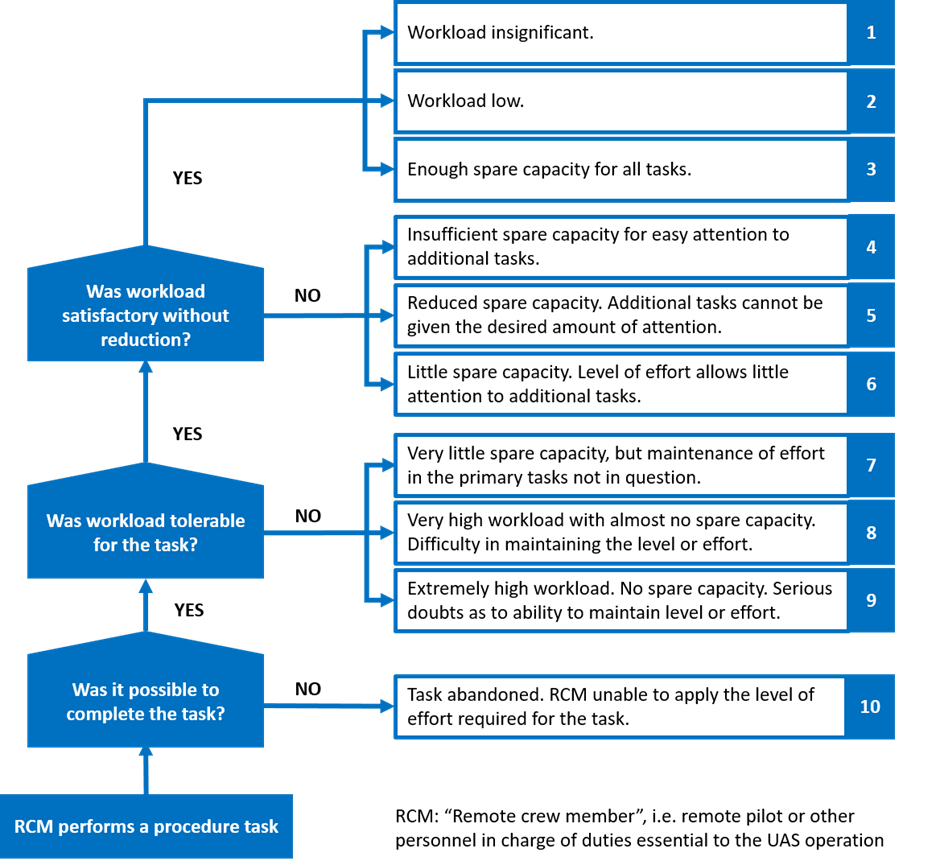
Figure 1 — Bedford Workload Scale adapted to operational procedures for UAS operations
AMC3 UAS.SPEC.030(3)(e) Application for an operational authorisation
ED Decision 2025/018/R
EMERGENCY RESPONSE PLAN (ERP)
1.Scope of this AMC
1.1This AMC defines the content of an ERP as well as the methodology for its validation. It may be used to meet Criterion #4 of OSO #8 (ERP) of Annex E to AMC1 Article 11.
1.2The risk assessment, as required by Article 11 of the UAS Regulation, should address the safety risks that are associated with the loss of control of a UAS operation, which may result in:
(a)fatal injuries to third parties on the ground;
(b)injuries to third parties in the air; or
(c)damage to critical infrastructure.
Note:As per Section S.2.3.2 of AMC1 Article 11, the loss of control of a UAS operation corresponds to situations where the contingency procedures would not have achieved the desired effect.
1.3.Therefore, in line with the risk assessment applied, the scope of this AMC is limited to addressing the response to emergency situations that are caused by the UAS operation, as well as the potential consequences that are indicated in point 1.2. However, the response to such emergency situations should not be limited to the potential risk/harm only to third parties but also to the UAS operator’s personnel.
1.4.This AMC does not address emergency situations other than those referred to in point 1.3. However, the UAS operator may be required to address such situations as part of the operational authorisation166.
2.Purpose of the ERP
2.1.The UAS operator should, in cooperation with other stakeholders, if applicable, develop, coordinate, and maintain an ERP that ensures orderly and safe transition from normal operation to emergency and return to normal operation. The ERP should include the actions to be taken by the UAS operator or specified individuals in an emergency, and indicate the size, nature, and complexity of the activities to be performed by the UAS operator or the specified individuals.
2.2.As for emergency procedures, an ERP is implemented by the UAS operator to address emergency situations. However, an ERP is specifically developed to:
(a)limit any escalating effect of the emergency situation;
(b)meet the conditions to alert the relevant authorities and entities.
2.3.The ERP should contain all the necessary information about the role of the relevant personnel in an emergency and about their response to it.
3.Effectiveness of the ERP
3.1.For the ERP to be effective, it should:
(a)be appropriate to the size, nature, and complexity of the UAS operation;
(b)be readily accessible by all relevant personnel and by other entities, where applicable;
(c)include procedures and checklists relevant to different or specific emergency situations;
(d)clearly define the roles and responsibilities of the relevant personnel;
(e)have quick-reference contact details of the relevant personnel;
(f)be regularly tested through practical exercises involving the relevant personnel; and
(g)be periodically reviewed and updated, when necessary, to maintain its effectiveness.
4.Emergency situations, response activation, procedures, and checklists
4.1.The ERP should define the criteria for identifying emergency situations, and for identifying the main emergency situations that are likely to increase the level of harm (escalating effect) if no action is taken.
4.2.The identified emergency situations should at least include those where one or more UA are operated by the UAS operator and have the potential to:
(a)harm one or more persons;
(b)hit a ground vehicle, building, or facility where there are one or more persons who might be injured as a consequence of the UA impact;
(c)harm critical infrastructure;
(d)start a fire that might propagate;
(e)release dangerous substances;
(f)hit an aircraft that carries people and/or whose crash might lead to one or more of the situations listed in (a) to (e); and
(g)cause the UA to leave the operational volume and fly beyond the limits of:
(1)the ground risk buffer; and/or
(2)the air risk buffer (if existing), or enter adjacent airspace where there is a risk of collision with manned aircraft.
4.3.The ERP should establish the criteria for the activation of the respective emergency response procedures to address the identified emergency situations.
4.4.The ERP should consider the following principles for prioritising the actions to respond to an emergency situation:
(a)alert the relevant personnel and entities;
(b)protect the life of those affected or in danger;
(c)give first aid while awaiting the arrival of the emergency services, provided the personnel employed by the UAS operator is qualified for that purpose;
(d)ensure the safety of the emergency responders;
(e)address secondary effects and put in place actions to reduce them (e.g. if the UA crashes on a road, warn the other drivers in the traffic or redirect them accordingly in order to avoid having cars colliding with the crashed UAS);
(f)keep the emergency situation under control or contained;
(g)protect property;
(h)restore the normal situation as soon as practicable;
(i)record the emergency situation and the response to it, and preserve evidence for further investigation;
(j)remove damaged items, unless needed untouched for investigation purposes, and restore the location of the emergency;
(k)debrief the relevant personnel;
(l)prepare any required post-emergency report or notification; and
(m)evaluate the effectiveness of the ERP and update it, if required.
4.5.As a minimum, the ERP should include procedures for:
(a)an orderly transition from the normal phase to the emergency response phase;
(b)the assignment of emergency responsibilities and roles (see point 5);
(c)coordinated action and interaction with other entities to respond to the emergency situation; and
(d)return to normal operation as soon as practicable.
4.6.The ERP should include a procedure for recording the information on the emergency situation and on the subsequent response. That procedure should also cover how to gather information from a third party that reports an emergency situation caused by a UA of the UAS operator.
4.7.The ERP should include procedures for handling hazardous materials in an emergency situation, if applicable.
4.8.The ERP should include checklists that:
(a)are suitable for the identified emergency situations, as per point 4.1;
(b)clearly indicate the sequence of actions and the personnel responsible to carry out those actions; and
(c)provide the contact details of key stakeholders, as per point 5.4.
4.9.The content of the ERP should be kept up to date and reflect all organisational or operational changes that may affect it.
5.Roles, responsibilities, and key points of contact
5.1.The UAS operator should nominate an emergency response manager (ERM) who has the overall responsibility for the emergency response.
5.2.If the UAS operator is not a one-person entity and/or manages external personnel in an emergency response, the UAS operator should establish an emergency response team (ERT) that:
(a)is led by the ERM;
(b)includes a core ERT that comprises persons with a role that implies being directly involved in responding to an emergency situation; and
(c)includes, if applicable, a support ERT that comprises ERT members who support the core ERT in responding to the emergency situation.
5.3.The ERP should provide a clear delineation of the responsibilities in an emergency response, including the duties of the remote pilot(s) and of any other personnel in charge of duties essential to the UAS operation.
5.4.The ERP should establish a contact list(s) of key staff, relevant authorities, and entities involved in an emergency response, including:
(a)the full names, roles, responsibilities, and contact details of the ERM and, if applicable, of the ERT members, including their replacement if the nominated persons are unavailable; and
(b)the full names, roles, responsibilities, and contact details of the relevant authorities and entities outside the UAS operator to be contacted in case of emergency; in addition, the single European emergency call number ‘112’ should be indicated as an emergency contact number for UAS operations that are conducted in any of the EASA Member States and in any other State where that number is used167.
5.5.The ERP should indicate the person(s) responsible for the emergency response means (refer to point 6.2) and their contact details. The responsible person(s) should ensure that those means are available and usable when needed.
5.6.To ensure a prompt response, the ERM and other ERT members, if applicable, should have direct access to:
(a)the emergency response checklists that are indicated in point 4.8; and
(b)if not included in the checklists referred to in (a), the contact list(s) indicated in point 5.4.
6.Emergency response means
6.1.The ERP should indicate the means to be used by the UAS operator to respond to an emergency, which may include one or more of the following:
(a)facilities, infrastructure, and equipment;
(b)extinguishing means, e.g. fire extinguishers, fireproof portable electronic device (PED) bags;
(c)personal protective equipment, e.g. protective clothing, high-visibility clothing, helmets, goggles, gloves;
(d)medical means, including first-aid kits;
(e)communication means, e.g. phones (landline and mobile), walkie-talkies, aviation radios, internet; and
(f)others.
6.2.The person(s) in charge of the emergency response means should have an updated record of the available means that are indicated in point 6.1, including their number and status (e.g. expiry date of perishable means).
7.ERP validation
7.1.If the UAS operator is a one-person entity and does not manage external personnel in an emergency response, the UAS operator should at least ensure that:
(a)the procedures that are indicated in point 4 cover all the identified emergency situations and that the necessary actions are reflected in the corresponding checklist(s);
(b)the contact details in the list(s) indicated in point 5.4 are up to date; and
(c)the availability of the emergency response means that are indicated in point 6 is checked before conducting any UAS operation, in particular that the communication means to alert the relevant contacts (see point (b)) are operational.
7.2.If the UAS operator is not a one-person entity and/or manages external personnel in an emergency response, in addition to complying with point 7.1, the UAS operator should conduct a tabletop exercise168 that:
(a)is established in accordance with the criteria that are indicated in the ERP to be considered representative;
(b)is consistent with the ERP training syllabus;
(c)includes sessions where one or more scenarios of the identified emergency situations are discussed by the exercise participants, which should include the relevant ERT members for each of the sessions; all aspects of the ERP should be covered once all sessions of the tabletop exercise have been completed;
(d)is guided by the ERM or any other person designated by the UAS operator to act as a facilitator;
(e)may include the participation of third parties that are identified in the ERP; the participation conditions for those third parties should be indicated in the ERP; and
(f)is performed with the periodicity that is indicated in the ERP.
However, if the UAS operator is a one-person entity and does not manage external personnel in an emergency response, a tabletop exercise may not be appropriate as the participation of third parties is not required. In such case, the conditions of point 7.1 are deemed sufficient and proportionate to the level of simplicity of the operator and, in principle, of the UAS operations.
For UAS operators with a more complex structure as well as for complex UAS operations, the tabletop exercises may need to be complemented with partial emergency exercises and/or full-scale exercises, including the corresponding drills.
7.3.After following the procedures that are described in the ERP in a real emergency situation, the UAS operator should conduct an analysis of the way the emergency was managed and verify the effectiveness of the ERP.
8.ERP training
8.1.The UAS operator should provide relevant personnel, and in particular ERT members, with ERP training.
8.2.The UAS operator should develop a training syllabus that covers all the elements of the ERP.
8.3.The UAS operator should compile and keep up to date a record of the ERP training that is completed by the relevant personnel.
8.4.The competent authority that issues the authorisation or an entity that is designated by that competent authority should verify the competencies of the relevant personnel.
UAS.SPEC.040 Issuing of an operational authorisation
Regulation (EU) 2020/639
(1)When receiving an application in accordance with point UAS.SPEC.030, the competent authority shall issue, without undue delay, an operational authorisation in accordance with Article 12 when it concludes that the operation meets the following conditions:
(a)all information in accordance with point (3) of point UAS.SPEC.030 is provided;
(b)a procedure is in place for coordination with the relevant service provider for the airspace if the entire operation, or part of it, is to be conducted in controlled airspace.
(2)The competent authority shall specify in the operational authorisation the exact scope of the authorisation in accordance with Article 12.
AMC1 UAS.SPEC.040(1) Operational authorisation — EASA Form 209
ED Decision 2025/018/R
OPERATIONAL AUTHORISATION TEMPLATE
The competent authority should produce the operational authorisation according to the following form:
| Operational authorisation for the ‘specific’ category |
| ||||||||
1. Authority that issues the authorisation | ||||||||||
1.1 Issuing authority | ||||||||||
1.2 Point of contact Office Telephone | ||||||||||
2. UAS operator data | ||||||||||
2.1 UAS operator registration number | ||||||||||
2.2 UAS operator name | ||||||||||
2.3 Point of contact Name Telephone | ||||||||||
3. Authorised operation | ||||||||||
3.1 Authorised location(s) including the lower and upper limits of the operational volume | Generic, lower limit __m (__ ft), upper limit __m (__ ft) Precise, specify coordinates _______________________, lower limit __m (__ ft), upper limit __m (__ ft) | |||||||||
3.2 Risk assessment reference and revision | SORA edition date ___ PDRA # __-__ edition date ___ other _________ | |||||||||
3.3 Level of assurance and integrity | SAIL I SAIL II SAIL III SAIL IV SAIL V SAIL VI Other____________ | |||||||||
3.4 Type of operation | VLOS BVLOS | |||||||||
3.5 Transport of dangerous goods | Yes No | |||||||||
3.6 Dropping material | Yes No | |||||||||
3.7 Ground risk characterisation | 3.7.1 Operational area (maximum population density) | controlled ground area people/km2 sparsely populated area up to 5 up to 50 up to 500 populated area up to 5 000 up to 50 000 more than 50 000 assemblies of people no limit | ||||||||
3.7.2 Adjacent ground area (average population density) | people/km2 sparsely populated area up to 50 up to 500 populated area up to 5 000 up to 50 000 assemblies of people no limit | |||||||||
3.7.3 Adjacent ground area (outdoor assemblies of people allowed within 1 km of the operational volume) | up to 40 000 people up to 400 000 people more than 400 000 people | |||||||||
3.8 Ground risk mitigations | 3.8.1 M1(A) — Sheltering | No Low Medium | ||||||||
3.8.2 M1(B) — Operational restrictions | No Medium High | |||||||||
3.8.3 M1(C) — Ground observation | No Low | |||||||||
3.8.4 M2 — Mitigation to reduce effect of ground impact | No Medium High | |||||||||
3.9 Final ground risk class (GRC) | ||||||||||
3.10 Residual air risk level in the operational volume | ARC-a ARC-b ARC-c ARC-d | |||||||||
3.11 Air risk mitigations | 3.11.1 Strategic mitigations | No Yes If yes, please describe _________________ | ||||||||
3.11.2 Tactical mitigation methods | ||||||||||
3.12 Achieved level of containment | Low Medium High Tethered | |||||||||
3.13 What is the minimum RP:UA ratio allowed between the remote pilot (RP) and the UA that may be operated simultaneously? | RP:UA ___:____ | |||||||||
3.14 Remote pilot competency | ||||||||||
3.15 Competency of staff, other than the remote pilot, essential for the safety of the operation | ||||||||||
3.16 Type of events to be reported to the competent authority (in addition to those required by Regulation (EU) No 376/2014) | ||||||||||
3.17 Insurance | No Yes | |||||||||
3.18 Compliance matrix file reference | ||||||||||
3.19 Remarks / additional limitations | ||||||||||
4. Data of authorised UAS | ||||||||||
4.1 Design organisation name (optional) | 4.2 Model name (optional) | |||||||||
4.3 Type of UAS | Fixed-wing Rotorcraft-helicopter Rotorcraft-gyroplane VTOL-capable UA (including multirotors Lighter than air / other | 4.4 Maximum UA characteristic dimensions | _____ m | |||||||
4.5 Take-off mass (optional) | _____ kg | 4.6 Maximum operational speed | _____ m/s (_____ kt) | |||||||
4.7 Type of C2 link | ||||||||||
4.8 Size of the adjacent ground area | ____ km | |||||||||
4.9 Additional technical requirements | ||||||||||
4.10 Serial number or, if applicable, UA registration mark (optional) | ||||||||||
4.11 Number of type certificate (TC) or design verification report (DVR), number and issue date (optional) | ||||||||||
4.12 Number of the certificate of airworthiness (CofA) (optional) | ||||||||||
4.13 Number of the noise certificate (optional) | ||||||||||
4.14 E-conspicuity system | Direct remote ID Network remote ID SRD-860 in SRD-860 out ADS-B In ADS-B Out Other ________ | |||||||||
5. Remarks | ||||||||||
6. Operational authorisation | ||||||||||
Any flight outside [insert Member State name] must comply with all the requirements defined in this operational authorisation and is subject to validation by the competent authority of the Member State where the operation is intended to be performed, in accordance with Article 13 of Implementing Regulation (EU) 2019/947. The conditions specified in this operational authorisation shall be supplemented, where necessary, by proof of compliance with the local conditions published by the Member State where the operation is intended to be performed and the implementation of mitigations to address risks specific to the airspace, terrain, population and climatic conditions of the flight area. | ||||||||||
6.1 Operational authorisation number | ||||||||||
6.2 Valid from | DD/MM/YYYY | 6.3 Expiry date | DD/MM/YYYY | |||||||
Date DD/MM/YYYY | Signature and stamp | |||||||||



EASA Form 209
Instructions for filling in the operational authorisation form
1.1Name of the competent authority that issues the operational authorisation, including the name of the State.
1.2Contact details of the competent authority’s staff responsible for the file.
2.1UAS operator’s registration number in accordance with Article 14 of the UAS Regulation.
2.2UAS operator’s name, as registered in the UAS operator’s registration database. This is an optional field as the information may be retrieved from the UAS operator’s registration.
2.3Contact details of the person responsible for the UAS operation, in charge to answer possible operational questions raised by the competent authority.
3.1Location(s) where the UAS operator is authorised to operate. It should include the maximum flight altitude, expressed in metres and feet in parentheses, of the approved operational volume using the AGL reference when the upper limit is below 150 m (492 ft), or use the MSL reference when the upper limit is above 150 m (492 ft).
The identification of the location(s) should contain the full operational volume and ground risk buffer (the red line in Figure 1). Depending on the initial ground and air risk classification determined using the SORA process and on the application of mitigations, the location(s) may be ‘generic’ or ‘precise’ (refer to GM2 UAS.SPEC.030(2)). When the UAS operation is conducted in a Member State other than the State of registration, the competent authority of the Member State of registration should specify the location(s) only after receiving confirmation from the State of operation, according to Article 13 of the UAS Regulation.
In case of ‘precise’ locations, the information may be provided in a separate file listing all authorised locations using a file format to display geographic data (e.g. kml, Json, etc.).
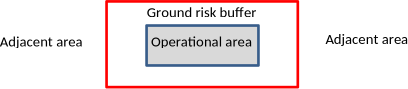
Figure 1 — Operational area and ground risk buffer
3.2Select one of the three options. If the SORA is used, indicate the edition date as defined in AMC1 Article 11. In case a PDRA is used, indicate the number and its edition date as defined in the applicable AMC to Article 11. In case a risk assessment methodology is used other than the SORA, provide its reference. In this last case, the UAS operator should demonstrate that the methodology complies with Article 11 of the UAS Regulation.
3.3If the risk methodology used is the SORA, indicate the final SAIL of the operation, otherwise select ‘other’ and provide the equivalent information provided by the risk assessment methodology used.
3.7If a qualitative measurement of the population density is used, then select one of the qualitative descriptors, otherwise check one of the descriptors linked to the maximum population density allowed.
3.9.If the SORA has been used, indicate the final risk class achieved after the application of the ground mitigations. If another risk assessment methodology has been used, indicate the equivalent information.
3.11.2Describe the air risk tactical mitigation methods to be applied by the UAS operator (e.g. employ airspace observer(s) or UA observer(s), etc.).
3.13 If the UAS flight manual provided by the UAS designer indicates that it is designed with a level of automation that reduces the remote pilot’s workload allowing one remote pilot (RP) to control multiple UA simultaneously, then specify the number of UA that one remote pilot is permitted to control (e.g. in case one RP is able to control simultaneously five UA, indicate ‘RP:UA 1:5’). This number should not exceed the limit defined in the UAS flight manual. Additionally, the UAS operator may decide to have a pool of remote pilots controlling multiple UA simultaneously. In this case, clear procedures should be developed to define who is the pilot-in-command, responsible during each phase of flight (e.g. in case three RPs are permitted to control simultaneously ten UA, indicate ‘RP:UA 3:10’).
3.14Specify the competency or the type of the remote pilot certificate, if required.
3.15Specify the competency or the type of the certificate for the staff, other than the remote pilot, essential for the safety of the operation, if required.
3.16List the type of events that the UAS operator should report to the competent authority, in addition to those required by Regulation (EU) No 376/2014, if applicable.
3.18Indicate the compliance matrix file identification and revision number (e.g. the compliance matrix defined in Chapter A4 of Annex A to AMC1 Article 11 (SORA).
3.19Free-text field where the competent authority may provide any additional relevant information.
Section 4.This section may be replicated for all authorised UAS models to be used under this operational authorisation.
4.1Name of the manufacturer of the UAS. This field is optional.
4.2Model of the UAS as defined by the design organisation in the UAS flight manual. This field is optional.
4.3Fixed-wing UA includes configurations such as aeroplanes, kites, gliders, etc.
Rotorcraft-helicopter UA includes all vertical-lift configurations having up to 2 rotors.
Rotorcraft-gyroplane UA is a special configuration with unpowered rotor.
VTOL-capable aircraft (VCA), including rotorcraft, includes vertical-lift configurations with 3 or more rotors and fixed-wing UA capable of vertically taking off and landing.
Lighter-than-air configurations include configurations such as airships, hot-air balloons, etc.
4.4Indicate the maximum dimensions of the UA in metres (refer to definition I.141 ‘UA characteristic dimension’ in Annex I to AMC1 Article 11 (SORA)).
4.5Indicate the maximum value, of the UA take-off mass (TOM), expressed in kg, at which the UA may be operated. All flights should be conducted without exceeding the specified TOM. The TOM maybe be different from (however, not exceeding) the MTOM defined by the UAS design organisation in the UAS flight manual. This field is optional.
4.6Maximum operational airspeed, expressed in m/s and kt in parentheses, that the UA will not exceed during the operation. This should always be lower than the maximum speed defined in the UAS flight manual.
4.7Indicate the type of C2 link to be used during the operation (e.g. radio link, LTE/5G, satellite, etc.).
4.8Provide the size in km to be considered for the adjacent ground area, starting from the limits of the ground risk buffer using the instructions defined in Section S.4.8.4 of AMC1 Article 11 (SORA).
4.9List any additional technical requirements established by the competent authority.
4.10This field is mandatory in case the UA is registered according to Article 14(7) of Implementing Regulation (EU) 2019/947. If the UA is not registered, the NAA may indicate the unique serial number (SN) of the UA defined by the design organisation according to standard ANSI/CTA2063A2019, Small Unmanned Aerial Systems Serial Numbers, 2019. In case of privately built UAS or UAS not equipped with a unique SN, insert the unique SN of the remote identification system. For UAS operations classified in SAIL V or higher, the serial numbers of all UAS should be provided and any change to them would require a prior approval from the competent authority. For UAS operations classified up to SAIL IV, a change to the serial number does not require prior approval from the competent authority.
4.11Include the EASA TC number, or the UAS design verification report (DVR) number issued by EASA, if required by the competent authority.
4.12If a UAS with an EASA TC is required, the UAS should have a certificate of airworthiness (CofA), and the competent authority should require compliance with the continuing airworthiness rules.
4.13If a UAS with an EASA TC is required, the UAS should have a noise certificate.
5Free-text field for the addition of any relevant remark.
6.1Reference number of the operational authorisation, as issued by the competent authority. The number should have the following format:
NNN-OAT-xxxxx/yyy
Where:
—‘NNN’ is the ISO 3166 Alpha-3 code of the Member State that issues the operational authorisation;
—‘OAT’ is a fixed field meaning ‘operational authorisation’;
—‘xxxxx’ are up to 12 alphanumeric characters defining the operational authorisation number; and
—‘yyy’ are 3 alphanumeric characters defining the revision number of the operational authorisation;
each amendment of the operational authorisation will determine a new revision number.
6.2The duration of the operational authorisation may be unlimited; in this case, indicate ‘Unlimited’. The authorisation will be valid for as long as the UAS operator complies with the relevant requirements of the UAS Regulation and with the conditions defined in the operational authorisation.
Note: The signature and stamp may be provided in electronic form. The quick response (QR) code should provide the link to the national database where the operational authorisation is stored.
GM1 UAS.SPEC.040(1) Operational authorisation
ED Decision 2019/021/R
OPERATIONAL AUTHORISATION TEMPLATE
In order to facilitate mutual recognition in cases of cross-border operations, the competent authority should produce an English version of the operational authorisation.
UAS.SPEC.050 Responsibilities of the UAS operator
Commission Implementing Regulation (EU) 2021/1166
(1)The UAS operator shall comply with all of the following:
(a)establish procedures and limitations adapted to the type of the intended operation and the risk involved, including:
(i)operational procedures to ensure the safety of the operations;
(ii)procedures to ensure that security requirements applicable to the area of operations are complied with in the intended operation;
(iii)measures to protect against unlawful interference and unauthorised access;
(iv)procedures to ensure that all operations are in respect of Regulation (EU) 2016/679 on the protection of natural persons with regard to the processing of personal data and on the free movement of such data. In particular it shall carry out a data protection impact assessment, when required by the National Authority for data protection in application of Article 35 of Regulation (EU) 2016/679;
(v)guidelines for its remote pilots to plan UAS operations in a manner that minimises nuisances, including noise and other emissions-related nuisances, to people and animals.
(b)designate a remote pilot for each flight or, in the case of autonomous operations, ensure that during all phases of the flight, responsibilities and tasks especially those defined in points (2) and (3) of point UAS.SPEC.060 are properly allocated in accordance with the procedures established pursuant to point (a);
(c)ensure that all operations effectively use and support the efficient use of radio spectrum in order to avoid harmful interference;
(d)ensure that before conducting operations, remote pilots comply with all of the following conditions:
(i)have the competency to perform their tasks in line with the applicable training identified by the operational authorisation or, if point UAS.SPEC.020 applies, by the conditions and limitations defined in the appropriate standard scenario listed in Appendix 1 or as defined by the LUC;
(ii)follow remote pilot training which shall be competency based and include the competencies set out in paragraph 2 of Article 8:
(iii)follow remote pilot training, as defined in the operational authorisation, for operations requiring such authorisation, it shall be conducted in cooperation with an entity designated by the competent authority;
(iv)follow remote pilot training for operations under declaration that shall be conducted in accordance with the mitigation measures defined by the standard scenario;
(v)have been informed about the UAS operator’s operations manual, if required by the risk assessment and procedures established in accordance with point (a);
(vi)obtain updated information relevant to the intended operation about any geographical zones defined in accordance with Article 15;
(e)ensure that personnel in charge of duties essential to the UAS operation, other than the remote pilot itself, comply with all of the following conditions:
(i)have completed the on-the-job-training developed by the operator;
(ii)have been informed about the UAS operator’s operations manual, if required by the risk assessment, and about the procedures established in accordance with point (a);
(iii)have obtained updated information relevant to the intended operation about any geographical zones defined in accordance with Article 15;
(f)carry out each operation within the limitations, conditions, and mitigation measures defined in the declaration or specified in the operational authorisation;
(g)keep and maintain an up-to-date record of:
(i)all the relevant qualifications and training courses completed by the remote pilot and the other personnel in charge of duties essential to the UAS operation and by the maintenance staff, for at least 3 years after those persons have ceased employment with the organisation or have changed their position in the organisation;
(ii)the maintenance activities conducted on the UAS for a minimum of 3 years;
(iii)the information on UAS operations, including any unusual technical or operational occurrences and other data as required by the declaration or by the operational authorisation for a minimum of 3 years;
(h)use UAS which, as a minimum, are designed in such a manner that a possible failure will not lead the UAS to fly outside the operation volume or to cause a fatality. In addition, Man Machine interfaces shall be such to minimise the risk of pilot error and shall not cause unreasonable fatigue;
(i)maintain the UAS in a suitable condition for safe operation by:
(i)as a minimum, defining maintenance instructions and employing an adequately trained and qualified maintenance staff; and
(ii)complying with point UAS.SPEC.100, if required;
(iii)using an unmanned aircraft which is designed to minimise noise and other emissions, taking into account the type of the intended operations and geographical areas where the aircraft noise and other emissions are of concern.
(j)establish and keep an up-to-date list of the designated remote pilots for each flight;
(k)establish and keep an up-to-date list of the maintenance staff employed by the operator to carry out maintenance activities; and
(l)ensure that each individual unmanned aircraft is installed with:
(i)at least one green flashing light for the purpose of visibility of the unmanned aircraft at night, and
(ii)an active and up-to-date remote identification system.
AMC1 UAS.SPEC.050(1) Responsibilities of the UAS operator
ED Decision 2019/021/R
OPERATIONAL PROCEDURES
(a)The UAS operator should develop procedures as required by the standard scenario (STS) or by the operational authorisation.
(b)If a UAS operator employs more than one remote pilot, the UAS operator should:
(1)develop procedures for UAS operations in order to coordinate the activities between its employees; and
(2)compile and maintain a list of their personnel and their assigned duties.
(c)The UAS operator should allocate functions and responsibilities in accordance with the level of autonomy of the UAS during the operation.
AMC1 UAS.SPEC.050(1)(a) Responsibilities of the UAS operator
ED Decision 2019/021/R
OPERATIONAL PROCEDURES
The UAS operator should develop operational procedures based on the manufacturer’s recommendations, if available.
When the UAS operator is required to develop an OM in accordance with point UAS.SPEC.030(3)(e), the procedures should be included in that manual.
GM1 UAS.SPEC.050(1)(a)(iv) Responsibilities of the UAS operator
ED Decision 2019/021/R
PROCEDURES TO ENSURE THAT ALL OPERATIONS ARE IN COMPLIANCE WITH REGULATION (EU) 2016/679 ON THE PROTECTION OF NATURAL PERSONS WITH REGARD TO THE PROCESSING OF PERSONAL DATA AND ON THE FREE MOVEMENT OF SUCH DATA
The UAS operator is responsible for complying with any applicable European Union and national rules, in particular, with regard to privacy, data protection, liability, insurance, security and environmental protection.
This GM has the purpose of providing guidance to the UAS operator to help them to identify and describe the procedures to ensure that the UAS operations are in compliance with Regulation (EU) 2016/679 on the protection of natural persons with regard to the processing of personal data and on the free movement of such data.
Description of the procedures established by the UAS operator |
1.Identify the privacy risks1 that the intended operation may create |
2.Define your role with respect to personal data collection and processing |
□ I am the (joint) data controller□ I am the (joint) data processor |
3.Data protection impact assessment (DPIA) |
Have you assessed the need to perform a DPIA: Yes □ No □ If yes, do you have to perform a DPIA? Yes □ No □ - If yes, did you perform a DPIA? Yes □ No □ |
4.Describe the measures you are taking to ensure data subjects are aware that their data may be collected6 |
5.Describe the measures you are taking to minimise the personal data you are collecting or to avoid collecting personal data7 |
6.Describe the procedure established to store the personal data and limit access to it |
7.Describe the measures taken to ensure that data subjects can exercise their right to access, correction, objection and erasure |
8.Additional information |
Notes:
1.For guidance regarding the identification of the privacy risks of your operation, please check:
—The DR PRO online training course (the link is temporary unavailable): Module 1 — Privacy risks in context; and
—The DR PRO Privacy-by-Design Guide: Privacy risks and safeguards in drone manufacturing (page 10).
2.For more information about definitions of personal data, please check:
—The DR PRO online training course (the link is temporary unavailable): Module 2 – What is personal data? and
—The DR PRO Privacy Code of Conduct: 3. Glossary.
‘Data controller’ means that you make decisions about what personal data is collected and how it is collected, processed and stored.
‘Data processor’ means that you follow instructions from another entity on collecting, processing and storing personal data.
For more information about your potential role as data controller or data processor, you can check:
—The DR PRO online training course (the link is temporary unavailable): Module 2 – Data protection Roles; and
—The DR PRO Privacy Code of Conduct for the responsibilities of data controllers.
3.For more information about when and how to conduct data protection impact assessments please check:
—The DR PRO Data Protection Impact Assessment template
4.For more information about how to inform data subjects about your activities you can check:
—The DR PRO Privacy Code of Conduct: 4.3.2 Act visibly and transparently;
—The DR PRO online training course (the link is temporary unavailable): Module 3 – Carry out your operation; and
—The DR PRO Pre-flight checklist (the link is temporary unavailable)
5.For more information about the data minimisation principle, please check:
—The DR PRO Privacy Code of Conduct: 4.3.1 Minimise the impact on people’s privacy and data protection;
—The DR PRO Privacy-by-Design Guide: Drone Privacy Enhancing Software Features; and
—The DR PRO online training course (the link is temporary unavailable): Module 3 – Risk mitigation strategies.
6.For guidance on the secure storage and access to personal data, please check:
—The DR PRO Privacy Code of Conduct: 4.4.2 Handle data securely;
—The DR PRO online training course (the link is temporary unavailable): Module 2 – How should personal data be handled? and
—The DR PRO Privacy-by-Design Guide: Drone Privacy Enhancing Software Features.
7.For more information about the rights of data subjects, please check:
—The DR PRO Privacy Code of Conduct: 4.3.3 Respect the rights of individuals; and
—The DR PRO online training course (the link is temporary unavailable): Module 2 – How should individuals be treated?
GM1 UAS.SPEC.050(1)(b) Responsibilities of the UAS operator
ED Decision 2019/021/R
LEVEL OF AUTONOMY AND GUIDELINES FOR HUMAN-AUTONOMY INTERACTION
The concept of autonomy, its levels and human-autonomous system interactions are currently being discussed in various domains (not only in aviation), and no common understanding has yet been reached. Guidance will therefore be provided once this concept is mature and globally accepted.
Nevertheless, the risk assessment of autonomous operations should ensure, as for any other operations, that the risk is mitigated to an acceptable level.
Besides, it is expected that autonomous operations or operations with a high level of autonomy will be subject to authorisation and will not be covered by STSs until enough experience is gained.
AMC1 UAS.SPEC.050(1)(d) and UAS.SPEC.050(1)(e) Responsibilities of the UAS operator
ED Decision 2022/002/R
THEORETICAL KNOWLEDGE SUBJECTS FOR THE TRAINING OF THE REMOTE PILOT AND ALL PERSONNEL IN CHARGE OF DUTIES ESSENTIAL TO THE UAS OPERATION IN THE ‘SPECIFIC’ CATEGORY
(a)The ‘specific’ category may cover a wide range of UAS operations with different levels of risk and a wide range of UAS designs, in particular in terms of level of automation. The following guidelines may, therefore, have to be adapted considering the level of automation and the level of involvement of the remote pilot in the management of the flight. The UAS operator is, therefore, required to identify the competency required for the remote pilot according to the outcome of the risk assessment. This AMC covers the theoretical knowledge subjects while AMC2 UAS.SPEC.050(1)(d) covers the practical knowledge subjects applicable to all UAS operations in the ‘specific’ category. In addition, for both theoretical and practical knowledge subjects, the UAS operator should select the relevant additional modules from AMC3 UAS.SPEC.050(1)(d), as applicable to the type of the intended UAS operation. The UAS operator should achieve a level of robustness consistent with the assurance integrity level (e.g. SAIL) of the intended UAS operation.
(b)Additional topics to cover areas under national competence, such as national regulations for security, privacy and data protection, may be added by the national competent authority. In case of operations conducted in a MS other the State of registration, these additional topics may be defined as local conditions required by the MS of operation.
(c)When the UAS operation is conducted according to one of the STSs that are listed in Appendix 1 to the Annex of the UAS Regulation, the UAS operator should ensure that the remote pilot has the competency that is defined in the STSs. In all other cases, the UAS operator should propose to the competent authority, as part of the application, a theoretical knowledge training course for the remote pilot based on the elements that are listed in AMC1 UAS.OPEN.020(4)(b), in UAS.OPEN.040(3), in AMC1 UAS.OPEN.030(2)(c) and in Attachment A to the Annex of the UAS Regulation, which are relevant for the intended operation, complemented by the elements listed below. The UAS operator may use the same listed topics to propose also for the personnel in charge of duties essential to the UAS operation a theoretical knowledge training course with competency-based theoretical training specific to the duties of that personnel.
(1)Aviation safety:
(i)remote pilot records;
(ii)logbooks and associated documentation;
(iii)good airmanship principles;
(iv)aeronautical decision-making;
(v)ground safety;
(vi)air safety;
(vii)air proximity reporting; and
(viii)advanced airmanship:
(A)manoeuvres and emergency procedures; and
(B)general information on unusual conditions (e.g. stalls, spins, vertical lift limitations, autorotation, vortex ring states).
(2)Aviation regulations:
(i)introduction to the UAS Regulation with focus on the ‘specific’ category;
(ii)risk assessment, introduction to the SORA; and
(iii)overview of the STSs and the PDRA.
(3)Navigation:
(i)navigational aids (e.g. GNSS) and their limitations;
(ii)reading maps and aeronautical charts (e.g. 1:500 000 and 1:250 000, interpretation, specialised charts, helicopter routes, U-space service areas, and understanding of basic terms); and
(iii)vertical navigation (e.g. reference altitudes and heights, altimetry).
(4)Human performance limitations:
(i)perception (situational awareness in BVLOS operations);
(ii)fatigue:
(A)flight duration within work hours;
(B)circadian rhythm;
(C)work stress;
(D)vision problems; and
(E)commercial pressure;
(iii)attentiveness:
(A)eliminating distractions; and
(B)scan techniques;
(iv)medical fitness (health precautions, alcohol, drugs, medication, etc.); and
(v)environmental factors such as vision changes from orientation to the sun.
(5)Airspace operating principles:
(i)airspace classifications and operating principles;
(ii)U-space;
(iii)procedures for airspace reservation;
(iv)aeronautical information publications (AIPs); and
(v)NOTAMs.
(6)General knowledge of UASs and external systems that support the operation of UASs:
(i)differences between autonomy levels (e.g. automatic versus autonomous operations);
(ii)loss of signal and system failure protocols — understanding the condition and planning for programmed responses such as returning to home, loiter, landing immediately;
(iii)equipment to mitigate air and ground risks (e.g. flight termination systems);
(iv)flight control modes;
(v)the means to monitor the UA (its position, height, speed, C2 link, systems status, etc.);
(vi)the means of communication with the VOs; and
(vii)the means to support air traffic awareness.
(7)Meteorology:
(i)obtaining and interpreting advanced weather information:
(A)weather reporting resources;
(B)reports;
(C)forecasts and meteorological conventions appropriate for typical UAS flight operations;
(D)local weather assessments (including sea breeze, sea breeze front, and urban heat island);
(E)low-level charts; and
(F)METAR, SPECI, TAF;
(ii)regional weather effects — standard weather patterns in coastal, mountain or desert terrains; and
(iii)weather effects on the UA (wind, storms, mist, variation of wind with altitude, wind shear, etc.).
(8)Technical and operational mitigation measures for air risks:
(i)operations for which airspace observers (AOs) are employed; and
(ii)principles of detect and avoid (DAA).
(9)Operational procedures:
(i)mission planning, airspace considerations, and site risk assessment:
(A)measures to comply with the limitations and conditions applicable to the operational volume and to the ground risk buffer for the intended UAS operation;
(B)UAS operations over a controlled ground area;
(C)BVLOS operations;
(D)use of UA VOs;
(E)importance of on-site inspections, operation planning, pre-flight and operating procedures;
(ii)multi-crew cooperation (MCC):
(A)coordination between the remote pilot and other personnel (e.g. AOs) in charge of duties essential to the UAS operation;
(B)crew resource management (CRM):
(a)effective leadership;
(b)working with others.
(10)Managing data sources regarding:
(i)where to obtain the data from;
(ii)the security of the data;
(iii)the quantity of the data needed; and
(iv)the impact on the storage of data
(c)emergency response plan (ERP) — the UAS operator should provide its personnel with competency-based theoretical training covering the ERP that includes the related proficiency requirements and recurrent training.
(d)Both the training and the assessment should be appropriate to the level of automation of the intended UAS operation.
AMC2 UAS.SPEC.050(1)(d) and UAS.SPEC.050(1)(e) Responsibilities of the UAS operator
ED Decision 2022/002/R
PRACTICAL-SKILLS TRAINING FOR THE REMOTE PILOT AND ALL PERSONNEL IN CHARGE OF DUTIES ESSENTIAL TO THE UAS OPERATION IN THE ‘SPECIFIC’ CATEGORY
(a)Regarding the practical-skills training and assessment for the remote pilot, the UAS operator should consider the competencies that are defined in AMC2 UAS.OPEN.030(2)(b), complemented by the items listed below. The UAS operator should adapt the practical-skills training to the characteristics of the intended UAS operation and the functions available on the UAS. The UAS operator may use the same listed topics and may provide a practical training course also for all other personnel in charge of duties essential to the UAS operation. Appropriate simulators may be used to conduct some or all the tasks.
(1)Preparation of the UAS operation:
(i)implement the necessary measures to comply with the limitations and conditions applicable to the operational volume and to the ground risk buffer for the intended UAS operation in accordance with the OM procedures;
(ii)follow the necessary procedures for UAS operations in controlled airspace, including a protocol to communicate with the ATC and obtain clearance and instructions, if necessary;
(iii)confirm that all necessary documents for the intended UAS operation are on-site;
(iv)brief all participants on the planned UAS operation;
(v)perform visual airspace scanning; and
(vi)if AOs are employed, place them appropriately and brief them on the deconfliction scheme that includes phraseology.
(2)Preparation for the flight:
(i)ensure that all safety systems and functions, if installed on the UAS, including its height and speed limitation systems, flight termination system, and triggering system, are operational; and
(ii)know the basic actions to be taken in the event of an emergency, including issues with the UAS, or a mid-air collision hazard arising during the flight.
(3)Flight under abnormal conditions:
(i)manage a partial or a complete power shortage of the UA propulsion system, while ensuring the safety of third parties on the ground;
(ii)manage a situation of a non-involved person entering the operational volume or the controlled ground area, and take appropriate measures to maintain safety; and
(iii)react to, and take the appropriate corrective actions for, a situation where the UA is likely to exceed the limits of both the flight geography (contingency procedures) and of the operational volume (emergency procedures) as they were defined during the flight preparation.
(4)In general, emphasis should be placed on the following:
(i)normal, contingency, and emergency procedures;
(ii)skill tests combined with periodic proficiency checks;
(iii)operational experience (with on-the-job training counting towards proficiency);
(iv)pre-flight and post-flight procedures and documentation;
(v)recurrent training (UAS / flight training device (FTD)); and
(vi)remote pilot incapacitation.
(b)The practical-skills training may be conducted with the UAS or on an FTD. Scenario-based training (SBT) with highly structured, real-world experience scripts for the intended UAS operation should be used to fortify personnel’s learning in an operational environment and improve situational awareness. SBT should include realistic normal, abnormal, and emergency scenarios that are drafted considering specific learning objectives.
(c)The practical-skills training is checked during the assessment and can be provided using the actual UAS or an FTD appropriate to the intended UAS operation.
(d)Initial and recurrent training
(1)The UAS operator should ensure that specified minimum requirements regarding the time of the initial and recurrent training (e.g. duration and number of flight hours) are provided for in a manner that is acceptable and approved by the competent authority.
(2)Depending on the training course, each of the topics shown in Table 1 below may require only overview training or in-depth training. In-depth training should be interactive and should include discussions, case-study reviews, and role play, as deemed necessary to enhance learning. In case of change or update of the SW/HW of the UAS, depending on the size of the changes, the UAS operator should define the level of training.
Topic | Initial training | Change of UAS | Change of remote pilot/crew | Recurrent training |
Situational awareness and error management | In-depth | In-depth | Overview | Overview |
Organisational safety culture, operational procedures, and organisational structure | In-depth | Not required | In-depth | Overview |
Stress management, fatigue, and vigilance | In-depth | Not required | Not required | Overview |
Decision-making | In-depth | Overview | Not required | Overview |
Automation and philosophy of the use of automation | As required | In-depth | In-depth | As required |
Specific UAS type-related differences | As required | In-depth | Not required for the same UAS type) | As required |
Case-based studies | In-depth | In-depth | In-depth | As required |
Table 1 — Level of the practical-skills training in several topics depending on initial training,
recurrent training, or change of UAS / remote pilot / remote crew