
Managing customer pressure is especially challenging with VIPs, executives, or aircraft owners, whose demanding schedules and expectations can push crews toward unsafe decisions. This article presents a video where a VIP return flight faces rapidly deteriorating weather. The pilot identifies alternative airfields, briefs the passengers, and makes the informed choice to land and wait for conditions to improve. Reassuring passengers in such situations is essential, as maintaining safety while preventing frustration is a pilot's core responsibility.
The art of saying no
Accidents have occurred due to pilots’ failure to resist customer pressure to fly when operational, weather-related, or technical conditions were unsafe. Pilots may feel compelled to meet customer expectations, even when doing so compromises safety. Understanding how to handle such situations safely and effectively is crucial to reducing risk and preventing accidents.
Resisting customer pressure can be particularly challenging, especially when dealing with VIPs, executives, or individuals who manage, own, or contract the company to operate flights on demand. These individuals often have tight schedules and high expectations, which can lead them to place implicit or explicit pressure on the flight crew to make or continue a flight, even in unsuitable conditions.
A strong company safety culture, coupled with clear procedures and pilot assertiveness, is essential to counteract passenger pressure and ensure safety. Pilots must develop the ability to say NO, propose a safer course of action, and justify it with confidence. Resisting pressure and making safety-based decisions is an essential part of their responsibility.
EASA video The Art of Saying No!
When the risks are unacceptable, the safest decision may be to delay or cancel the flight.
When conditions deteriorate in flight, it may be necessary to return to base, divert, or LAND and live.
This message needs to be consistently reinforced within flight operations, within the framework of the company’s Safety Management System (SMS), to ensure that pilots feel supported in making safety-first decisions.
Video story
The video scenario involves six VIP passengers who expect their return flight to proceed normally. But the weather is deteriorating. The passengers have a cruise at 6 p.m., so alternate airfields are identified and briefed. En route, however, the front moves faster than expected, snow begins to fall, visibility drops, and operational limits are approached. Even the best plan must adapt to changing weather.
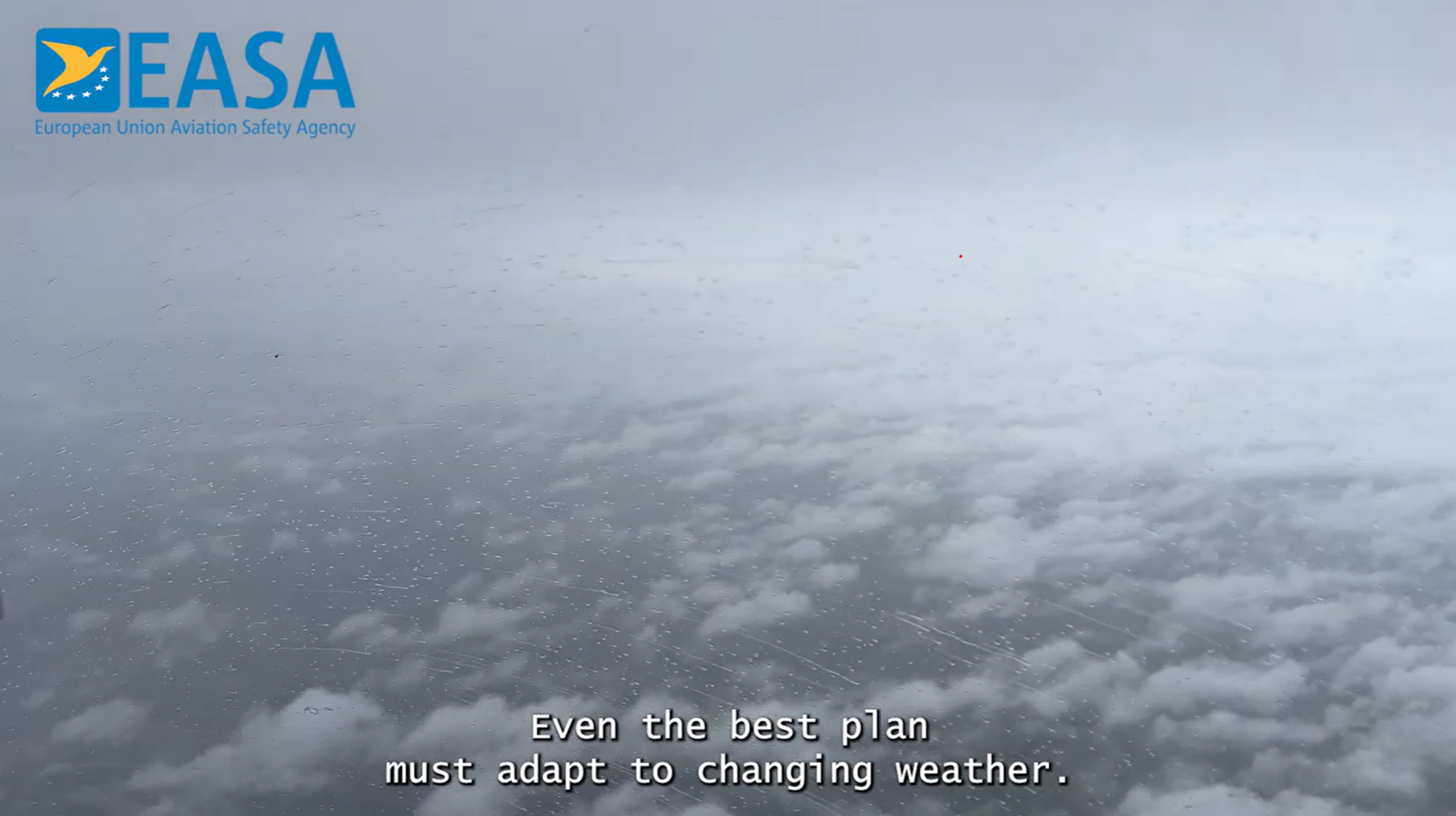
Adhering to best safety practices, the pilot and her colleague make an informed decision to divert to an airfield 10 minutes away, and they communicate and explain this decision effectively to the customer. After the snow front passes, conditions improve quickly. They resume the flight and arrive on time for the passengers’ cruise. The early diversion ensures both safety and mission success — a small delay that prevents bigger risks.
The video emphasises the critical importance of prioritising safety over external demands and reinforces that, when flight conditions deteriorate, landing the helicopter can be the safest course of action.
Key aspects include:
- The pilot’s role in customer relations, including strategies for effectively managing passenger frustration, avoiding conflict, and de‑escalating situations where frustration might escalate into unruly behaviour.
- Customer briefing procedures, aligned with company policies and external guidance, to ensure passengers understand the rationale behind operational decisions and their safety benefits.
- Safety Management System (SMS) processes and a strong safety culture that support a pilot’s ability to resist pressure to fly, with particular emphasis on risk assessment and management both before and during the flight.
Pilots must explain to passengers that any decision to cancel or delay a flight, or to return to base, divert, or land when conditions seriously deteriorate, is made with their safety in mind. Rather than viewing such decisions as an inconvenience or a failure to meet expectations, customers should understand that these actions reflect a robust company safety culture.
Ensuring that passengers feel reassured rather than frustrated when a flight is cancelled, postponed, or interrupted due to safety concerns is a key pilot responsibility.
Beyond managing immediate expectations, pilots also play an educational role. They help passengers, particularly those in leadership positions, understand that safety protocols contribute to the overall professionalism of an aviation operation and protect their lives. A well‑informed customer will recognise that a company prioritising safety is one they can trust, reinforcing long‑term confidence in its operation.
Takeaways
In VIP operations, pilots constantly balance mission goals with changing realities. True professionalism means knowing when to change course. Making assertive, safety‑first decisions under pressure defines a skilled crew.
EASA promotes a strong safety culture, one that empowers crews to act conservatively when needed. The company’s Safety Management System supports those choices and captures lessons through post‑flight reviews. Every decision and every report help make the next flight safer.
- Weather can change. A pilot’s judgment must not.
- True pilot leadership is saying NO and proposing a safer course of action when others expect Yes. Explain the NO. Earn passenger trust. Protect their lives.
- NO is not failure — it’s the decision that keeps everyone safe.
The ultimate objective is ensuring that every passenger and crew member returns home safely.
VIP Passenger Management: Communication and Safety — every flight, everytime.
References and further reading
Feeling the Pressure to Fly (The Rotorcraft Collective)
Just Say No! (The Rotorcraft Collective)
Robinson Helicopter Safety Notice 44 - Google Search
Passenger Pressure Management | EASA Community
YouTube EASA video Passenger Pressure Management - Google Search
Mission-Related 'Get-There-Itis' in Degraded Visual Environment | EASA Community
Weather Threats for VMC Flights | EASA Community
EHEST Video Degraded Visual Environment and Loss of Control
UIMC - Before Take-Off | EASA Community
UIMC - After Take Off | EASA Community
VAI Land & LIVE Program - Vertical Aviation International
Helicopter Airmanship | EASA Community
Personal Minimums | EASA Community
Coping with Weather - VFR2IMC | EASA Community
Threat and Error Management (TEM) for Helicopter Operations | EASA Community
Please log in or sign up to comment.