
Preparing for the new GA flying season
After several months of reduced flying during the winter, you may be eager to get back into the helicopter and start the new season. But as you know, long breaks can affect your flying skills, reduce situational awareness, and leave you less familiar with procedures or changes at your airfield.
Both EASA and GASCo remind us that a safe return to flying starts with good preparation, refreshed knowledge, and a careful reassessment of your personal readiness, your aircraft’s airworthiness, and your overall flying environment.
This article revisits and expands on the EASA article Getting Ready for the GA Season, published in 2022. It brings together key considerations to help you return to flying smoothly, safely, and confidently.
Restore your flying skills and personal readiness
The EASA article Getting Ready for the GA Season | EASA Community published in 2022 emphasises how important it is to consciously prepare after a long period of inactivity – such as the winter break. It's a good moment to step back, look at yourself, and ask: Am I truly ready to fly today?
Two simple and well-known tools can help you do that:
- PAVE (Pilot, Aircraft, EnVironment, External Pressures)
- IMSAFE (Illness, Medication, Sleep, Alcohol, Fatigue, Eating)
By working through these checklists, you give yourself a structured way to assess your physical condition, mental readiness, potential stressors, and anything else that might influence your safety in the cockpit.
This is also an excellent moment to gently warm up your flying mindset after the seasonal pause and mentally rehearse the flight.
The article includes the EASA video Helicopter COVID-19 Return to Flying. whose practical safety messages apply perfectly after any long break, such as the winter break:
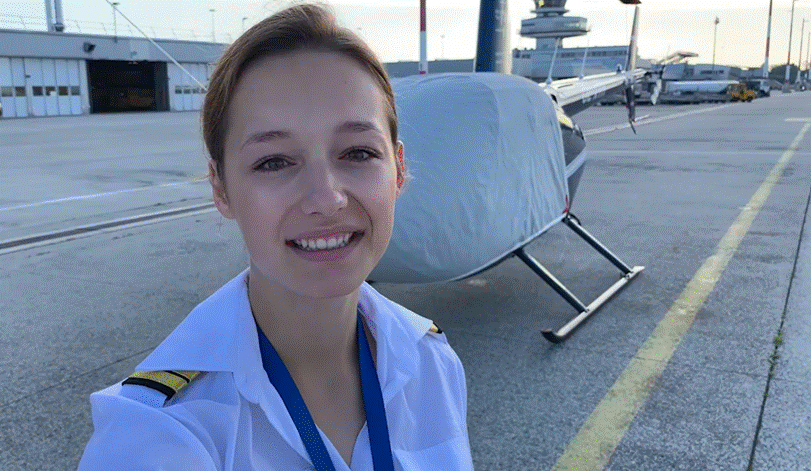
EASA video Helicopter COVID-19 Return to Flying, with Mona Seeberger.
It also highlights the EASA eLearning tutorial Returning to flying in the wake of COVID-19, adapted by GASCo from their tutorial Making a flight after an extended lay-off from flying:

EASA tutorial Returning to flying in the wake of COVID-19, developed by GASCo.
Originally created during the COVID‑19 period yet still highly relevant today, the tutorial prompts you to re‑think elements you may not have reviewed for a while and reviews the key precautions to take before resuming flying after a long break.
The tutorial reinforces:
- Flight planning and preparation
- Reviewing threat and error management (TEM) and decision‑making.
- Understanding vulnerabilities after long gaps
- Revising key helicopter handling fundamentals
- Refreshing knowledge of procedures and checklists
- Reporting after the flight to share experience
For GA helicopter pilots, this tutorial provides concise, targeted preparation that helps restore confidence, enhance operational sharpness, and precautions required for a safe return to flying.
Both the video and the tutorial help you revisit vulnerabilities that can appear after a long layoff, the basics of helicopter handling, TEM and sound decision-making, and the importance of reporting your experiences to help others learn.
Plan and prepare your flight thoroughly
The tutorial and the video also invite you to carefully plan and prepare your flight. While planning and preparation are essential for every flight, they become especially important after any extended break from flying, such as a winter pause.
Taking the time to carefully review the flight conditions and specificities, update your situational awareness, and refresh your planning skills significantly contributes to a safe and enjoyable flight, because there will be less unexpected conditions and surprises and need do elaborate solutions on the spot.
On the topic of flight planning and preparation, you might also enjoy exploring the material below, which offers great tips, examples, and insights to support you along the way:
EASA video Flight Planning and Preparation
Accompanying article Flight Planning | EASA Community
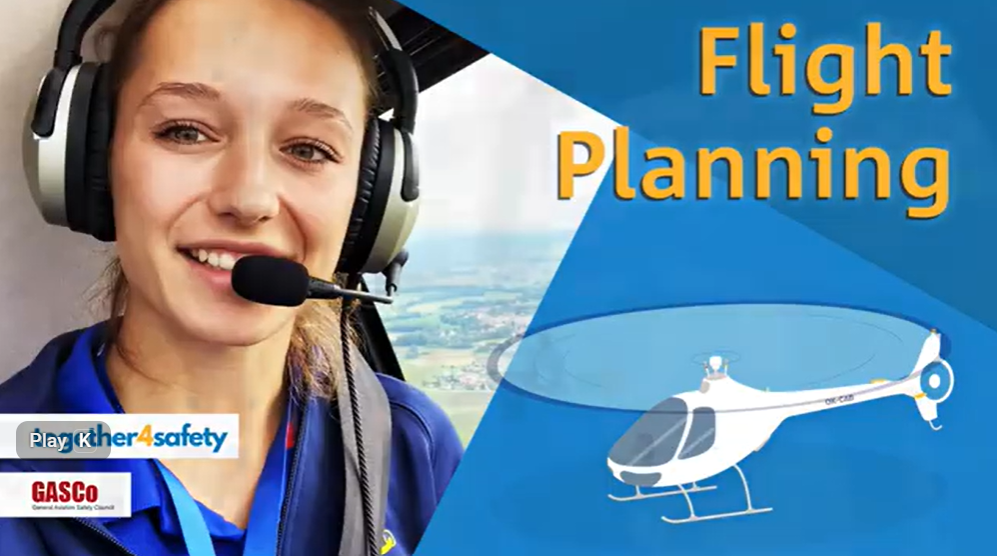
EASA video Flight Planning and Preparation,
developed in cooperation with GASCo.
EASA video Rotorcraft Unintended IMC - Avoidance Before Take-Off
Article UIMC - Before Take-Off | EASA Community
EASA video Offsite Landing 2024 - Planning and Preparation
Article Off-Site Landings - Part 1 - Planning and Preparation | EASA Community
EASA video EASA - Uncertified Helipad Landing
Article Uncertified Helipad Landing | EASA Community

EASA video EASA - Uncertified Helipad Landing, with Mathieu Vandenavenne.
EASA video Rotorcraft Unintended IMC - Avoidance Before Take-Off
Article UIMC - Before Take-Off | EASA Community
Review your aircraft documentation and airworthiness
After a quiet winter, your helicopter deserves your full attention. Before you even start the walk‑around, take a moment to ensure the aircraft documentation is complete and up to date. Under Part‑NCO, this includes the:
- Airworthiness certificate
- Registration
- Radio licence
- Insurance
- Noise certificate (if applicable)
- AFM/RFM
- MEL or CDL items if applicable

Jonny Greenall, Chief Pilot at Balearic Helicopters, presenting at the Rotorcraft Safety Zone of EUROPEAN ROTORS 2025 in Cologne.
You should also check that all operational material you need for the day is current, such as charts, NOTAMs, performance data, and weather briefings. A few minutes spent verifying documentation often saves far more time – and risk – later.
Give your helicopter a particularly thorough pre‑flight inspection
After the winter break, your helicopter may have been standing still for longer than usual. Even if it was stored in a hangar, environmental factors can still cause degradation. Approach the aircraft with the mindset that something may have changed without your noticing it.
Pay special attention to:
- Fuel contamination (always assume water might be present)
- Condition of fuel caps and seals
- Tyre pressure
- Fluid levels (oil, hydraulics, etc.)
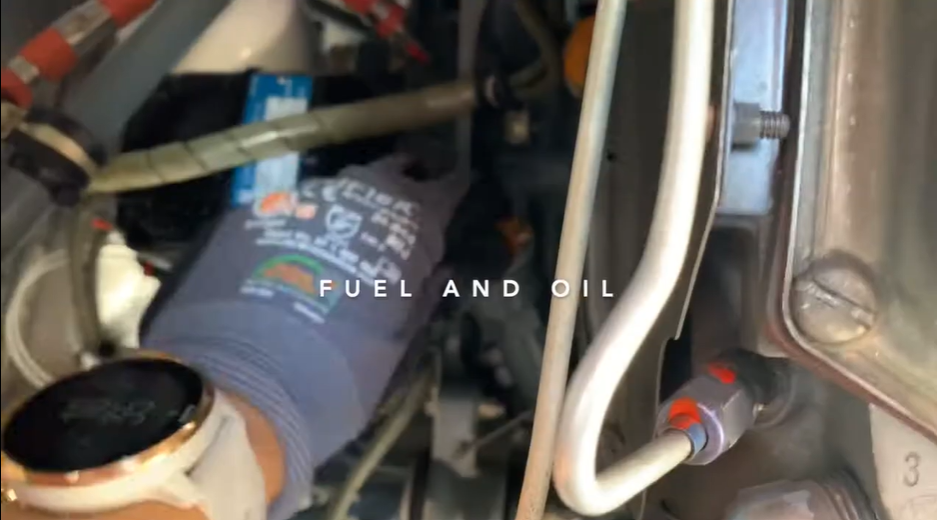
Fuel and oil check, from the EASA video Flight Planning and Preparation
- Corrosion
- Loose screws, wiring, or fittings
- Cleanliness and condition of cockpit windows
- Insects or nests in vents or pitot/static ports
Refer also to the PowerPoint “R44 Preflight Tips & Hints”, by Johnny Greenall, Balearic Helicopters, presented in the EASA Rotorcraft Safety Zone of EUROPEAN ROTORS 2025. It is attached at the end of this article.
Although specific to the Robinson R44, many of the tips also apply to other small helicopters used by GA pilots.
The manufacturer's pre-flight instructions are provided in the Aircraft Flight Manual (AFM), Normal Procedures section (usually Section 4). This is the primary, certified document where the manufacturer publishes required operational procedures, including:
- Pre‑flight/Exterior inspection checklist
- Before‑starting checks
- Starting procedures
- Shutdown procedures
- Emergency procedures (Section 3 – but not relevant for preflight).
Reassess your operating environment
Your operating environment rarely stands still, and winter can bring many changes. When returning after a long break, take time to review:
- Aerodrome procedures and local rules
- Equipment or operational changes at your home base
- Weather patterns – spring can be unpredictable
- Temperature effects on performance
- Any airspace changes or new restrictions
- Terrain considerations and updated MSAs
- Expected traffic density as activity increases
- Navigation and communication
The return-to-flying resources from EASA and GASCo encourage this kind of self-awareness and help you think realistically about the flight ahead.

Prepare your navigation, refresh your radio communication skills, and review the airspace structure, from the EASA video Helicopter COVID-19 Return to Flying.
Flying with an instructor
Consider taking 30 minutes for a training and refresher flight with an appropriately qualified flight instructor to help you ease back into flying. Also, re‑evaluate your personal minimums and adjust them if needed: increasing them temporarily can be a wise way to ease yourself back into flying after the winter break.
A short refresher session is an excellent way to rebuild confidence, sharpen handling skills, and regain the fluidity that may have faded during the winter break. An instructor can also help you identify any weak spots, provide personalised feedback, and guide you through specific manoeuvres or procedures you may not have practised for a while.
This small investment of time can greatly enhance both your safety margins and your comfort level before flying solo again.
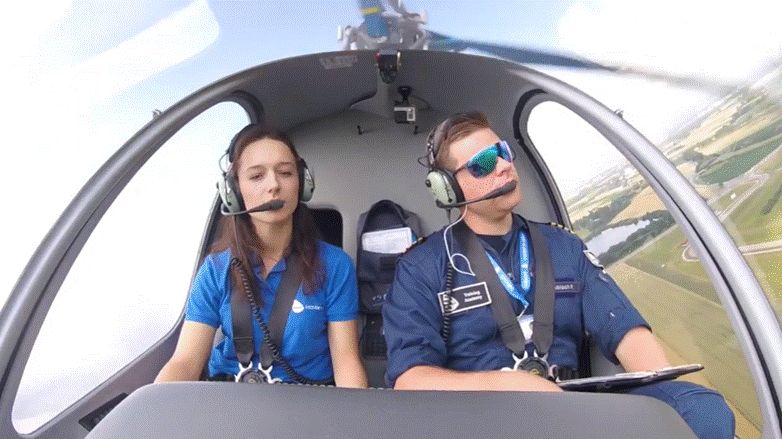
Take a training and refresher flight with a qualified flight instructor,
from the EASA video Helicopter COVID-19 Return to Flying
Manage pressure and eagerness to resume flying
After a long break, you may feel eager to “get going again”. You may feel a personal desire to perform well, or a subtle push to take and complete the flight even when conditions aren’t ideal – a known decision-making bias referred to as “get-there-itis”.
This is exactly the moment to slow down and ask:
- Am I putting myself under pressure?
- Am I trying to meet someone’s expectations?
- Is this flight worth continuing if something doesn’t feel right?
The message repeated throughout the EASA material and GASCo guidance is simple and powerful:
If something doesn’t feel right, postpone the flight!
Choosing to postpone the flight can protect you from risks that are far more serious than a simple delay.
Conclusion: a safe return starts on the ground
The transition from winter back into flying is your chance to reset, reflect, and reconnect with the fundamentals of safe helicopter flying.
All material mentioned in this article point toward the same goal: prepare well, take all necessary precautions, and build safety back into your habits.
Regain your confidence, reacquaint yourself with your helicopter, recheck your environment, refresh your knowledge, and prepare your flight thoroughly.
These steps will help you start the new flying season safely and with confidence.
Fly safely, take your time, and enjoy the return to the skies!
References
EASA article Getting Ready for the GA Season | EASA Community
EASA video Helicopter COVID-19 Return to Flying
EASA tutorial developed by GASCo Returning to flying in the wake of COVID-19
GASCo tutorial Making a flight after an extended lay-off from flyting
EASA article Flight Planning | EASA Community
EASA video Flight Planning and Preparation
EASA article UIMC - Before Take-Off | EASA Community
EASA video Rotorcraft Unintended IMC - Avoidance Before Take-Off
EASA article Off-Site Landings - Part 1 - Planning and Preparation | EASA Community
EASA video Offsite Landing 2024 - Planning and Preparation
EASA article Uncertified Helipad Landing | EASA Community
EASA video EASA - Uncertified Helipad Landing
EASA article UIMC - Before Take-Off | EASA Community
EASA video Rotorcraft Unintended IMC - Avoidance Before Take-Off
Acknowledgements
Thanks to Mike O’Donoghue for developing the GASCo tutorial and its EASA version.
Thanks also to Mona Seeburger, at the time with Global Helicopter Service, and to Helitrade and Geal & Mann for their contributions to the EASA video Helicopter COVID-19 Return to Flying.
Additional thanks go to the FAA, Flight Safety Australia, the UK CAA, and DGAC France for their material and inspiration.

Please log in or sign up to comment.