
Cable Collision Avoidance: Essential Techniques & Pilot Testimony, an Airbus Helicopter multimedia e-learning video
Airbus Helicopters’ Cable Collision Avoidance: Essential Techniques & Pilot Testimony video was published in October 2025 and promoted in a safety awareness campaign launched by Airbus in December.
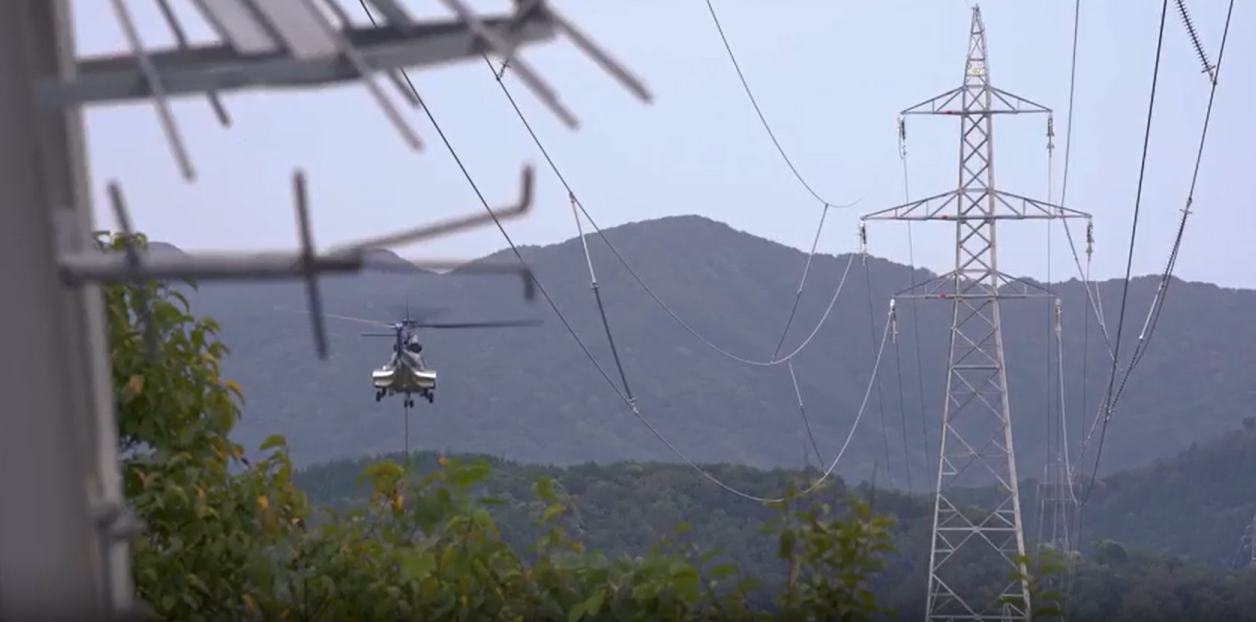
Cable Collision Avoidance: Essential Techniques & Pilot Testimony
Material was published on the Videos for pilots section of the of the Airbus Helicopters Multimedia and e-Learning website: Helicopters safety multimedia & e-learning | Airbus.
Video pitch
The video focuses on preventing and mitigating cable collision risks in helicopter operations.
It blends detection and avoidance techniques with pilot experience to reinforce preflight preparation, route planning, visual scanning, use of available charting aids and of technology as complementary defences.
Note: This video is positioned as supplemental safety material and does not replace official flight manuals or training requirements.
Why cable strikes happen
- Invisible hazards: Wires can be thin, unmarked, poorly contrasted against terrain or sky, and difficult to detect in certain light or background conditions.
- Human factors: Task saturation, low-level speed, and expectation bias reduce detection rates, especially in familiar areas or “quick hops”.
- Operational pressures: Time constraints, ad‑hoc landing sites, and last‑minute route changes increase exposure to uncharted or partially charted obstacles.
- Environment: Sun angle, haze, shadows, terrain masking, and seasonal foliage changes can conceal poles, towers, or mid‑span markers.
Key points from this Airbus video
The video is concise and practical, focusing on pilot awareness and operational techniques rather than exhaustive theory. The main themes are:
- Pre‑flight preparation: Know the areas where wires are likely (valleys, rivers, populated corridors).
- Route planning: Use charts and available obstacle data, but remember not all wires are charted.
- Visual scanning: Look for pylons, poles, and anchor points – wires themselves are often invisible.
- Crossing technique: Always cross near a support structure, never mid‑span.
- Speed and altitude management: Slow down and maintain altitude margins when approaching suspected wire areas.
- Pilot testimony: Reinforces that complacency and “familiar routes” are common traps; vigilance must be constant.
Checklist to avoid helicopter cable collision
Pre‑flight
- Review charts and known obstacle databases.
- Identify valleys, rivers, and corridors where wires are likely.
- Brief crew on potential wire hazards along the route.
En‑route
- Scan for support structures (pylons, poles, towers).
- Treat uncharted areas with caution – assume wires may be present.
- Adjust speed to allow time for detection and manoeuvring.
- Maintain altitude margins above typical wire envelopes.
Crossing wires
- Only cross at a support structure where the wire is most visible.
- Never cross mid‑span.
- Cross at an angle, with controlled speed and altitude buffer.
Airmanship
- Avoid complacency, even on familiar routes.
- Share observations and callouts if flying multi‑crew.
- If uncertain, slow down or turn back – don’t “press on” blindly.
Note: This checklist (not made by Airbus) reflects content from Airbus Helicopters’ Cable Collision Avoidance video. It is intended as a training and briefing aid – always follow your operator’s SOPs and regulatory guidance.
References and further reading
Cable Collision Avoidance: Essential Techniques & Pilot Testimony
Helicopters safety multimedia & e-learning | Airbus
VAI video Surviving the Wires Environment
Republished by the FAASTeam as Surviving the Wires Environment - YouTube
FAA video Avoiding Wire Strikes
EASA video Rotorcraft Cable Collisions Animation web
Pilots Who Ask Why's Preventing Wire Strikes: 10 Key Principles for Helicopter Pilots
Should Cables Be Made More Visible? | EASA Community
Helicopter Airmanship | EASA Community
EHEST Leaflet HE 2 Helicopter Airmanship | EASA
UK CAA Safety Sense Leaflet Helicopter Airmanship | EASA Community
From Take-Off to Landing | EASA Community
Pre-Flight Risk Assessment and Attitude | EASA Community
HAI Spotlight on Safety: Landing in an Unfamiliar Spot? Know Before You Go!
Uncertified Helipad Landing | EASA Community
Threat and Error Management (TEM) for Helicopter Operations | EASA Community
Off-Site Landings - Part 1 - Planning and Preparation | EASA Community
Off-Site Landings - Part 2 - Recce | EASA Community
Off-Site Landings - Part 3 - Manoeuvring in the Landing Site | EASA Community
Off-Site Landings - Part 4 - Departure, Take-off and Climb Procedures | EASA Community
EHEST Leaflet HE 3 Helicopter Off Airfield Landing Sites Operations | EASA (europa.eu)
Please log in or sign up to comment.