
On 12 August 2026, millions of people across Europe will look to the skies to witness one of the most significant solar eclipses in decades. For many, it will be a once-in-a-lifetime event.
The eclipse will be visible across much of Europe, with a total eclipse crossing northern Spain and a deep partial eclipse visible across Portugal, France, Belgium, the Netherlands, Germany, Switzerland and the United Kingdom. It also falls during the busy European summer flying season, when General Aviation activity is at its highest and many people are taking to the skies.
For aviation, the eclipse itself presents very little technical challenge. Aircraft systems, engines and navigation equipment are unaffected. However, there are two main risks for the aviation community to be aware of:
- More aircraft and drones sharing the same airspace, often while pilots are distracted by the spectacle and with rapidly varying light conditions.
- Changing atmospheric conditions that can impact balloons and sailplanes.
Understanding these risks will help ensure the eclipse is remembered for the right reasons.
See also this article from French Aeronautical Federation.
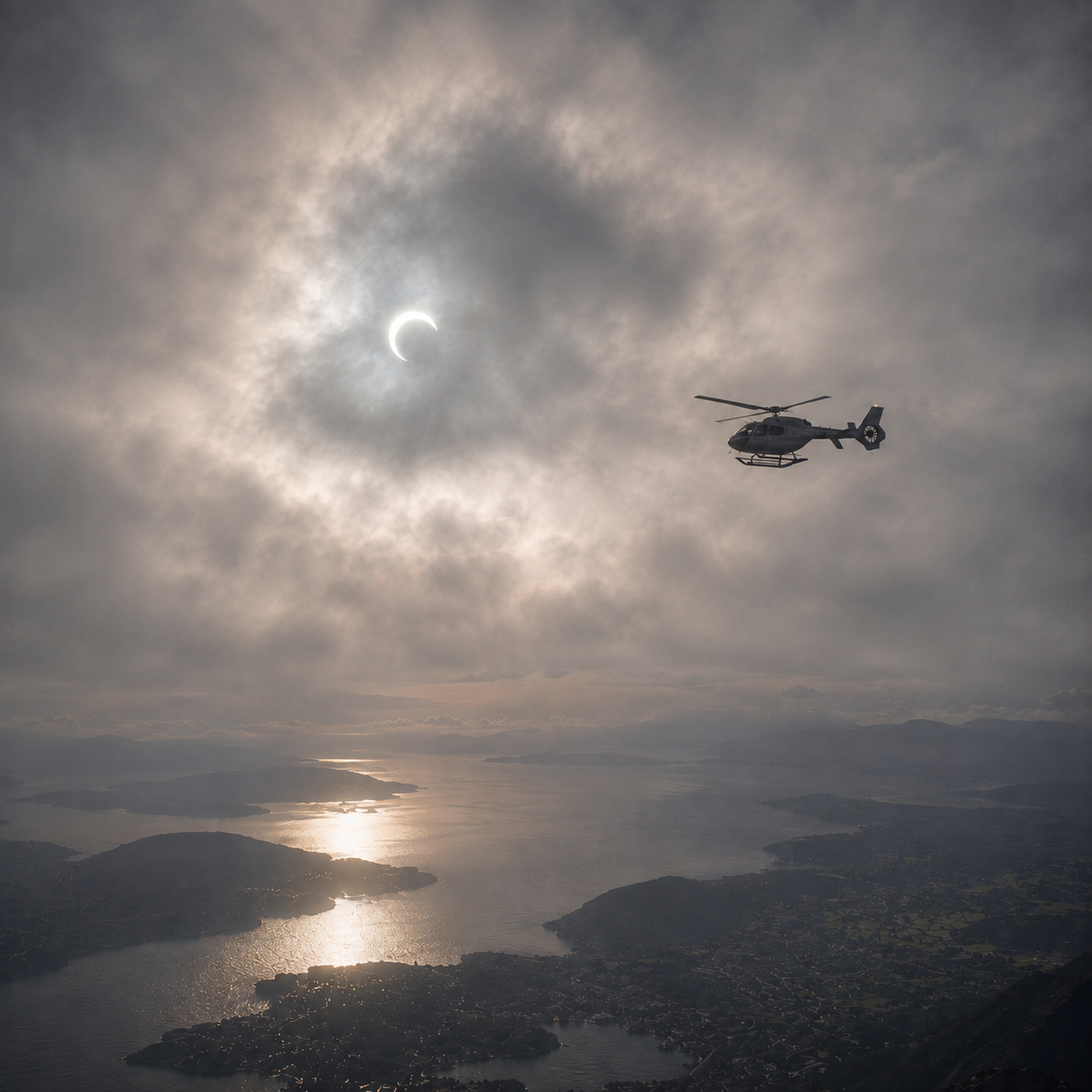
<Ai manipulated image>
Risk 1 – Busier skies and changing light conditions
Northern Spain, where the eclipse will be total, is expected to attract significant numbers of visitors, including private aircraft, helicopters, sightseeing flights, photographers and drone operators.
At the same time, the changing light can alter depth perception, reduce contrast and make it more difficult to spot other aircraft, power lines and other obstacles. Pilots should be prepared for a very rapid decrease in ambient light during the 10 minutes leading up to maximum obscuration. Conditions may be similar to a night VFR flight for at least 20 minutes.
The eclipse is also a powerful distraction. It's only natural to want to look up but while flying, every second spent watching the eclipse is a second not spent flying the aircraft or looking for other traffic, obstacles or terrain.
The advice is the same as it is for every flight: Aviate. Navigate. Communicate.
Fly the aircraft first. Maintain a good lookout, expect higher traffic levels around popular viewing locations and remember that other pilots may also be distracted.
There's also no place for eclipse viewing glasses in the cockpit. Whatever their quality, they reduce your outside vision at exactly the moment you need it most.
Risk 2 – Rapidly changing atmospheric conditions
As the Moon blocks the Sun, the ground cools and normal daytime heating is interrupted. When sunlight returns, the atmosphere begins warming again and local winds and convection can change surprisingly quickly.
Most powered aircraft will notice little more than unusual lighting, but for balloons, sailplanes, hang gliders and paragliders the impact of the eclipse can be much more significant.
Balloons
For hot air balloon pilots, the return of the sun is often the most challenging part of the eclipse.
As the temperature changes and winds become more active, keeping a balloon under control can quickly become more difficult.
Experienced balloon pilots who have flown during previous eclipses have described seeing inflated balloons collapse or suffer damage as crews struggled to control them while conditions changed around them.
If you're planning a balloon flight during the eclipse it is important to be aware that there may be rapid changes in wind, temperature and local atmospheric conditions leading to risks that might take you by surprise. The conditions may affect balloon inflation, performance, and safety. Every eclipse is different, but it's a good reminder that even a spectacular event like this deserves a healthy dose of respect. Please take care and exercise every precaution possible.
If you do fly please share your experiences with us via email to safetypromotion@easa.europa.eu so that we can learn more for future eclipses.
Gliders, hang gliders and paragliders
Pilots relying on thermal lift should expect soaring conditions to change throughout the eclipse. Plan accordingly and don't expect the atmosphere to behave as it would on a normal summer afternoon.
What this means for different aviation communities?
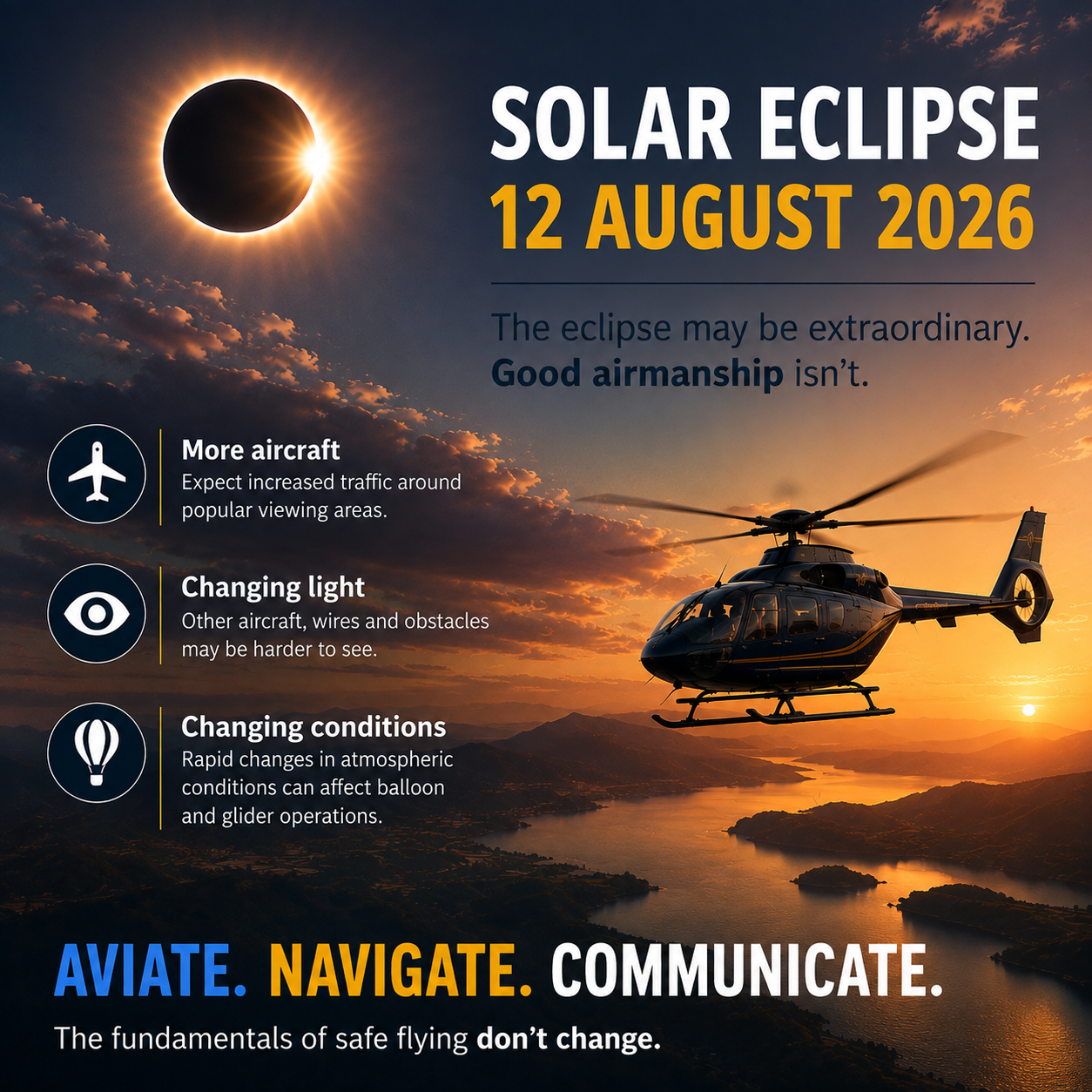
<AI Manipulated Image>
Helicopter operations
Helicopters may see increased demand for sightseeing flights, aerial filming and photography around the eclipse.
Combined with low-level operations, changing light and increased traffic, this makes maintaining an effective lookout even more important. Pay particular attention to wires and other obstacles, especially when operating below typical cruising altitudes, as they may become virtually invisible from above.
General Aviation
Expect busy skies, particularly close to the path of totality. Keep your eyes outside and keep continue monitoring your instruments too. Don't become distracted by the eclipse and remember that changing light may make other aircraft and obstacles harder to detect.
Drone operators
The eclipse is likely to encourage more recreational drone flying.
If you're operating a drone, remember that the rules don't change just because the sky does. Stay clear of manned aircraft, avoid controlled or restricted airspace and be particularly aware that helicopters and light aircraft may be operating at lower levels around popular viewing locations.
Enjoy the spectacle, safely
The eclipse will only last a few minutes. Good decisions before and during your flight will help ensure it remains an unforgettable experience—for all the right reasons.
Fly the aircraft first. Enjoy the eclipse second.
Please log in or sign up to comment.