
Wildfires and helicopter firefighting in Europe: lessons from the 2026 fire season
The 2026 wildfire season reinforced a reality that is becoming increasingly evident across Europe: wildfires are no longer an occasional environmental emergency confined to a limited number of regions. They have evolved into a recurring, continent-wide challenge with significant implications for public safety, environmental protection, civil protection authorities and aviation operators. According to the European Forest Fire Information System (EFFIS), more than 678,000 hectares had burned in the European Union by late September 2026, well above the long-term average of recent decades.
For the rotorcraft community, the lessons of 2026 extend beyond the scale of the fires themselves. The season highlighted the growing importance of aerial firefighting capabilities, the need for effective coordination between air and ground assets, and the value of European cooperation in responding to increasingly complex wildfire emergencies.
A growing European challenge
The geographical extent of wildfire activity during the summer of 2026 was particularly significant, affecting numerous countries and regions across Europe and North Africa.
Significant fires affected the Iberian Peninsula, southern France, Italy, Greece and parts of the Balkans.
Analysis by the Copernicus Emergency Management Service identified extensive burned areas across Europe, including nineteen individual fires exceeding 10,000 hectares between July and August.
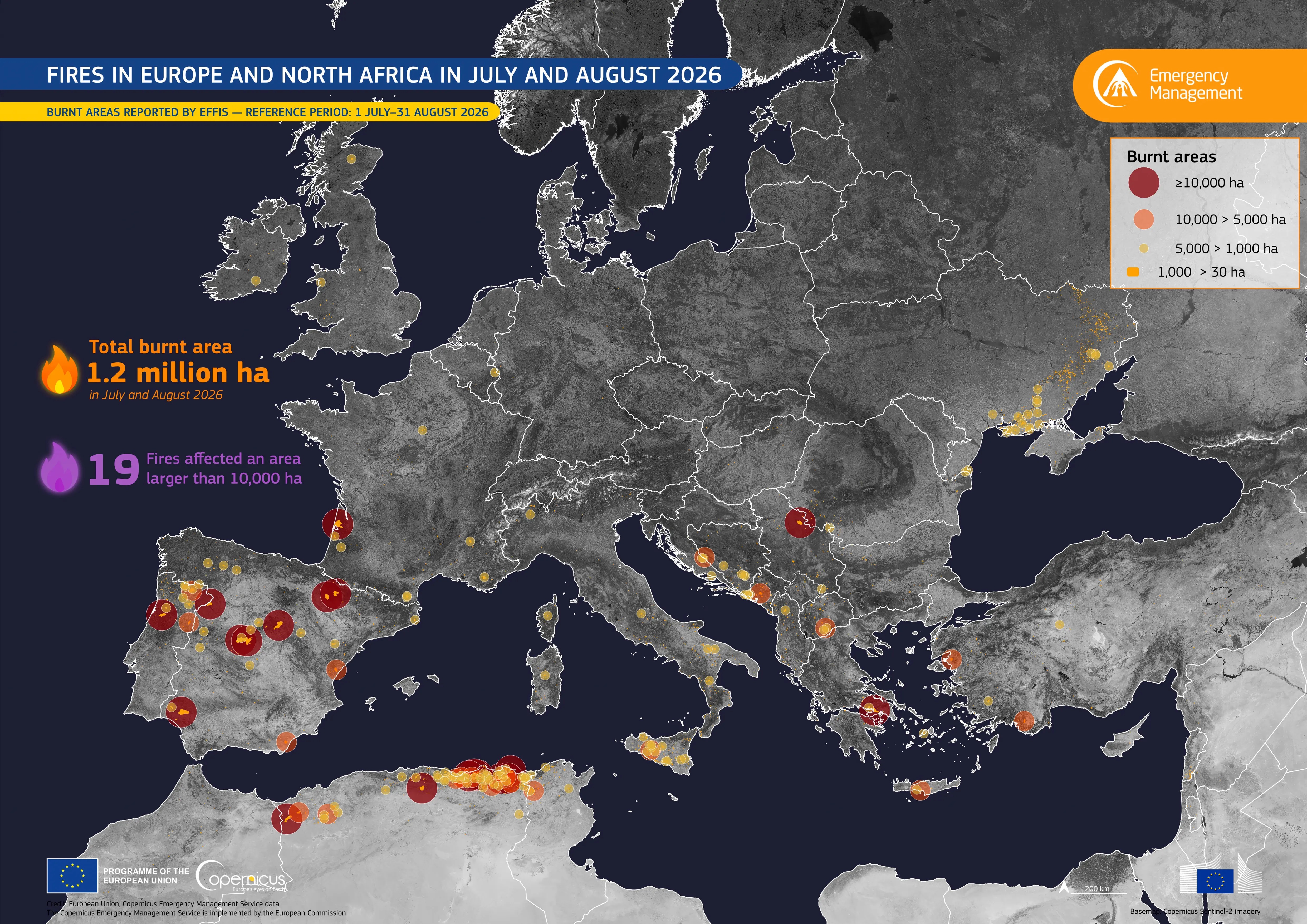
Figure 1. Copernicus, Fires in Europe and North Africa
in July and August 2026
Wildfire incidents may also involve multiple helicopters, fixed-wing airtankers, surveillance aircraft and increasingly unmanned aircraft systems operating within a relatively confined area. Maintaining situational awareness, adhering to established airspace coordination procedures and ensuring clear, concise communications are therefore essential to reducing collision risks and preventing misunderstandings between participating crews.
Finally, major wildfire events often require repeated sorties over extended periods. High cockpit workload, elevated temperatures, noise, vibration and the pressure associated with rapidly evolving operational priorities may contribute to cumulative fatigue. Effective crew resource management, disciplined operational procedures, comprehensive briefings and proactive fatigue mitigation measures are therefore fundamental to sustaining safe operations.
The experience of recent wildfire seasons has consistently shown that successful aerial firefighting depends not only on aircraft capability, but equally on sound operational planning, crew proficiency, interoperability and a thorough understanding of the unique hazards associated with the wildfire environment.
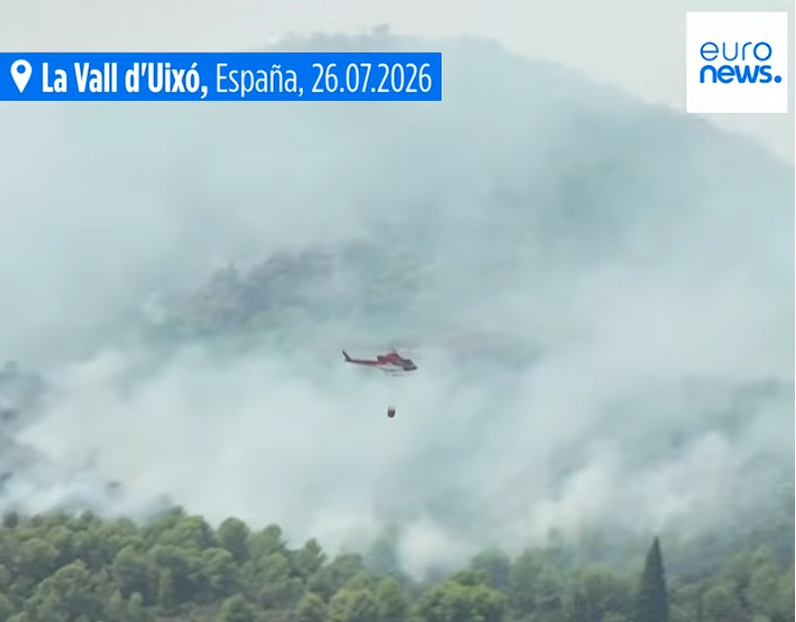
Figure 2. Helicopter firefighting operations in the Madrid and Ávila areas, Spain, July 2026
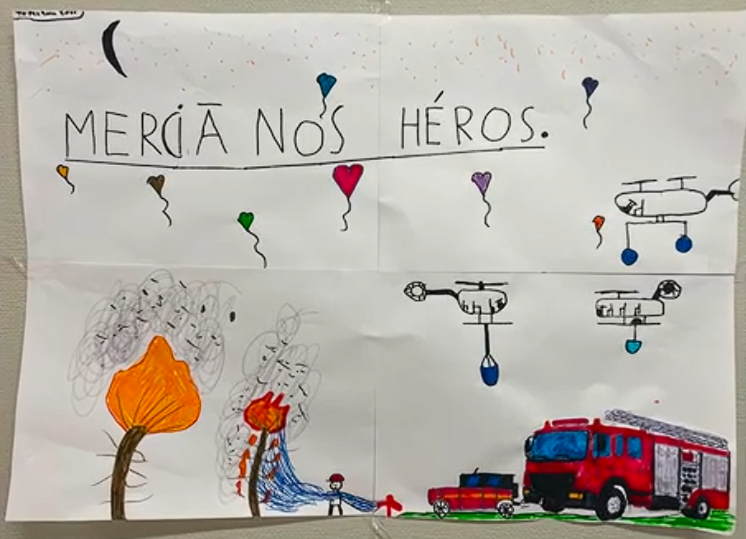
Figure 3. "Thanks to our heroes". A child's tribute fo firefighters, Ville d'Arès, France, published in September 2026
Wildfires also occurred in regions that have not traditionally been associated with large-scale wildfires.
The wildfire emergency in Belgium's Hautes Fagnes region provided a striking example. Although northern European countries have historically experienced lower levels of wildfire activity than Mediterranean regions, prolonged dry conditions and elevated temperatures created conditions capable of supporting significant fire development. More than 3,000 hectares were affected, prompting the deployment of aerial firefighting resources and international assistance.
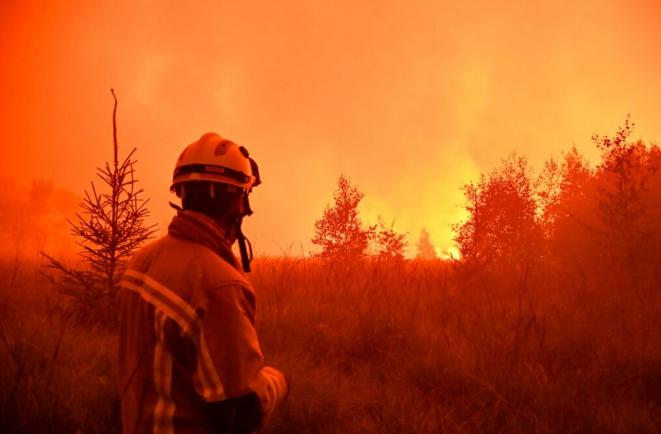
Figure 4. Firemen in action, High Fens nature reserve, Belgium, August 2026.
Credit: Belga/Images VHP
This broad geographical distribution confirms an important trend: wildfire exposure is expanding. Areas previously considered to be at relatively low risk are increasingly encountering operational conditions more commonly associated with southern Europe. Consequently, preparedness, training and response planning can no longer be viewed solely through a regional lens.
Climate change and the wildfire cycle
Climate change is playing a significant role in shaping Europe's wildfire environment. Higher average temperatures, more frequent heatwaves, prolonged droughts and changing rainfall patterns contribute to drier vegetation and longer periods of elevated fire danger. The European Commission notes that wildfire seasons are becoming longer and more severe, while regions not traditionally prone to wildfires may face increasing risk in the future.
Wildfires, however, are not merely a consequence of climate change. They also contribute to it. Large fires release substantial quantities of carbon dioxide and other greenhouse gases while simultaneously damaging forests and ecosystems that normally act as carbon sinks. The result is a self-reinforcing cycle in which climate change increases the likelihood and severity of wildfires, while wildfire emissions further exacerbate climate change.
Breaking this cycle requires action across the entire risk-management spectrum, including prevention, preparedness, early detection, landscape management, emergency response and post-fire recovery.
Why helicopters matter
Although wildfire response relies on numerous capabilities, helicopters provide a unique combination of flexibility, responsiveness and precision.
Their ability to operate close to the incident area, draw water from local sources and conduct repeated targeted drops makes them particularly effective during the initial attack phase, when rapid intervention may prevent a small fire from developing into a major incident. Helicopters can also operate in terrain where access by ground crews is difficult and where fixed-wing aircraft may face operational constraints.
Equally important are the many supporting roles helicopters perform during wildfire operations. These include aerial reconnaissance, fire perimeter assessment, command-and-control support, transport of firefighting personnel and equipment, medical evacuation, and logistical support for personnel operating in remote areas. In many incidents, helicopters provide the operational link between strategic command and tactical action on the ground.
As wildfire incidents become larger and more complex, these capabilities are becoming increasingly valuable for incident commanders seeking to maintain situational awareness and rapidly allocate resources where they can achieve the greatest operational effect.
Operational challenges for flight crews
Wildfire operations are among the most complex and demanding missions undertaken by helicopter crews. The operational environment is dynamic, time-critical and often characterised by rapidly changing hazards that can affect both aircraft performance and crew decision-making.
Heat, reduced visibility, and turbulences remain a persistent concern. Smoke can obscure terrain features, hide other aircraft operating in the vicinity and significantly degrade a pilot's ability to identify hazards and maintain visual references. At the same time, fires may generate intense localised weather phenomena, including strong updraughts, downdraughts and rapidly shifting winds capable of affecting aircraft handling and flight path control.
Water-bombing operations introduce additional risks. Crews frequently operate at low level, often in mountainous terrain, steep valleys or heavily forested areas where margins for manoeuvre are limited. Repeated approaches to water sources and drop zones require sustained concentration and precise aircraft handling. Obstacles such as trees, communication masts, power lines and unmarked cables may be difficult to detect, particularly in smoke-affected environments or unfamiliar operating areas. The combination of low-level flight, reduced visibility and demanding manoeuvring makes collision avoidance a critical consideration throughout the mission.
The water collection phase itself requires careful management. Whether using a bucket suspended beneath the aircraft or an integrated tank system, the addition of water significantly alters the helicopter's mass and handling characteristics. The weight increase may be substantial, particularly during periods of high temperature and elevated density altitude, when aircraft performance margins are already reduced. Depending on the system employed, the load may also influence the aircraft's centre of gravity and introduce pendular or dynamic effects that require active monitoring by the crew.
A further consideration arises during the release phase. The discharge of a large volume of water results in a rapid reduction in gross mass and, potentially, a shift in the centre of gravity. These abrupt changes can affect aircraft response and control. Anticipating the altered handling characteristics immediately after a drop is therefore an important aspect of safe and accurate firefighting operations.
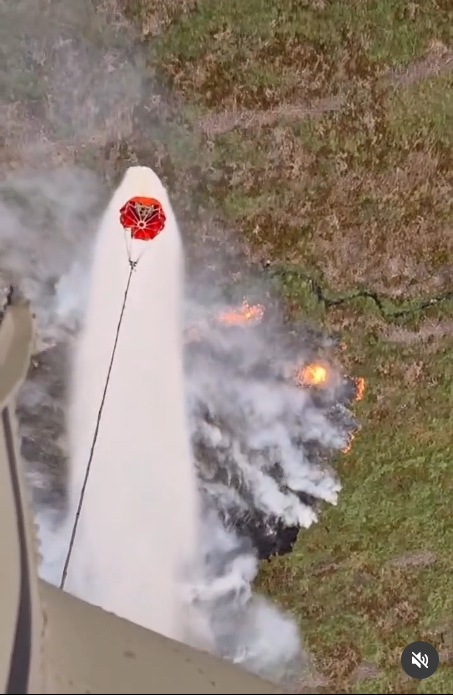
Figure 5. Helicopter water bombing operation over High Fens, Belgium, Dutch Koninklijke Luchtmacht (Reel posted on Instagram)
Many modern firefighting helicopters are equipped with 3-axis Stability Augmentation Systems (SAS) and Automatic Flight Control Systems (AFCS), which enhance stability and reduce pilot workload in turbulent and demanding environments. While critical firefighting manoeuvres remain largely hand-flown, these systems can significantly improve safety and operational effectiveness, especially during transit, positioning, and other non-drop phases of the mission.
European solidarity and shared capabilities
A significant lesson from the 2026 season is the importance of collective preparedness and mutual assistance.
Recognising the growing wildfire threat, the European Union deployed its largest-ever wildfire readiness package for summer 2026. Through the Union Civil Protection Mechanism (UCPM), 777 firefighters from 14 countries were pre-positioned in high-risk areas, while a shared fleet of 22 firefighting aircraft and five helicopters remained available to support participating states facing overwhelming wildfire emergencies.
These resources were mobilised repeatedly throughout the season. France, Spain, Belgium, Greece, Serbia and several other countries received assistance through European mechanisms when national capacities came under pressure. The Emergency Response Coordination Centre (ERCC) coordinated requests and deployments, while the Copernicus Emergency Management Service and EFFIS provided situational awareness, mapping and fire-risk forecasting to support operational decision-making.
The lesson is clear: as wildfire events increase in frequency and scale, resilience depends not only on national capabilities but also on the ability to share resources, adopt common procedures and operate effectively across borders.
Looking ahead
The 2026 wildfire season demonstrated that Europe must continue to adapt to an environment in which severe wildfires are becoming more frequent, more widespread and more demanding of emergency response resources. Prevention, preparedness, training and climate adaptation will all remain essential components of future resilience.
For the aviation community, the season also highlighted the enduring value of helicopter operations. Few aviation activities demonstrate such a direct and visible contribution to the protection of life, property, natural resources and critical infrastructure.
When integrated effectively with fixed-wing aircraft, ground firefighting teams and incident management structures, helicopter firefighting remains one of the most demanding and consequential rotorcraft missions. It illustrates how aviation expertise, operational flexibility and close interagency cooperation can contribute directly to public safety and environmental protection.
Above all, the events of 2026 confirmed that wildfires are a shared European challenge requiring coordinated European solutions. Sustaining robust aerial firefighting capabilities, strengthening interoperability and investing in collective preparedness will remain essential for protecting communities, preserving ecosystems and enhancing resilience in the face of an evolving wildfire threat.
References
European Forest Fire Information System - Welcome to EFFIS
Wildfires - European Commission
Wildfires - European Civil Protection and Humanitarian Aid Operations
Current wildfire situation in Europe - Joint Research Centre
In photos: Firefighters battling wildfires in High Fens
EU civil protection mechanism - European Civil Protection and Humanitarian Aid Operations
Emergency response coordination centre - European Civil Protection and Humanitarian Aid Operations
Please log in or sign up to comment.