
Annual Safety Review 2026
The EASA Annual Safety Review (ASR) 2026 has been published on 26 October 2026.
It analyses European aviation safety performance during 2025 and compares the results with those observed over the preceding ten years.
The review covers accidents and serious incidents across all aviation domains, identifies key safety risks and emerging trends, provides dedicated analyses for aeroplanes, helicopters, balloons, sailplanes, UAS, aerodromes, ground handling, and ATM/ANS, and serves as an important input to the European Safety Risk Management process and the European Plan for Aviation Safety (EPAS).
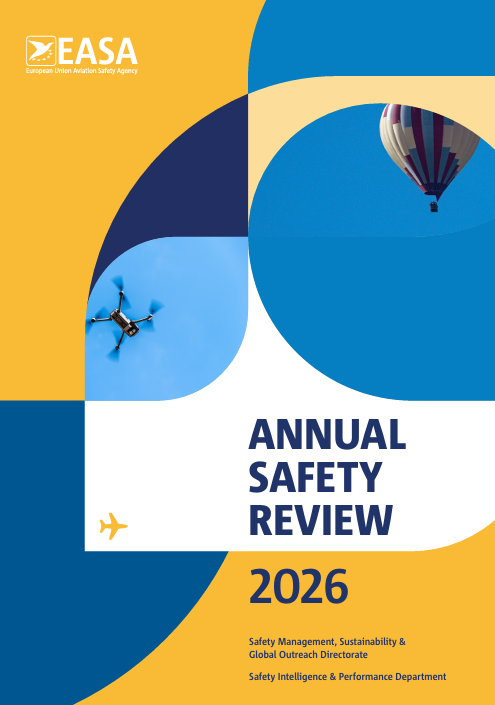
Annual Safety Review 2026 | EASA
This article does not aim to summarise the helicopter chapter of the ASR; instead, it focuses on the key risk areas identified for all helicopter operations. Readers are invited to refer to the ASR for the full picture, including more detailed and comprehensive results, as well as specific analyses addressing all helicopter operations, Commercial Air Transport (CAT), Specialised Operations (SPO), and Non-Commercial Operations (NCO).
How has helicopter safety evolved?
From a helicopter perspective, the overall safety picture remains mixed.
The total number of helicopter accidents in 2025 changed only slightly compared with recent years, suggesting that the sector has not experienced a significant deterioration or improvement in overall accident frequency.
However, the number of fatal accidents, fatalities and serious injuries increased compared with the recent five-year average, demonstrating that severe outcomes remain a concern. At the same time, reported serious incidents remain significantly above historical averages, reflecting both the demanding nature of helicopter operations and improved reporting.
Overall, helicopter safety performance may best be described as stable but not improving, with several long-standing risk areas continuing to dominate the accident landscape.
Key Risk Areas for all helicopter operations
The ASR identifies the following leading Key Risk Areas (KRAs) for all helicopter operations:
- Aircraft Upset (Loss of Control)
- Airborne Collision
- Terrain Collision
- Obstacle Collision in Flight
- Fire, Smoke and Pressurisation
1. Aircraft Upset (Loss of Control)
Aircraft upset refers to an unintended deviation from the aircraft's expected attitude, flight path, speed or energy state that may ultimately result in an uncontrolled collision with terrain.
Aircraft Upset is the most significant Key Risk Area for helicopter operations.
Factors contributing to aircraft upset include:
- adverse weather conditions
- engine or system malfunctions
- maintenance-related issues
- inappropriate energy management
- inappropriate automation management
- degraded monitoring
- spatial disorientation
- broader human performance issues
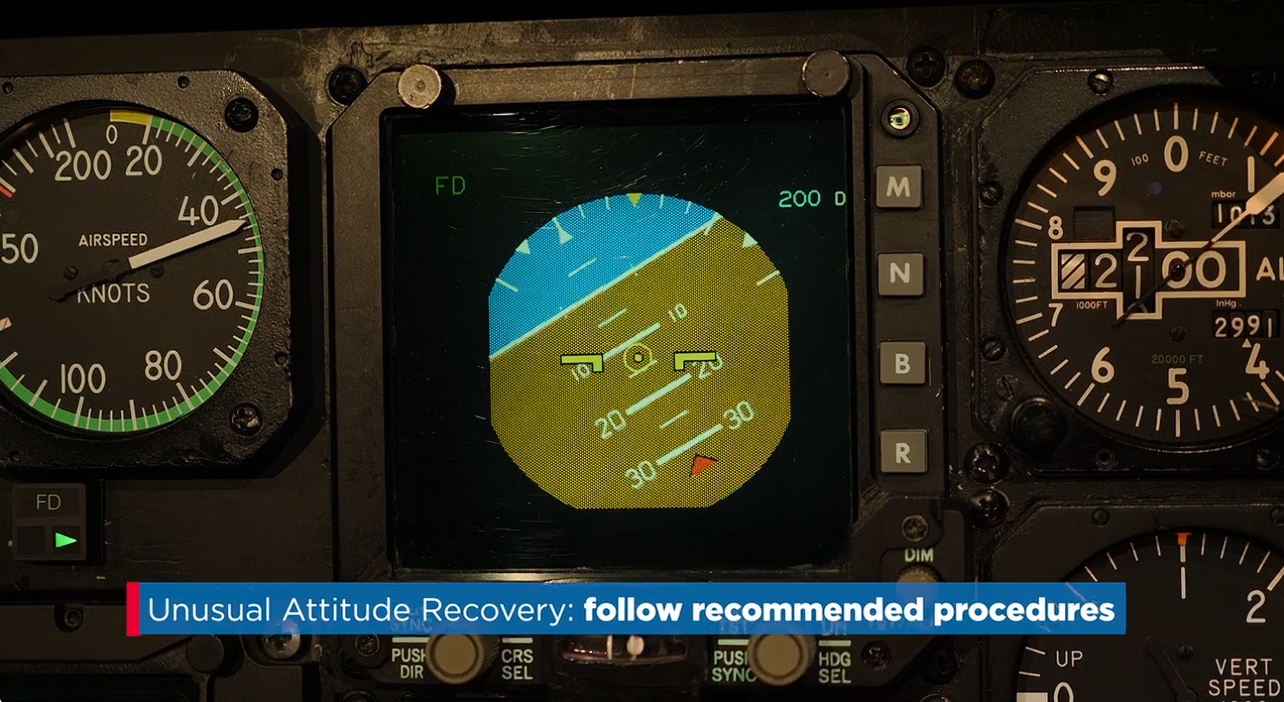
Picture from the Leonardo Helicopters video Automation and Flight Path Management
Failure to recover from an upset may result in loss of control in flight (LOC-I).
LOC-I remains the dominant occurrence category associated with helicopter accidents. According to the review, LOC-I accounted for 42% of fatal helicopter accidents over the last 10 years, making it the leading accident category in European helicopter operations.
Unlike many technical failures, LOC-I often develops from a sequence of operational and human-factor issues rather than from a single triggering event. It therefore remains one of the most challenging accident types to prevent.
As highlighted in the review, Inadvertent IMC (IIMC) is a significant precursor to LOC-I accidents. Deteriorating weather conditions may result in the loss of external visual references, leading to spatial disorientation and a rapid loss of aircraft control.
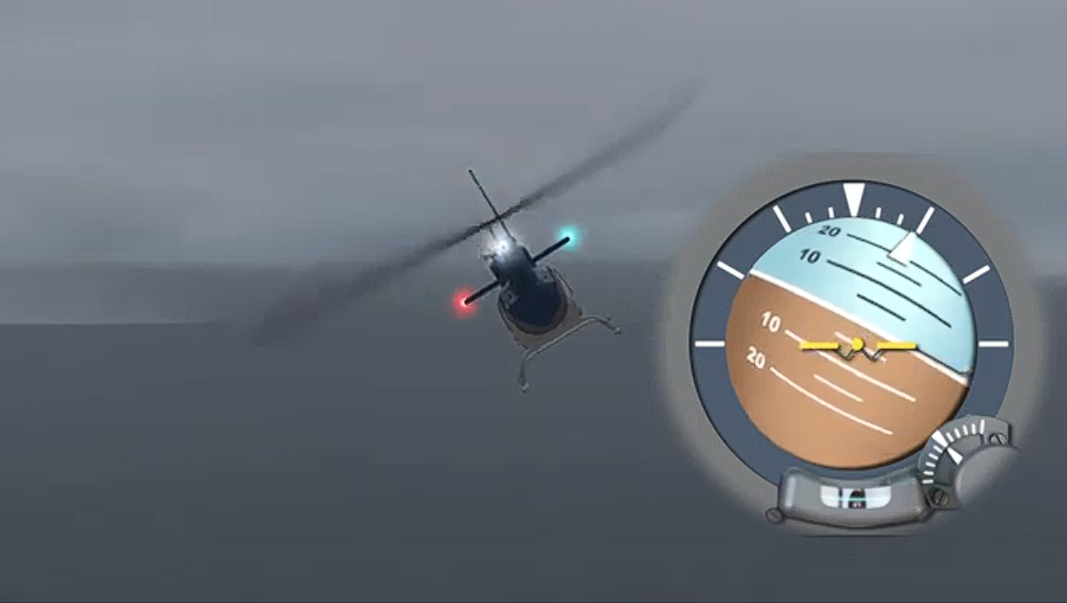
Picture from the EHEST Video Degraded Visual Environment and Loss of Control
Because helicopters are inherently dynamically unstable, they require continuous control inputs. In helicopters without an autopilot, maintaining control depends entirely on the pilot. An unexpected transition from visual to instrument meteorological conditions can rapidly lead to loss of control in flight (LOC-I), particularly when pilots are not sufficiently proficient in instrument flight. Such events have contributed to numerous fatal helicopter accidents. EASA identifies inadvertent entry into IMC (IIMC) as a Rotorcraft Top Safety Topic.
Unusual attitude recovery, instrument flying, and emergency manoeuvre training are essential. A clear understanding of the actions required following an inadvertent IMC (IIMC) encounter can significantly enhance safety and improve survivability. Nevertheless, prevention remains the most effective defence. The objective should always be to avoid inadvertent IMC through thorough pre-flight planning, sound weather-related decision-making, continuous threat assessment, and timely diversion or other alternative courses of action before conditions deteriorate beyond safe operating limits.
2. Airborne Collision
Airborne Collision includes actual or potential collisions between aircraft while airborne, as well as collisions involving other airborne objects such as UAS.
The ASR notes a growing number of occurrences involving losses of separation, airprox events and interactions with unmanned aircraft. The review also references a fatal mid-air collision between two helicopters that resulted in five fatalities.
Common contributing factors include:
- ineffective visual scanning
- inadequate situational awareness
- miscommunication between crews and ATC
- loss of communication
- misunderstanding of clearances
- increasing airspace complexity
- increasing UAS activity
3. Terrain Collision
Terrain Collision (Controlled Flight Into Terrain – CFIT) includes occurrences in which an aircraft collides with terrain without any indication that the flight crew were unable to maintain control of the aircraft. Terrain collisions continue to represent a significant safety risk because of their potentially severe or catastrophic consequences.
Typical contributors include:
- degraded visibility
- reduced visual cues
- visual illusions
- navigation errors
- misjudgement of terrain clearance
- inadequate threat assessment
- operational pressure
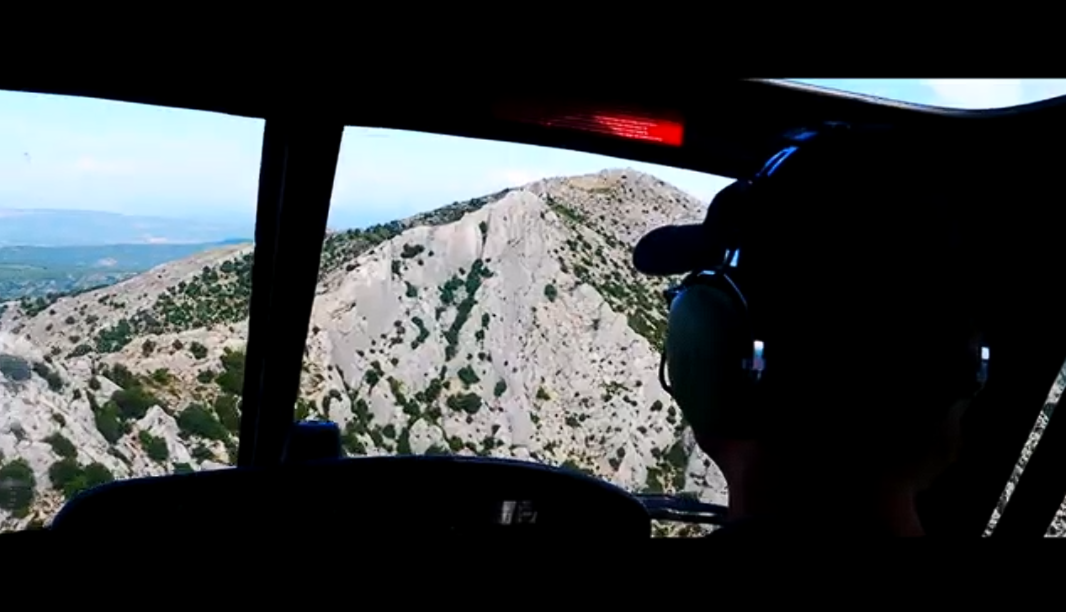
Picture from the EASA video CFIT and Distraction
Although less frequent than LOC-I events, terrain collisions are often unforgiving, which explains their high ranking in the European Risk Classification Scheme.
4. Obstacle Collision in Flight
Obstacle Collision in Flight involves collisions with fixed or temporary obstacles encountered during flight, particularly during low-level operations where helicopters spend a significant proportion of their operating time.
Typical obstacles include:
- power-line infrastructure
- telecommunication masts
- towers
- cranes
- construction sites
- temporary worksite obstacles
- structures close to landing sites
This risk remains particularly relevant to HEMS, aerial work, utility operations, hoist activities, firefighting missions and other specialised rotorcraft operations.
Obstacle collision events are often associated with deficiencies in planning, reconnaissance, situational awareness or threat identification.
Within the Obstacle Collision category, cable collisions (wire strikes) warrant particular attention.
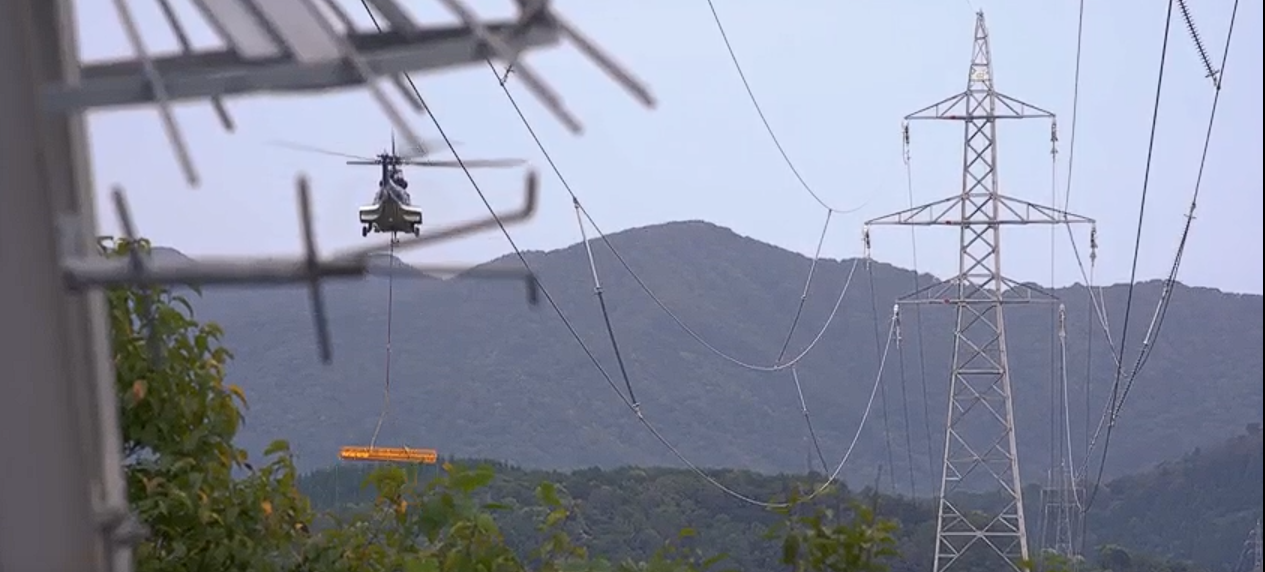
Picture from the Airbus Helicopters video
Cable Collision Avoidance: Essential Techniques & Pilot Testimony
Cable collisions constitute one of the most hazardous forms of obstacle collision because wires are inherently difficult to detect, particularly in low-light conditions, against cluttered backgrounds, during high-workload phases of flight, at night, or in Degraded Visual Environments.
Common threats include:
- electrical transmission lines
- distribution lines
- telecommunication cables
- supporting guy wires.
Wires frequently provide little opportunity for last-minute avoidance once detected. Prevention through early detection and avoidance therefore remains the primary defence.
5. Fire, Smoke and Pressurisation
Fire, Smoke and Pressurisation remains among the leading helicopter KRAs identified by EASA. Although many helicopters are not pressurised, the category encompasses a broad range of potentially catastrophic events involving fire, smoke, fumes and associated system failures.
Examples include:
- in-flight fires
- cockpit smoke or fumes
- post-impact fires
- failures affecting occupant survivability.
While less frequent than the previous KRAs, these events often have significant consequences for crews and passengers.
Take away
The Annual Safety Review 2026 confirms that rotorcraft safety continues to be dominated by operational and human-performance risks rather than purely technical failures.
Aircraft Upset, particularly LOC-I events associated with inadvertent IMC, remains the most critical risk in helicopter operations.
At the same time, low-level operations continue to expose crews to CFIT, obstacle and wire-strike hazards, while the growing complexity of the airspace environment increases the importance of collision avoidance and situational awareness.
For the rotorcraft community, the safety priorities remain clear:
- Prevent LOC-I and IIMC accidents
- Improve weather-related decision-making
- Strengthen TEM and human-performance resilience
- Reduce wire-strike and obstacle-collision accidents
- Improve airborne collision avoidance, including UAS encounters
- Enhance situational awareness during low-level operations
These themes remain fully aligned with the priorities of the European rotorcraft community and should continue to inform the European Safety Risk Management process and the European Plan for Aviation Safety (EPAS), while also guiding future EASA and ESPN-R safety-promotion activities.
References
Annual Safety Review 2026 | EASA, together with its companion summary Annual Safety Review 2026 – at a glance
European Plan for Aviation Safety | EASA
Figure credits:
Leonardo Helicopters video Automation and Flight Path Management
EHEST Video Degraded Visual Environment and Loss of Control
EASA video CFIT and Distraction - YouTube
Airbus Helicopters video Cable Collision Avoidance: Essential Techniques & Pilot Testimony
Please log in or sign up to comment.