Thanks, Sander.
This is exactly the kind of comments I was looking for.
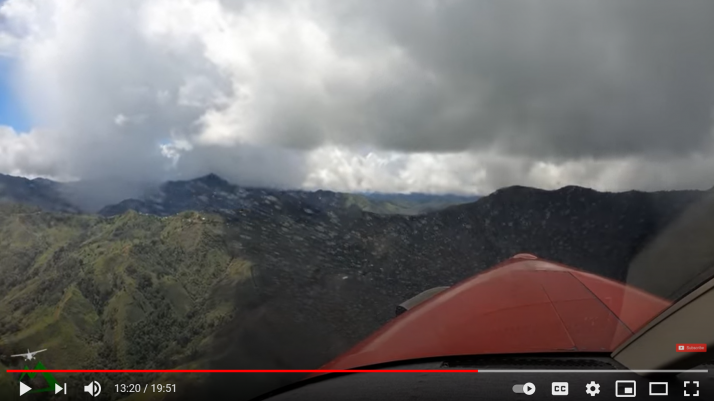
I didn't endorse this video but suggested that it could be used for training purposes with 2 leading questions:
- Can you spot the various threats in this flight and how good they were managed?
- What would you have done differently, possibly?
The objective here is to make people think about their own practices, eventually.
Thanks again for commenting!
Join your community
Join a community to be part of the discussion.
Dionysios Kefalas created a topic in Air Operations
Michel MASSON commented on a post in General Aviation
Multiple Threat and Error Management
Can you spot the various threats in this flight and how good they were managed?
What would you have done differently, possibly?
https://www.youtube.com/watch?v=JHQ8UAjoVVc
Great video for training, I suggest:
John FRANKLIN created a topic in Air Operations
Michel MASSON posted in General Aviation
Multiple Threat and Error Management
Can you spot the various threats in this flight and how good they were managed?
What would you have done differently, possibly?
https://www.youtube.com/watch?v=JHQ8UAjoVVc
Great video for training, I suggest:
John FRANKLIN created an event in Air Operations
Michel MASSON posted in General Aviation
Heat Waves Bring Thunderstorms!
Beware and refer to previous publications for risks description and safety tips, for instance:
https://www.easa.europa.eu/newsroom-and-events/news/sunny-swift-weather…;
https://www.easa.europa.eu/document-library/general-publications/egast-…;
See also this AOPA video on avoiding spring convective weather and thunderstorms:
https://www.bing.com/videos/search?q=AOPA+Safety+video+weather+thunders…
Feel free to share other good material in this forum.
Safety starts on the ground at the flight planning stage.
If the weather is questionable, don't fly or divert.
Know and respect your and your aircraft's limitations and use all available resources including your eyes, technology, FIS and ATC.
PS Even birds avoid flying into these thunderstorm forming clouds:
Michel MASSON posted in Rotorcraft
Heat Waves Bring Thunderstorms!
Beware and refers to previous publications and videos for risks description and safety tips:
https://www.easa.europa.eu/community/topics/weather-threats-vmc-flights;
https://www.easa.europa.eu/community/topics/weather-threats-vmc-flights…;
https://www.easa.europa.eu/document-library/general-publications/ehest-….
Feel free to share other good material in this forum.
Safety starts on the ground at the flight planning stage.
If the weather is questionable, don't fly, divert or Land & LIVE.
Know and respect your and your aircraft's limitations and use all available resources including your eyes, technology, FIS and ATC.
PS Even birds avoid flying into these thunderstorm forming clouds:
Michel MASSON created a topic in General Aviation
Christopher Wik created a topic in General Aviation
Fulvio Sirri commented on a post in Rotorcraft
In a further step to improve rotorcraft safety by mitigating the risk of human error at the design stage and to better support the investigation of rotorcraft accidents and incidents, EASA published ED Decision 2021/010/R.
The introduction of systematic considerations related to Human Factors during the rotorcraft design process is expected to reduce the risk of design-related errors attributable to human factors that may lead to or contribute to an accident or incident.
With reference to investigation of rotorcraft accidents and incidents, certification specifications and acceptable means of compliance (AMCs) have been created or amended to:
support compliance with the operational rules requiring the recording of data link communications,
improve the serviceability of flight recorders and the audio quality of cockpit voice recorders (CVR) recordings, ensuring a better data analysis related to accidents or incidents.
These actions are part of the EASA Rotorcraft Safety Roadmap and the systemic actions taken to improve aircraft tracking, rescue operations and accident investigation, as identified in the European Plan for Aviation Safety (EPAS 2021-2025).
https://www.easa.europa.eu/newsroom-and-events/news/easa-publishes-deci…
The comment posted is very interesting. However it is related to helicopters only. Why do not consider a general initiative by empowering the Human Factors aspects and requirement into Part 21 for the design activities?
Ludwig Hessler commented on Anonymous user's topic in General Aviation
Dear Mr. Richter,
The Agency is of the opinion that a "supported location" is a location where all the resources necessary for maintenance (as described in the MOE) are available (facilities, tooling, materials, staff, etc.).
As a consequence, a line station could be considered unsupported if Part-66 certifying staff is not available, in which case, the commander may release the maintenance described in their authorisation.
However, special care has to be taken as to the meaning of "Part-66 certifying staff is not available". Although it could be possible to say that the Part-66 certifying staff is not available, for example, if the maintenance takes place outside the times where the presence of Part-66 certifying staff has been agreed or when the Part-66 certifying staff has been unexpectedly sent to support an AOG situation at another location (in accordance with approved procedures), this should not be the case where the Part-66 certifying staff is present at the line station maintaining one aircraft and they cannot attend at that very moment an additional aircraft requiring maintenance.
This means that it is essential to clearly define in the MOE, to the satisfaction of the competent authority, the operating conditions of the line stations.
This is particularly important for the purpose of defining which locations need to be supported, the amount of Part-66 certifying staff required and when these staff should be available.
In addition, the Agency considers crucial that special care is given to ensure compliance with the existing requirements in order to issue the commander authorisation (defined procedures, practical training, duration of the authorisation, etc.) and to ensure that the scope of work authorised to the commander is in line with AMC 145.A.30(j)4.
I hope, this information clarifies the situation.
Ludwig Heßler
Airworthiness Expert
European Union Aviation Safety Agency
John FRANKLIN posted in Air Operations
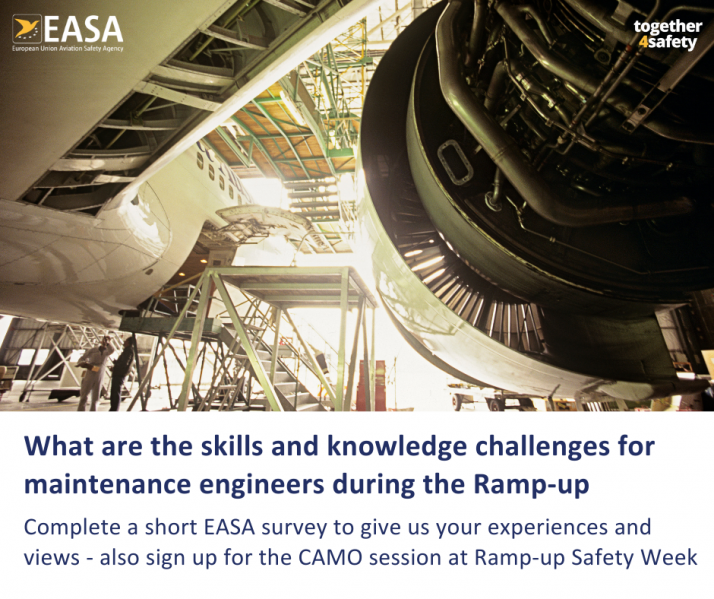
Please take part in the survey for on maintenance skills and knowledge challenges.
https://ec.europa.eu/eusurvey/runner/MESCESurveyJune2021
Michel MASSON posted in Rotorcraft
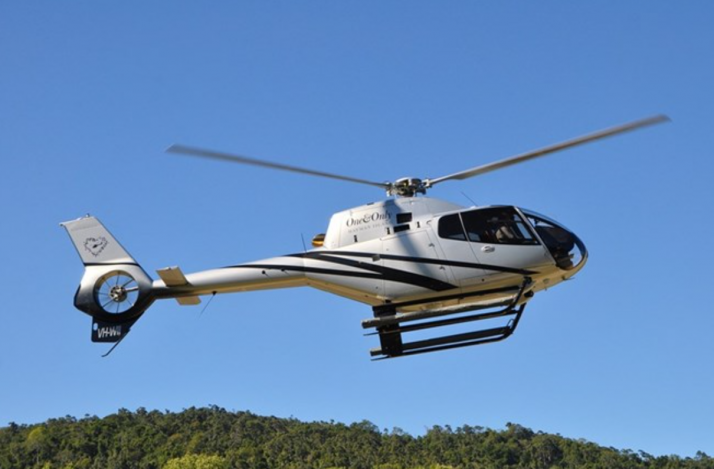
The ATSB is reminding helicopter operators about the importance of considering skill consolidation processes when transitioning pilots to a new and technically different helicopter type
https://www.atsb.gov.au/media/news-items/2021/unanticipated-yaw/
John FRANKLIN posted in Rotorcraft
In a further step to improve rotorcraft safety by mitigating the risk of human error at the design stage and to better support the investigation of rotorcraft accidents and incidents, EASA published ED Decision 2021/010/R.
The introduction of systematic considerations related to Human Factors during the rotorcraft design process is expected to reduce the risk of design-related errors attributable to human factors that may lead to or contribute to an accident or incident.
With reference to investigation of rotorcraft accidents and incidents, certification specifications and acceptable means of compliance (AMCs) have been created or amended to:
support compliance with the operational rules requiring the recording of data link communications,
improve the serviceability of flight recorders and the audio quality of cockpit voice recorders (CVR) recordings, ensuring a better data analysis related to accidents or incidents.
These actions are part of the EASA Rotorcraft Safety Roadmap and the systemic actions taken to improve aircraft tracking, rescue operations and accident investigation, as identified in the European Plan for Aviation Safety (EPAS 2021-2025).
https://www.easa.europa.eu/newsroom-and-events/news/easa-publishes-deci…
John FRANKLIN posted in Air Operations
There has been an update of Aviation Health Safety Protocol to support safe travel this summer. For more information - check out the full information on the EASA Website.
https://www.easa.europa.eu/newsroom-and-events/press-releases/easaecdc-…
Andrea Strata commented on John FRANKLIN's topic in General Aviation
Thank you for this episode dedicated to glider flying. As glider pilot and FI(S) may i suggest some small correction on italian translation? Rigging is montaggio not installazione; aircraft is aeromobile not velivolo. :-)
John FRANKLIN created a topic in General Aviation
Miguel Alonso Solano García commented on John FRANKLIN's topic in Air Operations
EXCELLENT!!!!!!!!!
John FRANKLIN created a topic in Air Operations