
Hi John, do you know if anything like this is planned in 2022 again?
Join a community to be part of the discussion.
Tristan Loraine posted in Air Operations
How much do you know about the aircraft cabin air topic? Do you know about the history of the contaminated air issue, the 50 safety recommendations and findings made by 12 air accident departments globally, the operational challenges of fault finding, the latest filtration and sensor developments, the ICAO training guidelines, the new blood test and medical protocol, the SMS and risk assessments, the new warnings on oil and hydraulic products, the recent EASA funded FACTS research etc...? Learn more about this important health and flight safety issue at the online - multi lingual - 2022 Aircraft Cabin Air Conference - registration just opened with currently 60% off registration fees for a limited period only. Visit: https://www.aircraftcabinair.com/

Durga Das posted in Air Operations
Thank you for accepting
FERNANDO RAMOS posted in Air Operations
Thanks for accepting me. A multi European community with high professional individuals. Keep the Excellent work.
Michel MASSON posted in Rotorcraft
NASA ASRS CALLBACK 505 of January 2022 - The Human Machine Interface
https://asrs.arc.nasa.gov/publications/callback/cb_505.html
CALLBACK 505 continues ASRS informal look at Human Factors in aviation, focusing on the human-machine interface. Examine the interfaces in each narrative, when errors may have originated and how they are advanced, and the significance each interface holds in the chain of events.
What action has EASA taken to mitigate the risk of human error at the design stage in Rotorcraft? Refer to ED Decision 2021/010/R:
https://www.easa.europa.eu/document-library/agency-decisions/ed-decisio…
Michel MASSON posted in Air Operations
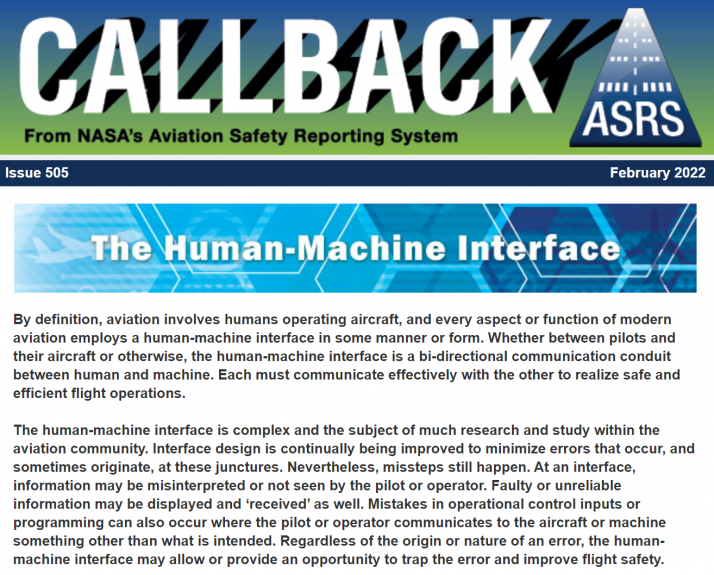
NASA ASRS CALLBACK 505 of February 2022 - The Human Machine Interface
https://asrs.arc.nasa.gov/publications/callback/cb_505.html
CALLBACK 505 continues ASRS informal look at Human Factors in aviation, focusing on the human-machine interface. Examine the interfaces in each narrative, when errors may have originated and how they are advanced, and the significance each interface holds in the chain of events.
Uschi Wagner commented on John FRANKLIN's event in General Aviation
Hi John, do you know if anything like this is planned in 2022 again?
Michel MASSON posted in General Aviation
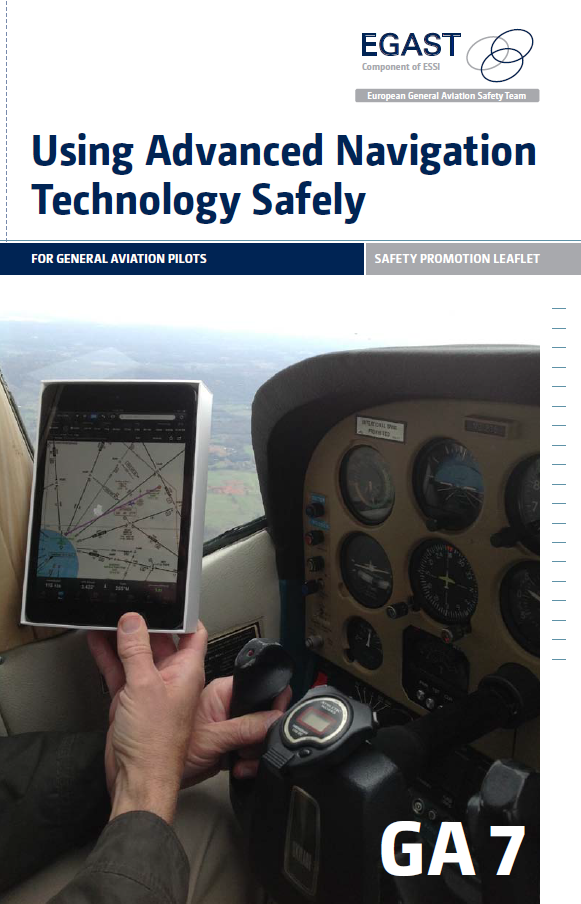
Do you know EGAST Leaflet GA7 Using Advanced Navigation Technology Safely?
https://www.easa.europa.eu/document-library/general-publications/egast-…
Authored at the time by my close Safety Promotion colleague Clement Audard, now Senior Expert Safety Assessment in the EASA Certification Directorate.
Available also in Spanish thanks to AESA.
Michel MASSON posted in Rotorcraft
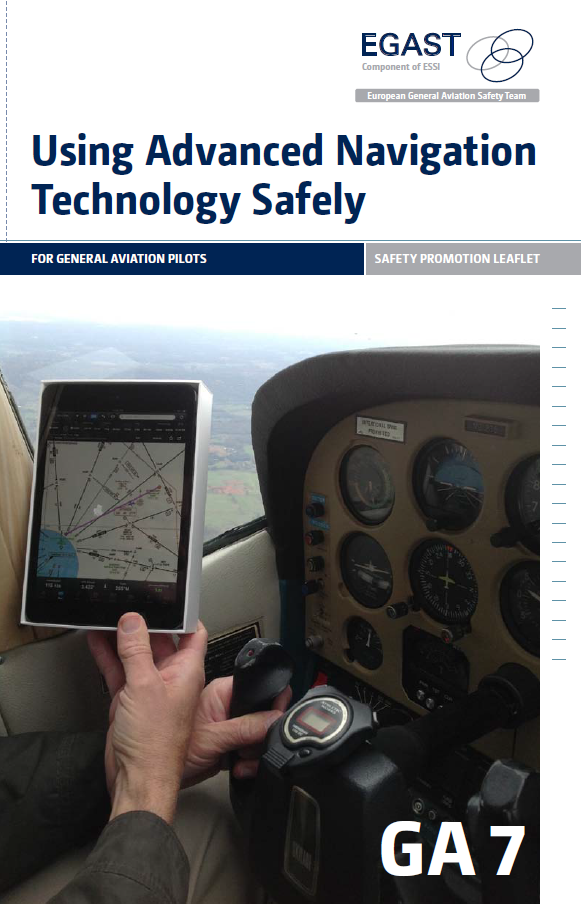
Do you know EGAST Leaflet GA7 Using Advanced Navigation Technology Safely?
Relevant also for Rotorcraft and VTOL pilots.
https://www.easa.europa.eu/document-library/general-publications/egast-…
Authored at the time by my close Safety Promotion colleague Clement Audard, now Senior Expert Safety Assessment in the EASA Certification Directorate.
Available also in Spanish thanks to AESA.
John FRANKLIN posted in Air Operations
Just to make a further reminder about the latest FDM Analysis Techniques and Priniciples Document that our FDM expert have created with the European Operators FDM Forum. Access it at the link here: https://www.easa.europa.eu/downloads/134273/en
Nick Wilcock commented on a post in General Aviation

Goodmorning everyone,
I have a question for you all.
Can a pilot with LAPL (A) be admitted to attend a course to become a CRI (A)?
A LAPL(A) does not contain an SEP (Land) Class Rating, it includes some privileges to operate SEP and/or TMG aircraft. There is a legal difference; a CRI(A) must hold an Aeroplane Class Rating in his/her licence and a LAPL(A) does not meet this criterion.
John FRANKLIN created an event in Rotorcraft
ROBERTO DICIOTTI posted in General Aviation
Goodmorning everyone,
I have a question for you all.
Can a pilot with LAPL (A) be admitted to attend a course to become a CRI (A)?
John FRANKLIN created an event in General Aviation
John FRANKLIN created an event in General Aviation
Axel-Stéphane Smorgrav commented on Vladimir FOLTIN's topic in General Aviation
I appear to have missed this post when it was published almost a year ago, but I did see the video on YouTube on the subject. I also watched quite a few other videos on the subject, including the in-flight testing by Flyer Magazine in January 2021, and videos by PilotAware, particularly that which explains the issues with aerial obscuration. I have also taken the time to read parts of the Horvath feasability study on using the mobile network in the context of electronic conspicuity, particularly the conclusions. And I have read NPA 2021-14.
There are a few things that really surprise me.
First of all I am surprised that one can suggest using portable (non-installed) devices for which one cannot presume the effectiveness, in order to meet a regulatory obligation to make oneself conspicuous to USSP or anyone. At least the aerial would need to be mounted outside in order to avoid obscuration.
Second I am really surprised that it is suggested that the public mobile network can be used for the same, given the conclusions of the Horvath report.
Next I do have some questions about the ISM band devices. There are already several technologies that exist, including FLARM and PilotAware, and more seem to be coming. Although these devices will be sending the same data frames, the frequencies, and I assume the encoding, is different from one system to the next. Would the USSPs be forced to support all existing and future ADS-B Light ISM band devices?
Thinking about iConspicuity beyond U-Space, PilotAware partly relies on its ATOM ground stations. Today those ground stations are managed by volunteers with absolutely no service level agreement or installation standards, so nothing guarantees the quality nor the availability of the signal or the service. I absolutely love the ingenuity and the concepts, which seem to somewhat inspired by TIS-B, but can we rely on such a system for iConspicuity?
An increasing number of light, general aviation aircraft, including UL, are already equipped with ADS-B 1090 ES. The Trig TT21, 22, 31 transponders seem to be extremely popular in light aircraft, and can easily and inexpensively be made transmitting 1090 ES. All ADS-B IN receivers I know are dual-band 1090/978. UAT and services like TIS-B to broadcast mode C/S and FLARM targets, and FIS-B to transmit information about active restriction areas and meteorological information would be a great incentive to all of powered GA to adopt ADS-B or UAT. And isn't ADS-B at some point going to replace SSR?
Jyrki Paajanen posted in General Aviation
Hi GA Community!
A little reminder to give pilots with third-country licences something to do whilst waiting for better weather:
As you may have seen in recent Europe Air Sports and AOPA bulletins, 2022 will finally bring an end to the exemption for being based in the EU and flying third-country registered aircraft with third country licences (e.g. Flying N-registered aircraft with FAA licence, when living permanently in the EU).
The current exemption runs out on 20 June 2022 and will not be renewed. From then on you will need an EU licence.
We have kept extending that exemption possibility year after year to await the entry into application of the licencing annex to the EU-USA BASA. That annex is now in force and Member States are processing applications to validate licences to meet the deadline. The text of the annex can be found here:
https://www.easa.europa.eu/sites/default/files/dfu/tip-l_final_signe.pdf
The main rules on converting from FAA to EU licence, are in section B, starting on page 12.
The EASA Basic Regulation (Article 2(1)(b)(ii) ) determines that the operation of aircraft is subject to the Basic Regulation, if they are “registered in a third country and operated by an aircraft operator established, residing or with a principal place of business in the territory to which the Treaties apply ”. This means also holding a Part-FCL licence to fly a third-country registered aircraft.
Therefore, if you are based in the EU and flying with a third country licence, I recommend you get in touch with your local licencing authority asap to talk through the process of transferring to an EASA licence. I realise that many people may not like the way the BASA turned out, and may not like the rules, but please remember that the transfer takes months. If you want to transfer and continue flying, initiate the transfer now, or risk being grounded next summer.
Let’s make sure no-one gets unnecessarily grounded :-)
Regards,
Jyrki Paajanen
Michel MASSON posted in Air Operations
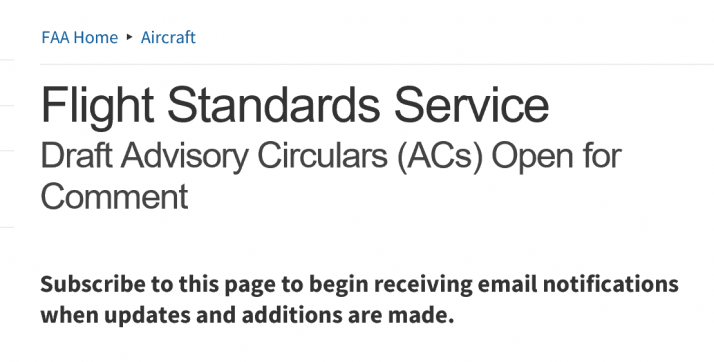
New FAA AC 120-FPM Flightpath Management open for comments
https://www.faa.gov/aircraft/draft_docs/afs_ac/
This advisory circular (AC) provides guidance and recommended practices to operators under Title 14 of the Code of Federal Regulations (14 CFR) parts 121 and 135, as well as part 142 training centers, in developing operational policies, procedures, and training to support effective flightpath management (FPM).
Comments due by March 5, 2022 can be provided by non-US citizens and organizations.
John FRANKLIN created a topic in Air Operations
Michel MASSON posted in Rotorcraft
General Aviation - Season Opener 2022
14 March - 25 March 2022
The "Be Ready - Fly Safely Campaign" addresses return to flying after the winter season and combines EASA and national events. It targets GA pilots including of Rotorcraft and other stakeholder groups. Registration details will follow: stay informed via the "Get Notified" section of this EASA event page:
https://www.easa.europa.eu/newsroom-and-events/events/general-aviation-….
Michel MASSON posted in General Aviation
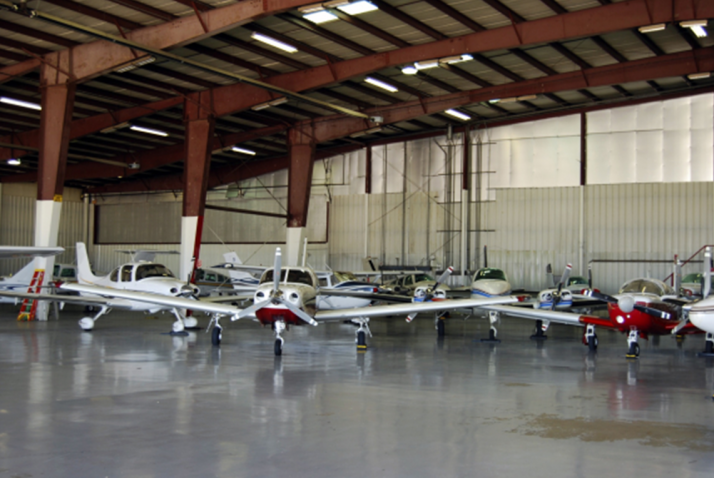
General Aviation - Season Opener 2022
14 March - 25 March 2022
The "Be Ready - Fly Safely Campaign" addresses return to flying after the winter season and combines EASA and national events. It targets GA pilots and other stakeholder groups. Registration details will follow: stay informed via the "Get Notified" section of this EASA event page:
https://www.easa.europa.eu/newsroom-and-events/events/general-aviation-….