
Many thanks for the copy.
Join a community to be part of the discussion.
Kieran OCARROLL commented on John FRANKLIN's topic in Air Operations
Many thanks for the copy.
John FRANKLIN created a topic in Air Operations
Alberto FERNANDEZ LOPEZ commented on a post in General Aviation

Hello everyone. I have a question regarding Forms of PMA parts.
There is a Technical Implementation Procedure (TIP) for Airworthiness and environmental Certification, as a bilateral agreement between the FAA and EASA (https://www.faa.gov/aircraft/air_cert/international/bilateral_agreement…)
Section 3.3.4 states the cases in which a FAA PMA part can be accepted by EASA, with the information that needs to be present in the Form 8130-3 (for example, a statement that the part is not a critical component).
I believe this is clear for new parts. However, my question has to do with when those parts are subjected to an inspection, repair or overhaul. I believe that a repair shop that carries out an overhaul, for example, on a component that is a PMA part, can't add to the Form 1 or Form 8130-3 a statement such as "is not a critical component". Only the part's manufacurer can do it.
So, my question is: Are the requirements of the TIP out only applicable for new parts? What should a Form 8130-3 or Form 1 of an inspected/repaired/overhaul PMA part have, in order for us to be able to install it on an aircraft?
Hi Filipe Pedro,
Design changes under PMA concept are not considered under European rules nor by means of the bilateral.
If there is no design change linked to the PMA part (for instance the PMA part was produced under a license agreement), the part belongs to a design approved in Europe and the particular used part was already installed in a European aircraft, it can be installed if the part was maintained in an European approved maintenance organisation or if the part was maintained in a maintenance organisation located in the US and holding both FAA and EASA approvals. In this later case, the Form 8130-3 to release the part is called ‘Dual’ since the part can be installed in both US and European registered aircraft.
For maintenance provisions in regards to the Bilateral, do not refer to the TIP, but to the MAG instead.
Jean-Claude Ribaux commented on a post in General Aviation
A Holder of an ATPL with CR A330 want to fly non commercial, SEP aircraft with LAPL prerogative (Vorrecht)
Is it possible ?
Does he need another licence?
Same question
Does a PPL pilot which want to fly under LAPL prerogatives need a new licence ?
TKS
Thank you Thomas I hope that the EASA representatives are of the same opinion. In those dramatic days of aviation unemployment that could help to save some flying activity. In some countries (fe Switz) the administrative burden for revalidation or renewal became huge and expensive...
Hugo Oliveira created a topic in Air Operations
Elena Beatriz GARCIA SANCHEZ commented on John FRANKLIN's topic in General Aviation
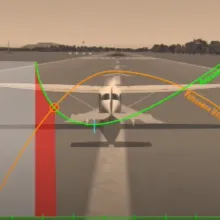
You can find advice here on touch-and-go landing https://www.boldmethod.com/learn-to-fly/maneuvers/touch-and-go-landing/
Jean-Claude Ribaux posted in General Aviation
A Holder of an ATPL with CR A330 want to fly non commercial, SEP aircraft with LAPL prerogative (Vorrecht)
Is it possible ?
Does he need another licence?
Same question
Does a PPL pilot which want to fly under LAPL prerogatives need a new licence ?
TKS
Filipe Pedro posted in General Aviation
Hello everyone. I have a question regarding Forms of PMA parts.
There is a Technical Implementation Procedure (TIP) for Airworthiness and environmental Certification, as a bilateral agreement between the FAA and EASA (https://www.faa.gov/aircraft/air_cert/international/bilateral_agreement…)
Section 3.3.4 states the cases in which a FAA PMA part can be accepted by EASA, with the information that needs to be present in the Form 8130-3 (for example, a statement that the part is not a critical component).
I believe this is clear for new parts. However, my question has to do with when those parts are subjected to an inspection, repair or overhaul. I believe that a repair shop that carries out an overhaul, for example, on a component that is a PMA part, can't add to the Form 1 or Form 8130-3 a statement such as "is not a critical component". Only the part's manufacurer can do it.
So, my question is: Are the requirements of the TIP out only applicable for new parts? What should a Form 8130-3 or Form 1 of an inspected/repaired/overhaul PMA part have, in order for us to be able to install it on an aircraft?
Christian Chaix commented on Christian Chaix's topic in General Aviation
Thank you all for your feedback.
I understand the difference in notions, but even though both levels are EASA-regulated, only one gets an EASA issued document.
Since the ATO certificate was hung on the wall, I was merely seeking for an as official equivalent.
The NAA document, even delegated from EASA, will indeed be enough.
An EASA acknowledgement, even not a certificate, would have made - imho - some sense, for the sake of continuity in issuing authority.
Best regards,
Christian
Hans Bogaerts commented on a post in General Aviation
FI(A) privileges according to Part-FCL.
As Opinion 05/2017 was filtered into Part-FCL there was consideration towards FI(A) holders who do not have a (national) commercial pilot history or a commercial pilot license. In Finland, these persons generally only hold a PPL(A) due to medical and age reasons. As a rule they have not even converted their long time ago acquired national CPL privileges into EASA licenses. Some of them have fulfilled the age old ICAO CPL knowledge requirement during their FI(A) courses as an addendum to the instructor course.
As new instructors are emerging who do NOT hold or have held commercial licenses there will be a diversification of instructors arising in the future, as the requirements for a CPL license or the required knowledge will prevent them even from attempting to remove the LAPL only limitation from their licenses. We will have retirement age "senior" instructors and Young instructors, but no path to cross the abyss.
As a result, as GA people are reluctant to switch from PPL(A) holders to LAPL(A), there is a possible lack of instructors who are proficient and not legally qualified to extend SEP(land) or SEP(sea) privileges. The LAPL only FI(A) privilege is interpreted as to limiting to only LAPL license instruction and nothing further AFAIK.
The Part-FCL limitations will also put an end to separate Class rating instruction, as the group of pilots who are legally able to instruct in SEA class rating will be scarce in the future.
The purpose of the opinion was to improve GA instruction in general, but the result ended quite short of the runway.
The Opinion 05/2017 can be deemed a failure as far instructor privileges for PPL(A) license holders are considered.
I'm trying to understand if the discussion was triggered by a recent change, or by the fact that to get an FI(A) rating on a PPL(A) licence you need to pass the CPL theoretical exam. I've known only one instructor who had a PPL(A), but he was a legacy CPL holder so he had passed the CPL theory.
Thinking "performance based" I would indeed dare to say the full CPL theory is overkill for PPL flight instruction.
I have to say that you very rarely hear about PPL(A) holders getting a n FI(A) rating. This could be because of the theoretical knowledge requirement. Most FI's here have a CPL or ATPL.
Mathieu VANDENAVENNE commented on a post in Rotorcraft

Hi everybody,
I just joined the Community.
Stefano

Welcome on board Stefano!
Michel MASSON created a topic in Rotorcraft
Stefano Burigana posted in Rotorcraft
MAINTENANCE CHECK FLIGHTS (MCF)
Good morning,
Safe-IT, the Italian safety managers' group, published four documents related to the maintenance check flights, in order to help the operators to better understand the regulation and to get in compliance with it.
• MCF Manual - Required for Level "A" MCF on complex motor-powered aircrafts
• MCF SOP - useful for Level "B" or on other than complex motor-powered aircrafts MCF flights
• MCF risk assessment - A starting point for an internal safety analysis
• MCF Vade Mecum - A tentative to clarify the regulation and the necessary MCF requirements
These documents have been discussed inside the Safe-IT group, but they can be obviously improved. Any comment, suggestion and correction from you is welcome.
The documents are open and disclosable. You can freely download them from ESPN-R LinkedIn or by requesting them at s.burigana@aeronauticalsafety.com.
Ciao
Stefano
Stefano Burigana posted in Rotorcraft
Hi everybody,
I just joined the Community.
Stefano
Paulo Peixoto commented on John FRANKLIN's topic in Air Operations
Thanks for sharing. Well done
John FRANKLIN created a topic in Air Operations
John FRANKLIN created a topic in General Aviation
Mohamed Khedr commented on a post in General Aviation

Are there any news about Operation Suitability Data OSD for maintenance
Yes, this what i ask about
OSD initially issued for pilots then cabin crew and it planned to be issued for maintenance
It contains different data that is not covered in amm, ipc and other manuals like the TASE items which refer to the areas that needs special attention during training for this specific type (like fly by wire for Airbus A320)
Michel MASSON created a topic in General Aviation
Michel MASSON created a topic in General Aviation