



 63 / 168

PAGE
61
Key Safety Risk Areas
for Business Aviation
One of the main messages from the analysis of business aviation is that the high level of safety in this sector has
continued to be maintained in 2014. From the analysis, there are a number of key safety risk areas for business
aviation that will form the main areas of the safety improvement strategy for this sector in the EASp. In the com‑
ing months a full safety risk portfolio for business aviation will be developed with the involvement of industry
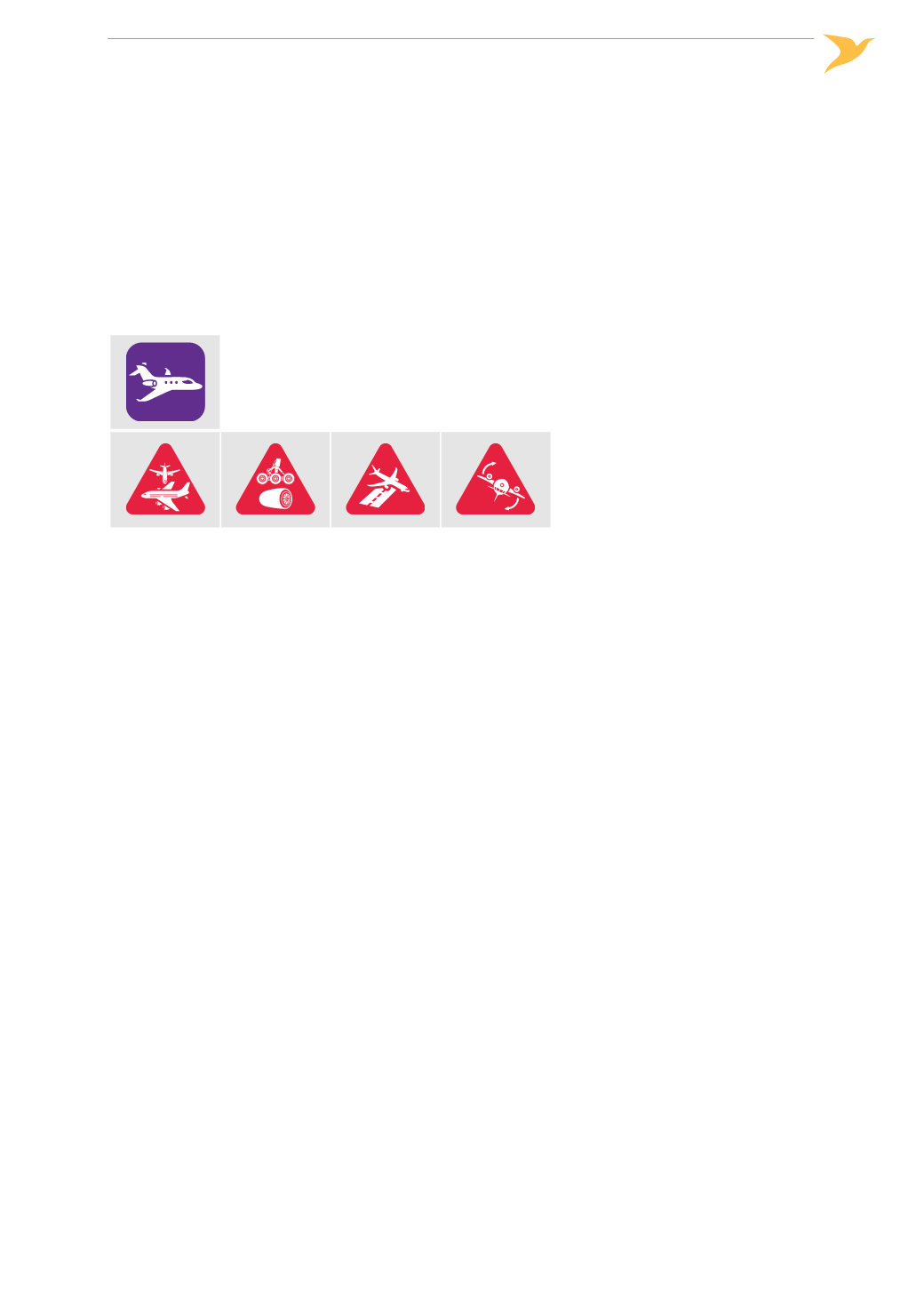
stakeholders. The major safety risk areas are:
§
§
MAC/Airprox - ATM:
the business aviation sector routinely carries out significant amounts of flying in
uncontrolled airspace and such aircraft regularly use smaller airports. This exposes business aviation
operators to a potentially greater risk of airborne collision compared to airline operations. Work on
MAC/Airprox will be taken forward within the EASp through further risk assessment involving a wide
range of industry Stakeholders.
§
§
SCF‑NP:
from a technical point of view, non‑powerplant component failures continue to feature in ac‑
cidents and this remains an area of focus for future safety activities.
§
§
Runway Excursion:
a significant number of business aviation occurrences take place in the landing
phase and runway excursions continue to feature as a safety risk. At a worldwide level, around a third
of accidents involve runway excursions, making the situation in Europe significantly better than that
at the global level.
§
§
Abnormal Runway Contact:
the occurrence category of abnormal runway contact includes a num‑
ber of different types of events including hard landings, tail strikes and long landings. Often these are
pre‑cursors to runway excursions and in many cases are influenced by poor weather and other envi‑
ronmental factors.
§
§
Loss of Control - In‑Flight:
while loss of control accidents rarely occur, the accident often result in fa‑
talities. Therefore, understanding and controlling the risks leading to a loss of control will be an area
of specific focus within the business aviation sector.
These key issues match closely the safety priorities developed by various representatives bodies and trade groups
from the business aviation sector at both the global and European levels.