



 95 / 168

PAGE
93
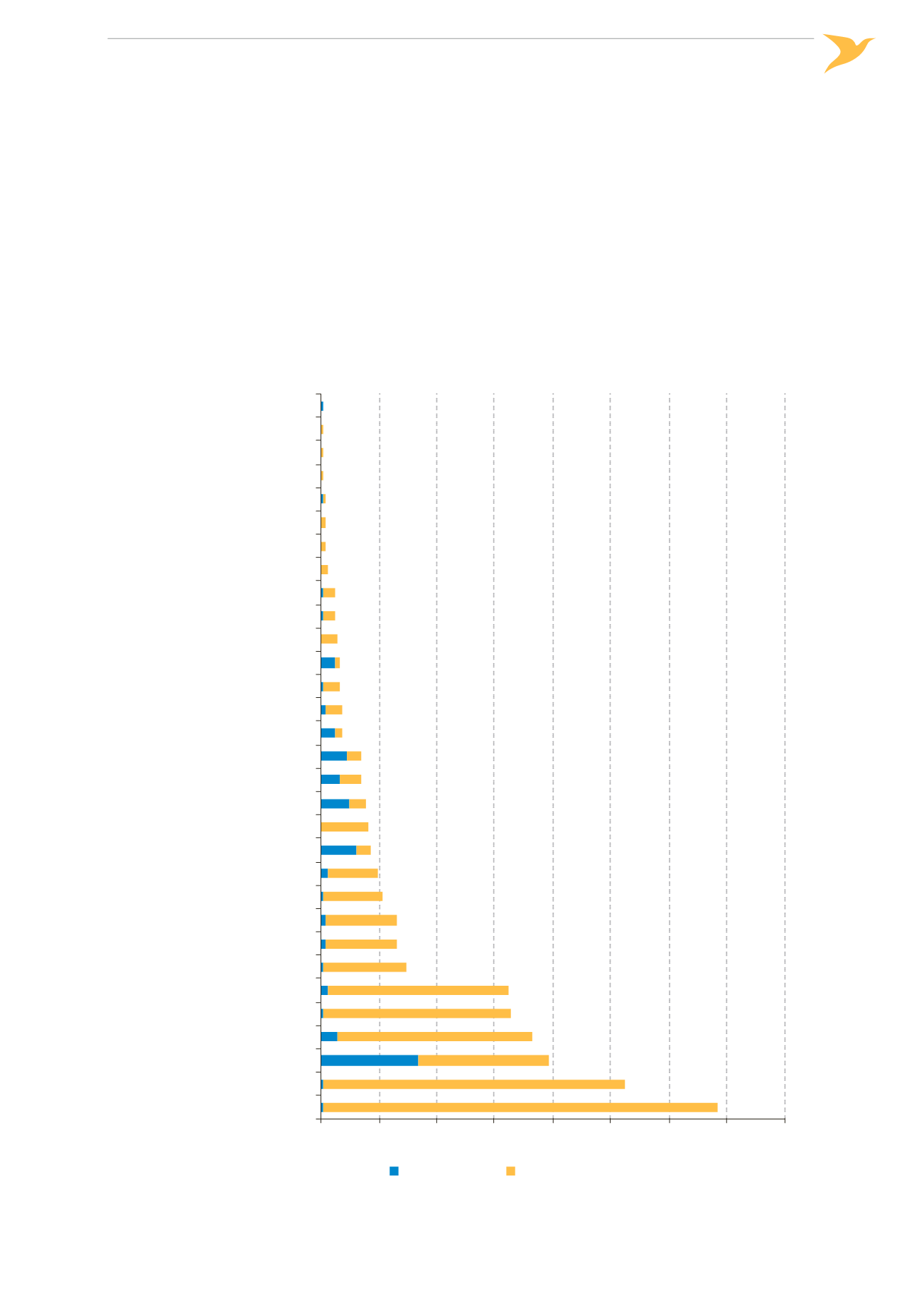
As can be seen in Figure 31, Loss of Control In‑flight (LOC‑I) accounted for 32% of fatal accidents. LOC‑I was also
the greatest contributor to fatalities in 2014. Of the 397 fatal accidents involving fixed‑wing aeroplanes, 135 were
attributed to Loss of Control In‑flight in the preceding five‑year period 2009-2013. F‑POST, which commonly
accompanies LOC‑I was the second most numerous occurrence category related to fatal accidents. This was fol‑
lowed by SCF‑PP and LALT. LALT is often attributed as a cause where, for example, a stall has occurred and the
low altitude flying restricts the pilot reacting in a timely manner.
´
´
Figure 31:
Fixed-wing aeroplane fatal and non-fatal accidents per occurrence category
2009-2014
Non-Fatal Accidents
Fatal Accidents
0
100
200
300
400
500
600
700
800
ARC: Abnormal runway contact
RE: Runway excursion
LOC-I: Loss of control - inight
SCF-PP: powerplant failure or
LOC-G: Loss of control - ground
SCF-NP: System/component failure or
GCOL: Ground Collision
CTOL: Collision with obstacle(s) during
FUEL: Fuel related
WSTRW: Windshear or thunderstorm.
OTHR: Other
F-POST: Fire/smoke (post-impact)
USOS: Undershoot/overshoot
LALT: Low altitude operations
UNK: Unknown or undetermined
CFIT: Controlled ight into or toward
MAC: Airprox/ ACAS alert/ loss of
AMAN: Abrupt maneuvre
TURB: Turbulence encounter
UIMC: Unintended ight in IMC
ADRM: Aerodrome
RAMP: Ground Handling
F-NI: Fire/smoke (non-impact)
GTOW: Glider towing related events
BIRD: Birdstrike
RI-VAP: Runway incursion - vehicle,
ICE: Icing
RI-A: Runway incursion - animal
ATM: ATM/CNS
SEC: Security related
EVAC: Evacuation