



 53 / 168

PAGE
51
´
´
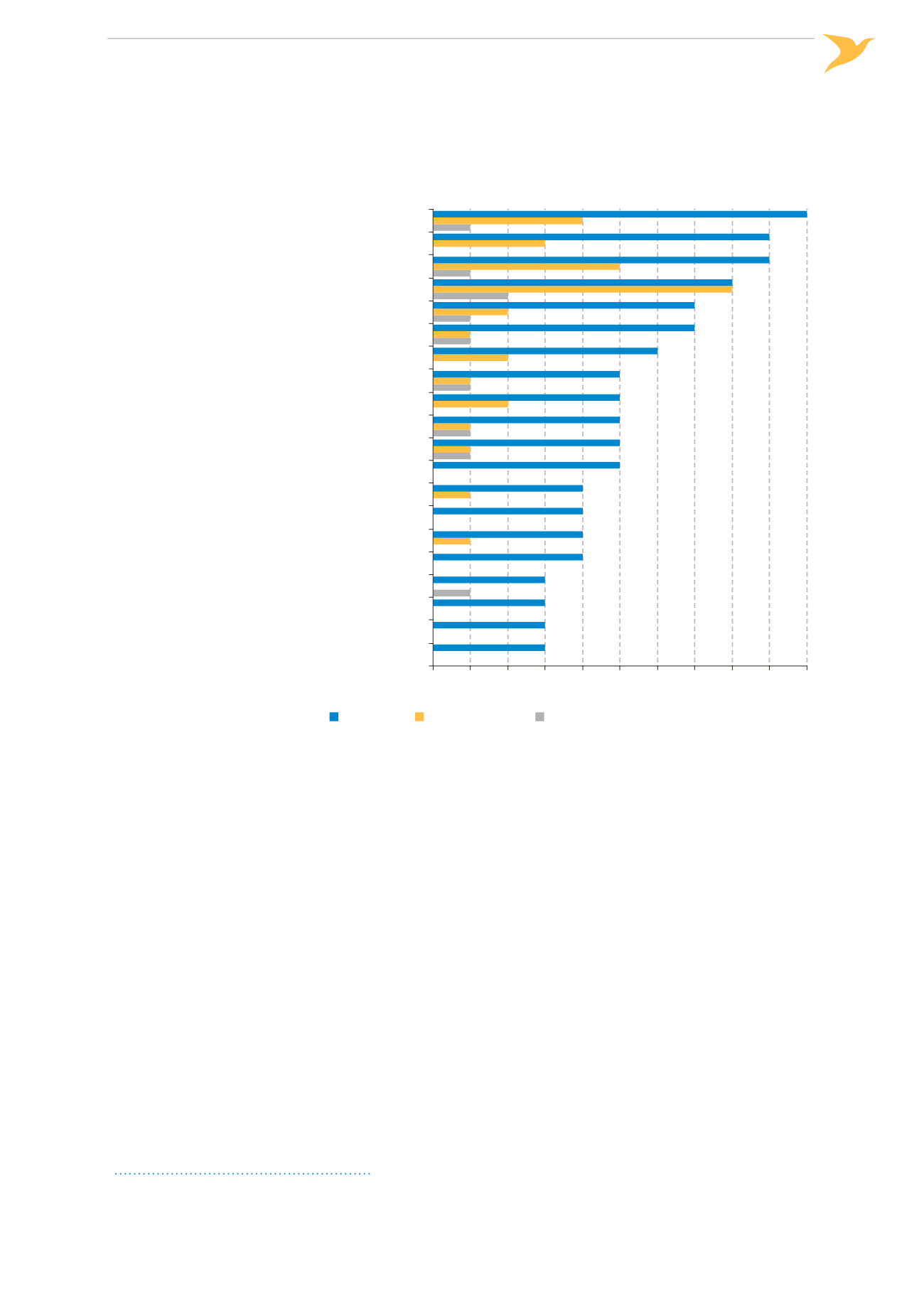
Figure 13:
Contributing factors/events sorted by most frequently present in LOC‑I accidents
Accident
Serious Incident
Incident
0
1
2
3
4
5
6
7
8
9
10
Operational Oversight
/Flight Operations Safety Promotion and Training
(Flight Operations Safety Risk Management
Use of Checklists
Unstabilised Approach
Control of Transition Between Manual and Automated Flight
Poor Visibility Encounter
Lack of Action
Incorrect Action Selection
Lack of Communication
Fatigue
Speed Control - Low Speed
Operation of Flight Controls
Icing Conditions Encounter
Response to Warning System
Distraction - Job Related
Go-around
$Monitoring of Equipment/ Instruments
Flight Crew CRM
Use of Policy/ Procedures
The analysis on LOC‑I was then completed by combining the analysis with expert judgement to define a full list
of safety issues for the Agency’s initial Safety Risk Portfolio. Figure 14 then further refines this analysis by rank‑
ing the safety issues according to their involvement in accidents, serious incidents and incidents.
The top five safety issues are:
1. Inadequate management system and oversight
4
2. Inadequate CRM, communication and decision‑making
3. Inadequate knowledge of aircraft systems and associated procedures
4. Inadequate crew awareness
5. Management of adverse weather conditions
4 Later split in two: inadequate management system and inadequate oversight