



 50 / 168

Annual Safety Review 2014
Commercial Air Transport
PAGE
48
Key Safety Risk Areas for Commercial
Air Transport Aeroplanes
Through analysing the occurrence categories, the key safety risk areas for commercial air transport fixed wing
operations were identified using the data provided in Figure 11. These form the basis for the Safety Risk Port‑
folio and the further analysis of each risk area is then used to identify the specific safety issues. These key risk
areas are
3
:
§
§
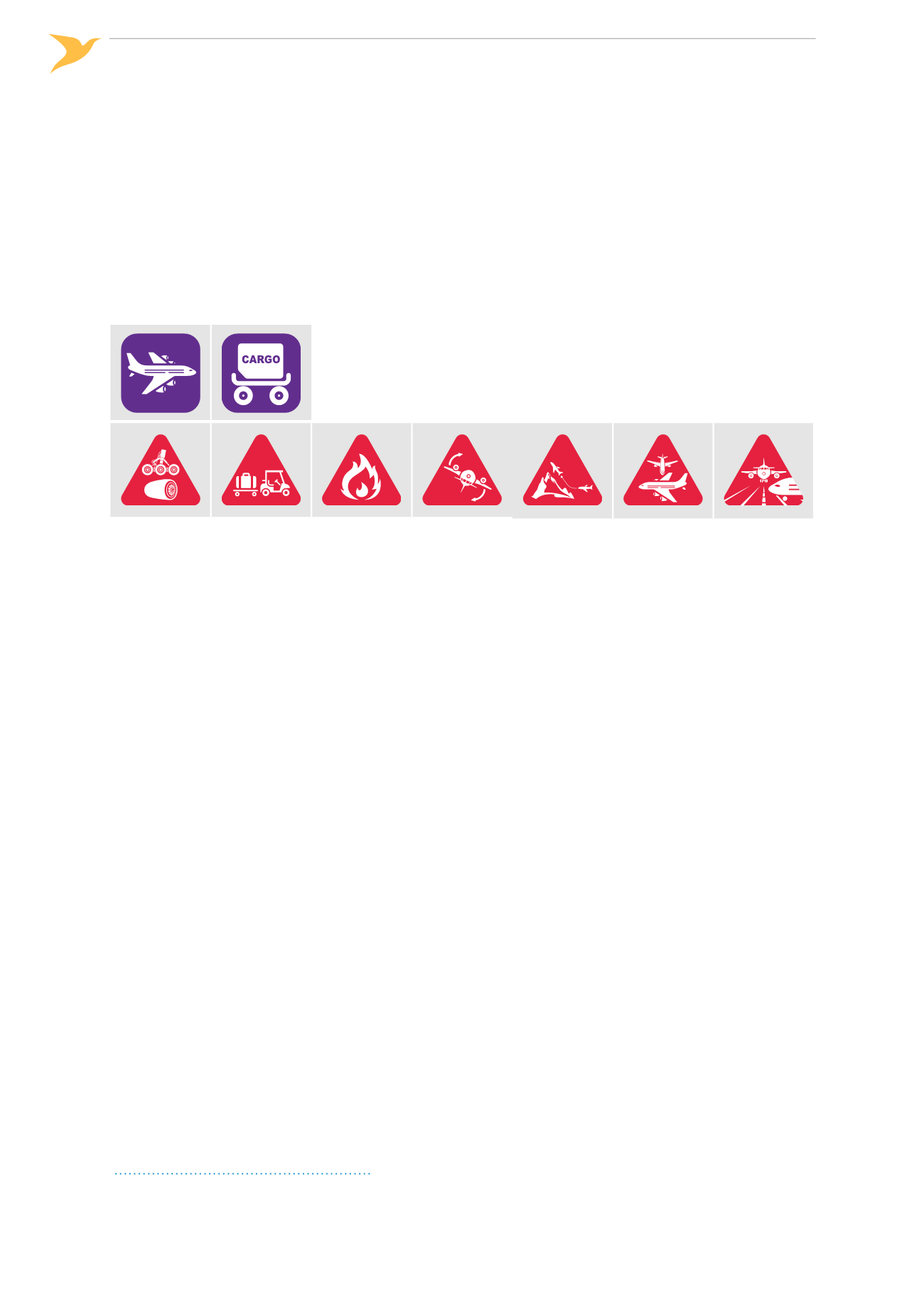
Loss of control – in flight (LOC‑I):
the most frequent risk area for fatal accidents, both in Europe and
worldwide.
§
§
System Component Failure (SCF):
the 3rd most frequent risk area for fatal accidents and the most fre‑
quent risk area for all accidents and serious incidents.
§
§
MAC/Airprox (MAC):
the 2nd most frequent risk area for all accidents and serious incidents.
§
§
Runway excursion/abnormal runway contact (RE/ARC):
ARC is often a pre‑cursor to RE occurrences,
therefore for the purpose of considering safety issues they have been combined. ARC is the most fre‑
quent risk area for non‑fatal accidents.
§
§
Ground collisions/Ground handling (GCOL/RAMP):
RAMP is the 4th most frequent risk area for fa‑
tal accidents and is combined with GCOL as both involve occurrences in and around an aerodrome.
§
§
Controlled flight into or toward terrain (CFIT):
whilst the installation of Ground Proximity Warning
Systems has greatly reduced the risk of fatal CFIT accidents in recent years, it remains the final type of
fatal accident in this analysis and still poses a threat in some circumstances.
§
§
Fire/Smoke Non‑Impact (FIRE):
FIRE is the 5th most frequent risk area for all accidents and serious
incidents.
§
§
Runway incursion (RI):
RI is the 6th most frequent risk area for all accidents and serious incidents.
3 For a complete list of CICTT occurrence categories, refer to Appendix 1.